neco 2019 chemistry | Objective

Prepare for your exams with neco questions? Reviewing past/model questions is one of the most effective ways to guarantee a high score. This practice hub features authentic 2019 chemistry (Objective) questions designed to simulate the real exam environment.

Practice these randomly selected questions to test your readiness.
Question 1 View Details
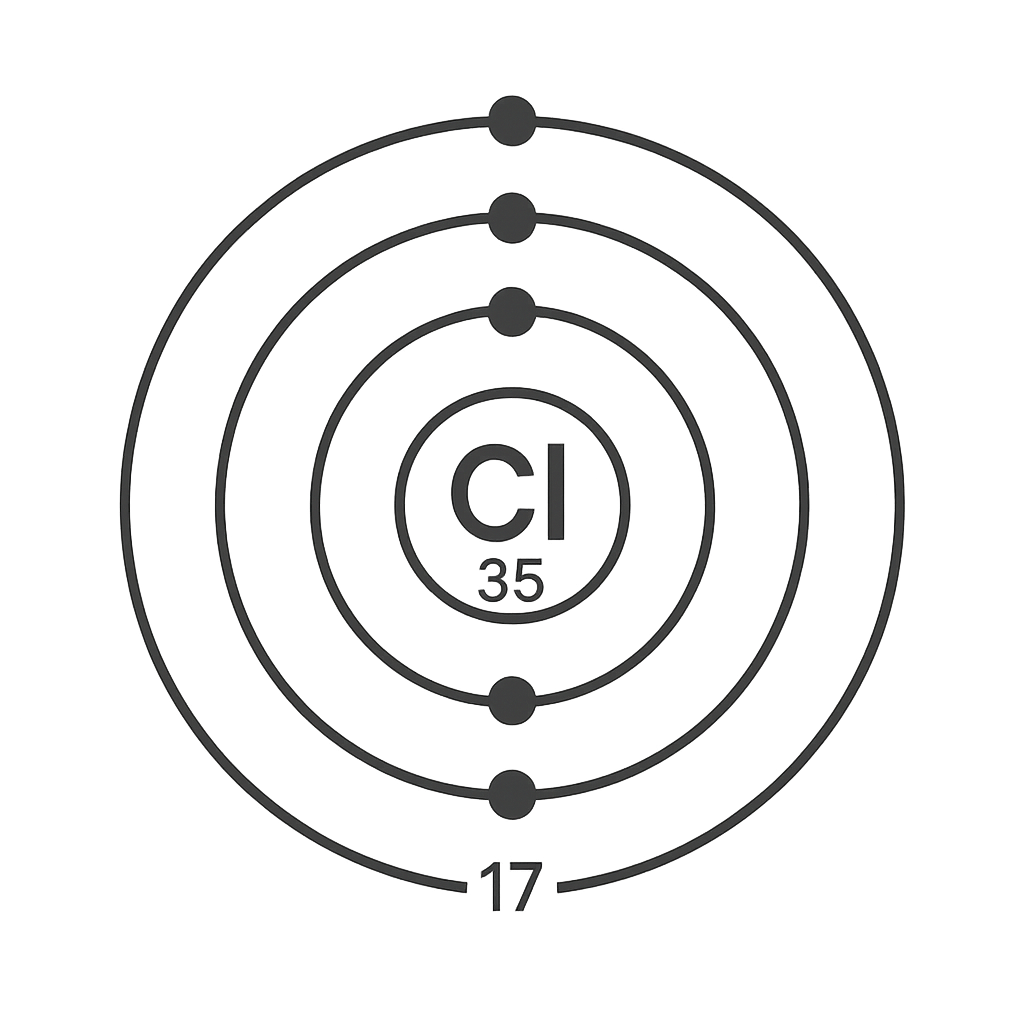
The diagram shows the Bohr model of an element. The nucleus is labelled \(\_{17}^{35}\text{Cl}\). The electron shells contain 2, 8 and 7 electrons respectively. Identify the element symbol, its atomic number, mass number and calculate the number of neutrons.
Correct A. Cl, atomic number 17, mass number 35, neutrons 18
B. Cl, atomic number 17, mass number 35, neutrons 17
C. Cl, atomic number 17, mass number 36, neutrons 19
D. Br, atomic number 35, mass number 79, neutrons 44

Correct Answer: A

Want to see the full step-by-step solution? Unlock AI Explanation & Analytics
Question 2 View Details
A 5.00 L sample of a gaseous mixture at 27°C and 1.00 atm has a total mass of 6.00 g. The mixture contains only nitrogen gas \(\mathrm{N_2}\) and oxygen gas \(\mathrm{O_2}\). Determine the mass of oxygen present in the mixture.
A. 3.12 g
Correct B. 2.51 g
C. 4.00 g
D. 1.84 g

Correct Answer: B

Want to see the full step-by-step solution? Unlock AI Explanation & Analytics
Question 3 View Details
Two primary alcohols with molecular formula \(\mathrm{C_4H_{10}O}\) have boiling points of 108°C and 117°C respectively. Identify the structural formulas of these alcohols and explain the difference in their boiling points.
A. 1‑butanol: CH3CH2CH2CH2OH (b.p. 117°C); 2‑methyl‑2‑propanol: (CH3)3COH (b.p. 108°C). The branched isomer boils lower due to reduced surface area.
Correct B. 1‑butanol: CH3CH2CH2CH2OH (b.p. 117°C); 2‑methyl‑1‑propanol: (CH3)2CHCH2OH (b.p. 108°C). The branched isomer boils lower due to reduced surface area and weaker intermolecular forces.
C. 1‑butanol: CH3CH2CH2CH2OH (b.p. 117°C); 2‑methyl‑1‑propanol: (CH3)2CHCH2OH (b.p. 108°C). The difference arises from the presence of a carbonyl group in the branched isomer.
D. 1‑butanol: CH3CH2CH2CH2OH (b.p. 108°C); 2‑methyl‑1‑propanol: (CH3)2CHCH2OH (b.p. 117°C). The linear isomer boils lower because it has a smaller molecular weight.

Correct Answer: B

Want to see the full step-by-step solution? Unlock AI Explanation & Analytics
Question 4 View Details
A secondary alkyl bromide \(\mathrm{(CH_3)_2CHBr}\) is reacted with aqueous sodium acetate \(\mathrm{CH_3COONa}\) at 25°C in a polar protic solvent. Predict whether the substitution proceeds by an \(\mathrm{S_N1}\) or \(\mathrm{S_N2}\) mechanism and justify your answer.
A. E2
B. E1
Correct C. S_N1
D. S_N2

Correct Answer: C

Want to see the full step-by-step solution? Unlock AI Explanation & Analytics
Question 5 View Details
A sample of an aqueous solution contains one of the following metal ions: \(\mathrm{Fe^{3+}}\), \(\mathrm{Cu^{2+}}\) or \(\mathrm{Zn^{2+}}\). The following observations are made: 1. Addition of dilute NaOH produces a pale blue precipitate that dissolves on adding excess NaOH. 2. Addition of concentrated \(\mathrm{NH_3}\) to the solution after step 1 gives a deep blue solution that remains unchanged on further addition of \(\mathrm{NH_3}\). Identify the metal ion present in the original solution.
A. Ni^{2+}
B. Fe^{3+}
Correct C. Cu^{2+}
D. Zn^{2+}

Correct Answer: C

Want to see the full step-by-step solution? Unlock AI Explanation & Analytics
Question 6 View Details
The diagram shows the structural formula of ethanol, \( \mathrm{CH_3CH_2OH} \). Using the periodic table, determine the total number of valence electrons contributed by all atoms in the molecule.
A. 22
B. 18
C. 24
Correct D. 20

Correct Answer: D

Want to see the full step-by-step solution? Unlock AI Explanation & Analytics
Question 7 View Details
The solubility product of silver chloride is \(K_{sp}=1.6\times10^{-10}\). In a solution that already contains \(0.010\;\text{M}\) sodium chloride, calculate the solubility of AgCl in grams per litre.
Correct A. 2.3\times10^{-6}\;\text{g/L}
B. 1.6\\times10^{-5}\\;\\text{g\/L}
C. 5.0\\times10^{-7}\\;\\text{g\/L}
D. 3.2\\times10^{-6}\\;\\text{g\/L}

Correct Answer: A

Want to see the full step-by-step solution? Unlock AI Explanation & Analytics
Question 8 View Details
In acidic solution, oxalic acid \(\mathrm{H_2C_2O_4}\) reacts with potassium permanganate according to the balanced equation: \(2\,\mathrm{MnO_4^-}+5\,\mathrm{C_2O_4^{2-}}+16\,\mathrm{H^+}\rightarrow2\,\mathrm{Mn^{2+}}+10\,\mathrm{CO_2}+8\,\mathrm{H_2O}\). If \(0.10\;\text{mol}\) of oxalic acid is to be completely oxidised, what volume (in mL) of a \(0.20\;\text{M}\) KMnO_4 solution is required?
A. 400
B. 250
C. 500
Correct D. 200

Correct Answer: D

Want to see the full step-by-step solution? Unlock AI Explanation & Analytics
Question 9 View Details
A 1.0 L solution contains 0.10 mol each of acetic acid (pK_a = 4.76), benzoic acid (pK_a = 4.20) and propionic acid (pK_a = 4.87). Sodium hydroxide solution of concentration 0.10 M is added until the pH reaches 8.0. Assuming the Henderson-Hasselbalch relationship holds for each acid‑base pair, calculate the volume of NaOH solution required (in litres, to two decimal places).
Correct A. 3.00
B. 4.00
C. 2.50
D. 3.50

Correct Answer: A

Want to see the full step-by-step solution? Unlock AI Explanation & Analytics
Question 10 View Details
When anisole (\(\mathrm{C_6H_5OCH_3}\)) is treated with bromine (\(\mathrm{Br_2}\)) in the presence of iron(III) bromide (\(\mathrm{FeBr_3}\)), which position(s) on the aromatic ring are most activated for substitution, and what is the major mono‑brominated product formed? Give the name of the product.
A. para‑chloroanisole (4‑chloroanisole)
Correct B. para‑bromoanisole (4‑bromoanisole)
C. ortho‑bromoanisole (2‑bromoanisole)
D. meta‑bromoanisole (3‑bromoanisole)

Correct Answer: B

Want to see the full step-by-step solution? Unlock AI Explanation & Analytics
Question 11 View Details
A 3.00 g mixture of \( \text{CaCO}_3 \) and \( \text{Na}_2\text{CO}_3 \) is heated strongly so that each carbonate decomposes to its oxide and carbon dioxide: \( \text{CaCO}_3 \rightarrow \text{CaO} + \text{CO}_2 \) \( \text{Na}_2\text{CO}_3 \rightarrow \text{Na}_2\text{O} + \text{CO}_2 \) The total mass of the oxide residues obtained is 1.70 g. Determine the mass percent of \( \text{CaCO}_3 \) in the original mixture.
Correct A. 74.3 %
B. 55.0 %
C. 81.2 %
D. 68.5 %

Correct Answer: A

Want to see the full step-by-step solution? Unlock AI Explanation & Analytics
Question 12 View Details
Write the ground‑state electron configuration of the element with atomic number 26 and state the number of unpaired electrons in its ground state.
A. [Ar] 4s^1 3d^7 ; 2 unpaired electrons
B. [Ar] 4s^2 3d^6 ; 2 unpaired electrons
C. [Ar] 4s^2 3d^5 ; 3 unpaired electrons
Correct D. [Ar] 4s^2 3d^6 ; 4 unpaired electrons

Correct Answer: D

Want to see the full step-by-step solution? Unlock AI Explanation & Analytics
Question 13 View Details
An unknown alkane is completely combusted. From 5.00 g of the alkane, 14.6 g of \( \text{CO}_2 \) and 9.0 g of \( \text{H}_2\text{O} \) are obtained. Determine the molecular formula of the alkane and calculate its molar mass (to one decimal place).
A. C₄H₁₀, molar mass ≈ 58.1 g·mol⁻¹
Correct B. C₂H₆, molar mass ≈ 30.1 g·mol⁻¹
C. C₅H₁₂, molar mass ≈ 72.1 g·mol⁻¹
D. C₃H₈, molar mass ≈ 44.1 g·mol⁻¹

Correct Answer: B

Want to see the full step-by-step solution? Unlock AI Explanation & Analytics
Question 14 View Details
The lattice energy of an ionic compound can be approximated by \( U = k \dfrac{z^+ z^-}{r} \), where \( k \) is a constant, \( z^+ \) and \( z^- \) are the charges on the cation and anion, and \( r \) is the inter‑ionic distance (in pm). For \( \text{ACl} \) (where \( z^+ = 1, z^- = 1 \)) the measured lattice energy is 750 kJ·mol⁻¹ and \( r = 260 \) pm. Assuming the same constant \( k \) applies, calculate the lattice energy of \( \text{BCl}_2 \) (where \( z^+ = 2, z^- = 1 \) and \( r = 210 \) pm). Comment on the relative solubility of \( \text{BCl}_2 \) in water compared with \( \text{ACl} \).
A. ≈ 2 500 kJ·mol⁻¹ (and BCl₂ is less soluble than ACl)
Correct B. ≈ 1 860 kJ·mol⁻¹ (and BCl₂ is less soluble than ACl)
C. ≈ 1 200 kJ·mol⁻¹ (and BCl₂ is less soluble than ACl)
D. ≈ 1 860 kJ·mol⁻¹ (and BCl₂ is more soluble than ACl)

Correct Answer: B

Want to see the full step-by-step solution? Unlock AI Explanation & Analytics
Question 15 View Details
The vapor pressure of a liquid follows the Clausius-Clapeyron relation \( \ln P = -\dfrac{\Delta H_{\text{vap}}}{R}\dfrac{1}{T} + C \). At 298 K the vapor pressure is 0.40 kPa, and at 308 K it is 0.70 kPa. (R = 8.314 J·mol⁻¹·K⁻¹). Determine the enthalpy of vaporisation \( \Delta H_{\text{vap}} \) (in kJ·mol⁻¹) and predict the vapor pressure at 318 K.
A. ≈ 1.05 kPa
B. ≈ 1.35 kPa
C. ≈ 0.95 kPa
Correct D. ≈ 1.19 kPa

Correct Answer: D

Want to see the full step-by-step solution? Unlock AI Explanation & Analytics
Question 16 View Details
An aqueous solution at 25\(^\circ\)C is saturated with calcium fluoride, CaF\(_2\). The solubility product at this temperature is \(K_{sp}=1.5\times10^{-10}\). Initially the solution is at equilibrium. Then 0.010 mol of NaF is added to 1.00 L of this saturated solution, and the volume change is negligible. Calculate the concentration of Ca\(^{2+}\) ions in the solution after the system re‑establishes equilibrium.
Correct A. 1.3\times10^{-6}\,\text{M}
B. 1.3\\times10^{-5}\\,\\text{M}
C. 3.0\\times10^{-6}\\,\\text{M}
D. 1.0\\times10^{-6}\\,\\text{M}

Correct Answer: A

Want to see the full step-by-step solution? Unlock AI Explanation & Analytics
Question 17 View Details
A 100 g mixture of benzene (M = 78.11 g·mol\(^{-1}\)) and toluene (M = 92.14 g·mol\(^{-1}\)) has a density of 0.88 g·mL\(^{-1}\). At 25\(^\circ\)C the total vapour pressure above the mixture is measured to be 0.45 atm. The vapour pressures of the pure components at this temperature are 0.55 atm for benzene and 0.28 atm for toluene. Assuming the mixture behaves as an ideal solution (Raoult's law), (a) determine the mole fraction of benzene in the liquid phase, and (b) calculate the mass of benzene present in the mixture.
A. x_{B}=0.55 (≈) and mass of benzene = 5.2\\times10^{1}\\,\\text{g}
Correct B. x_{B}=0.63 (≈) and mass of benzene = 5.9\times10^{1}\,\text{g}
C. x_{B}=0.60 (≈) and mass of benzene = 5.8\\times10^{1}\\,\\text{g}
D. x_{B}=0.70 (≈) and mass of benzene = 6.4\\times10^{1}\\,\\text{g}

Correct Answer: B

Want to see the full step-by-step solution? Unlock AI Explanation & Analytics
Question 18 View Details
A wastewater stream contains 0.025 mol\,L\(^{-1}\) nitrate‑N (as NO\(_3^{-}\)) and 0.015 mol\,L\(^{-1}\) phosphate‑P (as PO\(_4^{3-}\)). A biological denitrification step reduces nitrate to N\(_2\) according to\n\\(2\,\text{NO}_{3}^{-}+5\,\text{C}_{6}\text{H}_{12}\text{O}_{6}+6\,\text{H}^{+}\rightarrow\text{N}_{2}+5\,\text{C}_{6}\text{H}_{12}\text{O}_{7}\\).\nThe same stream also contains calcium ions at 0.030 mol\,L\(^{-1}\), which precipitate phosphate as calcium phosphate according to\n\\(3\,\text{Ca}^{2+}+2\,\text{PO}_{4}^{3-}\rightarrow\text{Ca}_{3}(\text{PO}_{4})_{2}\\).\nAssuming complete nitrate removal and complete phosphate precipitation limited only by calcium, calculate (a) the minimum moles of glucose required per litre, (b) the concentration of calcium remaining after precipitation, and (c) the reduction in chemical oxygen demand (COD) in mg\,L\(^{-1}\), given that oxidation of one mole of glucose consumes six moles of O\(_2\) (M\(_{O2}=32\) g\,mol\(^{-1}\)).
A. (a) 0.075\\,\\text{mol\\,L}^{-1}, (b) 0.005\\,\\text{mol\\,L}^{-1}, (c) 1.0\\times10^{4}\\,\\text{mg\\,L}^{-1}
Correct B. (a) 0.0625\,\text{mol\,L}^{-1}, (b) 0.0075\,\text{mol\,L}^{-1}, (c) 1.2\times10^{4}\,\text{mg\,L}^{-1}
C. (a) 0.050\\,\\text{mol\\,L}^{-1}, (b) 0.010\\,\\text{mol\\,L}^{-1}, (c) 1.4\\times10^{4}\\,\\text{mg\\,L}^{-1}
D. (a) 0.060\\,\\text{mol\\,L}^{-1}, (b) 0.008\\,\\text{mol\\,L}^{-1}, (c) 1.3\\times10^{4}\\,\\text{mg\\,L}^{-1}

Correct Answer: B

Want to see the full step-by-step solution? Unlock AI Explanation & Analytics
Question 19 View Details
A galvanic cell is constructed as \(\text{Zn}\,|\,\text{Zn}^{2+}(0.010\,\text{M})\,||\,\text{Cu}^{2+}(0.050\,\text{M})\,|\,\text{Cu}\) at 25\(^\circ\)C. Standard reduction potentials are \(E^{\circ}(\text{Zn}^{2+}+2e^{-}\rightarrow\text{Zn})=-0.76\,\text{V}\) and \(E^{\circ}(\text{Cu}^{2+}+2e^{-}\rightarrow\text{Cu})=+0.34\,\text{V}\). (a) Calculate the cell EMF under the given concentrations using the Nernst equation. (b) If the cell is allowed to run until \([\text{Cu}^{2+}] = 0.010\,\text{M}\) and \([\text{Zn}^{2+}] = 0.050\,\text{M}\), what is the new EMF? (c) Determine the maximum electrical work obtainable per mole of Zn oxidised under the initial conditions.
A. (a) 0.98\,\text{V}, (b) 0.95\,\text{V}, (c) 1.80\times10^{5}\,\text{J\,mol}^{-1} (≈180\,\text{kJ\,mol}^{-1})
B. (a) 1.20\,\text{V}, (b) 1.15\,\text{V}, (c) 2.30\times10^{5}\,\text{J\,mol}^{-1} (≈230\,\text{kJ\,mol}^{-1})
Correct C. (a) 1.12\,\text{V}, (b) 1.08\,\text{V}, (c) 2.16\times10^{5}\,\text{J\,mol}^{-1} (≈216\,\text{kJ\,mol}^{-1})
D. (a) 1.05\,\text{V}, (b) 1.02\,\text{V}, (c) 2.00\times10^{5}\,\text{J\,mol}^{-1} (≈200\,\text{kJ\,mol}^{-1})

Correct Answer: C

Want to see the full step-by-step solution? Unlock AI Explanation & Analytics
Question 20 View Details
The solid allotropes of sulfur, rhombic S\(_8\) and monoclinic S\(_8\), interconvert according to the reaction\n\\(\text{rhombic}\,\text{S}_{8}\rightleftharpoons\text{monoclinic}\,\text{S}_{8}\\).\nAt 298 K the standard enthalpy of formation of rhombic sulfur is defined as 0 kJ·mol\(^{-1}\), and the enthalpy change for the transition to monoclinic at this temperature is +2.0 kJ·mol\(^{-1}\). At 400 K the equilibrium constant for the transition is K = 3.0. Assuming the enthalpy change is temperature‑independent, (a) calculate the standard enthalpy change \(\Delta H^{\circ}\) for the transition (in kJ·mol\(^{-1}\)), (b) determine the temperature at which K = 0.5, and (c) if 0.050 mol of rhombic sulfur is heated to that temperature in a sealed container, calculate the amount (in mol) of monoclinic sulfur present at equilibrium.
A. (a) +10.7\,\text{kJ\,mol}^{-1}, (b) 3.00\times10^{2}\,\text{K}, (c) 1.67\times10^{-2}\,\text{mol}
B. (a) -10.7\,\text{kJ\,mol}^{-1}, (b) 2.57\times10^{2}\,\text{K}, (c) 1.67\times10^{-2}\,\text{mol}
C. (a) +10.7\,\text{kJ\,mol}^{-1}, (b) 2.57\times10^{2}\,\text{K}, (c) 2.50\times10^{-2}\,\text{mol}
Correct D. (a) +10.7\,\text{kJ\,mol}^{-1}, (b) 2.57\times10^{2}\,\text{K}, (c) 1.67\times10^{-2}\,\text{mol}

Correct Answer: D

Want to see the full step-by-step solution? Unlock AI Explanation & Analytics
Question 21 View Details
An electrochemical cell is constructed as follows: Zn(s) | Zn^{2+} (0.010 M) || Cu^{2+} (unknown) | Cu(s). At 25°C the measured emf of the cell is 1.05 V. Standard reduction potentials are \(E^{\circ}_{\text{Cu}^{2+}/\text{Cu}} = +0.34\,\text{V}\) and \(E^{\circ}_{\text{Zn}^{2+}/\text{Zn}} = -0.76\,\text{V}\). \(a\) Calculate the concentration of Cu^{2+} in the cell. \(b\) Using the standard cell potential, determine the equilibrium constant \(K\) for the overall cell reaction.
A. [Cu^{2+}] = 1.0\\times10^{-4}\\ \text{M};\\ K \\approx 3.0\\times10^{37}
B. [Cu^{2+}] = 5.0\\times10^{-4}\\ \text{M};\\ K \\approx 1.5\\times10^{36}
Correct C. [Cu^{2+}] = 2.0\times10^{-4}\ \text{M};\ K \approx 1.5\times10^{37}
D. [Cu^{2+}] = 2.0\\times10^{-3}\\ \text{M};\\ K \\approx 1.5\\times10^{35}

Correct Answer: C

Want to see the full step-by-step solution? Unlock AI Explanation & Analytics
Question 22 View Details
A sample solution contains two metal ions selected from Fe^{3+}, Cu^{2+}, Ni^{2+} and Zn^{2+}. The following sequence of tests is performed:\n1. To 5.0 mL of the solution, a few drops of dilute NaOH are added, producing a precipitate.\n2. Excess NH_{4}OH is then added, and the precipitate dissolves, giving a clear deep‑blue solution.\n3. Finally, dimethylglyoxime (DMG) solution is added, resulting in a bright red precipitate.\nIdentify the metal ion(s) present in the original sample and write the net ionic equation for the formation of the red DMG precipitate.
A. Cu^{2+} and Ni^{2+} are present; \(\text{Cu}^{2+} + 2\,\text{C}_{4}\text{H}_{5}\text{N}_{2}\text{O}_{2} + 2\,\text{OH}^{-} \rightarrow \text{Cu}(\text{C}_{4}\text{H}_{5}\text{N}_{2}\text{O}_{2})_{2}\,\downarrow + 2\,\text{H}_{2}\text{O}\)
B. Fe^{3+} and Zn^{2+} are present; \(\text{Zn}^{2+} + 2\,\text{C}_{4}\text{H}_{5}\text{N}_{2}\text{O}_{2} + 2\,\text{OH}^{-} \rightarrow \text{Zn}(\text{C}_{4}\text{H}_{5}\text{N}_{2}\text{O}_{2})_{2}\,\downarrow + 2\,\text{H}_{2}\text{O}\)
C. Cu^{2+} and Fe^{3+} are present; \(\text{Fe}^{3+} + 2\,\text{C}_{4}\text{H}_{5}\text{N}_{2}\text{O}_{2} + 2\,\text{OH}^{-} \rightarrow \text{Fe}(\text{C}_{4}\text{H}_{5}\text{N}_{2}\text{O}_{2})_{2}\,\downarrow + 2\,\text{H}_{2}\text{O}\)
Correct D. Cu^{2+} and Ni^{2+} are present; \(\text{Ni}^{2+} + 2\,\text{C}_{4}\text{H}_{5}\text{N}_{2}\text{O}_{2} + 2\,\text{OH}^{-} \rightarrow \text{Ni}(\text{C}_{4}\text{H}_{5}\text{N}_{2}\text{O}_{2})_{2}\,\downarrow + 2\,\text{H}_{2}\text{O}\)

Correct Answer: D

Want to see the full step-by-step solution? Unlock AI Explanation & Analytics
Question 23 View Details
Write the hybridisation of the carbon atom in methane (CH_{4}) and state the approximate H-C-H bond angle.
Correct A. sp^{3}; 109.5^{\circ}
B. sp^{3}; 90^{\circ}
C. sp^{2}; 120^{\circ}
D. sp; 180^{\circ}

Correct Answer: A

Want to see the full step-by-step solution? Unlock AI Explanation & Analytics
Question 24 View Details
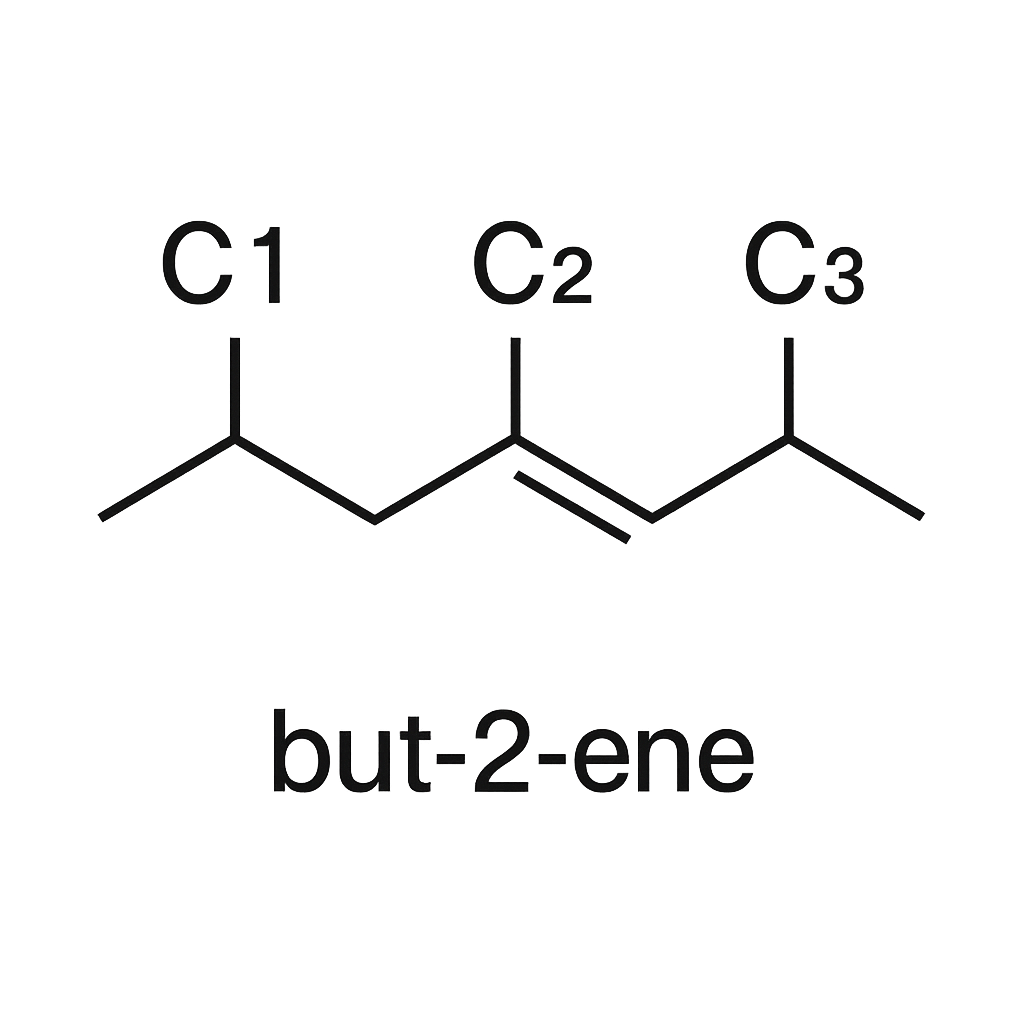
A 10.0 g sample of a mixture of 2‑butanol (C_{4}H_{10}O, M = 74.12 g·mol^{-1}) and tert‑butyl alcohol (C_{4}H_{10}O, M = 74.12 g·mol^{-1}) is heated with excess concentrated H_{2}SO_{4}. Only the secondary alcohol (2‑butanol) undergoes acid‑catalysed dehydration to give but‑2‑ene (C_{4}H_{8}, M = 56.11 g·mol^{-1}) according to the equation:\nC_{4}H_{10}O \rightarrow C_{4}H_{8} + H_{2}O.\nThe reaction is carried out to completion with 100 % yield for the dehydration of 2‑butanol, and 0.80 g of but‑2‑ene is isolated.\n(a) Determine the mass percent of 2‑butanol in the original mixture.\n(b) Calculate the mass of water formed in the reaction.
A. Mass % of 2‑butanol = 12.5\%; mass of water formed = 0.300 g
B. Mass % of 2‑butanol = 9.8\%; mass of water formed = 0.250 g
Correct C. Mass % of 2‑butanol = 10.6\%; mass of water formed = 0.257 g
D. Mass % of 2‑butanol = 11.2\%; mass of water formed = 0.260 g

Correct Answer: C

Want to see the full step-by-step solution? Unlock AI Explanation & Analytics
Question 25 View Details
The element with atomic number 31 is arsenic. Write its ground‑state electron configuration using the noble‑gas core notation and state the block of the periodic table to which it belongs.
A. [Ar] 3d^{10} 4s^{2} 4p^{2}; p‑block
B. [Ar] 3d^{9} 4s^{2} 4p^{1}; p‑block
Correct C. [Ar] 3d^{10} 4s^{2} 4p^{1}; p‑block
D. [Ar] 3d^{10} 4s^{2} 4p^{1}; s‑block

Correct Answer: C

Want to see the full step-by-step solution? Unlock AI Explanation & Analytics

Master the Exam!

You've seen a preview, but there are thousands more questions plus AI tutor to break down complex solutions.

Unlock Full Access Available for Android & Windows
Help others prepare! Share this practice hub:
Chat with Support