neco 2017 biology | Essay

Prepare for your exams with neco questions? Reviewing past/model questions is one of the most effective ways to guarantee a high score. This practice hub features authentic 2017 biology (Essay) questions designed to simulate the real exam environment.

Practice these randomly selected questions to test your readiness.
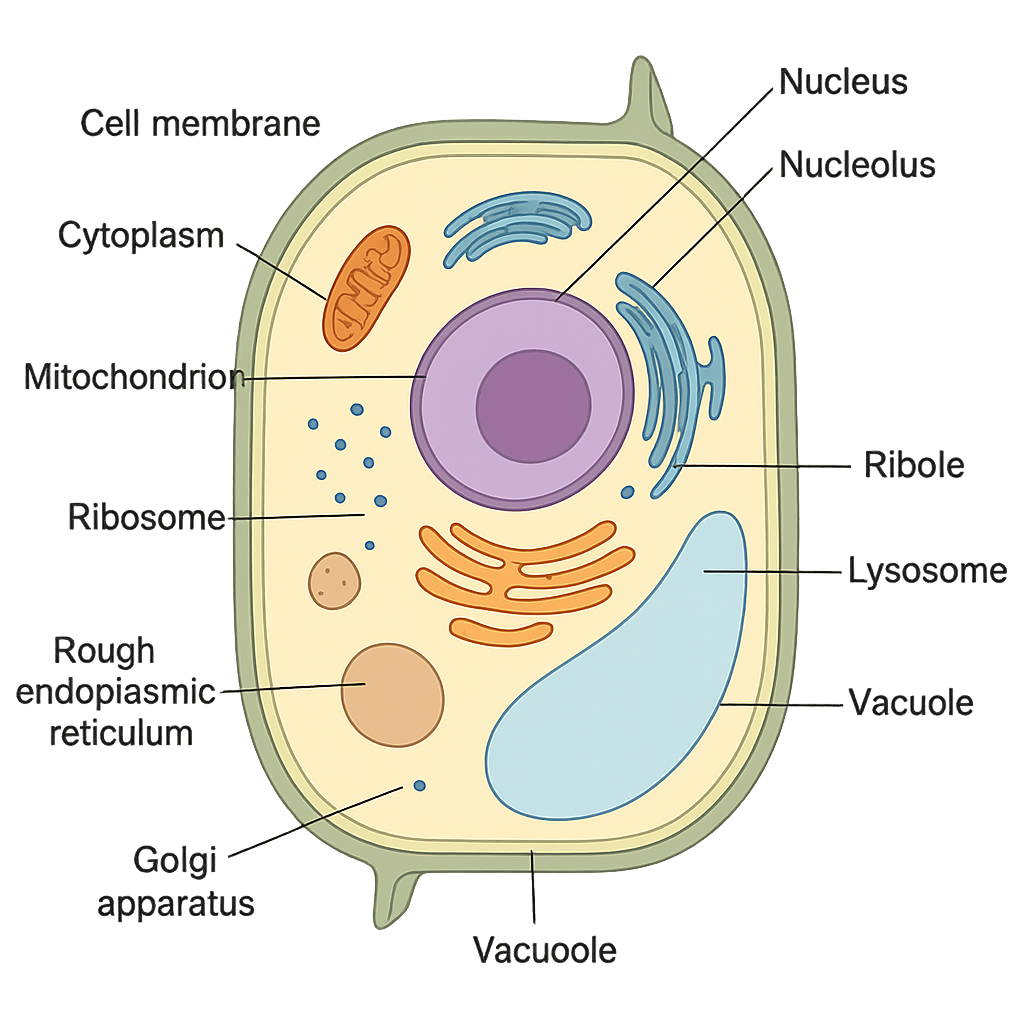
Question 1 View Details
The labelled diagram shows a typical eukaryotic cell.
Question Parts
(a)
Identify six major structures shown in the diagram and write their names.
(b)
State the main function of each of the following organelles:
() Nucleus
() Mitochondrion
() Ribosome
() Rough endoplasmic reticulum
() Golgi apparatus
() Lysosome
(c)
Explain two key differences between plant and animal cells, citing the structures that are present in one but absent in the other.
(d)
A hypothetical drug inhibits the sodium‑potassium pump in the cell membrane. Predict two physiological consequences of this inhibition in a multicellular organism.
Detailed Essay Solution & Marking Scheme Available

Get the step-by-step mathematical proofs, key points required by examiners, and a comprehensive breakdown from our AI Tutor.
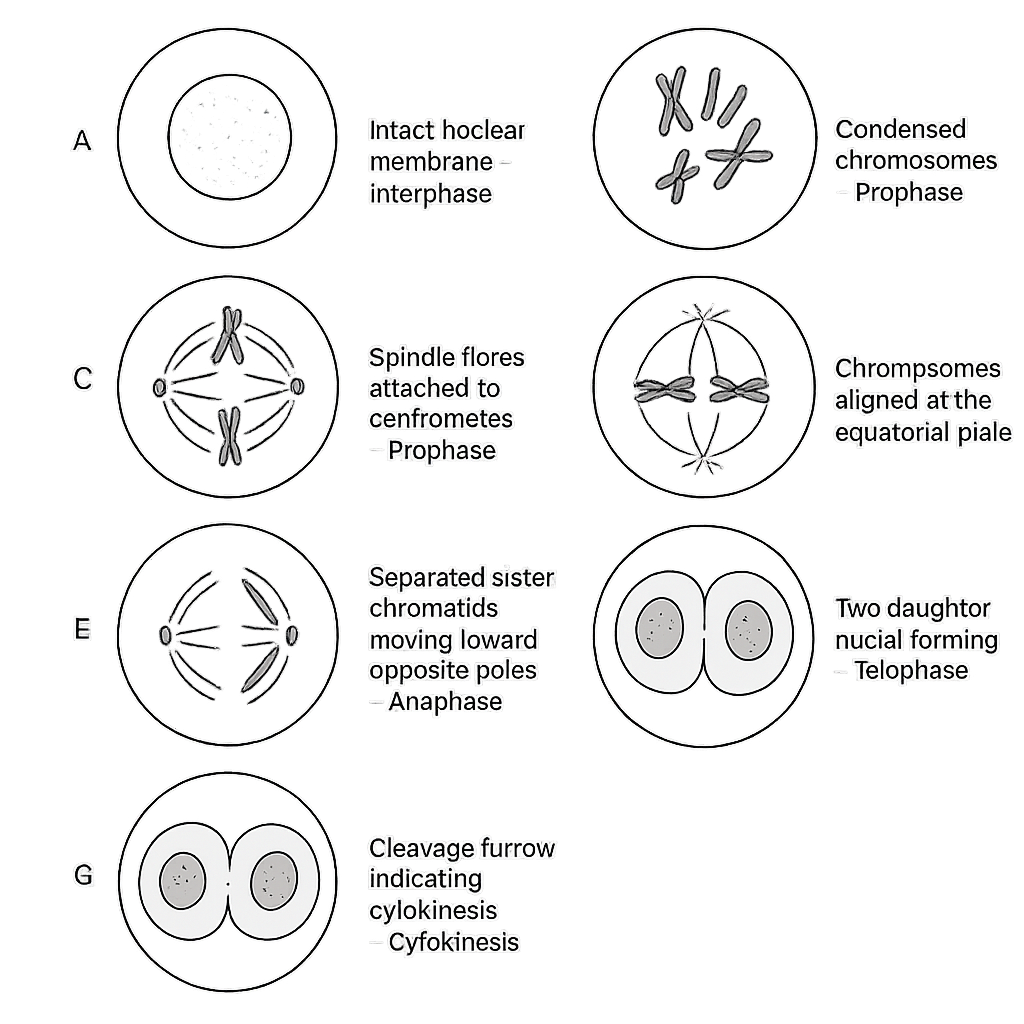
Question 2 View Details
The labelled diagram shows a typical eukaryotic cell undergoing mitosis. Labels A–G correspond to structures or events as described in the diagram. Using the diagram, answer the following:
Question Parts
(a)
Identify the mitotic phase represented by each label (A, B, C, D, E, F, G).
(b)
Describe the key events that occur in each of the four phases of mitosis (Prophase, Metaphase, Anaphase, Telophase).
(c)
A diploid organism has a somatic chromosome number of 2n = 24. Calculate the number of chromosomes and chromatids present (i) at the start of anaphase and (ii) at the end of telophase.
(d)
Briefly compare mitosis with meiosis in terms of (i) number of daughter cells produced and (ii) chromosome number in each daughter cell.
Detailed Essay Solution & Marking Scheme Available

Get the step-by-step mathematical proofs, key points required by examiners, and a comprehensive breakdown from our AI Tutor.
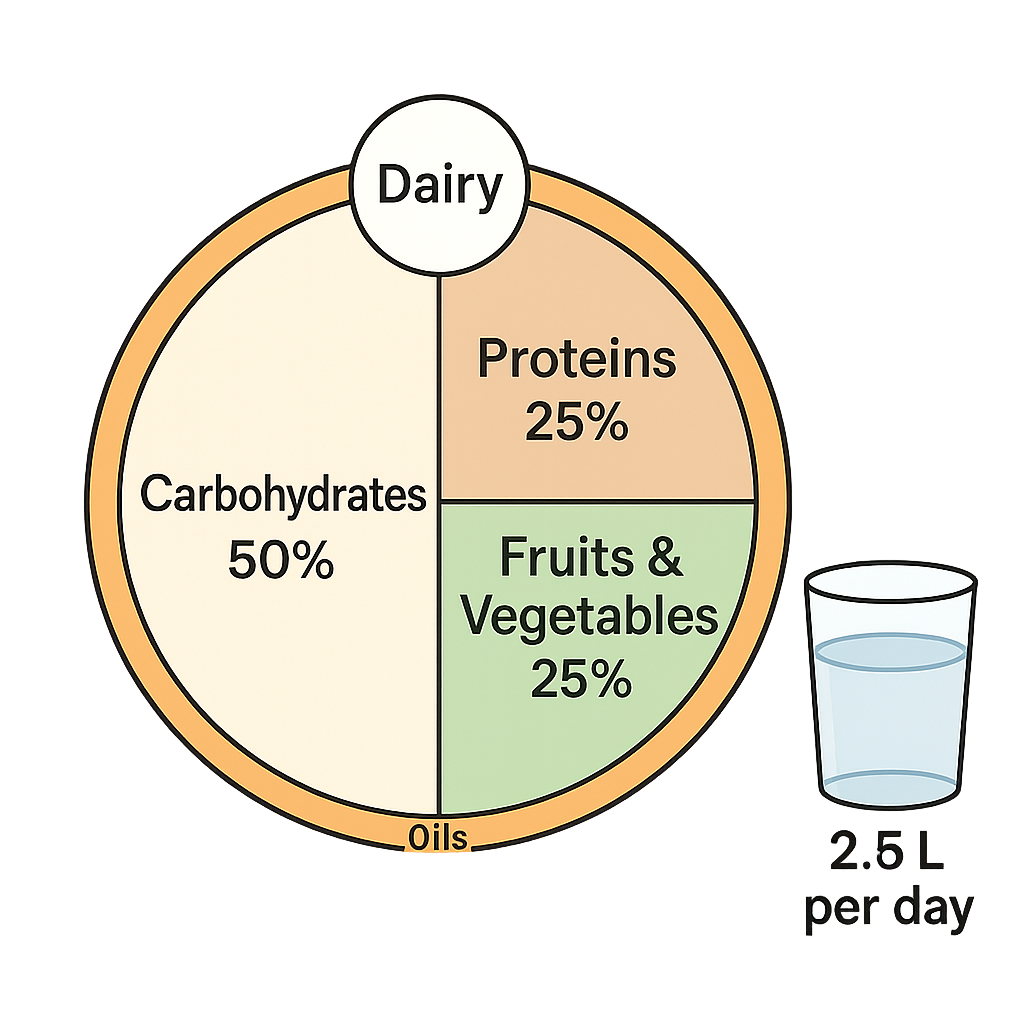
Question 3 View Details
The diagram shows a labelled plate model of a balanced diet as recommended by the Nigerian Food Guide. The plate is divided into sections for Carbohydrates, Proteins, Fruits & Vegetables, Dairy, Oils, and a separate illustration indicating a daily water intake of 2.5 litres.
Question Parts
(a)
Identify the three major macronutrients displayed on the plate and state the primary physiological role of each in the human body.
(b)
The plate indicates that 50 % of a meal should be carbohydrate‑rich foods, 25 % protein‑rich foods and the remaining 25 % fruits & vegetables. If a person eats a 600 g meal that follows this proportion, calculate the mass (in grams) of each food group.
(c)
Explain how a deficiency of vitamin A could affect the visual system, linking your answer to the structure and function of the retina.
(d)
The diagram also shows a recommended daily water intake of 2.5 L. Discuss two physiological consequences of inadequate water intake in an adult.
Detailed Essay Solution & Marking Scheme Available

Get the step-by-step mathematical proofs, key points required by examiners, and a comprehensive breakdown from our AI Tutor.
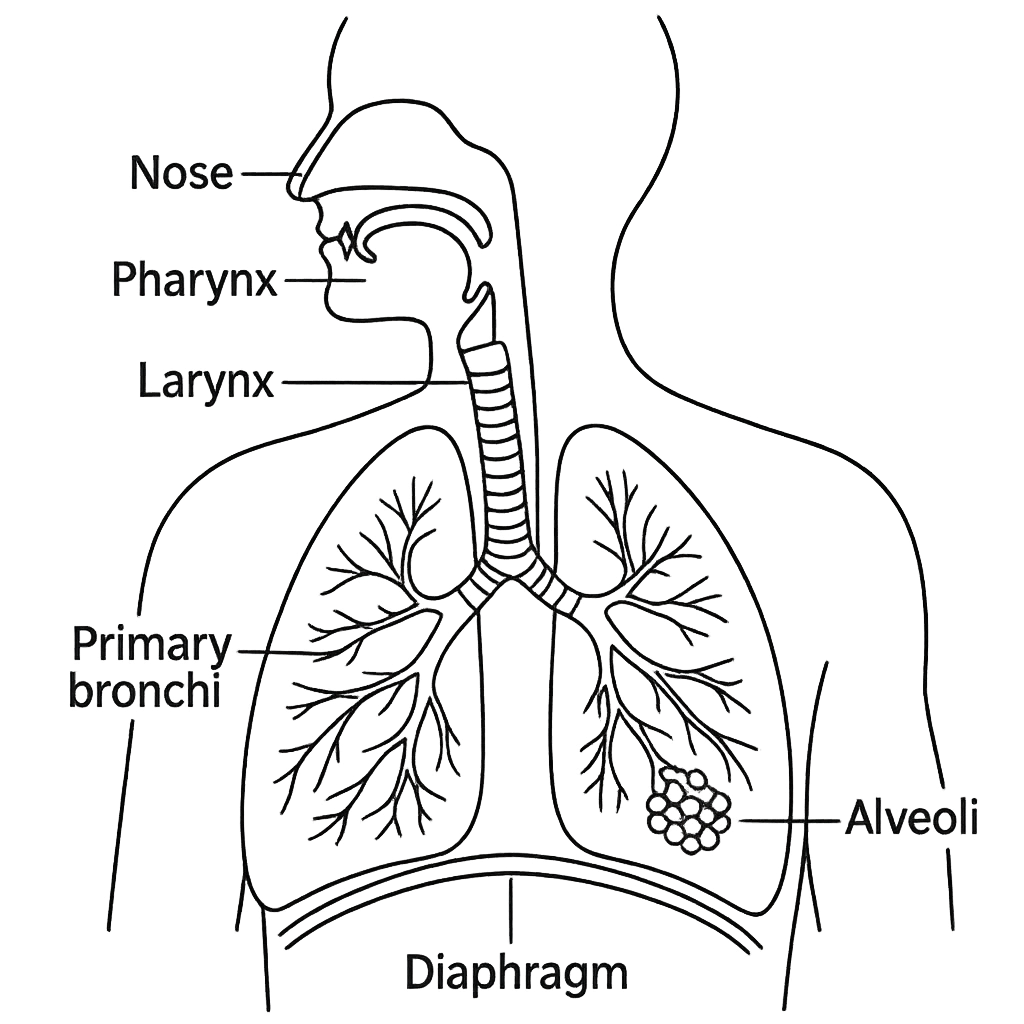
Question 4 View Details
The labelled diagram of the human respiratory system is provided. Using the diagram, answer the following questions.
Question Parts
(a)
Describe the complete pathway that air follows from the external environment to the site of gas exchange, naming each structure it passes through as shown in the diagram.
(b)
Explain the mechanism of gas exchange that occurs in the alveoli, including the role of partial pressure gradients and the structure of the respiratory membrane.
(c)
During quiet breathing the diaphragm (label D) contracts and moves downwards by 2 cm. If the lung compliance is 0.2 L·kPa⁻¹ and the average intrapleural pressure falls by 0.5 kPa, estimate the increase in lung volume (in litres) that results from this contraction.
(d)
A person ascends to a high altitude where the atmospheric PO₂ is 13 kPa (sea‑level PO₂ ≈ 21 kPa).
() List and briefly describe two physiological adaptations that help maintain oxygen supply at this altitude.
() Which anatomical part shown in the diagram is primarily responsible for increasing ventilation during quiet breathing?
Detailed Essay Solution & Marking Scheme Available

Get the step-by-step mathematical proofs, key points required by examiners, and a comprehensive breakdown from our AI Tutor.
Question 5 View Details
A researcher is studying water transport in a tall Eucalyptus tree that is 20 m high. Measurements of water potential (Ψ) are as follows: at the soil‑root interface Ψ = -0.2 MPa, at the base of the trunk Ψ = -0.5 MPa and at the leaf tip Ψ = -1.5 MPa. The average hydraulic conductivity (L) of the xylem is 5 \times 10^{-7} \text{ m}^3\text{ MPa}^{-1}\text{ s}^{-1}.
Question Parts
(a)
Explain the three main mechanisms that contribute to the upward movement of water in the tree, indicating which of the measured water potentials each mechanism primarily overcomes.
(b)
Using the given hydraulic conductivity, estimate the volumetric flow rate of water through the xylem (in cm³·s⁻¹). Show all calculation steps and state any assumptions you make.
(c)
Discuss two environmental factors that could reduce water‑transport efficiency in this tree and suggest one physiological adaptation the tree might possess to mitigate each factor.
Detailed Essay Solution & Marking Scheme Available

Get the step-by-step mathematical proofs, key points required by examiners, and a comprehensive breakdown from our AI Tutor.
Question 6 View Details
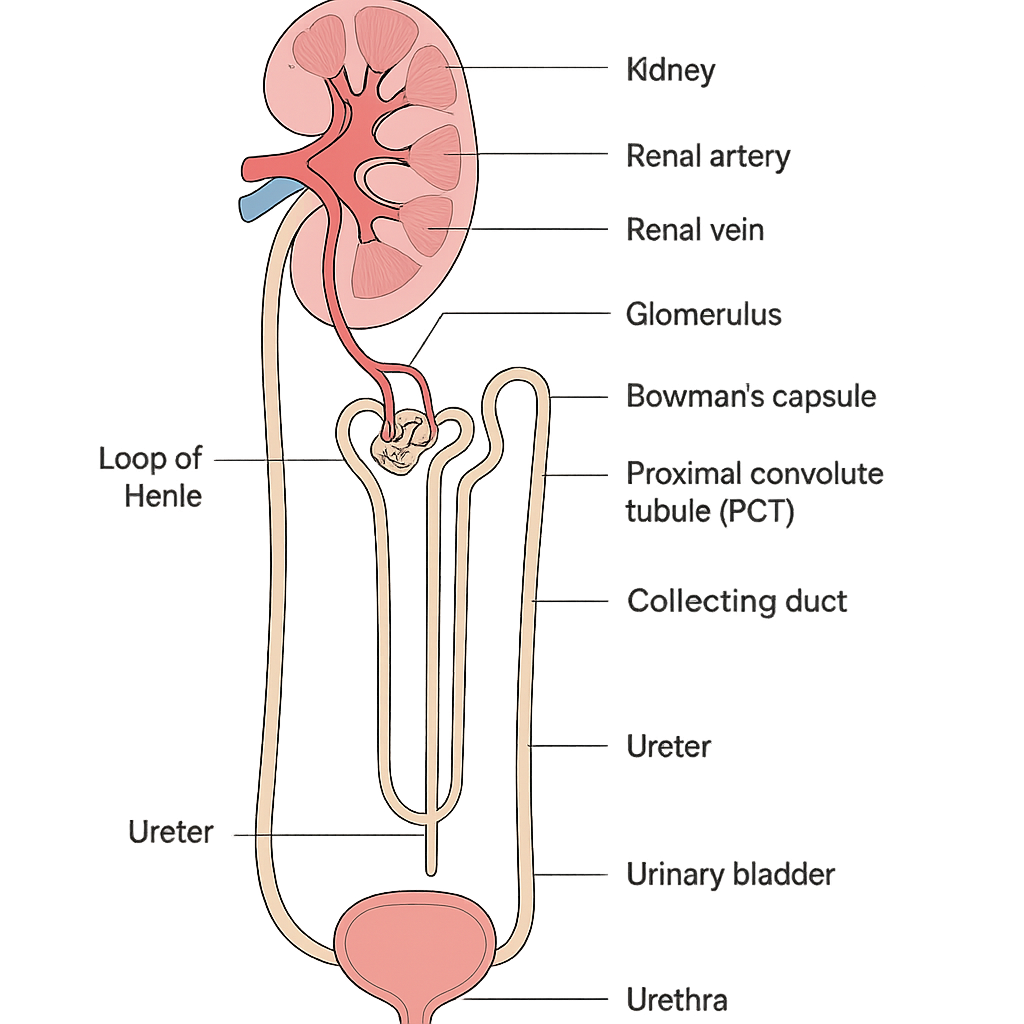
The diagram shows the human excretory system with the structures labelled as follows: Kidney (including the renal cortex and medulla), renal artery, renal vein, glomerulus, Bowman's capsule, proximal convoluted tubule (PCT), loop of Henle (descending and ascending limbs), distal convoluted tubule (DCT), collecting duct, ureter, urinary bladder and urethra.
Question Parts
(a)
Describe, in the correct sequential order, the pathway that the filtrate follows from its formation in the kidney to its excretion from the body. For each structure, state its specific function in the process of urine formation.
(b)
Explain how the loop of Henle contributes to the concentration of urine, making reference to the counter‑current multiplier mechanism.
(c)
A patient suffers from an obstruction in the ureter that prevents urine from passing into the urinary bladder. Predict the physiological consequences on kidney function and systemic blood pressure, and suggest two possible clinical interventions to relieve the condition.
(d)
If the glomerular filtration rate (GFR) is 125 mL per minute, calculate the approximate total volume of filtrate formed in one day. Briefly discuss how the subsequent reabsorption processes modify this volume before urine is excreted.
Detailed Essay Solution & Marking Scheme Available

Get the step-by-step mathematical proofs, key points required by examiners, and a comprehensive breakdown from our AI Tutor.

Question 7 View Details
The maintenance of the internal environment is essential for the survival of organisms. Consider the regulation of blood glucose concentration in humans.
Question Parts
(a)
Describe the negative‑feedback mechanism that controls blood glucose level, including the role of the pancreas, insulin, glucagon and the major target tissues.
(b)
A person with type 1 diabetes has insufficient insulin. Predict the short‑term and long‑term physiological consequences of this condition on blood glucose and body systems.
(c)
Propose a simple experimental procedure to investigate the effect of a carbohydrate‑rich meal on blood glucose level in healthy volunteers. Include hypothesis, variables, method of measurement and expected result.
Detailed Essay Solution & Marking Scheme Available

Get the step-by-step mathematical proofs, key points required by examiners, and a comprehensive breakdown from our AI Tutor.

Question 8 View Details
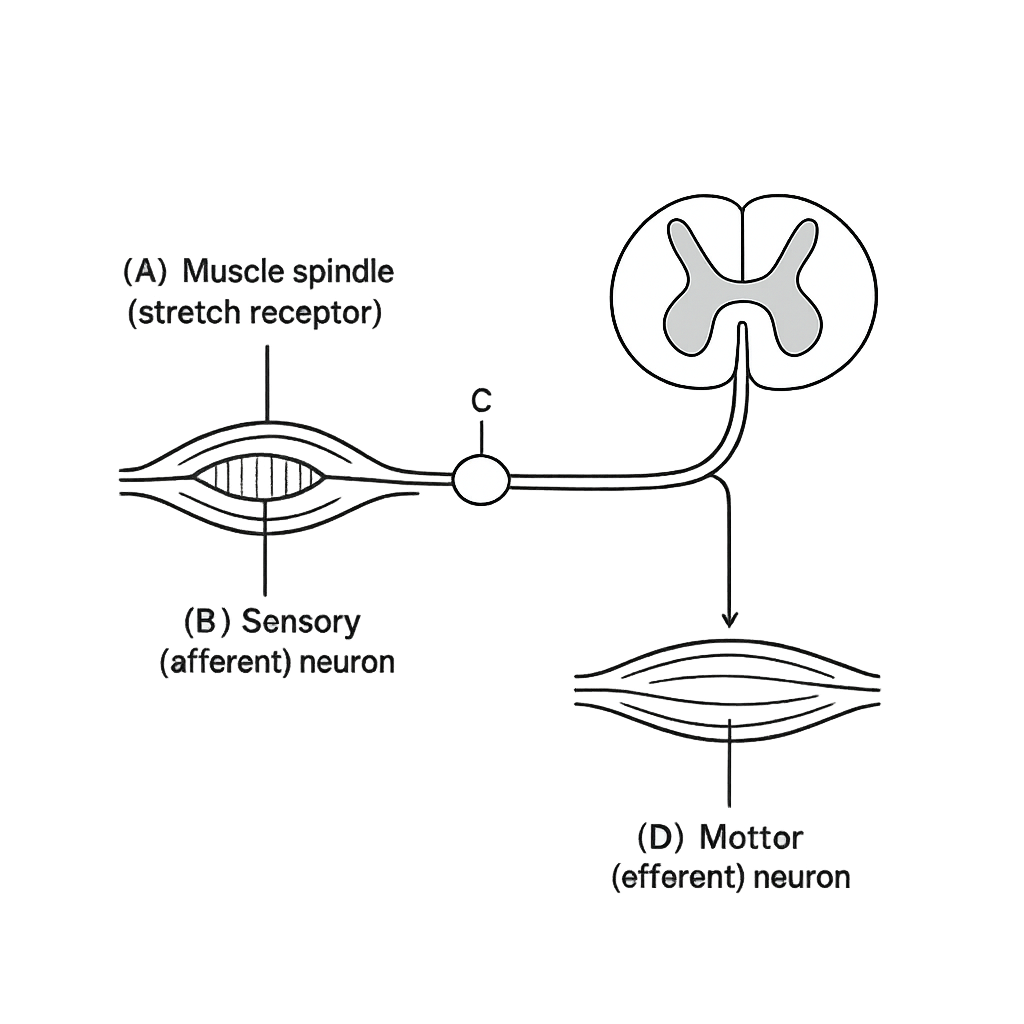
The diagram shows a simple spinal reflex arc involved in the regulation of muscle tone.
Question Parts
(a)
Describe, in order, the sequence of events that occur from the activation of the stretch receptor to the contraction of the skeletal muscle.
(b)
Explain how this reflex arc contributes to the coordination of voluntary movements.
(c)
Predict the likely effect on the reflex response if the dorsal root ganglion is damaged, and justify your answer.
(d)
Discuss how descending pathways from the brain can modify the magnitude of this reflex during a purposeful activity such as catching a ball.
Detailed Essay Solution & Marking Scheme Available

Get the step-by-step mathematical proofs, key points required by examiners, and a comprehensive breakdown from our AI Tutor.

Master the Exam!

You've seen a preview, but there are thousands more questions plus AI tutor to break down complex solutions.

Unlock Full Access Available for Android & Windows
Help others prepare! Share this practice hub:
Chat with Support