gce model questions vol1 2024 chemistry | Essay

Prepare for your exams with gce model questions vol1 questions? Reviewing past/model questions is one of the most effective ways to guarantee a high score. This practice hub features authentic 2024 chemistry (Essay) questions designed to simulate the real exam environment.

Practice these randomly selected questions to test your readiness.
Question 1 View Details
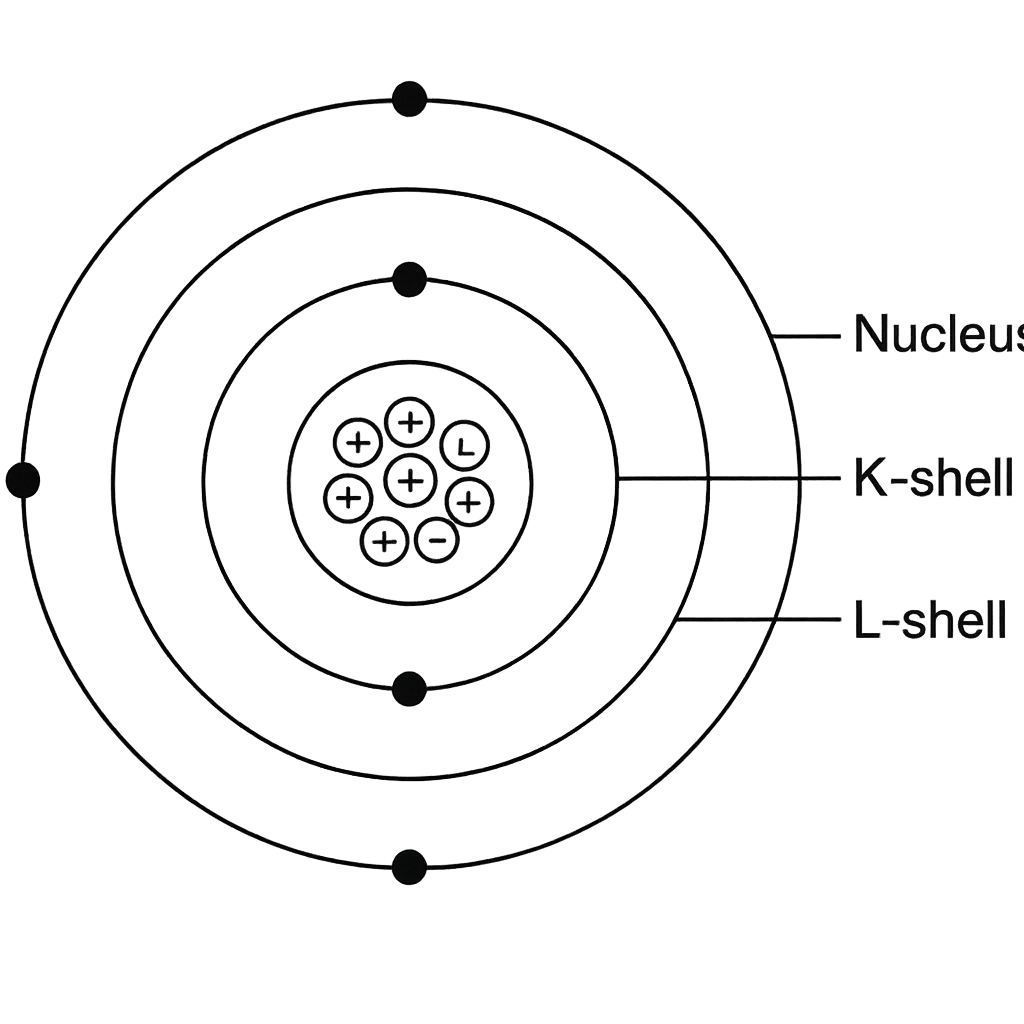
The diagram shows a phosphorus atom (atomic number 15, mass number 31) with its nucleus and three electron shells labelled K, L and M.
Question Parts
(a)
State the number of protons, neutrons and electrons present in a neutral phosphorus atom.
(b)
Write the full electron configuration of phosphorus using the notation 1s² 2s² 2p⁶ 3s² 3p³.
(c)
Phosphorus commonly forms a P³⁻ ion. Explain, with reference to the diagram, how the ion is formed and calculate the new number of electrons and the overall charge on the ion.
(d)
A natural sample of phosphorus contains 95 % ^31P and 5 % ^32P (mass numbers 31 and 32 respectively). Using the diagram, calculate the average atomic mass of the sample.
Detailed Essay Solution & Marking Scheme Available

Get the step-by-step mathematical proofs, key points required by examiners, and a comprehensive breakdown from our AI Tutor.
Question 2 View Details
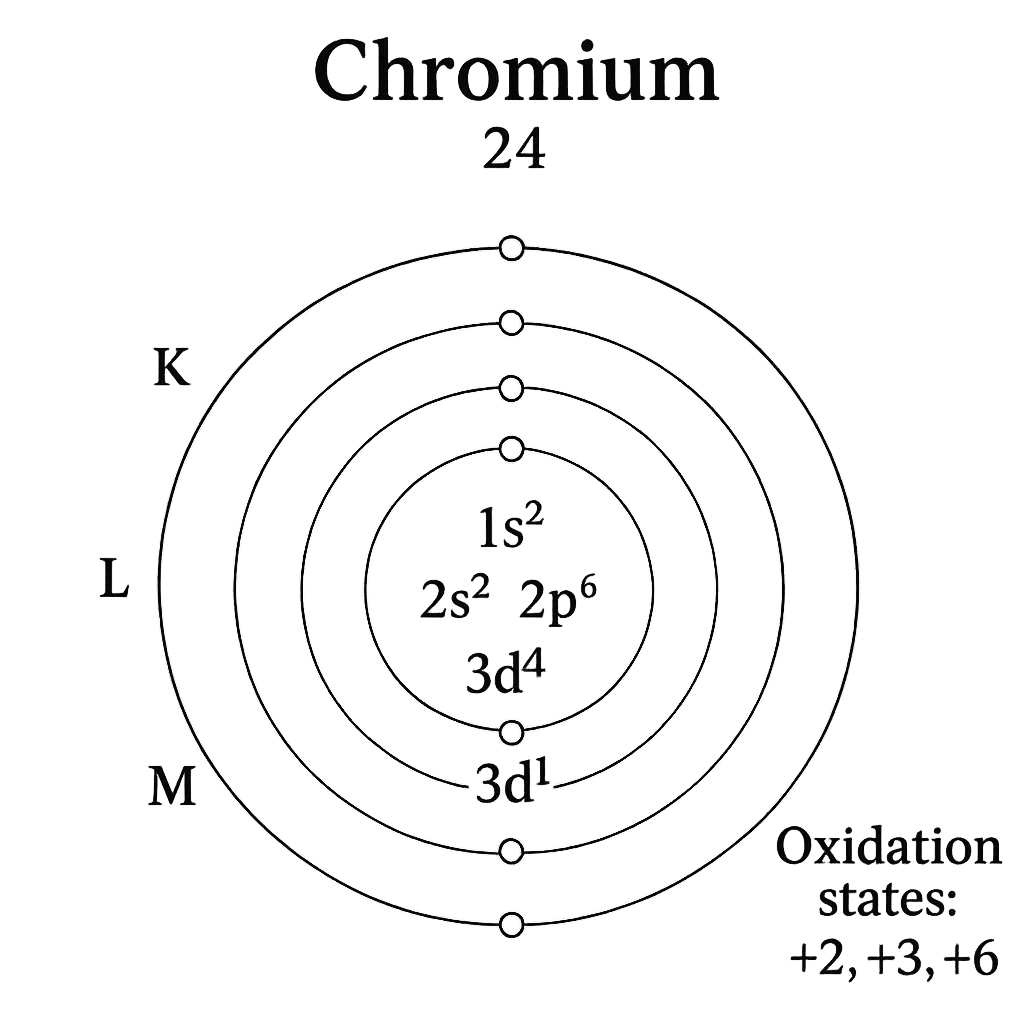
The diagram shows a neutral atom of the element with atomic number 24. The electron shells are labelled K, L, M and N and the distribution of electrons in each subshell is indicated as follows: 1s² 2s² 2p⁶ 3s² 3p⁶ 3d⁴ 4s². The diagram also lists the common oxidation states observed for this element (+2, +3 and +6).
Question Parts
(a)
Write the ground‑state electron configuration of the element in spectroscopic (noble‑gas) notation.
(b)
Explain, with reference to the electron configuration shown, why the element most commonly exhibits a +3 oxidation state rather than the expected +2 or +4 state.
(c)
Using Slater’s rules, calculate the effective nuclear charge (Z_eff) experienced by a 3d electron in the neutral atom. Show all steps.
(d)
Discuss how the calculated Z_eff influences the size of the 3d orbital and the chemical behaviour of the element compared with the other members of its group.
Detailed Essay Solution & Marking Scheme Available

Get the step-by-step mathematical proofs, key points required by examiners, and a comprehensive breakdown from our AI Tutor.
Question 3 View Details
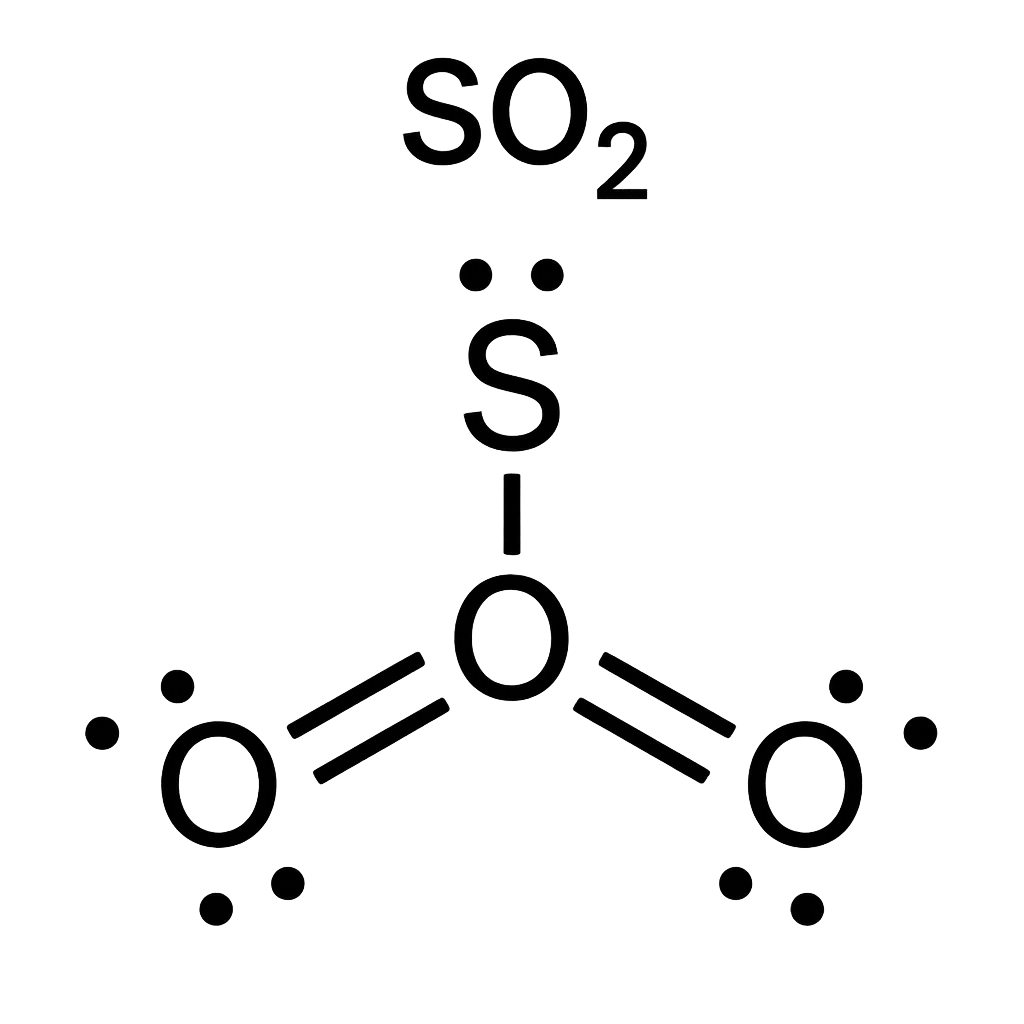
The diagram shows the Lewis structure of the molecule sulphur dioxide (SO₂).
Question Parts
(a)
Identify the central atom and state the number of valence electrons that appear around each atom in the Lewis structure.
(b)
Determine the hybridisation of the central sulphur atom and give the ideal bond angle between the S–O bonds.
(c)
Using the information above, state whether SO₂ is polar or non‑polar and justify your answer.
Detailed Essay Solution & Marking Scheme Available

Get the step-by-step mathematical proofs, key points required by examiners, and a comprehensive breakdown from our AI Tutor.
Question 4 View Details
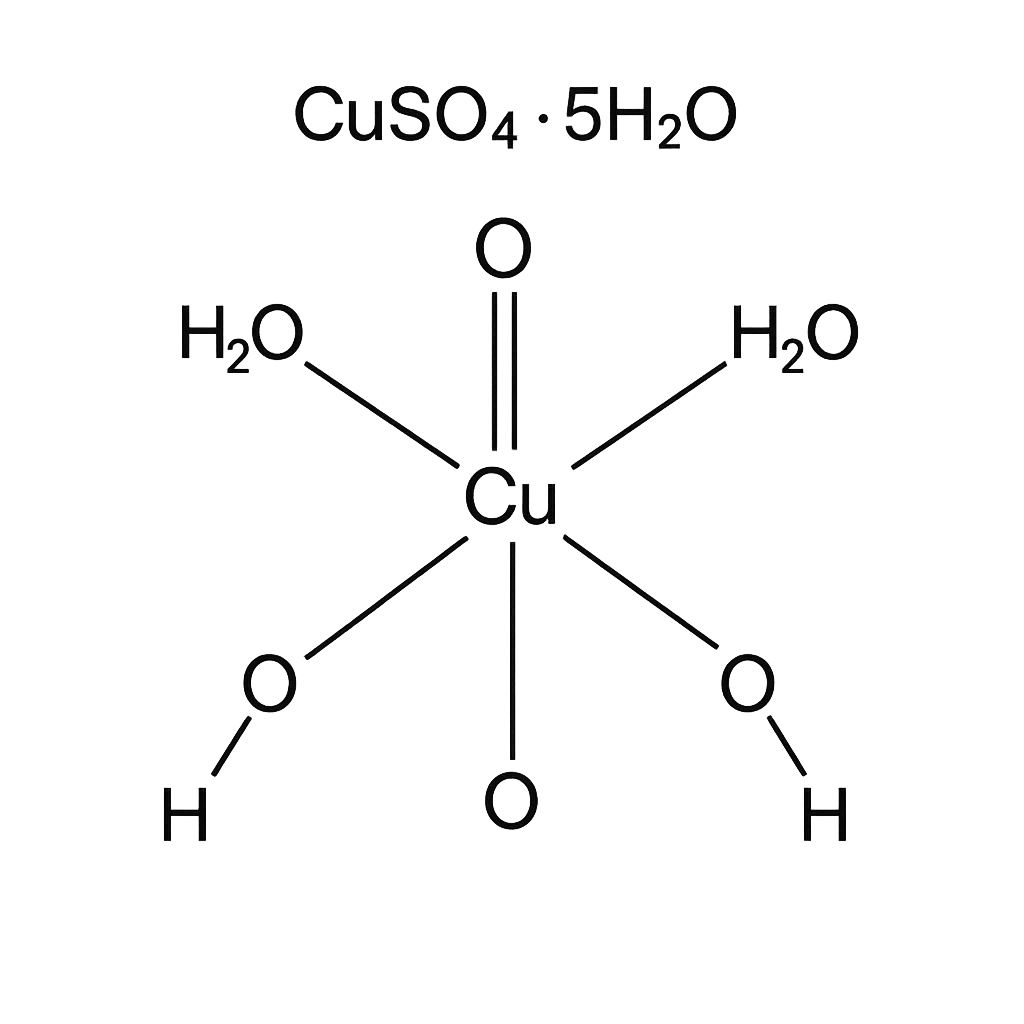
The diagram shows the structural formula of copper(II) sulfate pentahydrate, CuSO4·5H2O. The compound consists of a Cu²⁺ ion coordinated to a tetrahedral sulfate (SO4) group and five water molecules attached to the copper ion.
Question Parts
(a)
Write the empirical formula of the compound shown and state the total number of atoms present in one formula unit.
(b)
Calculate the mass percent of water in the hydrate.
(c)
A 12.5 g sample of the hydrate is heated until it becomes completely anhydrous. Determine (i) the mass of anhydrous CuSO4 obtained and (ii) the mass of water lost.
(d)
The anhydrous CuSO4 obtained is dissolved in water to prepare 250 cm³ of a solution that contains exactly 0.200 mol of CuSO4. Calculate (i) the concentration of the solution in g L⁻¹ and (ii) the approximate volume of water (in cm³) required, assuming the density of water is 1.00 g cm⁻³ and the volume contributed by the solute is negligible.
Detailed Essay Solution & Marking Scheme Available

Get the step-by-step mathematical proofs, key points required by examiners, and a comprehensive breakdown from our AI Tutor.

Question 5 View Details
A 2.50 g sample of a solid mixture containing pure calcium carbonate (CaCO₃) and an inert impurity is reacted with excess hydrochloric acid according to the equation: CaCO₃ + 2 HCl → CaCl₂ + CO₂ + H₂O. The volume of CO₂ gas collected over water at 25 °C and 760 mmHg is 1.12 L. The vapour pressure of water at 25 °C is 23.8 mmHg. The impurity does not react with HCl. (a) Determine the mass of CaCO₃ present in the original sample. (b) Calculate the percentage purity of the sample. (c) If the same 2.50 g sample were instead heated to decompose the CaCO₃ completely (CaCO₃ → CaO + CO₂) and the mass of CaO obtained was 0.85 g, discuss any discrepancy between the two methods and suggest possible reasons.
Question Parts
(a)
Determine the mass of CaCO₃ present in the original sample.
(b)
Calculate the percentage purity of the sample.
(c)
If the same 2.50 g sample were instead heated to decompose the CaCO₃ completely (CaCO₃ → CaO + CO₂) and the mass of CaO obtained was 0.85 g, discuss any discrepancy between the two methods and suggest possible reasons.
Detailed Essay Solution & Marking Scheme Available

Get the step-by-step mathematical proofs, key points required by examiners, and a comprehensive breakdown from our AI Tutor.

Question 6 View Details
A sealed rigid container of volume 5.00 L contains 0.80 mol of nitrogen gas (N₂) at 298 K. The container is then heated to 350 K. (a) Calculate the final pressure of the gas, assuming ideal behaviour. (b) Using the van der Waals constants for N₂ (a = 1.39 L²·atm·mol⁻², b = 0.0391 L·mol⁻¹), calculate the corrected pressure at 350 K. (c) Explain, with reference to intermolecular forces and molecular volume, why the real pressure differs from the ideal pressure. (d) Sketch a qualitative P–T phase diagram for nitrogen, indicating the positions of the initial and final states and the critical point.
Question Parts
(a)
Calculate the final pressure of the gas, assuming ideal behaviour.
(b)
Using the van der Waals constants for N₂ (a = 1.39 L²·atm·mol⁻², b = 0.0391 L·mol⁻¹), calculate the corrected pressure at 350 K.
(c)
Explain, with reference to intermolecular forces and molecular volume, why the real pressure differs from the ideal pressure.
(d)
Sketch a qualitative P–T phase diagram for nitrogen, indicating the positions of the initial (298 K, 3.7 atm) and final (350 K, 3.6 atm) states and the critical point.
Detailed Essay Solution & Marking Scheme Available

Get the step-by-step mathematical proofs, key points required by examiners, and a comprehensive breakdown from our AI Tutor.

Question 7 View Details
A buffer solution is prepared by dissolving 0.250 mol of acetic acid (CH₃COOH, Ka = 1.8 × 10⁻⁵) and 0.200 mol of sodium acetate (CH₃COONa) in enough water to give a total volume of 1.00 L.
Question Parts
(a)
Calculate the pH of the buffer solution.
(b)
If 0.050 mol of a strong acid (HCl) is added to the buffer (volume remains 1.00 L), calculate the new pH of the solution.
(c)
Explain, in terms of the acid‑base equilibrium, why the buffer resists a large change in pH when the strong acid is added.
(d)
Suggest a suitable indicator for titrating this buffer with NaOH and justify your choice based on its colour‑change range.
Detailed Essay Solution & Marking Scheme Available

Get the step-by-step mathematical proofs, key points required by examiners, and a comprehensive breakdown from our AI Tutor.

Question 8 View Details
Calcium fluoride (CaF₂) is sparingly soluble in water. Its solubility product at 25 °C is Ksp = 3.9 × 10⁻¹¹. At 60 °C the Ksp rises to 1.2 × 10⁻¹⁰. The dissolution equilibrium is CaF₂(s) ⇌ Ca²⁺ + 2 F⁻.
Question Parts
(a)
Calculate the molar solubility (s) of CaF₂ in pure water at 25 °C.
(b)
If the solution already contains 0.010 M NaF, determine the solubility of CaF₂ under these conditions (assume the added fluoride does not change the volume).
Detailed Essay Solution & Marking Scheme Available

Get the step-by-step mathematical proofs, key points required by examiners, and a comprehensive breakdown from our AI Tutor.

Question 9 View Details
In an acidic solution, potassium permanganate (KMnO4) is used to oxidise ferrous ions (Fe2+) to ferric ions (Fe3+). The relevant standard reduction potentials at 25 °C are: MnO4⁻ + 8H⁺ + 5e⁻ → Mn²⁺ + 4H₂O E° = +1.51 V Fe³⁺ + e⁻ → Fe²⁺ E° = +0.77 V (a) Write the balanced overall redox equation for the reaction. (b) Calculate the standard cell potential (E°cell) for the process. (c) State whether the reaction is spontaneous under standard conditions and justify your answer. (d) If 10.0 g of FeSO₄ (containing Fe²⁺) is to be completely oxidised in excess acid, calculate the mass of KMnO₄ required, assuming 100 % yield. (Molar masses: Fe = 55.85 g mol⁻¹, MnO₄⁻ = 118.94 g mol⁻¹).
Question Parts
(a)
Write the balanced overall redox equation for the reaction.
(b)
Calculate the standard cell potential (E°cell) for the process.
(c)
State whether the reaction is spontaneous under standard conditions and justify your answer.
(d)
If 10.0 g of FeSO₄ is to be completely oxidised in excess acid, calculate the mass of KMnO₄ required, assuming 100 % yield.
Detailed Essay Solution & Marking Scheme Available

Get the step-by-step mathematical proofs, key points required by examiners, and a comprehensive breakdown from our AI Tutor.

Question 10 View Details
A galvanic cell is constructed with a copper electrode immersed in 0.010 M Cu²⁺ solution and a zinc electrode immersed in 0.10 M Zn²⁺ solution at 25 °C. Standard reduction potentials are: Cu²⁺ + 2e⁻ → Cu E° = +0.34 V Zn²⁺ + 2e⁻ → Zn E° = –0.76 V (a) Write the overall cell reaction and calculate the standard electromotive force (E°cell). (b) Using the Nernst equation, determine the cell potential (Ecell) under the given concentrations. (c) If the cell operates until 0.001 mol of copper is deposited on the copper electrode (the solutions are each 1.00 L and concentrations are assumed to remain essentially constant), calculate the new cell potential. (d) Briefly discuss how an increase in temperature would affect the cell potential, citing the relevant thermodynamic relationship.
Question Parts
(a)
Write the overall cell reaction and calculate the standard electromotive force (E°cell).
(b)
Using the Nernst equation, determine the cell potential (Ecell) under the given concentrations.
(c)
If the cell operates until 0.001 mol of copper is deposited on the copper electrode (the solutions are each 1.00 L and concentrations are assumed to remain essentially constant), calculate the new cell potential.
Detailed Essay Solution & Marking Scheme Available

Get the step-by-step mathematical proofs, key points required by examiners, and a comprehensive breakdown from our AI Tutor.

Master the Exam!

You've seen a preview, but there are thousands more questions plus AI tutor to break down complex solutions.

Unlock Full Access Available for Android & Windows
Help others prepare! Share this practice hub:
Chat with Support