gce model questions vol1 2024 biology | Essay

Prepare for your exams with gce model questions vol1 questions? Reviewing past/model questions is one of the most effective ways to guarantee a high score. This practice hub features authentic 2024 biology (Essay) questions designed to simulate the real exam environment.

Practice these randomly selected questions to test your readiness.
Question 1 View Details
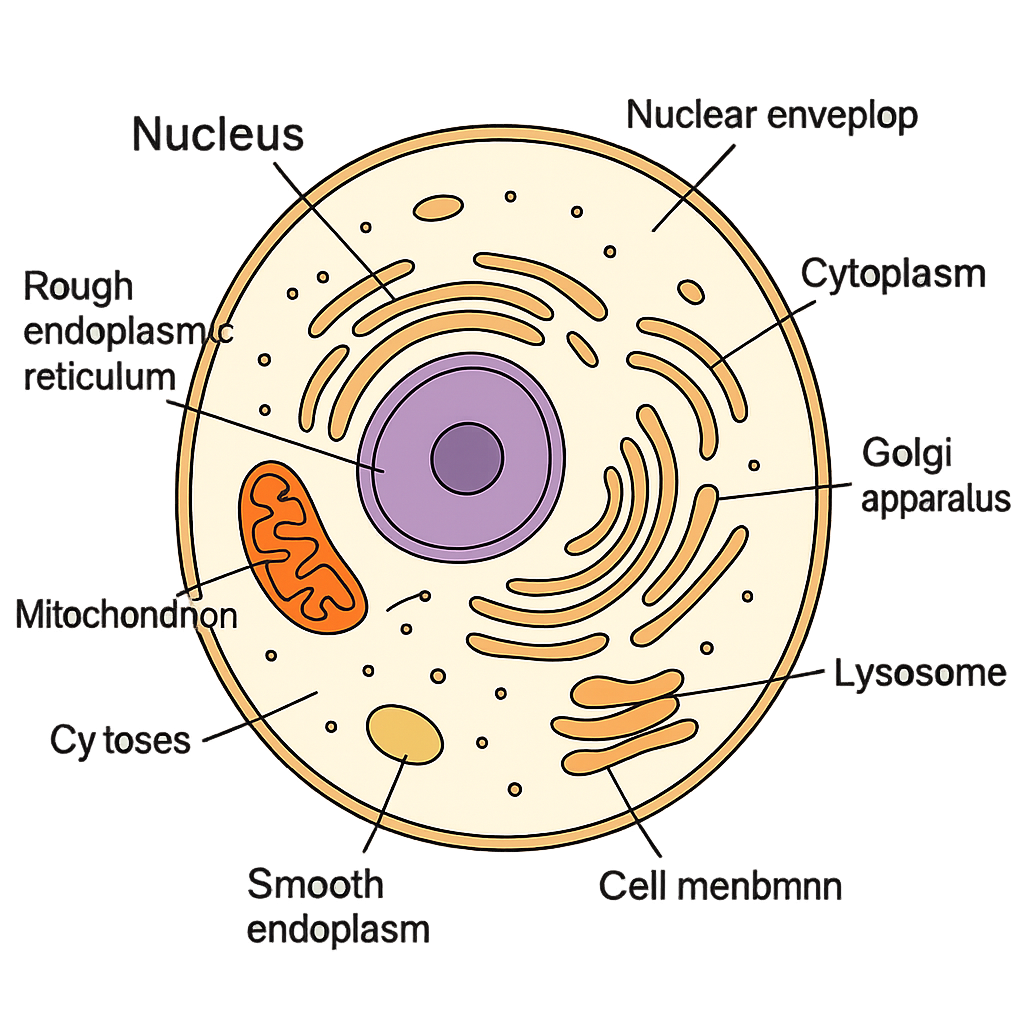
The diagram shows a typical eukaryotic animal cell.
Question Parts
(a)
List all the labelled structures shown in the diagram.
(b)
For each of the following organelles – mitochondrion, rough endoplasmic reticulum, and lysosome – describe its main function.
(c)
Explain the structure–function relationship of the plasma membrane in relation to (i) passive diffusion and (ii) active transport.
Detailed Essay Solution & Marking Scheme Available

Get the step-by-step mathematical proofs, key points required by examiners, and a comprehensive breakdown from our AI Tutor.
Question 2 View Details
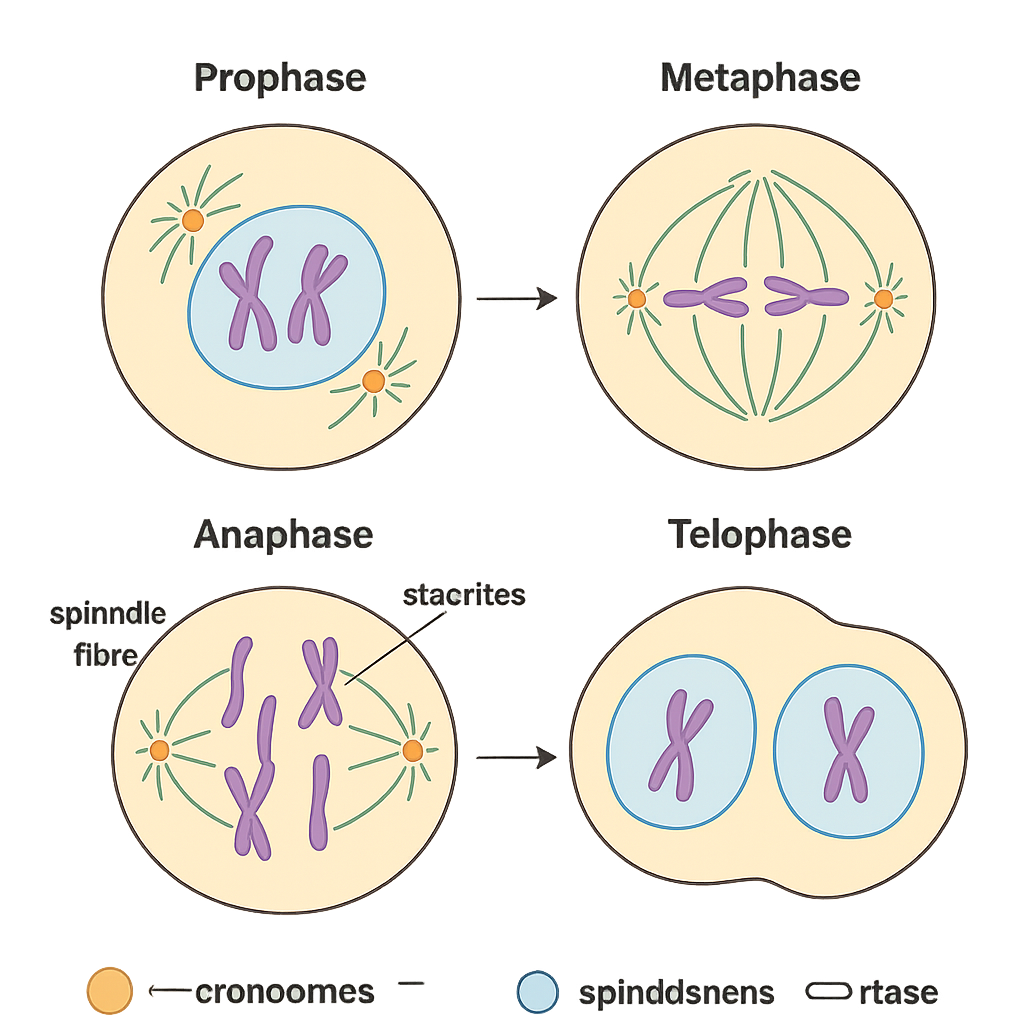
The diagram illustrates the sequential stages of mitosis in a typical animal cell.
Question Parts
(a)
Name the four principal phases shown in the diagram in the correct order.
(b)
For each phase, state one key event that characterises that phase.
(c)
Explain the role of spindle fibres in chromosome segregation during mitosis.
(d)
Compare mitosis with meiosis in terms of (i) number of daughter cells produced and (ii) genetic composition of the daughter cells.
Detailed Essay Solution & Marking Scheme Available

Get the step-by-step mathematical proofs, key points required by examiners, and a comprehensive breakdown from our AI Tutor.
Question 3 View Details
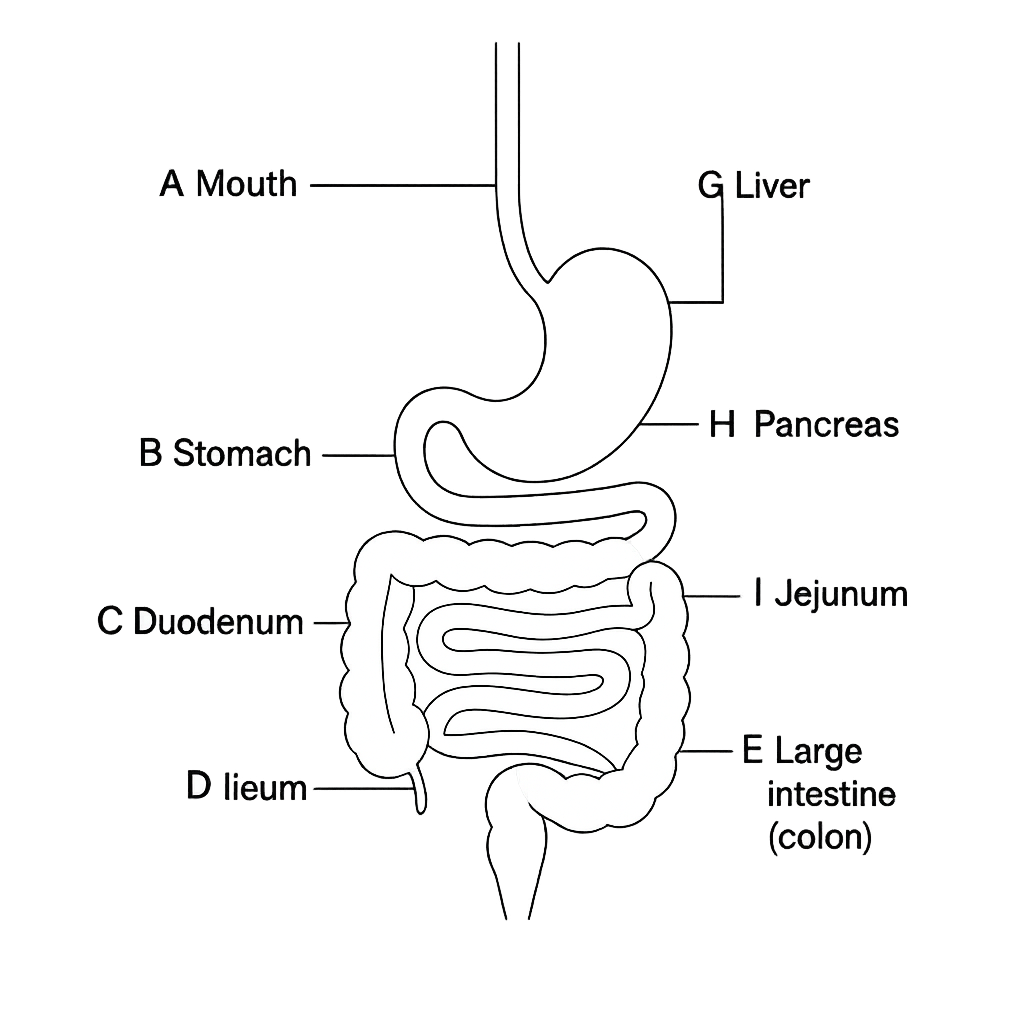
The diagram shows the human digestive system with the parts labelled A to H.
Question Parts
(a)
Identify the structures labelled B, C and F in the diagram.
(b)
Explain the role of the Stomach in the chemical digestion of proteins.
(c)
Discuss how the structure of the small intestine enhances nutrient absorption.
(d)
A diet high in dietary fibre reaches the Large intestine largely undigested. Using the diagram, explain how the Large intestine processes this fibre and its significance for water balance.
Detailed Essay Solution & Marking Scheme Available

Get the step-by-step mathematical proofs, key points required by examiners, and a comprehensive breakdown from our AI Tutor.
Question 4 View Details
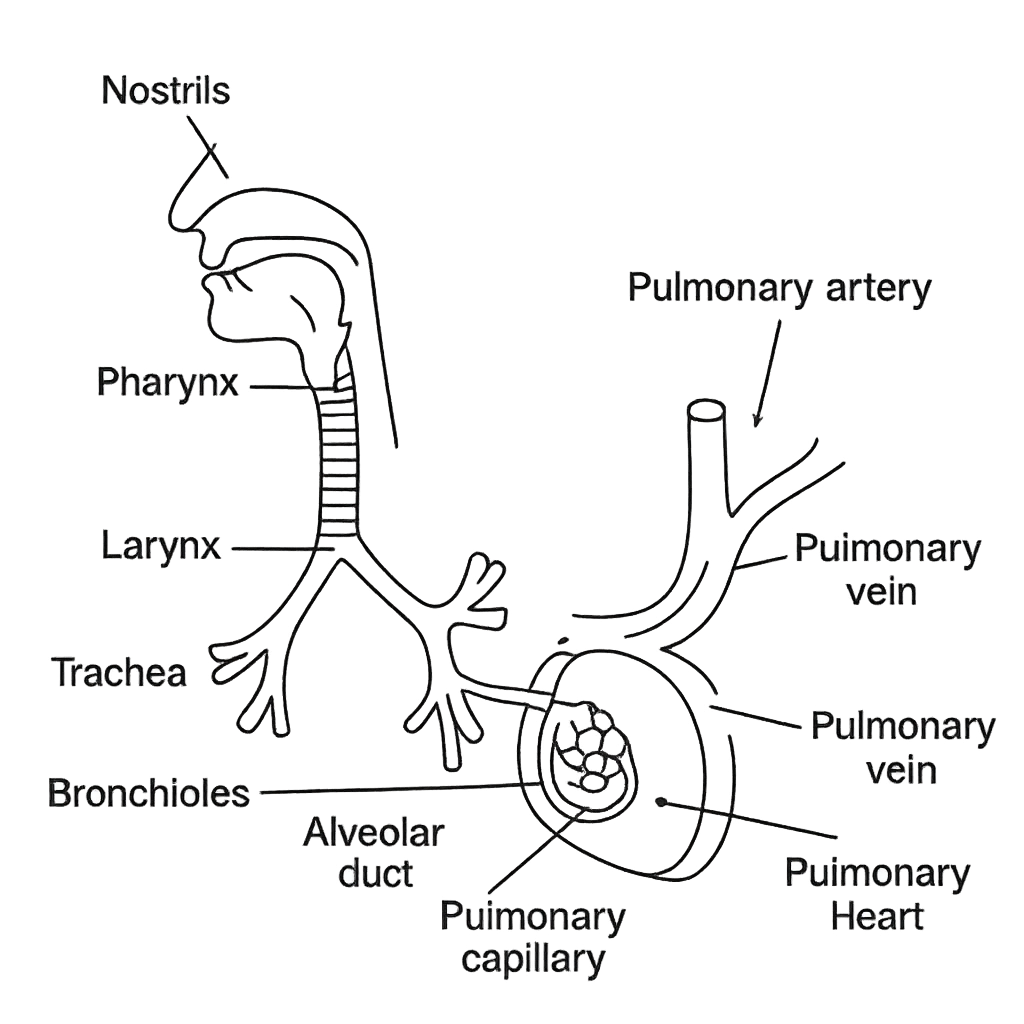
The labelled diagram illustrates the pathway of air from the external environment to the alveoli and the return pathway of blood from the alveoli to the heart in the human respiratory system.
Question Parts
(a)
Describe, in the correct order, the route taken by inhaled air from the nostrils to the alveoli, naming each structure shown in the diagram.
(b)
Explain the mechanism of gas exchange at the alveolar‑capillary membrane, including the role of partial pressure gradients and haemoglobin.
(c)
Compare the transport of oxygen and carbon dioxide in the blood, stating the principal forms in which each gas is carried and the physiological reason for these differences.
Detailed Essay Solution & Marking Scheme Available

Get the step-by-step mathematical proofs, key points required by examiners, and a comprehensive breakdown from our AI Tutor.

Question 5 View Details
A mature tropical tree, 30 m tall, is growing in a region where the soil water is relatively dilute. The following data are recorded: - At the root surface the solute concentration in the xylem sap is 0.01 mol L⁻¹ and the pressure potential is +0.20 MPa. - At the leaf petiole the solute concentration in the xylem sap is 0.05 mol L⁻¹ and the pressure potential is –0.30 MPa (tension). - Temperature is 25 °C. Assume the solute is non‑ionic (i = 1) and use the relation ψs = –i C R T, where R = 0.0831 L bar K⁻¹ mol⁻¹ and 1 bar = 0.10 MPa. Answer the following:
Question Parts
(a)
Calculate the water potential (ψ) at the root surface and at the leaf petiole.
(b)
State the direction of water movement in the plant and justify your answer using the values obtained in (a).
(c)
Explain how the cohesion‑tension theory accounts for the ascent of water from the roots to the leaves in this tree.
(d)
Suggest two physiological adaptations that could help this tree survive a prolonged drought period and briefly justify each adaptation.
Detailed Essay Solution & Marking Scheme Available

Get the step-by-step mathematical proofs, key points required by examiners, and a comprehensive breakdown from our AI Tutor.

Question 6 View Details
A 28‑year‑old adult is undergoing routine renal function testing. The following pressures are measured in the glomerular capillaries and Bowman's capsule: - Glomerular hydrostatic pressure (Pgc) = 55 mmHg - Bowman's capsule hydrostatic pressure (Pbc) = 15 mmHg - Plasma oncotic pressure (πgc) = 30 mmHg The filtration coefficient (Kf) for the kidneys is 12.5 mL min⁻¹ mmHg⁻¹. Answer the following questions:
Question Parts
(a)
Calculate the net filtration pressure and the glomerular filtration rate (GFR) for this individual.
(b)
If the plasma protein concentration rises, increasing the oncotic pressure to 35 mmHg while the other pressures remain unchanged, determine the new GFR and comment on the physiological significance of this change.
(c)
A drug that specifically inhibits the Na⁺/K⁺‑ATPase in the renal tubular epithelial cells is administered. Discuss how this inhibition would affect urine volume, urine concentration and the composition of the urine.
Detailed Essay Solution & Marking Scheme Available

Get the step-by-step mathematical proofs, key points required by examiners, and a comprehensive breakdown from our AI Tutor.

Question 7 View Details
The maintenance of blood glucose concentration within a narrow range is a classic example of homeostasis in humans.
Question Parts
(a)
Describe the negative‑feedback loop that regulates blood glucose concentration, naming all the major components involved.
(b)
Explain how insulin and glucagon act on their target tissues to restore normal glucose levels after a meal and during fasting respectively.
(c)
Predict the immediate and longer‑term effects on blood glucose concentration if the pancreatic β‑cells are destroyed (as in type 1 diabetes).
(d)
Evaluate two lifestyle interventions that can help a person with type 1 diabetes maintain glucose homeostasis, explaining the physiological basis for each.
Detailed Essay Solution & Marking Scheme Available

Get the step-by-step mathematical proofs, key points required by examiners, and a comprehensive breakdown from our AI Tutor.

Question 8 View Details
Coordination of movement in the human body relies on the integrated operation of the nervous system.
Question Parts
(a)
Outline the structure of a typical monosynaptic stretch reflex arc and explain why it is important for maintaining posture.
(b)
Compare the pathways of somatic and autonomic nervous systems in terms of (i) number of neurones in the efferent limb, (ii) type of effectors, and (iii) typical physiological responses.
(c)
A patient suffers a complete transection of the spinal cord at the T12 level. Predict which of the following reflexes are likely to be preserved and which are lost: (i) patellar tendon reflex, (ii) plantar (Babinski) reflex, (iii) abdominal reflex, (iv) withdrawal reflex of the foot. Justify your answer.
(d)
Discuss how neuroplasticity can contribute to the recovery of coordinated movement after a spinal cord injury, citing at least two cellular or network mechanisms.
Detailed Essay Solution & Marking Scheme Available

Get the step-by-step mathematical proofs, key points required by examiners, and a comprehensive breakdown from our AI Tutor.

Question 9 View Details
Discuss the physiological regulation of the human menstrual cycle and evaluate two modern contraceptive methods in terms of their mechanism of action, effectiveness and possible side effects.
Question Parts
(a)
Outline the hormonal events of the menstrual cycle, indicating for each phase the principal hormone(s) involved and their source.
(b)
Explain how the feedback mechanisms between the hypothalamus, anterior pituitary and ovaries maintain the regularity of the cycle.
(c)
Evaluate two modern contraceptive methods:
() Combined oral contraceptive pill (COCP).
() Intra‑uterine contraceptive device (IUD).
Detailed Essay Solution & Marking Scheme Available

Get the step-by-step mathematical proofs, key points required by examiners, and a comprehensive breakdown from our AI Tutor.

Question 10 View Details
A pedigree shows a family in which a rare autosomal recessive disorder appears in two siblings but not in their parents. The disorder is caused by a mutation in gene X on chromosome 12. Gene X is linked to a marker locus M with a recombination frequency of 10 %. The marker alleles are M1 and M2. Affected children are homozygous recessive (xx).
Question Parts
(a)
Determine the most probable genotype of the parents for gene X and the marker locus M.
(b)
Assuming no crossing‑over between X and M, calculate the probability that a child born to these parents will be affected by the disorder.
(c)
Discuss how the 10 % recombination frequency modifies the probability obtained in part (b) and the implications for genetic counselling of this family.
Detailed Essay Solution & Marking Scheme Available

Get the step-by-step mathematical proofs, key points required by examiners, and a comprehensive breakdown from our AI Tutor.

Master the Exam!

You've seen a preview, but there are thousands more questions plus AI tutor to break down complex solutions.

Unlock Full Access Available for Android & Windows
Help others prepare! Share this practice hub:
Chat with Support