gce model questions vol1 2021 biology | Essay

Prepare for your exams with gce model questions vol1 questions? Reviewing past/model questions is one of the most effective ways to guarantee a high score. This practice hub features authentic 2021 biology (Essay) questions designed to simulate the real exam environment.

Practice these randomly selected questions to test your readiness.
Question 1 View Details
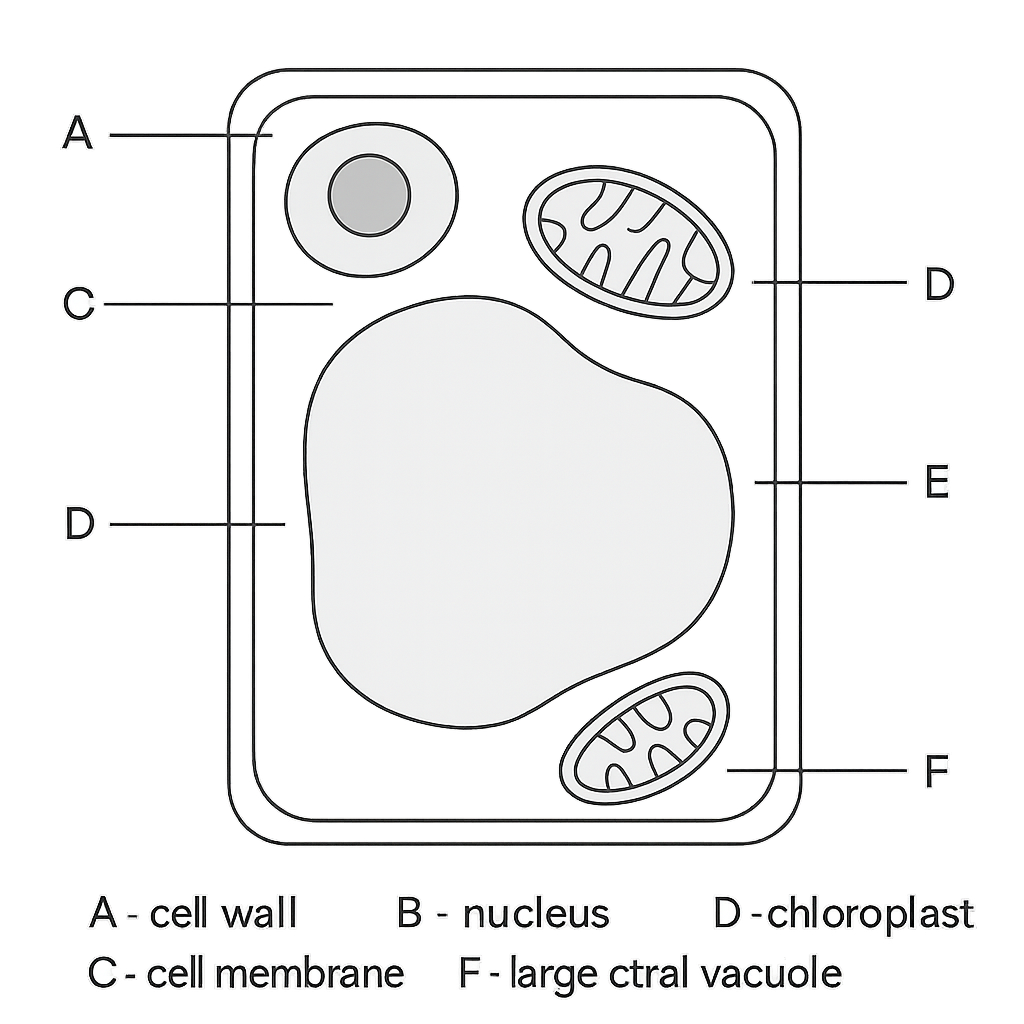
The diagram shows a typical plant cell with the structures labelled A–F.
Question Parts
(a)
Identify the six labelled structures (A–F) and state the primary function of each.
(b)
Compare the structure and function of the cell wall with the cell membrane.
(c)
Explain how the presence of chloroplasts contributes to the cell’s role in photosynthesis, including the role of thylakoid membranes.
(d)
Discuss two ways in which the cell maintains internal homeostasis using the organelles shown in the diagram.
Detailed Essay Solution & Marking Scheme Available

Get the step-by-step mathematical proofs, key points required by examiners, and a comprehensive breakdown from our AI Tutor.
Question 2 View Details
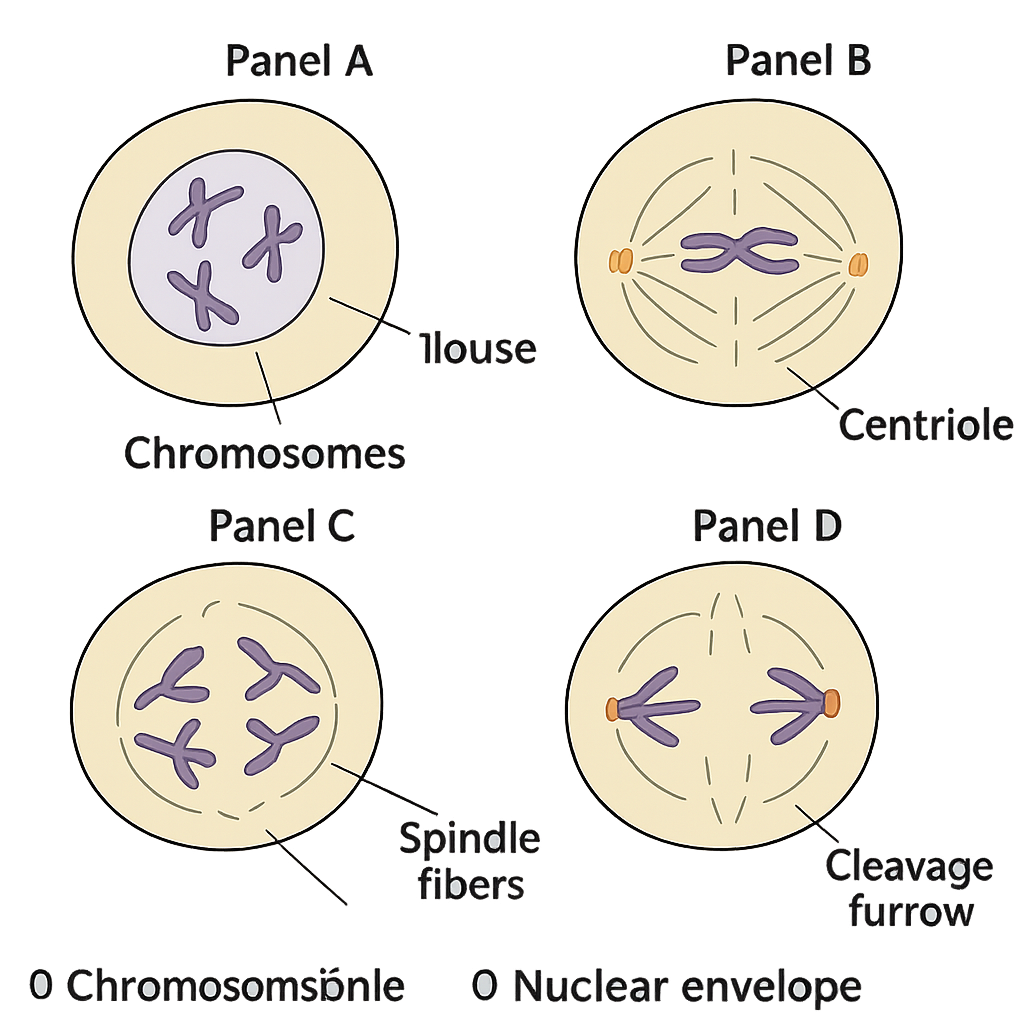
The labelled diagram shows an animal cell at successive stages of mitosis. Each panel (A, B, C and D) depicts a different stage and key structures such as chromosomes, spindle fibres and centrioles are indicated.
Question Parts
(a)
Identify the stage of mitosis represented in each panel (A, B, C and D).
(b)
For the stage you identified as Metaphase, describe (i) the arrangement of chromosomes and (ii) the role of the spindle fibres.
(c)
Compare mitosis with Meiosis I in terms of (i) chromosome number in the resulting cells and (ii) generation of genetic variation.
(d)
A somatic cell is diploid with 46 chromosomes. Calculate the number of chromosomes present in each daughter cell after (i) mitosis and (ii) Meiosis II. Show the reasoning for each calculation.
(e)
Discuss two biological situations where rapid cell division is advantageous and two situations where it can be detrimental. Provide a brief explanation for each case.
Detailed Essay Solution & Marking Scheme Available

Get the step-by-step mathematical proofs, key points required by examiners, and a comprehensive breakdown from our AI Tutor.
Question 3 View Details
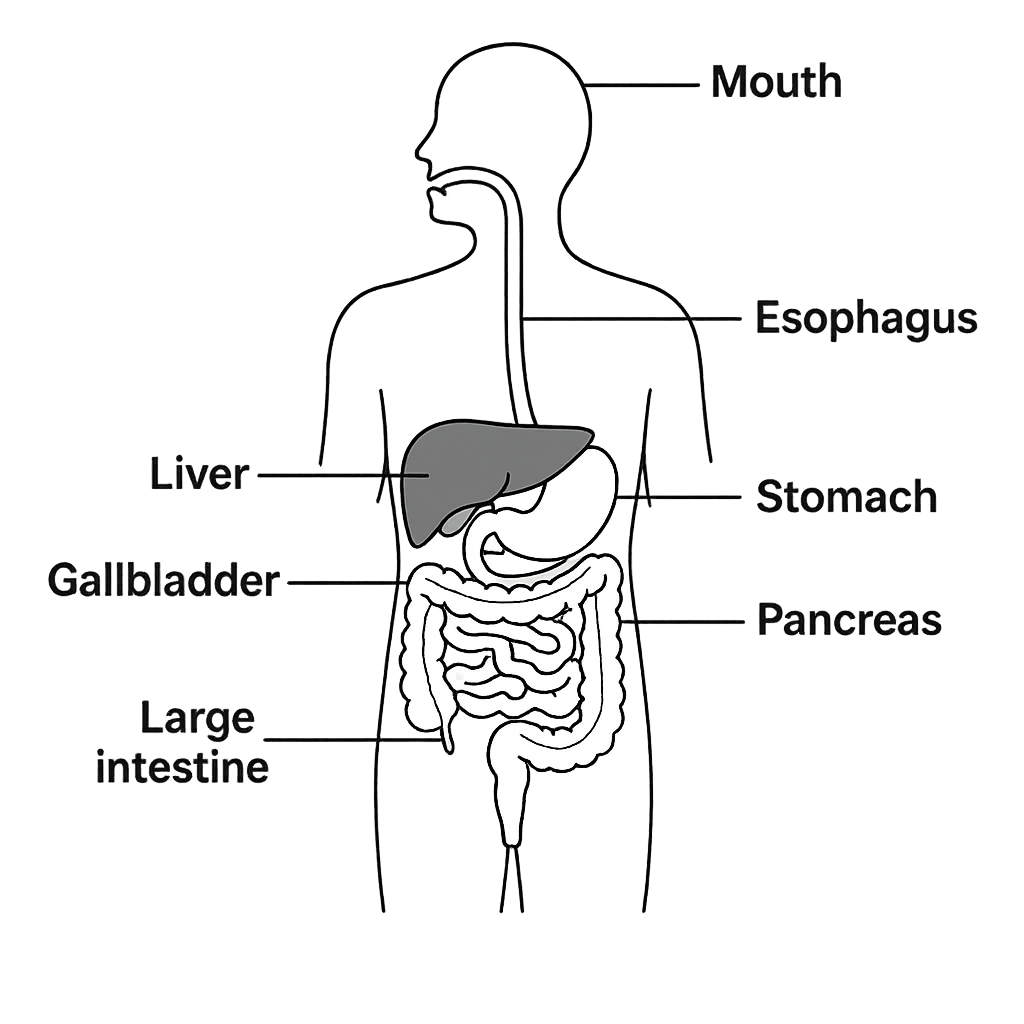
The diagram shows the human digestive system with the major organs labelled.
Question Parts
(a)
List the three main types of macronutrients and indicate which organ(s) in the diagram are primarily responsible for the initial digestion of each type.
(b)
For the small intestine, describe the specific processes by which carbohydrates are broken down, mentioning the enzymes involved and the role of the structures shown in the diagram.
(c)
A diet lacking in dietary fibre can lead to health problems. Using the diagram, explain how the absence of fibre affects the function of the large intestine and the overall digestive efficiency.
Detailed Essay Solution & Marking Scheme Available

Get the step-by-step mathematical proofs, key points required by examiners, and a comprehensive breakdown from our AI Tutor.

Question 4 View Details
The diagram shows the major structures of the human respiratory system.
Question Parts
(a)
Describe the pathway of air from the external environment to the site of gas exchange, naming each structure the air passes through.
(b)
Explain the process of external respiration that occurs in the alveoli, including the roles of partial pressure gradients and the respiratory membrane.
(c)
The diaphragm is a muscle that assists ventilation.
() Describe how contraction and relaxation of the diaphragm change thoracic volume and pressure, applying Boyle’s law to explain inhalation and exhalation.
() A person inhales 0.5 L of air per breath at sea level (760 mmHg, 25 °C). Assuming the temperature remains constant and that the thoracic cavity volume increases by 2.0 L from an initial volume of 5.0 L, calculate the change in pressure inside the thoracic cavity relative to atmospheric pressure during inhalation. Show your reasoning.
(d)
Smoking damages the respiratory system.
() List two structural changes in the respiratory tract caused by chronic smoking.
() Discuss how each change impairs the efficiency of gas exchange.
Detailed Essay Solution & Marking Scheme Available

Get the step-by-step mathematical proofs, key points required by examiners, and a comprehensive breakdown from our AI Tutor.

Question 5 View Details
A climber ascends to a high‑altitude camp at 3 500 m where the atmospheric pressure is about 65 % of sea‑level pressure. The reduced ambient pressure lowers the partial pressure of oxygen in the inspired air and consequently the alveolar PO₂. Answer the following questions.
Question Parts
(a)
Explain how the partial‑pressure gradient between alveolar air and pulmonary capillary blood drives the diffusion of O₂ into the blood.
(b)
Describe two structural adaptations of the human respiratory system that enhance oxygen uptake when the alveolar PO₂ is low, and explain why each adaptation is beneficial.
(c)
Using the principle expressed in Fick’s law of diffusion, discuss qualitatively how an increase in alveolar surface area and a decrease in diffusion distance would affect the rate of O₂ diffusion into the blood.
Detailed Essay Solution & Marking Scheme Available

Get the step-by-step mathematical proofs, key points required by examiners, and a comprehensive breakdown from our AI Tutor.

Question 6 View Details
A laboratory investigation measured the concentrations of urea and creatinine in the urine and blood of a patient with suspected renal impairment. The data obtained are shown below: • Urine volume (V) = 1.5 L day⁻¹ • Urine urea concentration (U_urea) = 20 g L⁻¹ • Urine creatinine concentration (U_cr) = 0.8 g L⁻¹ • Blood urea concentration (P_urea) = 7 g L⁻¹ • Blood creatinine concentration (P_cr) = 0.12 g L⁻¹ Using these data, answer the following questions.
Question Parts
(a)
Calculate the renal clearance of urea (C_urea) in mL min⁻¹. Show all steps.
(b)
Calculate the renal clearance of creatinine (C_cr) in mL min⁻¹, showing all steps.
(c)
Compare the two clearances obtained and interpret what they reveal about the patient’s renal function, particularly in relation to glomerular filtration rate (GFR).
Detailed Essay Solution & Marking Scheme Available

Get the step-by-step mathematical proofs, key points required by examiners, and a comprehensive breakdown from our AI Tutor.

Question 7 View Details
Homeostasis is the process by which living organisms maintain internal stability despite external changes.
Question Parts
(a)
Explain how the pancreas contributes to the regulation of blood glucose concentration. Include the hormones involved and describe the feedback mechanism.
(b)
Describe the negative feedback loop that controls human body temperature. Identify the sensor, integrating centre and effector(s) and explain how they interact when core temperature rises above normal.
(c)
A person has been trekking in a hot desert for several days and now shows signs of dehydration. Using your knowledge of homeostatic control, answer the following.
() Explain how the osmoreceptors detect the change in plasma osmolality and the subsequent hormonal response.
() Describe how the kidneys adjust urine output to conserve water, mentioning the role of ADH and the principle of water reabsorption in the collecting ducts.
Detailed Essay Solution & Marking Scheme Available

Get the step-by-step mathematical proofs, key points required by examiners, and a comprehensive breakdown from our AI Tutor.

Question 8 View Details
Coordination of movement involves the integration of sensory information and motor output by the nervous system.
Question Parts
(a)
Outline the complete pathway of the monosynaptic stretch reflex, naming the type of receptor, the afferent neuron, the integration centre, the efferent neuron and the effector muscle.
(b)
Explain how the corticospinal tract enables voluntary control of limb muscles. In your answer, describe the origin, the pathway through the brain and spinal cord, and the role of upper motor neurons. Also discuss the clinical signs that would be expected if there is an upper motor neuron lesion affecting this tract.
Detailed Essay Solution & Marking Scheme Available

Get the step-by-step mathematical proofs, key points required by examiners, and a comprehensive breakdown from our AI Tutor.

Question 9 View Details
The reproductive system of mammals is regulated by a complex interaction of hormones and feedback mechanisms.
Question Parts
(a)
Explain the hormonal regulation of the menstrual cycle, describing the roles of FSH, LH, estrogen and progesterone in the follicular and luteal phases.
(b)
A researcher proposes to use a synthetic analogue of GnRH to suppress ovulation in women. Discuss the physiological basis for this approach and evaluate two possible side effects that could arise from long‑term use.
(c)
Compare and contrast the mechanisms of fertilisation in external fertilising species (e.g., many fish) with internal fertilising mammals, focusing on at least three key differences in gamete encounter, protection, and selection.
Detailed Essay Solution & Marking Scheme Available

Get the step-by-step mathematical proofs, key points required by examiners, and a comprehensive breakdown from our AI Tutor.

Question 10 View Details
Understanding inheritance patterns is essential for predicting genetic disorders.
Question Parts
(a)
A pedigree shows a rare autosomal recessive disorder. In the pedigree, two unaffected parents have an affected child. Explain how this observation supports autosomal recessive inheritance, and calculate the probability that two of their unaffected siblings will both be carriers, assuming Hardy‑Weinberg equilibrium with allele frequency q = 0.02 in the population.
(b)
A scientist uses PCR to amplify a specific gene segment before sequencing. Outline the steps of PCR, then explain how the choice of annealing temperature influences specificity and yield of the product.
(c)
Gene therapy aims to correct a defective gene in somatic cells. Discuss two major ethical concerns associated with somatic gene therapy, and suggest one regulatory measure to address each concern.
Detailed Essay Solution & Marking Scheme Available

Get the step-by-step mathematical proofs, key points required by examiners, and a comprehensive breakdown from our AI Tutor.

Master the Exam!

You've seen a preview, but there are thousands more questions plus AI tutor to break down complex solutions.

Unlock Full Access Available for Android & Windows
Help others prepare! Share this practice hub:
Chat with Support