waec model questions vol1 2020 chemistry | Essay

Prepare for your exams with waec model questions vol1 questions? Reviewing past/model questions is one of the most effective ways to guarantee a high score. This practice hub features authentic 2020 chemistry (Essay) questions designed to simulate the real exam environment.

Practice these randomly selected questions to test your readiness.
Question 1 View Details
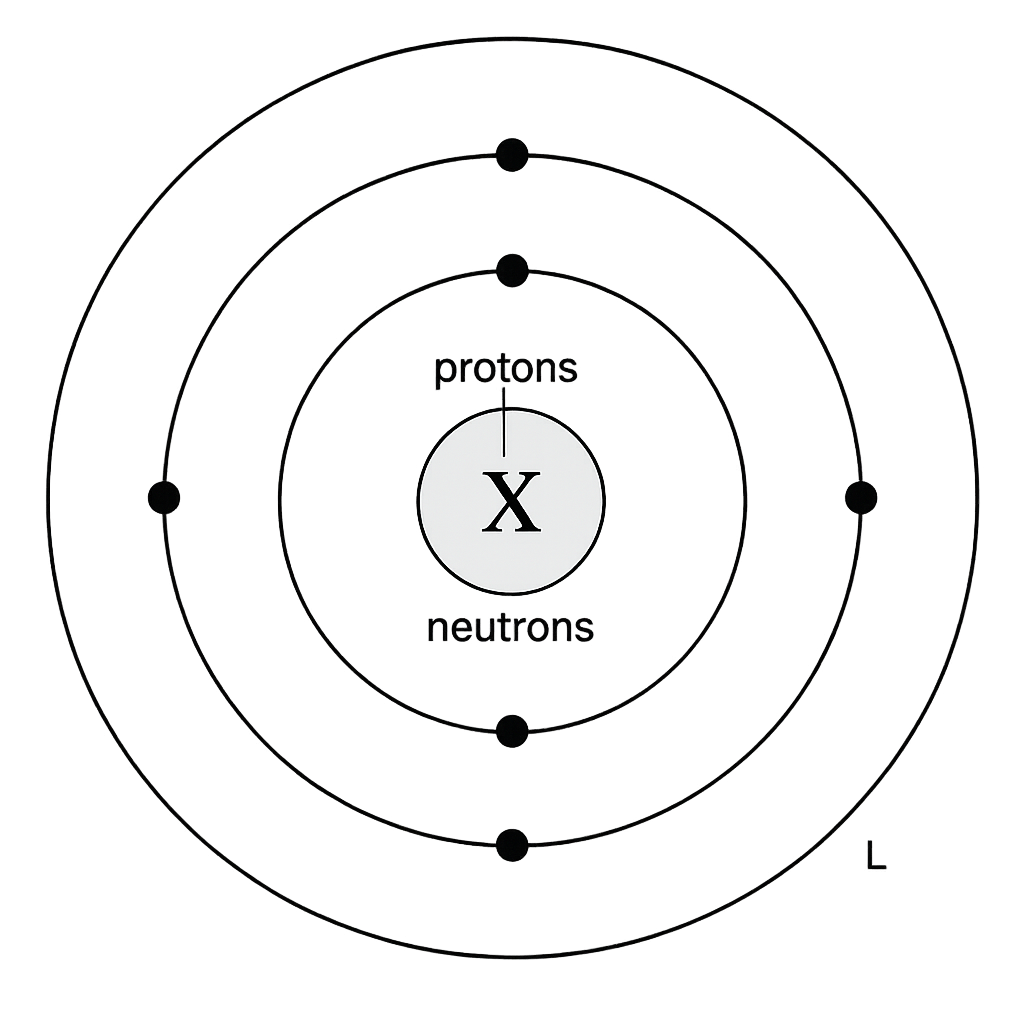
The diagram shows a Bohr model of an unknown element X. The nucleus contains 15 protons and 16 neutrons. The electron shells are labelled K, L and M with 2, 8 and 5 electrons respectively.
Question Parts
(a)
State the atomic number (Z) and the mass number (A) of element X.
(b)
Write the ground‑state electron configuration of X using the Aufbau principle (show the distribution in K, L and M shells).
(c)
The element commonly forms a cation in its compounds. Indicate the most likely ionic charge of X and write the electron configuration of the ion formed.
(d)
Explain, using the diagram, why the ionisation energy of X is expected to be lower than that of the element immediately to its right in the same period.
Detailed Essay Solution & Marking Scheme Available

Get the step-by-step mathematical proofs, key points required by examiners, and a comprehensive breakdown from our AI Tutor.
Question 2 View Details
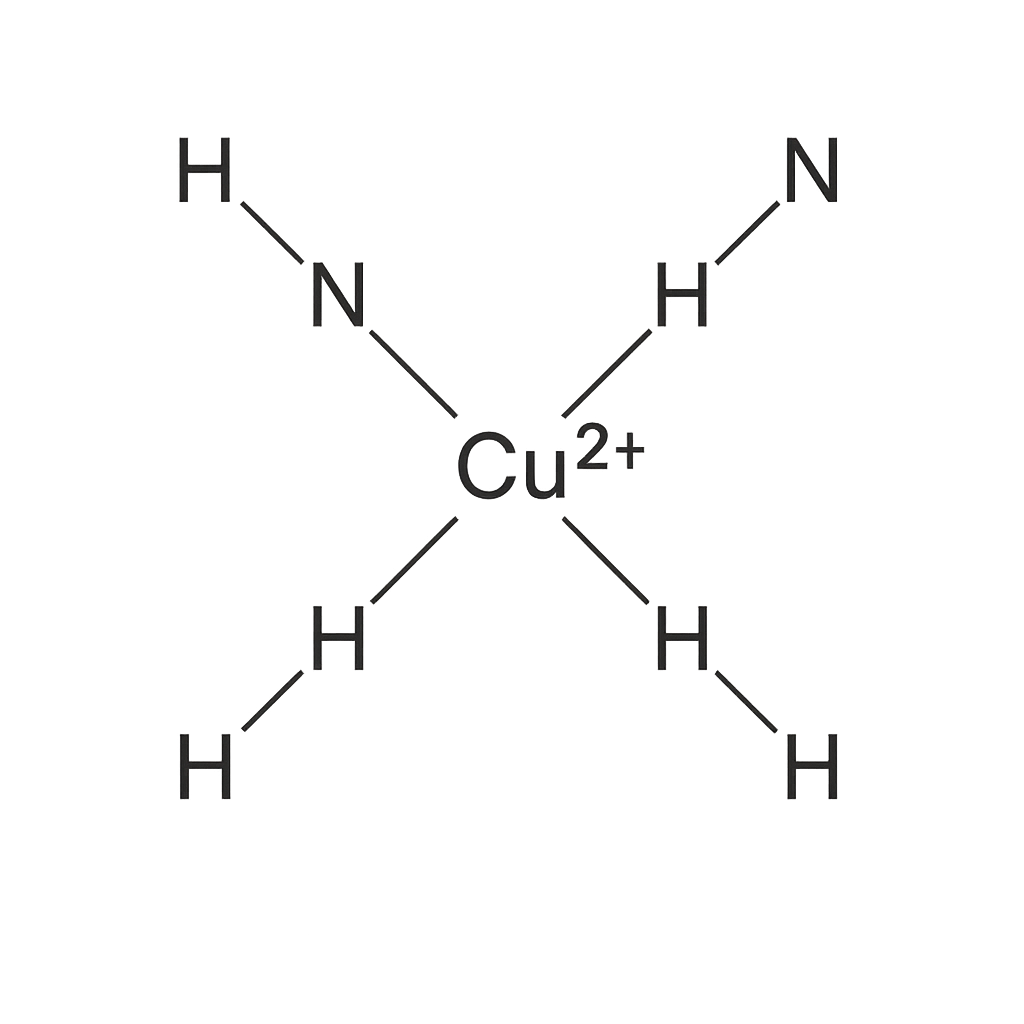
The diagram shows the structure of a coordination complex formed by a transition‑metal ion with four identical ligands arranged in a square planar geometry.
Question Parts
(a)
Identify the central metal ion, giving its atomic number and its position (group and period) in the periodic table.
(b)
Determine the oxidation state of the metal ion in the complex.
(c)
State the coordination number and the geometry of the complex, and explain how the geometry is consistent with the electron configuration of the metal ion.
(d)
The complex exhibits a deep blue colour. Explain the origin of this colour in terms of electronic transitions, and discuss why such a colour is typical for complexes of metals from this part of the periodic table.
Detailed Essay Solution & Marking Scheme Available

Get the step-by-step mathematical proofs, key points required by examiners, and a comprehensive breakdown from our AI Tutor.

Question 3 View Details
Consider the statements and data given below about chemical bonding:
Question Parts
(a)
Explain, with appropriate reasoning, why sodium chloride (NaCl) forms an ionic bond rather than a covalent bond.
(b)
Ammonia (NH₃) is a covalent molecule. State the type of covalent bond present, describe its molecular geometry and hybridisation, and predict whether the molecule is polar or non‑polar, giving reasons.
(c)
The lattice energy of magnesium oxide (MgO) is 3790 kJ mol⁻¹, whereas that of sodium chloride (NaCl) is 787 kJ mol⁻¹. Using the concepts of ionic charge and ionic radii, explain the large difference in their lattice energies.
Detailed Essay Solution & Marking Scheme Available

Get the step-by-step mathematical proofs, key points required by examiners, and a comprehensive breakdown from our AI Tutor.

Question 4 View Details
The diagram shows the structural formula of a colourless liquid compound X, which contains only carbon (C), hydrogen (H) and oxygen (O) atoms. The molecular mass of X has been determined as 320 g mol⁻¹ by mass‑spectrometry. A 1.00 g sample of X was completely combusted and the combustion products were collected. The experiment gave 2.20 g of carbon dioxide (CO₂) and 0.90 g of water (H₂O).
Question Parts
(a)
Calculate the mass of carbon, hydrogen and oxygen present in the original 1.00 g sample of X.
(b)
Using the masses obtained in part (a), determine the empirical formula of X.
(c)
Given that the molar mass of X is 320 g mol⁻¹, deduce the molecular formula of X.
(d)
The structural diagram of X is shown. Another compound Y has the same molecular formula as X but a different arrangement of the functional groups. Identify the type of isomerism exhibited between X and Y and justify your answer.
Detailed Essay Solution & Marking Scheme Available

Get the step-by-step mathematical proofs, key points required by examiners, and a comprehensive breakdown from our AI Tutor.

Question 5 View Details
A mixture containing 8.00 g of calcium carbonate (CaCO₃) and 30.0 mL of 0.500 M hydrochloric acid (HCl) is placed in a sealed reaction vessel at 25 °C. The reaction proceeds according to: CaCO₃(s) + 2 HCl(aq) → CaCl₂(aq) + CO₂(g) + H₂O(l) The carbon dioxide gas produced is collected over water at 25 °C and a total pressure of 760 mmHg. The vapour pressure of water at this temperature is 23.8 mmHg. Answer the following:
Question Parts
(a)
Identify the limiting reagent in the reaction.
(b)
Calculate the theoretical volume of CO₂ (in litres) that should be produced at 25 °C and 760 mmHg, after correcting for the vapour pressure of water.
(c)
If the volume of CO₂ actually collected (after correcting for water vapour) is 0.150 L, calculate the percent yield of the reaction.
Detailed Essay Solution & Marking Scheme Available

Get the step-by-step mathematical proofs, key points required by examiners, and a comprehensive breakdown from our AI Tutor.

Question 6 View Details
A 2.00 L rigid container holds liquid ammonia (NH₃) at 25 °C. The pressure measured inside the container is 1.20 atm. The system is then heated to 45 °C while the volume of the container remains unchanged. Answer the following:
Question Parts
(a)
Assuming ammonia behaves as an ideal gas, calculate the pressure of the gas after heating to 45 °C.
Detailed Essay Solution & Marking Scheme Available

Get the step-by-step mathematical proofs, key points required by examiners, and a comprehensive breakdown from our AI Tutor.

Question 7 View Details
An element X has atomic number 15.
Question Parts
(a)
Write the ground‑state electron configuration of X.
(b)
Predict whether the first ionisation energy of X is higher or lower than that of element Y (atomic number 16) and give a brief justification.
(c)
Explain why the atomic radius of X is smaller than that of element Z (atomic number 14).
Detailed Essay Solution & Marking Scheme Available

Get the step-by-step mathematical proofs, key points required by examiners, and a comprehensive breakdown from our AI Tutor.

Question 8 View Details
Transition metal M forms the complex [M(H₂O)₆]³⁺ in aqueous solution.
Question Parts
(a)
State the oxidation state of M in the complex and justify your answer.
(b)
Explain why such a complex is typically coloured.
(c)
If the complex is dissolved in a strongly acidic solution, predict how its stability will be affected and give a reason.
Detailed Essay Solution & Marking Scheme Available

Get the step-by-step mathematical proofs, key points required by examiners, and a comprehensive breakdown from our AI Tutor.

Master the Exam!

You've seen a preview, but there are thousands more questions plus AI tutor to break down complex solutions.

Unlock Full Access Available for Android & Windows
Help others prepare! Share this practice hub:
Chat with Support