neco model questions vol1 2019 biology | Essay

Prepare for your exams with neco model questions vol1 questions? Reviewing past/model questions is one of the most effective ways to guarantee a high score. This practice hub features authentic 2019 biology (Essay) questions designed to simulate the real exam environment.

Practice these randomly selected questions to test your readiness.
Question 1 View Details
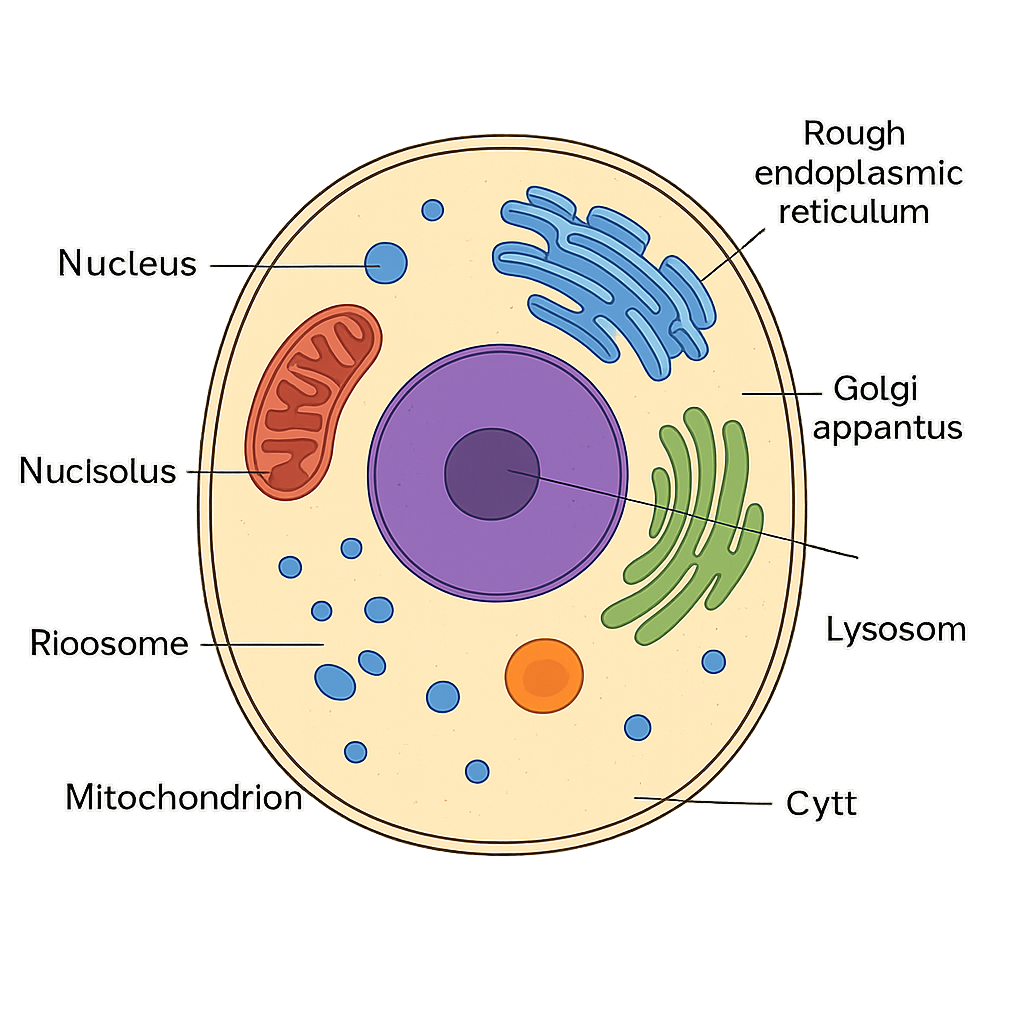
The diagram shows a typical animal cell.
Question Parts
(a)
Identify and name six major organelles that are clearly visible in the diagram.
(b)
State the primary function of each organelle you listed in part (a).
(c)
Compare the mitochondrion with the chloroplast, giving two similarities and two differences in their structure and function.
(d)
Explain how the plasma membrane controls the entry of glucose into the cell, mentioning the type of transport involved.
Detailed Essay Solution & Marking Scheme Available

Get the step-by-step mathematical proofs, key points required by examiners, and a comprehensive breakdown from our AI Tutor.
Question 2 View Details
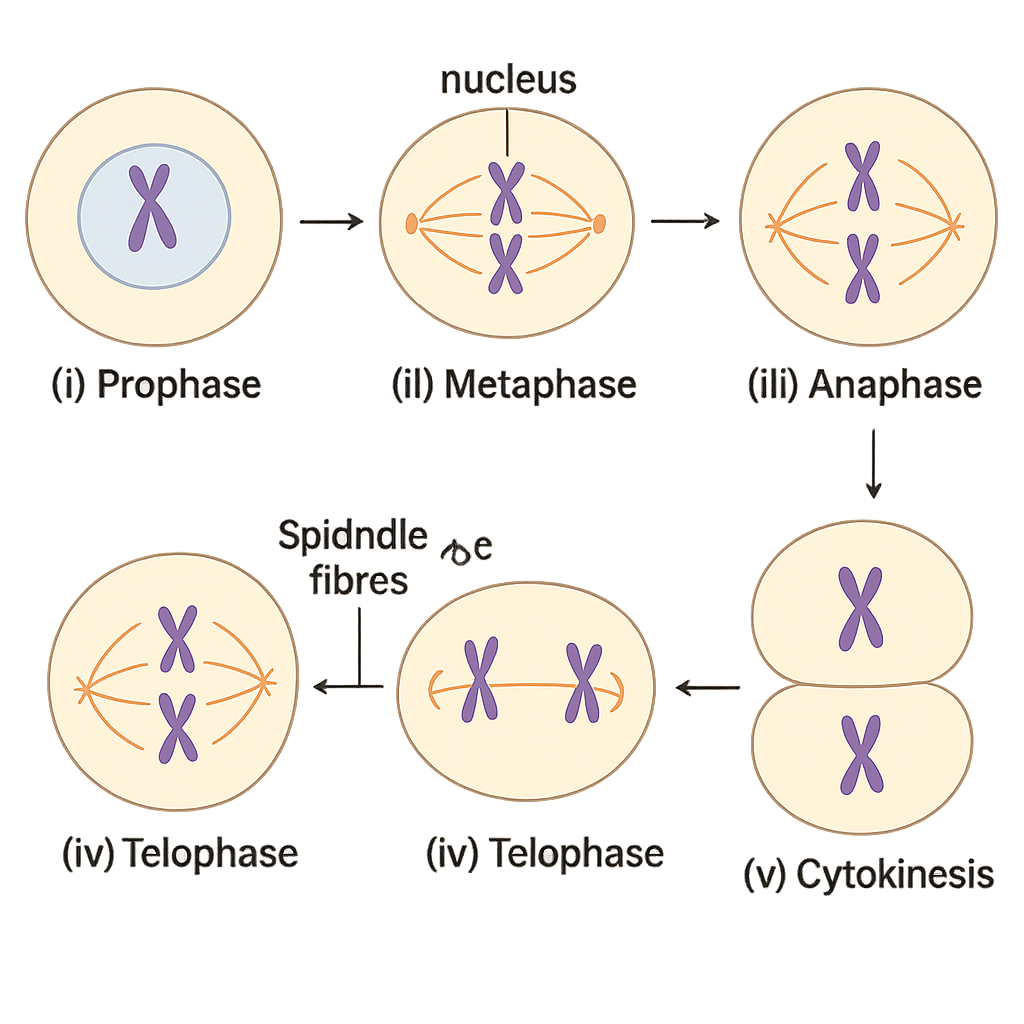
The diagram is a labelled illustration of a typical eukaryotic somatic cell undergoing cell division. The stages are numbered (i) to (v) and show the cell membrane, nucleus (where present), chromosomes, spindle fibres and the cleavage furrow.
Question Parts
(a)
Identify the stage marked (i) in the diagram and describe two key events that occur during this stage.
(b)
Using a table, compare the chromosome number and genetic composition of the daughter cells produced at the end of (i) mitosis with those produced at the end of meiosis II in a diploid organism (2n = 28).
(c)
A plant tissue culture is initiated with a single diploid cell (2n = 28). After several cycles of cell division, a sample is observed to contain cells with 56 chromosomes. Explain how this increase could have occurred, indicating which type(s) of cell division could be responsible and why.
Detailed Essay Solution & Marking Scheme Available

Get the step-by-step mathematical proofs, key points required by examiners, and a comprehensive breakdown from our AI Tutor.
Question 3 View Details
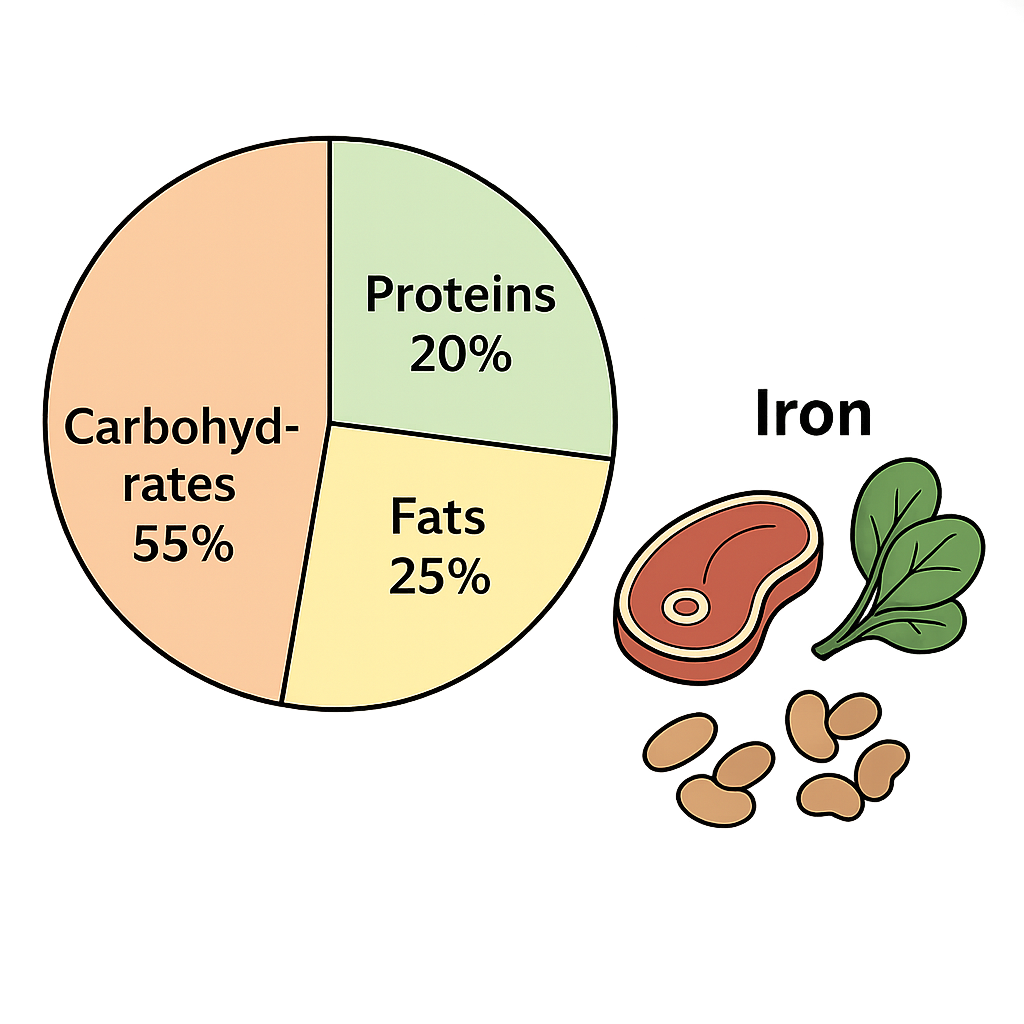
The diagram shows a labelled plate model illustrating the major food groups and their recommended proportion in a balanced diet for an adult.
Question Parts
(a)
Identify the three macronutrients shown in the diagram and state the primary physiological function of each.
(b)
Using the percentages shown in the plate (Carbohydrates 55 %, Proteins 20 %, Fats 25 %), compare them with the recommended caloric distribution for an adult (Carbohydrates 55 %, Proteins 15 %, Fats 30 %). Discuss any discrepancy and its possible nutritional implication.
(c)
A patient requires a total energy intake of 2 500 kcal per day. Based on the plate proportions (55 % carbs, 20 % proteins, 25 % fats), calculate the approximate gram amount of each macronutrient the patient should consume. (Use 4 kcal g⁻¹ for carbohydrates and proteins, 9 kcal g⁻¹ for fats.)
(d)
One of the micronutrients highlighted in the diagram is iron. Explain how a deficiency of iron can affect the body’s oxygen‑transport system.
Detailed Essay Solution & Marking Scheme Available

Get the step-by-step mathematical proofs, key points required by examiners, and a comprehensive breakdown from our AI Tutor.
Question 4 View Details
A 30‑year‑old woman is studied at rest and during moderate exercise. The following respiratory data are recorded: - At rest: tidal volume = 500 mL, respiratory rate = 12 breaths·min⁻¹. - During moderate exercise: tidal volume = 800 mL, respiratory rate = 20 breaths·min⁻¹. Answer the following:
Question Parts
(a)
Calculate the minute ventilation (in litres per minute) at rest and during moderate exercise.
(b)
Explain why minute ventilation increases during moderate exercise, linking your answer to changes in metabolic demand.
(c)
At high altitude the barometric pressure falls, reducing the partial pressure of oxygen (Pₒ₂). Discuss two physiological adjustments the body makes to maintain adequate oxygenation.
Detailed Essay Solution & Marking Scheme Available

Get the step-by-step mathematical proofs, key points required by examiners, and a comprehensive breakdown from our AI Tutor.

Question 5 View Details
A researcher is investigating the transport of oxygen in the blood of a mammal. The following data were obtained from arterial and venous blood samples taken at rest: - Haemoglobin concentration: 150 g L⁻¹ - Oxygen‑binding capacity of haemoglobin: 1.34 mL O₂ g⁻¹ Hb - Arterial partial pressure of oxygen (PₐO₂): 95 mmHg - Venous partial pressure of oxygen (PᵥO₂): 40 mmHg - Arterial haemoglobin saturation (SₐO₂): 98 % - Venous haemoglobin saturation (SᵥO₂): 75 % - Solubility coefficient of O₂ in plasma: 0.0031 mL O₂ (100 mL blood)⁻¹ mmHg⁻¹ - Cardiac output at rest: 5.0 L min⁻¹ Using the information above, answer the following questions.
Question Parts
(a)
Calculate the arterial oxygen content (CₐO₂) in mL O₂ per litre of blood.
(b)
Calculate the venous oxygen content (CᵥO₂) in mL O₂ per litre of blood.
(c)
Determine the amount of oxygen delivered to the tissues per minute (in mL O₂ min⁻¹).
(d)
Briefly explain why the diffusion gradient between arterial and venous blood is essential for capillary exchange of oxygen.
Detailed Essay Solution & Marking Scheme Available

Get the step-by-step mathematical proofs, key points required by examiners, and a comprehensive breakdown from our AI Tutor.

Question 6 View Details
A laboratory study examined how plasma antidiuretic hormone (ADH) concentration influences urine concentration and volume in healthy adults over a 24‑hour period. The subjects were placed under three controlled conditions that produced low, moderate and high plasma ADH levels. The results are shown in the table below. | ADH level | Urine osmolality (mOsm kg⁻¹) | Urine volume (L day⁻¹) | |-----------|-----------------------------|------------------------| | Low | 150 | 2.5 | | Moderate | 300 | 1.5 | | High | 600 | 0.8 | Assume that the filtered load of plasma water by the kidneys is approximately constant at 2.5 L day⁻¹ for all three conditions. Answer the following questions.
Question Parts
(a)
Calculate the total amount of solute excreted per day (in mOsm day⁻¹) for each ADH level.
Detailed Essay Solution & Marking Scheme Available

Get the step-by-step mathematical proofs, key points required by examiners, and a comprehensive breakdown from our AI Tutor.

Question 7 View Details
A 25‑year‑old male presents with excessive sweating, rapid heart rate and weight loss. Laboratory investigation shows a markedly low blood glucose concentration. Explain how homeostatic mechanisms normally maintain blood glucose concentration, discuss how failure of these mechanisms leads to the observed clinical signs, and evaluate two therapeutic interventions that could restore homeostasis in this condition.
Question Parts
(a)
Describe the normal regulation of blood glucose concentration.
(b)
Explain how the failure of these regulatory mechanisms produces the patient’s symptoms of sweating, tachycardia and weight loss.
(c)
Evaluate two therapeutic interventions that could be used to re‑establish glucose homeostasis in this patient.
Detailed Essay Solution & Marking Scheme Available

Get the step-by-step mathematical proofs, key points required by examiners, and a comprehensive breakdown from our AI Tutor.

Question 8 View Details
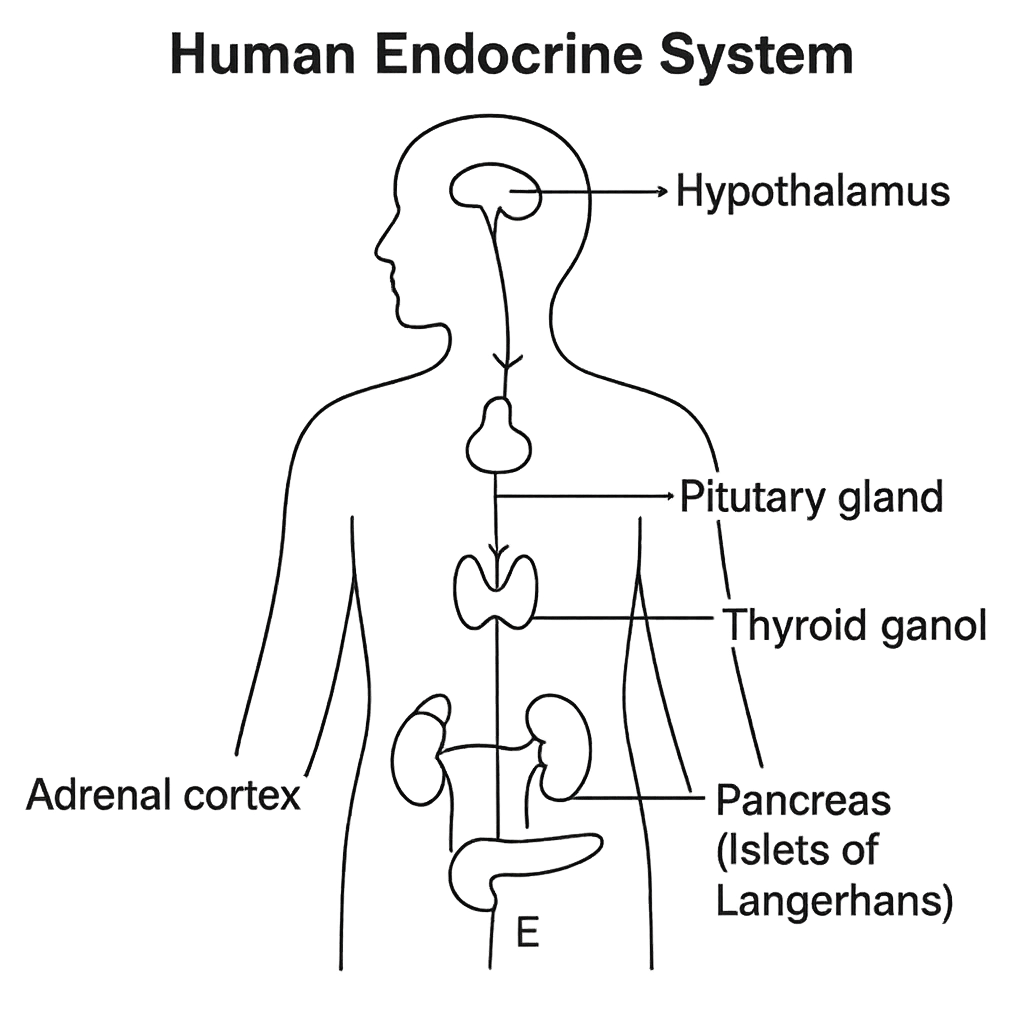
The diagram shows the major components of the human endocrine system and the principal hormonal pathways between them.
Question Parts
(a)
Identify the gland labelled **C** and state the principal hormone it secretes together with its primary physiological effect.
(b)
Explain the negative feedback mechanism that involves the hypothalamus (label A), pituitary gland (label B) and adrenal cortex (label D) in the regulation of blood glucose concentration.
(c)
A patient has a tumour in the gland labelled **D** that causes excessive secretion of hormone **cortisol**. Predict two clinical manifestations of this condition and suggest one appropriate therapeutic approach.
Detailed Essay Solution & Marking Scheme Available

Get the step-by-step mathematical proofs, key points required by examiners, and a comprehensive breakdown from our AI Tutor.

Master the Exam!

You've seen a preview, but there are thousands more questions plus AI tutor to break down complex solutions.

Unlock Full Access Available for Android & Windows
Help others prepare! Share this practice hub:
Chat with Support