neco 2023 biology | Essay

Prepare for your exams with neco questions? Reviewing past/model questions is one of the most effective ways to guarantee a high score. This practice hub features authentic 2023 biology (Essay) questions designed to simulate the real exam environment.

Practice these randomly selected questions to test your readiness.
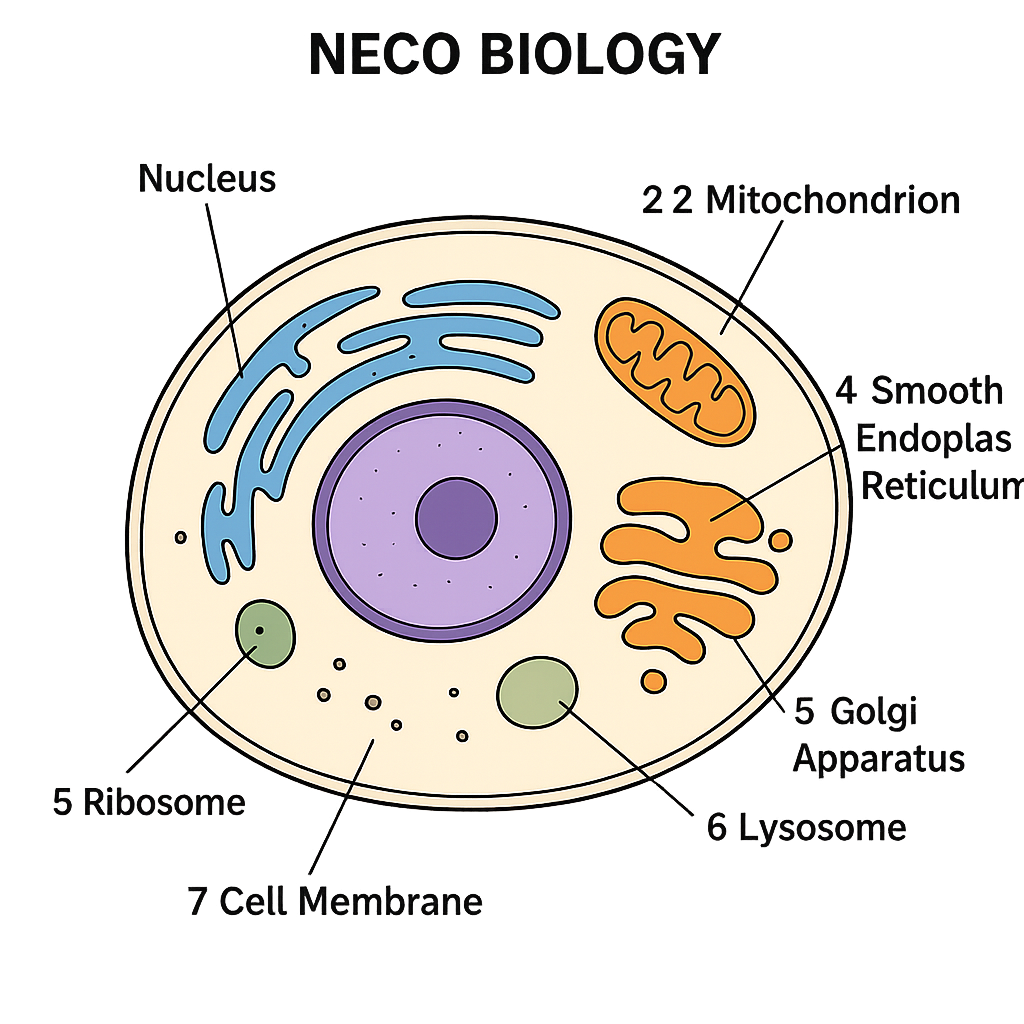
Question 1 View Details
The diagram shows a typical animal cell with its major organelles labelled.
Question Parts
(a)
Identify the organelles labelled 1–9 in the diagram and state one main function of each.
(b)
Explain how the structure of the mitochondrion enables it to perform its function of ATP production.
(c)
A plant cell differs from the animal cell shown in the diagram. List two structures that are present in a typical plant cell but absent in the diagram and give one function for each.
Detailed Essay Solution & Marking Scheme Available

Get the step-by-step mathematical proofs, key points required by examiners, and a comprehensive breakdown from our AI Tutor.
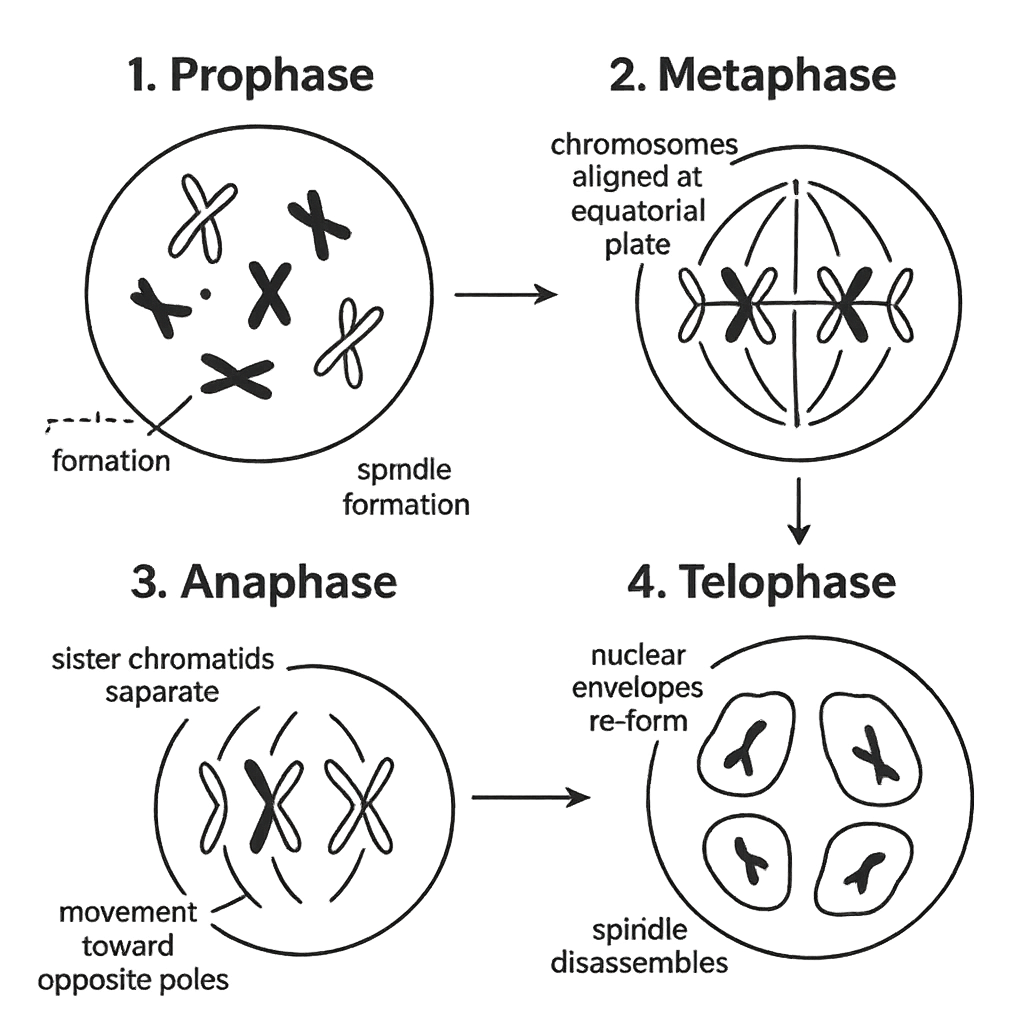
Question 2 View Details
The labelled diagram depicts the stages of mitosis in a eukaryotic cell.
Question Parts
(a)
Describe the key events that occur in each of the four stages shown (prophase, metaphase, anaphase, telophase).
(b)
Explain the role of spindle fibres during mitosis and why their proper attachment to chromosomes is essential for accurate cell division.
(c)
If the diploid chromosome number (2n) of the organism is 24, how many chromosomes are present in each daughter cell after mitosis is completed? Show your reasoning.
Detailed Essay Solution & Marking Scheme Available

Get the step-by-step mathematical proofs, key points required by examiners, and a comprehensive breakdown from our AI Tutor.
Question 3 View Details
A 10‑year‑old child weighing 30 kg consumes the following foods in a day: - 2 boiled eggs (each provides 6 g protein, 5 g fat) - 150 g boiled rice (2.5 g protein, 28 g carbohydrate, 0.4 g fat per 100 g) - 100 g grilled chicken breast (31 g protein, 3.6 g fat) - 250 ml whole milk (3.3 g protein, 5 g carbohydrate, 3.5 g fat per 100 ml) - 30 g roasted peanuts (25 g protein, 16 g carbohydrate, 49 g fat per 100 g) - 1 medium orange (130 mg vitamin C) and 100 g broccoli (89 mg vitamin C) The recommended dietary allowance (RDA) for protein for a child of this age is 0.95 g kg⁻¹ body weight per day, and the recommended energy distribution is: 55–65 % from carbohydrate, 10–15 % from protein and 20–30 % from fat. The RDA for vitamin C is 45 mg per day. Answer the following:
Question Parts
(a)
Calculate the total amount of protein (in grams) consumed and state whether it meets, exceeds or falls short of the RDA.
(b)
Determine the percentage contribution of protein, carbohydrate and fat to the total dietary energy (use 4 kcal g⁻¹ for protein and carbohydrate, 9 kcal g⁻¹ for fat). Compare each percentage with the recommended range and comment on the balance of the diet.
(c)
Based on your findings in (a) and (b), suggest two specific dietary modifications that would improve the nutritional balance for this child. Explain the rationale for each suggestion.
Detailed Essay Solution & Marking Scheme Available

Get the step-by-step mathematical proofs, key points required by examiners, and a comprehensive breakdown from our AI Tutor.
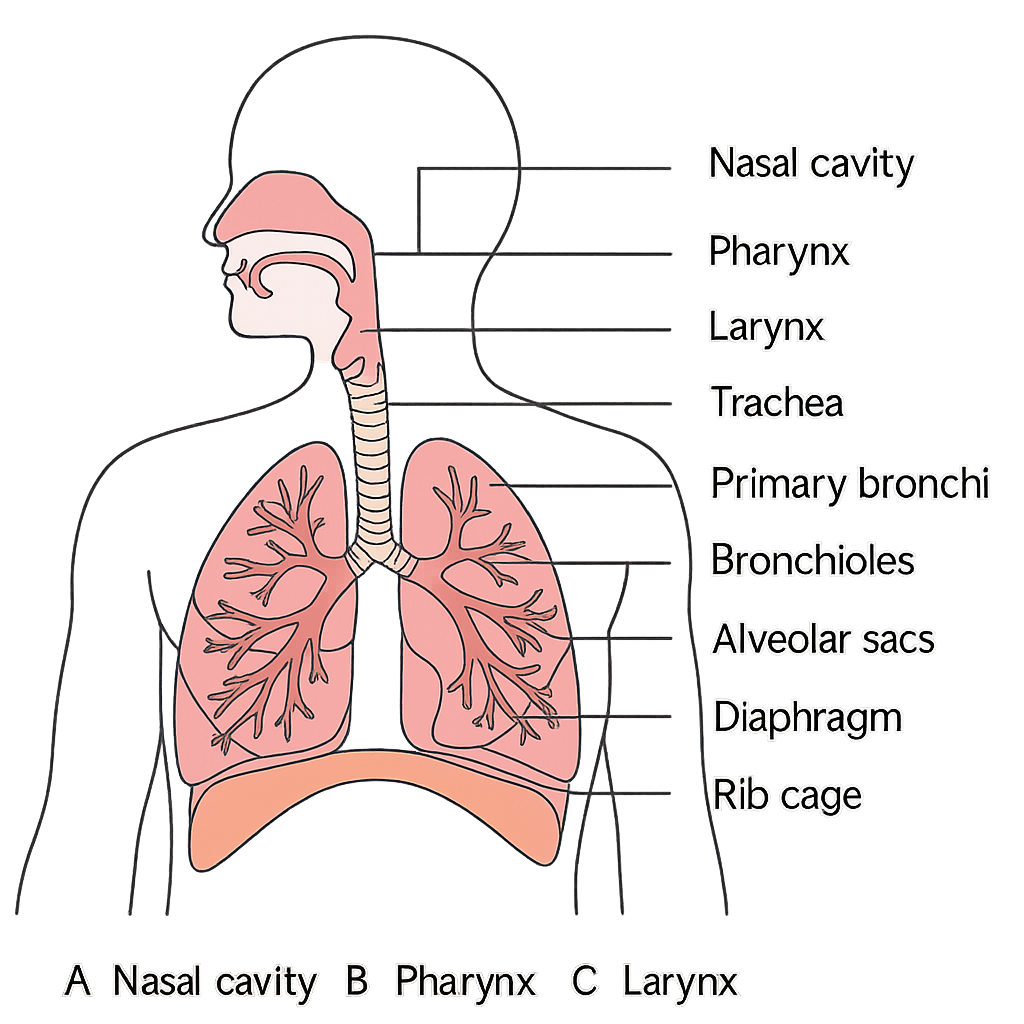
Question 4 View Details
The diagram shows the major structures of the human respiratory system, including the nasal cavity, pharynx, larynx, trachea, primary bronchi, bronchioles, alveolar sacs, diaphragm and the rib cage.
Question Parts
(a)
Describe, in order, the pathway that air follows from the external environment to the site of gas exchange.
(b)
Explain the structural adaptations of the alveoli that facilitate efficient external respiration.
(c)
Discuss the role of the diaphragm in the mechanics of ventilation, including how its movement changes thoracic volume and pressure.
(d)
Compare external respiration with internal respiration, highlighting the key differences in location, gases involved and the direction of diffusion.
Detailed Essay Solution & Marking Scheme Available

Get the step-by-step mathematical proofs, key points required by examiners, and a comprehensive breakdown from our AI Tutor.
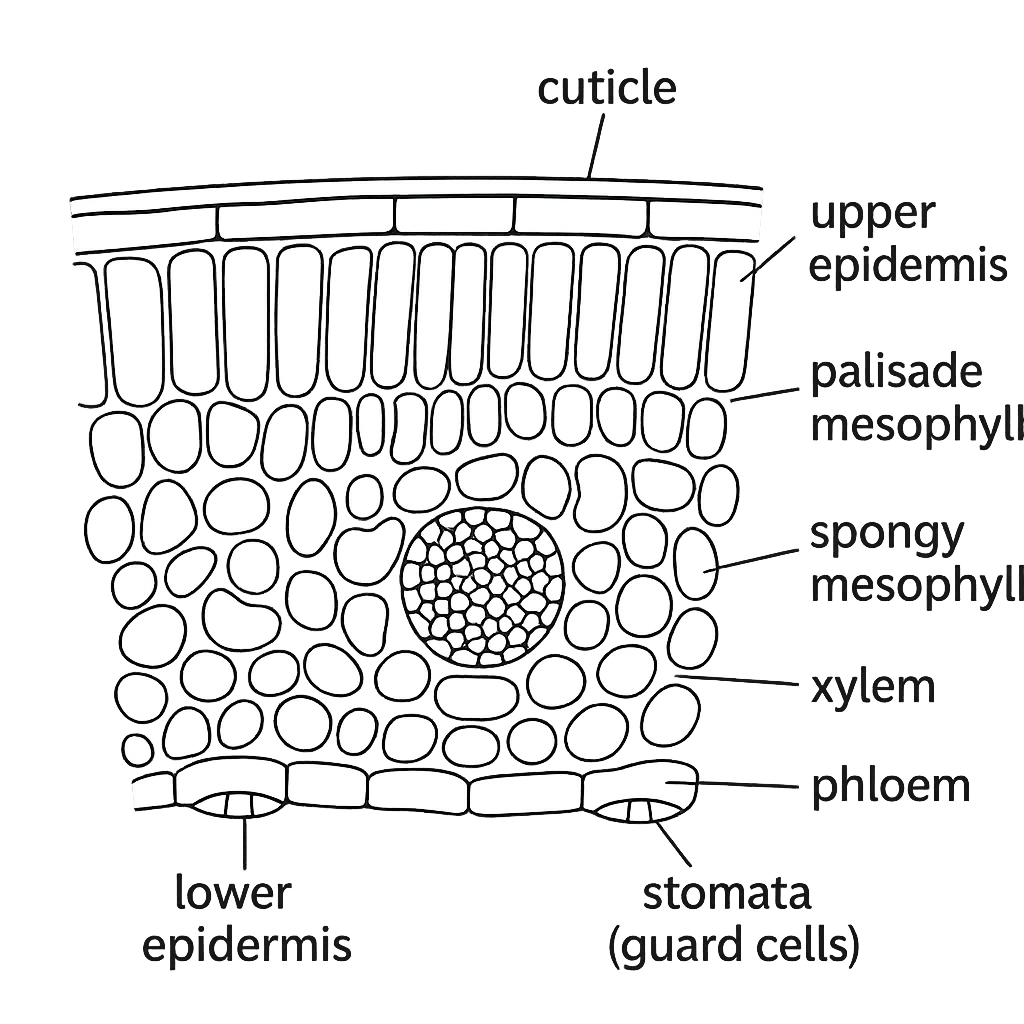
Question 5 View Details
The diagram shows a transverse section of a mature dicot leaf. The labelled parts include the cuticle, upper epidermis, lower epidermis with a pair of stomata (guard cells shown), palisade mesophyll, spongy mesophyll, a vascular bundle containing xylem and phloem, and a surrounding bundle sheath. Using this diagram, answer the following questions.
Question Parts
(a)
Describe the complete pathway that a water molecule follows from the soil to the guard cells of a stomatal pore. In your answer, name each structure the water passes through and state the main physical or chemical driving force operating at that stage.
(b)
The leaf loses water by transpiration at a rate of 5 mm per day. The leaf area shown in the diagram is 30 cm². (i) Calculate the volume of water lost from the leaf in one day. (ii) The plant’s root system can absorb water at a maximum rate of 0.8 mL per hour. Determine whether the root system can supply enough water to replace the daily transpirational loss, showing all calculations.
(c)
Identify and discuss two structural adaptations shown in the diagram that help the leaf minimise water loss. Relate each adaptation to its functional significance.
Detailed Essay Solution & Marking Scheme Available

Get the step-by-step mathematical proofs, key points required by examiners, and a comprehensive breakdown from our AI Tutor.

Question 6 View Details
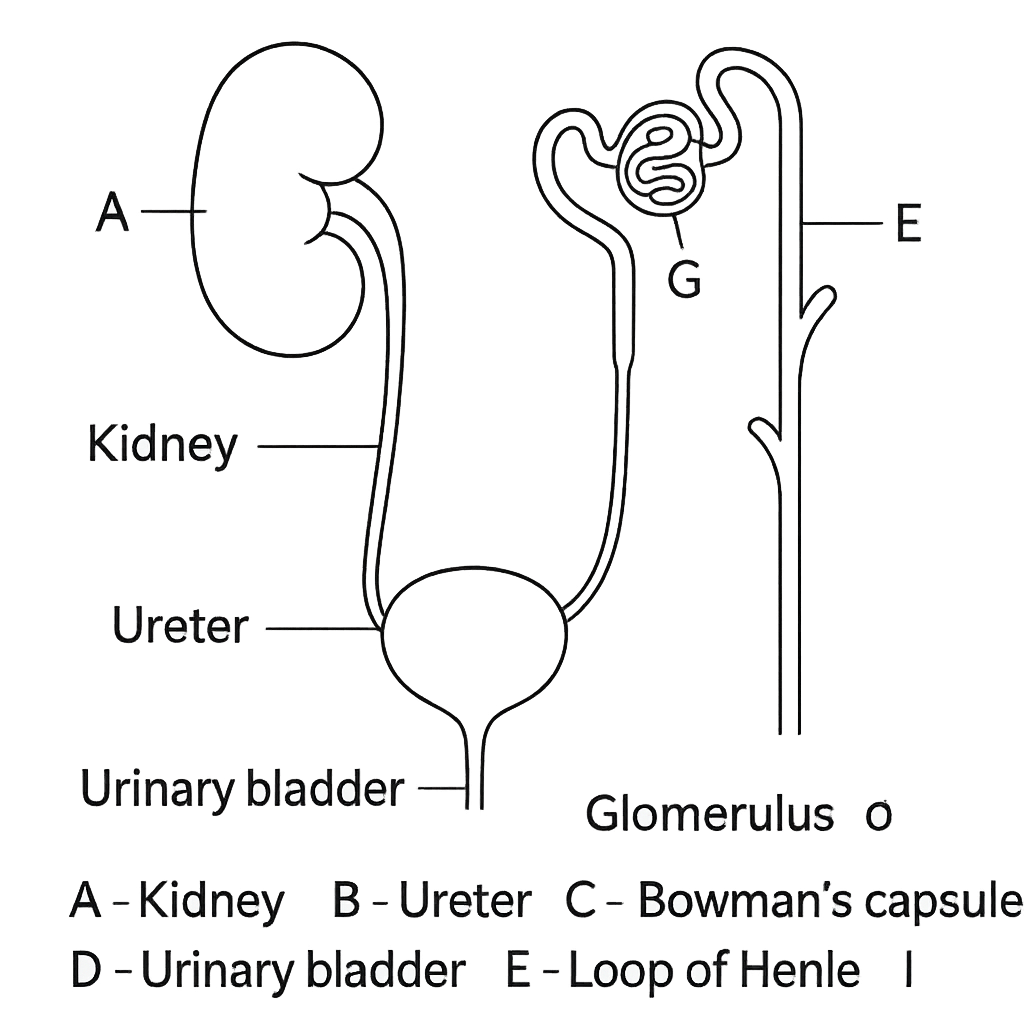
The labelled diagram shows the human excretory system. Structures are labelled A to I as follows: A – Kidney, B – Ureter, C – Urinary bladder, D – Urethra, E – Nephron, F – Glomerulus, G – Bowman's capsule, H – Loop of Henle, I – Collecting duct.
Question Parts
(a)
Identify each structure labelled A–I in the diagram.
(b)
For each of the following processes, state which part of the nephron is primarily involved and briefly describe its role:
(c)
A patient has a congenital defect that reduces the length of the loop of Henle by 40 %. Discuss how this alteration would affect the kidney’s ability to concentrate urine and explain the physiological mechanism involved.
(d)
The average glomerular filtration rate (GFR) in a healthy adult is 125 mL min⁻¹. Calculate the total volume of filtrate formed in 24 hours. If 99 % of this filtrate is re‑absorbed, determine the volume of urine excreted per day. Show all steps.
Detailed Essay Solution & Marking Scheme Available

Get the step-by-step mathematical proofs, key points required by examiners, and a comprehensive breakdown from our AI Tutor.

Question 7 View Details
Homeostasis is essential for maintaining the internal environment of the human body within narrow limits.
Question Parts
(a)
Explain, with a labelled diagram, how the pancreas regulates blood glucose concentration through a negative feedback mechanism. Include the roles of insulin and glucagon.
(b)
Predict the biochemical and physiological changes that would occur in a person with chronic insulin deficiency (type 1 diabetes). Discuss at least three systems.
(c)
Design a simple laboratory experiment to test the efficacy of a new insulin‑mimetic drug on lowering blood glucose in diabetic rats. Outline the control groups, variables, method of measurement and criteria for success.
Detailed Essay Solution & Marking Scheme Available

Get the step-by-step mathematical proofs, key points required by examiners, and a comprehensive breakdown from our AI Tutor.

Question 8 View Details
The diagram illustrates the regulation of blood glucose concentration in the human body.
Question Parts
(a)
State the name of each structure labelled 1 to 5 in the diagram.
(b)
Explain how insulin and glucagon act to maintain normal blood glucose concentration, referring to the labelled structures.
(c)
A tumour destroys the beta cells (label 3). Identify the condition that results and describe two physiological consequences of this condition.
(d)
Suggest one therapeutic approach to manage the condition described in part (c) and explain its principle of action.
Detailed Essay Solution & Marking Scheme Available

Get the step-by-step mathematical proofs, key points required by examiners, and a comprehensive breakdown from our AI Tutor.

Master the Exam!

You've seen a preview, but there are thousands more questions plus AI tutor to break down complex solutions.

Unlock Full Access Available for Android & Windows
Help others prepare! Share this practice hub:
Chat with Support