gce model questions vol1 2025 biology | Essay

Prepare for your exams with gce model questions vol1 questions? Reviewing past/model questions is one of the most effective ways to guarantee a high score. This practice hub features authentic 2025 biology (Essay) questions designed to simulate the real exam environment.

Practice these randomly selected questions to test your readiness.
Question 1 View Details
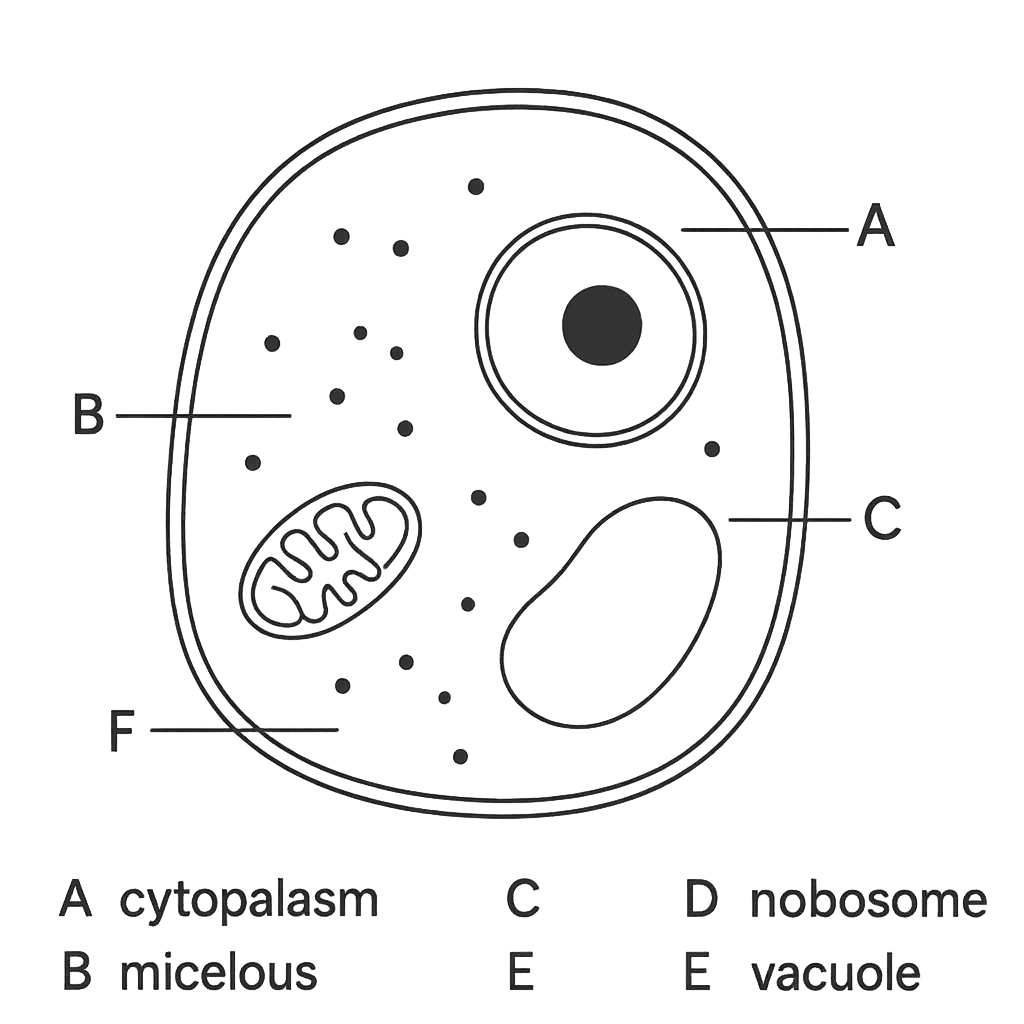
The diagram shows a typical animal cell with its major organelles labelled A–G.
Question Parts
(a)
Identify the structures labelled A, B, C, D, E, F and G in the diagram.
(b)
State the main function of the nucleus, mitochondrion and ribosome.
(c)
Explain how the cell membrane contributes to the maintenance of homeostasis in the cell.
Detailed Essay Solution & Marking Scheme Available

Get the step-by-step mathematical proofs, key points required by examiners, and a comprehensive breakdown from our AI Tutor.
Question 2 View Details
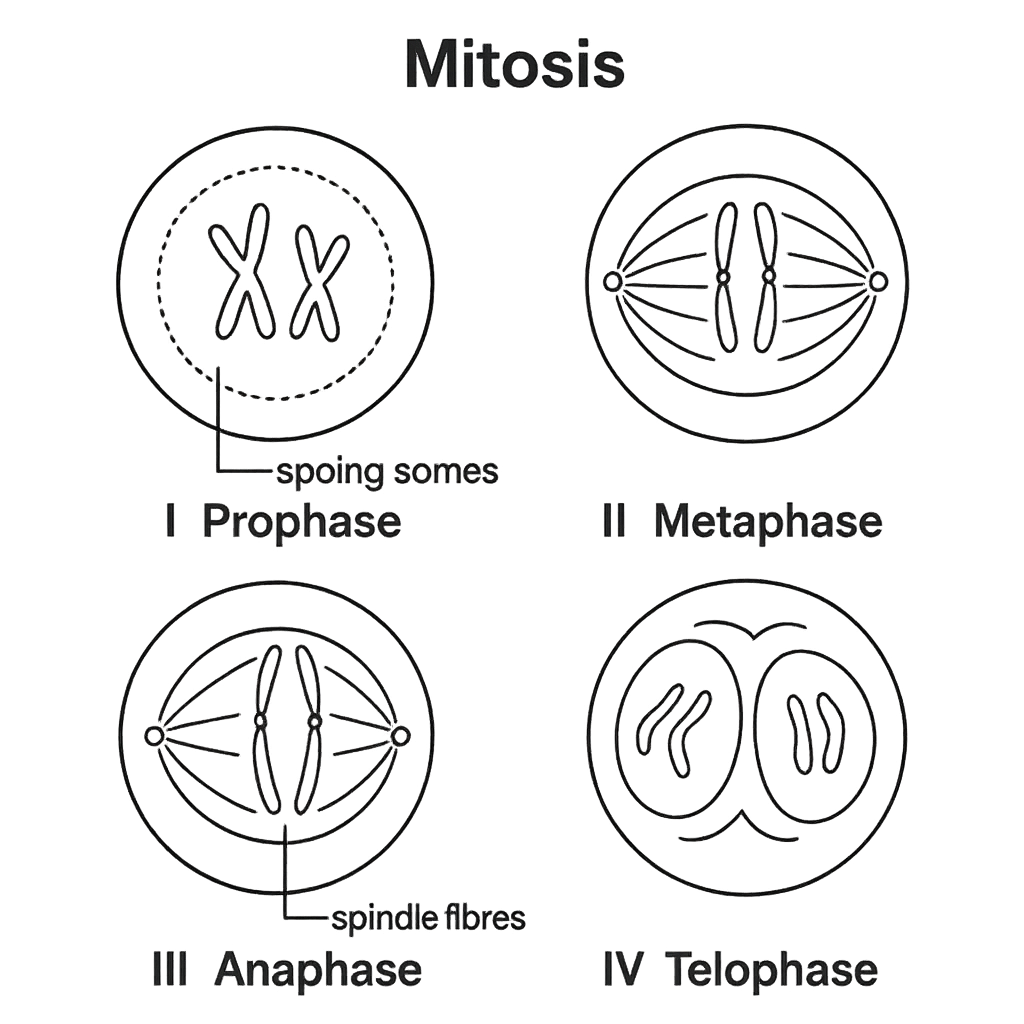
The diagram illustrates the sequential stages of mitosis in a eukaryotic cell, with each stage labelled I–IV.
Question Parts
(a)
Write the correct order of the stages represented by I, II, III and IV.
(b)
For each stage, describe the principal events that occur.
(c)
Discuss the importance of cytokinesis in the overall cell‑division process.
Detailed Essay Solution & Marking Scheme Available

Get the step-by-step mathematical proofs, key points required by examiners, and a comprehensive breakdown from our AI Tutor.
Question 3 View Details
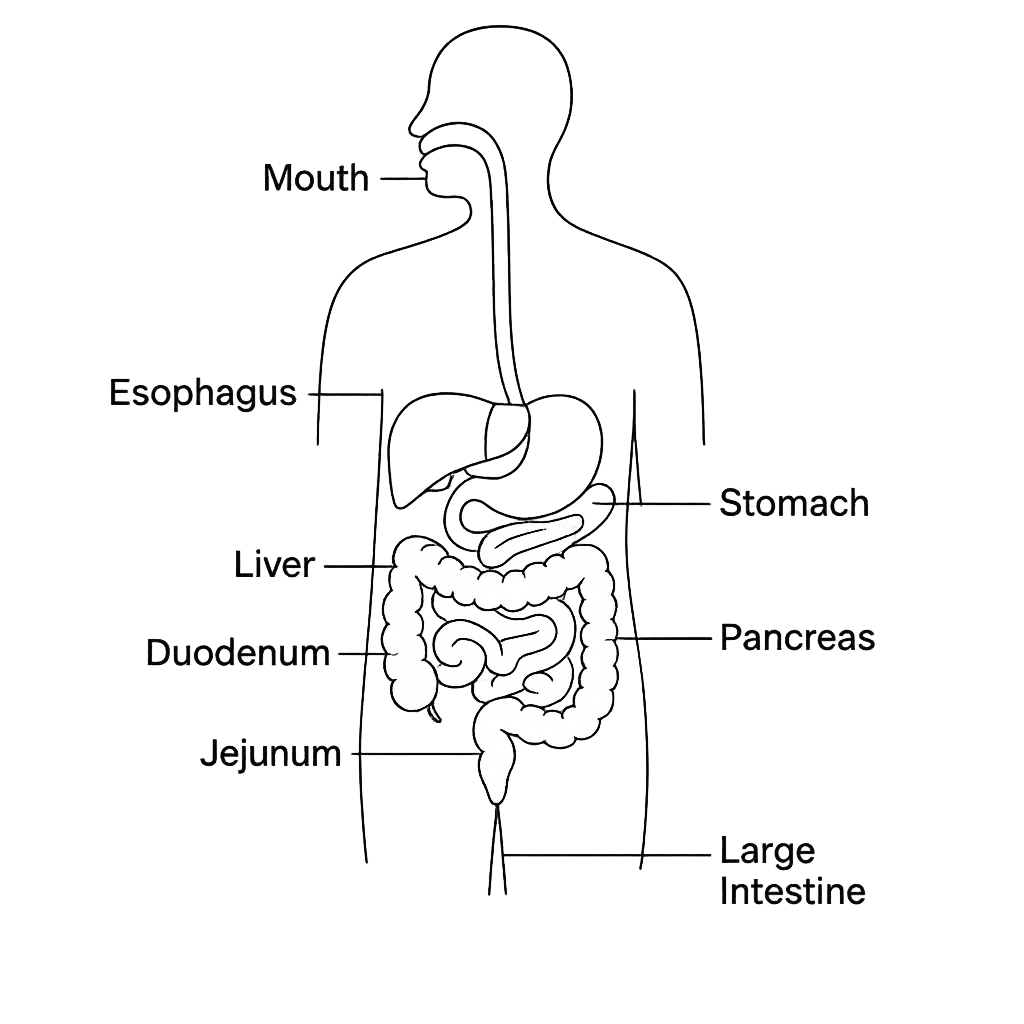
The diagram shows the major organs of the human digestive system involved in the processing and absorption of nutrients.
Question Parts
(a)
Identify the organ where the majority of carbohydrate digestion occurs and explain why the enzymes present there are particularly suited to this function.
(b)
Using the surface‑area values shown below, calculate the percentage of the total absorptive surface area of the small intestine that is contributed by the jejunum. Duodenum: 1.2 m² Jejunum: 2.5 m² Ileum: 3.0 m² Large intestine: 0.5 m²
(c)
Discuss two physiological consequences of a deficiency of pancreatic lipase on nutrient absorption.
Detailed Essay Solution & Marking Scheme Available

Get the step-by-step mathematical proofs, key points required by examiners, and a comprehensive breakdown from our AI Tutor.
Question 4 View Details
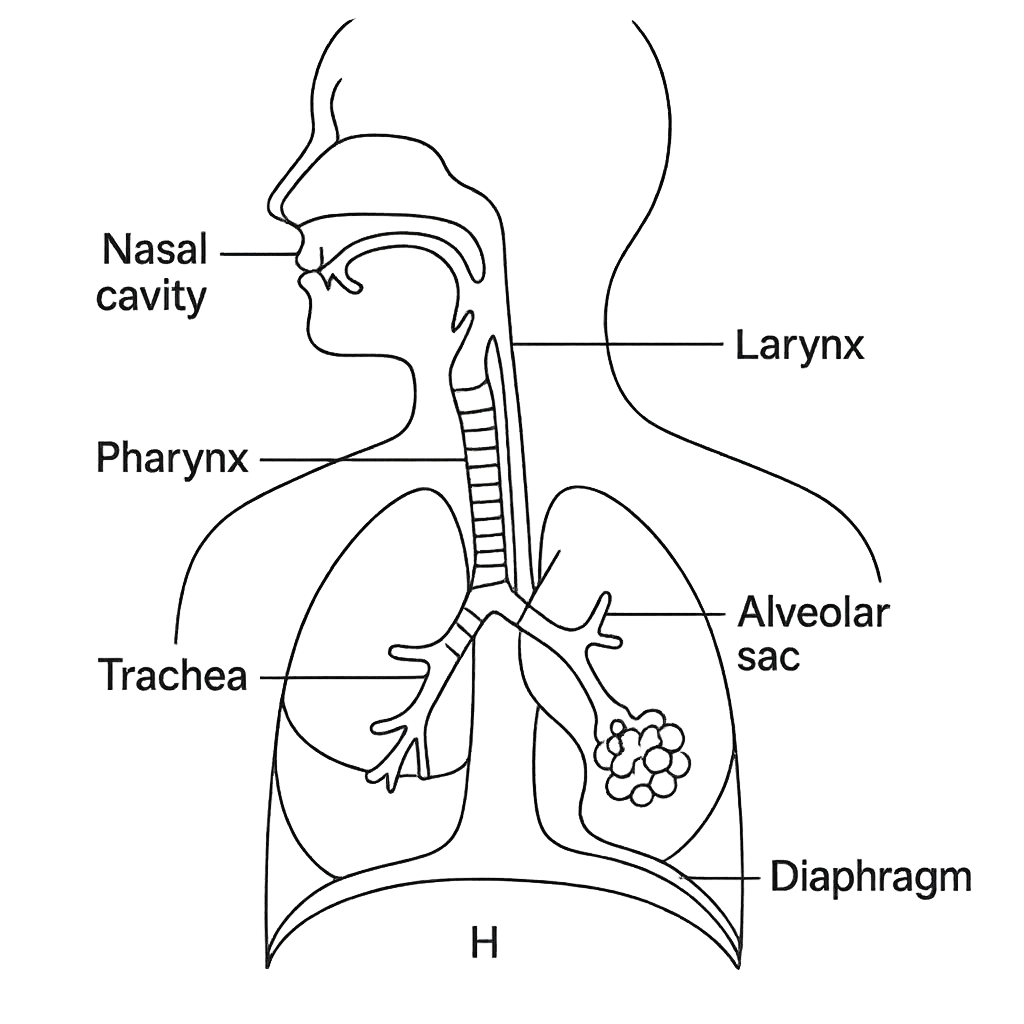
The diagram shows the major structures of the human respiratory system, each labelled from A to H.
Question Parts
(a)
State the anatomical structure represented by each label (A–H).
(b)
Describe the complete route taken by an inhaled molecule of oxygen from the external environment to the blood capillary surrounding an alveolus, referring to the labelled parts.
(c)
i) Define external respiration and internal respiration. ii) State where each occurs in the diagram and the direction of gas movement. iii) Explain how the structure of the alveolar wall facilitates diffusion.
(d)
A blockage in the right main bronchus (E) reduces airflow to the right lung. Discuss (i) the impact on overall oxygen uptake, (ii) the compensatory changes that may occur in the left lung, and (iii) two clinical signs that might be observed.
Detailed Essay Solution & Marking Scheme Available

Get the step-by-step mathematical proofs, key points required by examiners, and a comprehensive breakdown from our AI Tutor.

Question 5 View Details
A 30‑metre‑tall tropical tree loses water through its leaves at a rate of 0.5 kg h⁻¹. The total cross‑sectional area of its functional sapwood (the part of the xylem that conducts water) is 0.02 m². Assuming the density of water is 1000 kg m⁻³, answer the following: a) Calculate the average velocity of the upward flow of water in the xylem (express your answer in µm s⁻¹). Show all steps of your calculation. b) Using the cohesion‑tension theory, explain how this relatively slow upward flow can sustain the water supply to the canopy of such a tall tree. In your answer discuss at least three factors that assist the movement of water against gravity.
Question Parts
(a)
Calculate the average velocity of the upward flow of water in the xylem (express your answer in µm s⁻¹). Show all steps of your calculation.
(b)
Using the cohesion‑tension theory, explain how this relatively slow upward flow can sustain the water supply to the canopy of such a tall tree. In your answer discuss at least three factors that assist the movement of water against gravity.
Detailed Essay Solution & Marking Scheme Available

Get the step-by-step mathematical proofs, key points required by examiners, and a comprehensive breakdown from our AI Tutor.

Question 6 View Details
A 25‑year‑old adult has the following laboratory results: - Plasma creatinine concentration = 0.9 mg dL⁻¹ - Urine creatinine concentration = 90 mg dL⁻¹ - 24‑hour urine volume = 1.5 L Using these data, answer the following: a) Estimate the creatinine clearance (in mL min⁻¹) and explain why it is used as an approximation of the glomerular filtration rate (GFR). b) Describe the counter‑current multiplication mechanism in the loop of Henle and explain how it enables the kidney to produce urine that is more concentrated than plasma. Include in your answer the roles of the descending and ascending limbs.
Question Parts
(a)
Estimate the creatinine clearance (in mL min⁻¹) and explain why it is used as an approximation of the glomerular filtration rate (GFR).
(b)
Describe the counter‑current multiplication mechanism in the loop of Henle and explain how it enables the kidney to produce urine that is more concentrated than plasma. Include in your answer the roles of the descending and ascending limbs.
Detailed Essay Solution & Marking Scheme Available

Get the step-by-step mathematical proofs, key points required by examiners, and a comprehensive breakdown from our AI Tutor.

Question 7 View Details
The maintenance of internal stability (homeostasis) is essential for the proper functioning of the human body.
Question Parts
(a)
Describe the negative‑feedback mechanism that regulates blood glucose concentration in a healthy adult. In your answer identify the sensor, control centre, effectors and the hormones involved.
(b)
A 45‑year‑old man with type 2 diabetes mellitus has a fasting blood glucose concentration of 180 mg/dL.
() Explain two short‑term physiological effects of this hyperglycaemia on the circulatory system.
() Propose two lifestyle modifications that could help lower his fasting glucose, and justify how each influences the homeostatic control of blood glucose.
Detailed Essay Solution & Marking Scheme Available

Get the step-by-step mathematical proofs, key points required by examiners, and a comprehensive breakdown from our AI Tutor.

Question 8 View Details
Coordination of movement in humans involves the integration of the nervous system with the muscular system.
Question Parts
(a)
Outline the complete pathway of a voluntary motor command from the primary motor cortex to a skeletal muscle, naming the major structures and the type of neuron at each stage.
(b)
Explain how a mild concussion could disrupt the pathway described in part (a), referring to both central and peripheral components.
(c)
The athlete is prescribed a drug that blocks acetylcholine receptors at the neuromuscular junction. Predict the effect of this drug on:
Detailed Essay Solution & Marking Scheme Available

Get the step-by-step mathematical proofs, key points required by examiners, and a comprehensive breakdown from our AI Tutor.

Question 9 View Details
Discuss the physiological processes involved in human reproduction, from gametogenesis to birth, and evaluate two methods of contraception in terms of their mechanism of action and effectiveness.
Question Parts
(a)
Outline the sequence of events from spermatogenesis to fertilisation, including the role of the principal hormones.
(b)
Describe the hormonal changes that regulate the menstrual cycle and how they prepare the uterus for implantation.
(c)
Compare and contrast the mechanism of action, advantages and disadvantages of (i) the combined oral contraceptive pill and (ii) the intra‑uterine contraceptive device (IUD). Evaluate their overall effectiveness.
() Combined oral contraceptive pill – mechanism of action.
() Combined oral contraceptive pill – advantages and disadvantages.
() Intra‑uterine device – mechanism of action.
() Intra‑uterine device – advantages and disadvantages.
() Overall effectiveness comparison.
Detailed Essay Solution & Marking Scheme Available

Get the step-by-step mathematical proofs, key points required by examiners, and a comprehensive breakdown from our AI Tutor.

Question 10 View Details
Explain the principles of Mendelian inheritance and how they are modified by genetic linkage and crossing‑over. Using a dihybrid cross involving two linked genes, predict the phenotypic ratios expected in the F2 generation.
Question Parts
(a)
State Mendel’s laws of inheritance and give a brief example of a monohybrid cross that yields a 3:1 phenotypic ratio.
(b)
Define genetic linkage and explain how crossing‑over can alter the expected segregation of linked genes.
Detailed Essay Solution & Marking Scheme Available

Get the step-by-step mathematical proofs, key points required by examiners, and a comprehensive breakdown from our AI Tutor.

Master the Exam!

You've seen a preview, but there are thousands more questions plus AI tutor to break down complex solutions.

Unlock Full Access Available for Android & Windows
Help others prepare! Share this practice hub:
Chat with Support