gce model questions vol1 2023 biology | Essay

Prepare for your exams with gce model questions vol1 questions? Reviewing past/model questions is one of the most effective ways to guarantee a high score. This practice hub features authentic 2023 biology (Essay) questions designed to simulate the real exam environment.

Practice these randomly selected questions to test your readiness.
Question 1 View Details
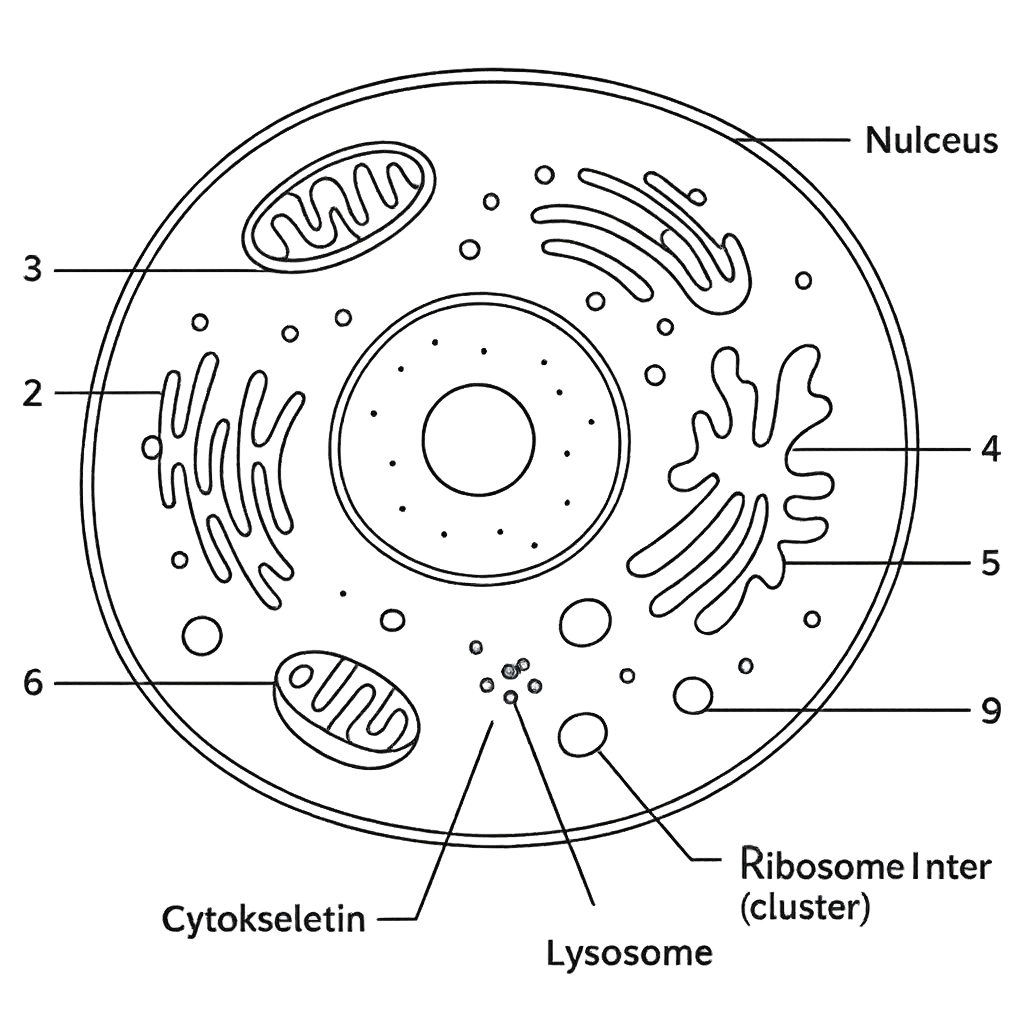
The diagram shows a typical animal eukaryotic cell.
Question Parts
(a)
Identify and label the organelles indicated by the numbers 1‑9 on the diagram.
(b)
State the main function(s) of each labelled organelle.
(c)
Compare the structure of this animal cell with a typical plant cell, mentioning at least three differences.
(d)
Explain how the cell membrane controls the movement of substances into and out of the cell, referring to the concepts of selective permeability and active transport.
(e)
Discuss the role of the cytoskeleton in maintaining cell shape and facilitating cell movement.
Detailed Essay Solution & Marking Scheme Available

Get the step-by-step mathematical proofs, key points required by examiners, and a comprehensive breakdown from our AI Tutor.
Question 2 View Details
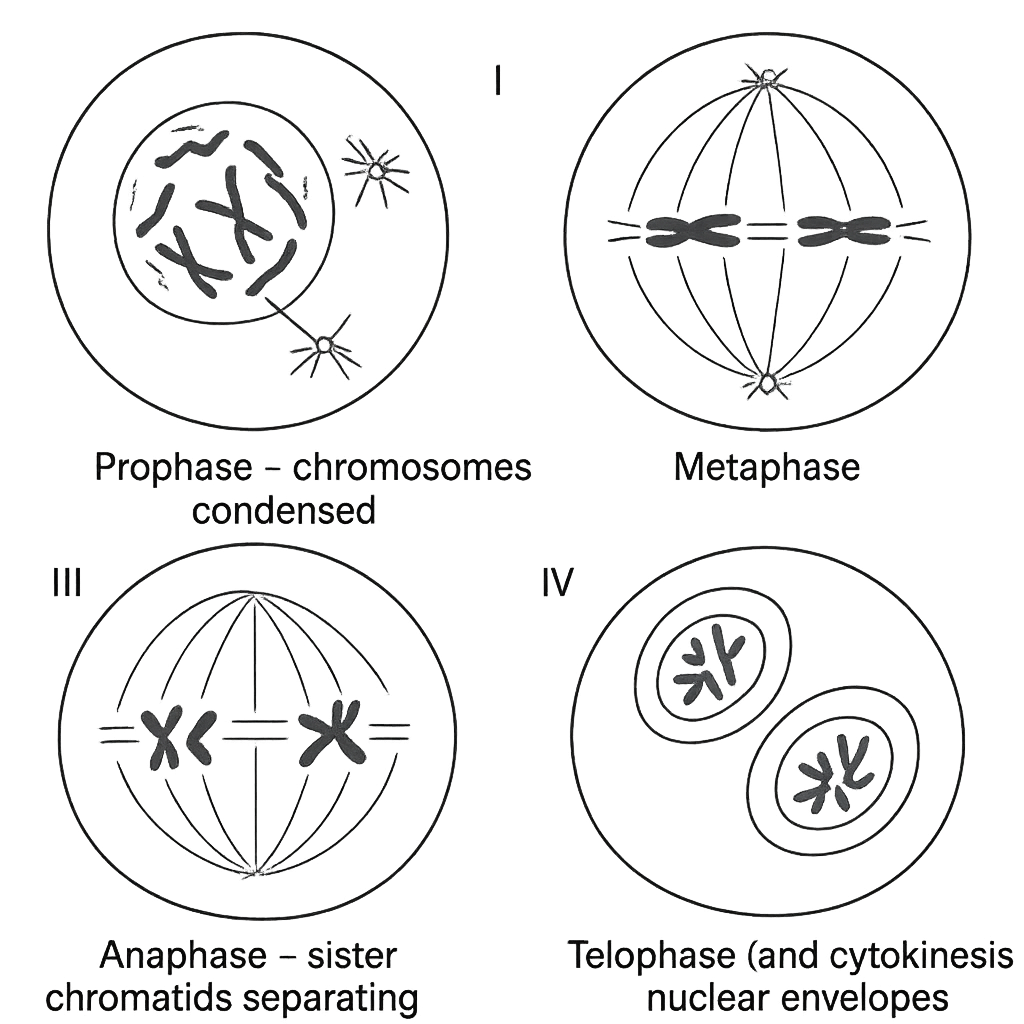
The diagram shows a typical animal cell undergoing mitosis. The four stages are labelled I, II, III and IV.
Question Parts
(a)
Identify the stage represented by each label (I–IV) and state the key events that occur in each stage.
() Label I
() Label II
() Label III
() Label IV
(b)
Explain the role of the spindle apparatus in ensuring accurate chromosome segregation, referring to the diagram.
(c)
A mutation causes the cell to skip the metaphase checkpoint. Discuss two possible consequences of this error for the daughter cells.
Detailed Essay Solution & Marking Scheme Available

Get the step-by-step mathematical proofs, key points required by examiners, and a comprehensive breakdown from our AI Tutor.
Question 3 View Details
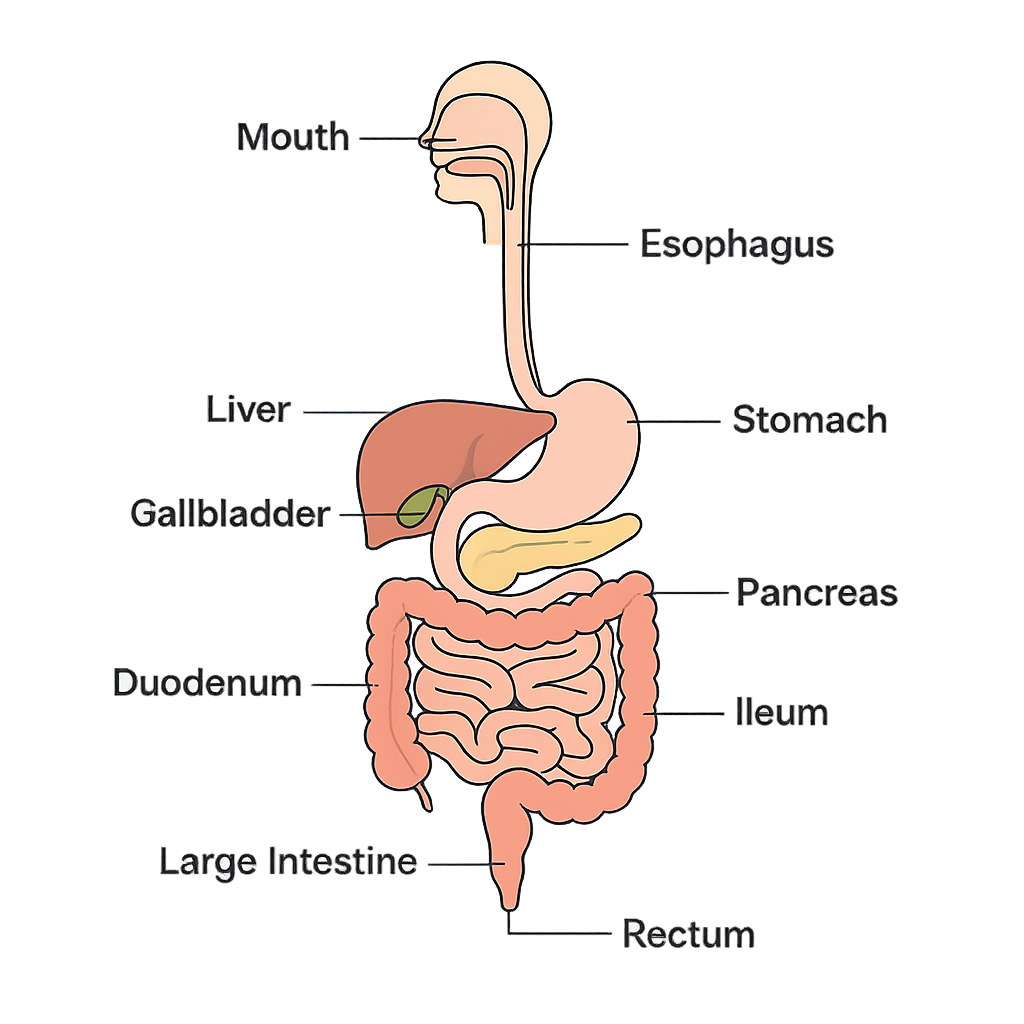
The diagram shows a labelled schematic of the human digestive system.
Question Parts
(a)
List the organs shown in the diagram in the order that a bolus of food passes through them from ingestion to excretion.
(b)
For each of the following organs – stomach, pancreas and small intestine – describe its primary function in digestion and absorption.
(c)
A meal contains 60 g of carbohydrate, 20 g of protein and 15 g of fat. Using the standard Atwater factors (4 kcal g⁻¹ for carbohydrate and protein, 9 kcal g⁻¹ for fat), calculate: (i) the total energy supplied by the meal (in kilocalories); (ii) the percentage contribution of each macronutrient to the total energy.
Detailed Essay Solution & Marking Scheme Available

Get the step-by-step mathematical proofs, key points required by examiners, and a comprehensive breakdown from our AI Tutor.
Question 4 View Details
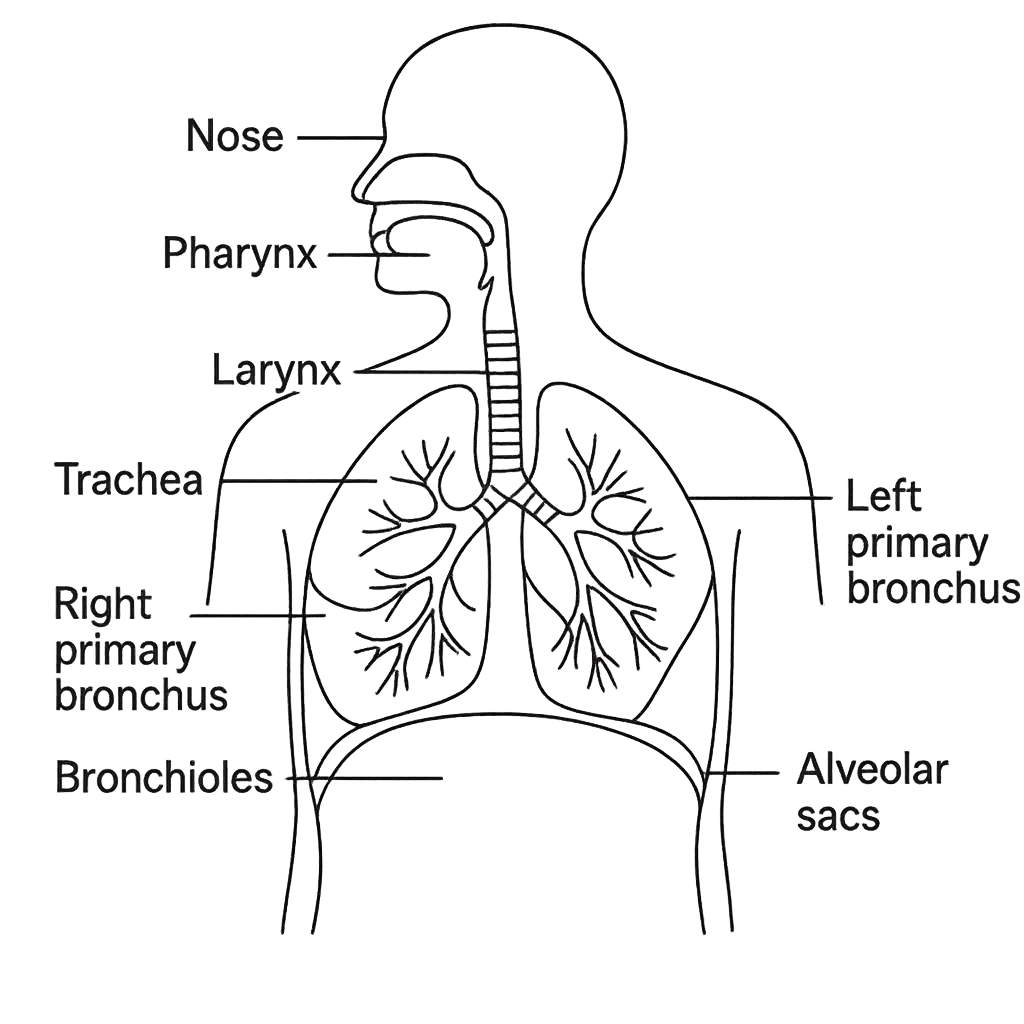
The diagram shows the main structures of the human respiratory system.
Question Parts
(a)
Describe, in the correct order, the pathway that air follows from the external environment to the alveoli. For each structure named, state its principal function in the respiratory process.
(b)
Explain the mechanism of gas exchange that occurs in the alveoli. In your answer, discuss the roles of partial pressure gradients, the respiratory membrane, and the large surface area provided by the alveolar sacs.
(c)
Describe how ventilation (the movement of air in and out of the lungs) is achieved. Focus on the actions of the diaphragm and the external intercostal muscles and explain how changes in thoracic volume affect intrapulmonary pressure.
(d)
Answer the following:
() Compare external respiration with internal respiration, highlighting the differences in location, gases involved and the direction of diffusion.
() Explain how the respiratory system works together with the circulatory system to deliver oxygen to body tissues and remove carbon dioxide.
Detailed Essay Solution & Marking Scheme Available

Get the step-by-step mathematical proofs, key points required by examiners, and a comprehensive breakdown from our AI Tutor.

Question 5 View Details
A flowering plant (species *Impatiens walleriana*) is grown in a greenhouse where temperature, humidity and light intensity can be controlled. The plant is well‑watered and allowed to develop a healthy root system. The researcher wishes to investigate how water is transported from the roots to the leaves and how environmental factors influence the rate of transpiration. The following data were recorded for a fully expanded leaf under two different conditions: | Condition | Light intensity (µmol m⁻² s⁻¹) | Relative humidity (%) | Measured transpiration rate (g H₂O h⁻¹ leaf⁻¹) | |-----------|------------------------------|-----------------------|--------------------------------------------| | A | 200 | 60 | 0.45 | | B | 800 | 30 | 1.20 | Using the information above, answer the following questions:
Question Parts
(a)
Describe in detail the complete pathway that water follows from the soil to the leaf mesophyll, naming all major tissues and structures involved. In your answer, explain the physical mechanisms (e.g., cohesion‑tension, root pressure, capillarity) that drive the upward movement of water.
(b)
Interpret the data in the table. Explain why the transpiration rate differs between Condition A and Condition B, referring to at least three physiological factors that are affected by the changes in light intensity and relative humidity.
(c)
A mutant of *I. walleriana* has been identified in which the expression of aquaporin proteins in root cortical cells is reduced by 70 %. Predict how this genetic change would affect (i) the rate of water uptake from the soil and (ii) the overall transpiration rate under Condition B. Justify your predictions with reference to the role of aquaporins.
Detailed Essay Solution & Marking Scheme Available

Get the step-by-step mathematical proofs, key points required by examiners, and a comprehensive breakdown from our AI Tutor.

Question 6 View Details
A laboratory rat is fed a high‑protein diet for four weeks. Blood samples are taken before and after administration of a new diuretic drug. The following values are recorded: | Parameter | Before drug (control) | After drug (treated) | |--------------------------|-----------------------|----------------------| | Blood urea nitrogen (BUN) (mg dL⁻¹) | 18 | 30 | | Serum creatinine (µmol L⁻¹) | 85 | 120 | | Urine volume (mL day⁻¹) | 25 | 180 | Answer the questions that follow, using the data where appropriate:
Question Parts
(a)
Describe the structure of the mammalian nephron, indicating the function of each major segment (glomerulus, proximal tubule, loop of Henle, distal tubule, collecting duct) in the formation of urine.
(b)
Using the data provided, evaluate the effect of the diuretic drug on kidney function. Discuss what the changes in BUN, serum creatinine and urine volume indicate about glomerular filtration rate (GFR) and tubular handling of solutes.
(c)
Explain how antidiuretic hormone (ADH) modifies water reabsorption in the collecting duct. Predict the likely urine osmolality of the rat under (i) normal hydration and (ii) severe dehydration, and justify your predictions.
Detailed Essay Solution & Marking Scheme Available

Get the step-by-step mathematical proofs, key points required by examiners, and a comprehensive breakdown from our AI Tutor.

Question 7 View Details
A 25‑year‑old male runner is training for a marathon in a hot, humid climate. During a 2‑hour run his core body temperature rises, sweating increases markedly and his blood glucose level falls from 5.5 mmol L⁻¹ to about 3.8 mmol L⁻¹.
Question Parts
(a)
Describe the physiological mechanisms that act to maintain core body temperature during the run.
(b)
Explain how blood glucose concentration is regulated during prolonged moderate‑intensity exercise.
(c)
A runner with type 1 diabetes mellitus joins the same training session without adjusting his insulin dose. Predict the likely consequences for his homeostatic balance and suggest two management strategies to reduce the risk of a serious episode.
Detailed Essay Solution & Marking Scheme Available

Get the step-by-step mathematical proofs, key points required by examiners, and a comprehensive breakdown from our AI Tutor.

Question 8 View Details
A 42‑year‑old male suffers a traumatic spinal cord injury at the T12 vertebral level. He retains voluntary movement of the upper limbs, has loss of voluntary movement in the lower limbs, but the patellar (knee‑jerk) reflex remains present.
Question Parts
(a)
Outline the complete neural pathway that conveys a voluntary motor command from the primary motor cortex to a skeletal muscle of the lower limb.
(b)
Describe the monosynaptic reflex arc that mediates the patellar (knee‑jerk) reflex and explain why this reflex can still be elicited after a T12 lesion.
(c)
Discuss the role of the cerebellum in the coordination of walking and predict the gait abnormalities that would result from a lesion affecting the cerebellar vermis.
(d)
Propose two physiotherapy techniques that could improve functional coordination in this patient and justify how each technique exploits neuro‑plasticity.
Detailed Essay Solution & Marking Scheme Available

Get the step-by-step mathematical proofs, key points required by examiners, and a comprehensive breakdown from our AI Tutor.

Question 9 View Details
A 28‑year‑old woman attends a fertility clinic after two years of unsuccessful attempts to conceive. She reports regular menstrual cycles but occasional mid‑cycle abdominal pain. The following investigations are performed: (i) Serum hormone concentrations on day 3 of the cycle: FSH = 6 IU/L, LH = 5 IU/L, estradiol = 120 pg/mL. (ii) Transvaginal ultrasound on day 14 shows a dominant follicle measuring 18 mm and an endometrial thickness of 5 mm. (iii) Hysterosalpingogram demonstrates patent fallopian tubes. Using this information, answer the questions below.
Question Parts
(a)
Explain the normal hormonal regulation of the menstrual cycle up to the point of ovulation, describing the roles of GnRH, FSH, LH, estradiol and the feedback mechanisms involved.
(b)
Interpret the investigation results and identify the most likely factor contributing to this woman's infertility.
(c)
Discuss two assisted reproductive techniques that could be offered to this couple, outlining for each: the principle, the main steps, and at least one advantage and one limitation.
(d)
Evaluate the ethical considerations associated with the use of assisted reproductive technologies in this case.
Detailed Essay Solution & Marking Scheme Available

Get the step-by-step mathematical proofs, key points required by examiners, and a comprehensive breakdown from our AI Tutor.

Question 10 View Details
The pedigree below represents a three‑generation family affected by an autosomal recessive metabolic disorder that results in accumulation of substrate X. Squares denote males, circles females; filled symbols indicate affected individuals, half‑filled symbols indicate carriers, and unfilled symbols are unaffected non‑carriers. The proband is a 5‑year‑old boy (III‑2) who is affected. His parents (II‑1 and II‑2) are phenotypically normal. His maternal grandfather (I‑2) is affected, while his paternal grandparents are unaffected. [Pedigree description] : I‑1 (male, unaffected) — I‑2 (female, affected) → II‑2 (female, carrier)\nI‑3 (male, unaffected) — I‑4 (female, unaffected) → II‑1 (male, carrier)\nII‑1 × II‑2 → III‑1 (female, unaffected), III‑2 (male, affected), III‑3 (female, carrier).
Question Parts
(a)
State the mode of inheritance of the disorder and justify your answer using evidence from the pedigree.
(b)
Assuming the couple have another child, calculate the probability that the next child will be affected by the disorder.
Detailed Essay Solution & Marking Scheme Available

Get the step-by-step mathematical proofs, key points required by examiners, and a comprehensive breakdown from our AI Tutor.

Master the Exam!

You've seen a preview, but there are thousands more questions plus AI tutor to break down complex solutions.

Unlock Full Access Available for Android & Windows
Help others prepare! Share this practice hub:
Chat with Support