waec model questions vol1 2024 chemistry | Essay

Prepare for your exams with waec model questions vol1 questions? Reviewing past/model questions is one of the most effective ways to guarantee a high score. This practice hub features authentic 2024 chemistry (Essay) questions designed to simulate the real exam environment.

Practice these randomly selected questions to test your readiness.
Question 1 View Details
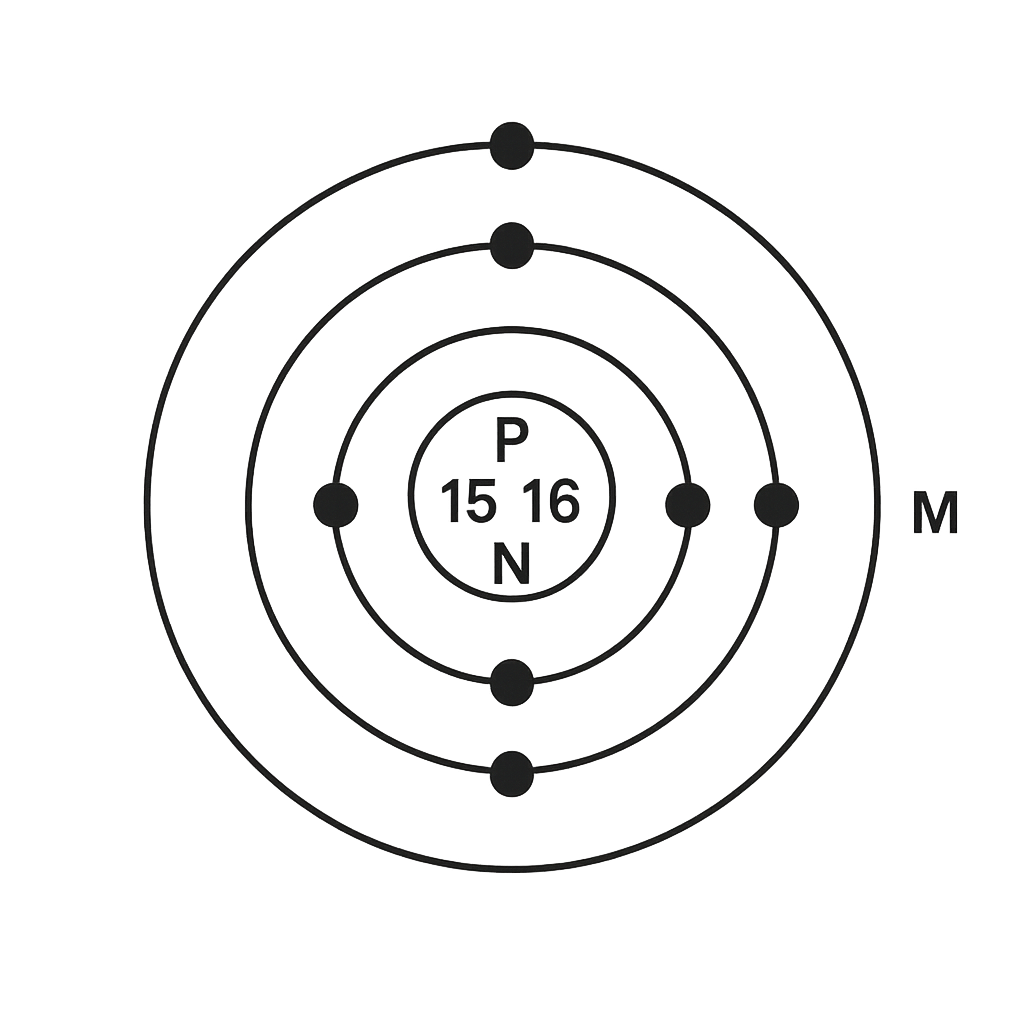
The diagram shows a model of an atom of an unknown element. The nucleus contains 15 protons and 16 neutrons. The electron shells are labelled K, L and M and contain 2, 8 and 5 electrons respectively.
Question Parts
(a)
Identify the element represented by the atom.
(b)
Write the ground‑state electron configuration of the element using the Aufbau principle.
(c)
Calculate the number of neutrons present in the nucleus.
(d)
Explain, on the basis of its electron arrangement, why this element is likely to gain three electrons when it forms compounds.
Detailed Essay Solution & Marking Scheme Available

Get the step-by-step mathematical proofs, key points required by examiners, and a comprehensive breakdown from our AI Tutor.
Question 2 View Details
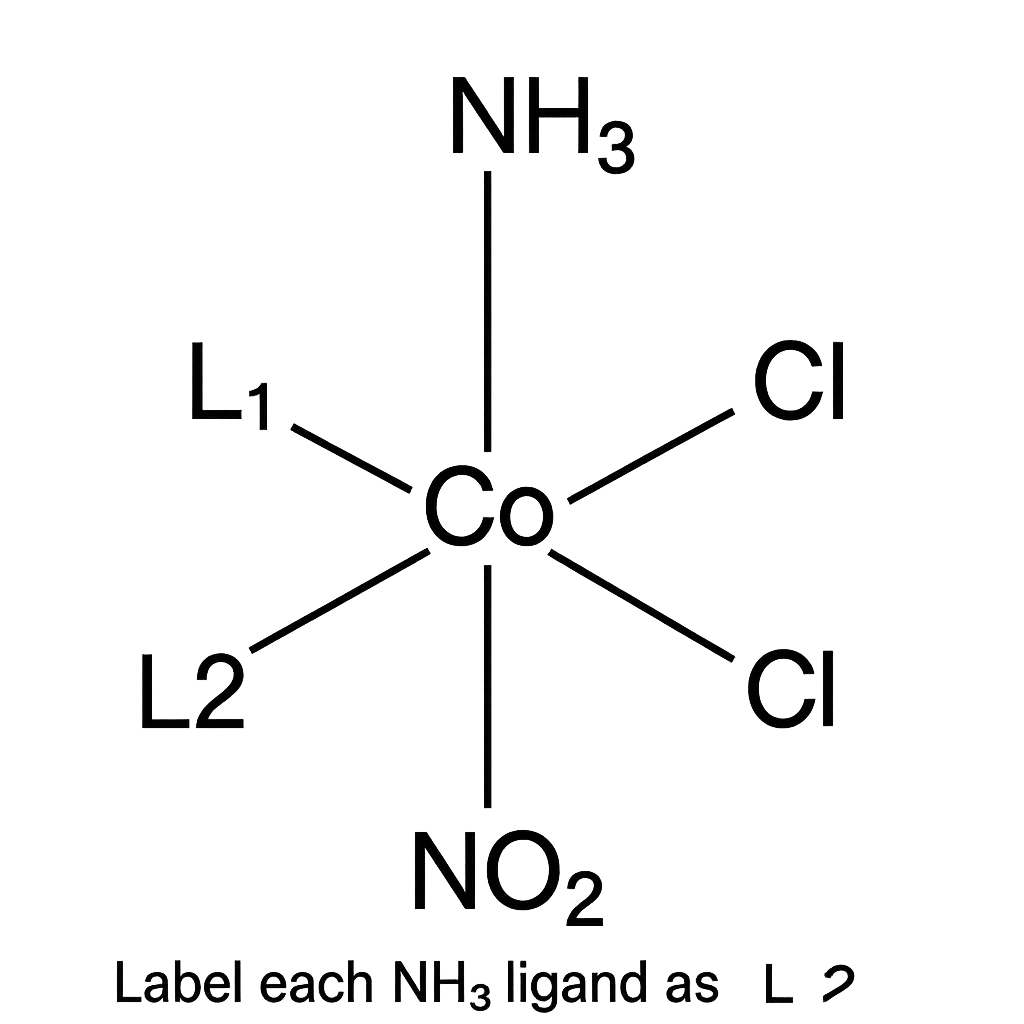
The diagram shows an octahedral coordination complex. The central metal ion is cobalt (Co) and the six coordination sites are occupied by the ligands indicated: - Three ammonia molecules (NH₃) are labelled as L₁ and are positioned at the three mutually trans sites. - Two chloride ions (Cl⁻) are labelled as L₂ and occupy adjacent equatorial positions. - One nitrito ligand (NO₂⁻) is labelled as L₃ and occupies the remaining equatorial position. Using the information from the diagram, answer the following questions.
Question Parts
(a)
Write the correct IUPAC name of the complex, including the oxidation state of the metal.
(b)
Determine the oxidation state of the cobalt ion in the complex.
(c)
Calculate the number of d‑electrons present in the cobalt ion after oxidation.
(d)
Discuss the type of geometric isomerism possible for this complex and give the name of one alternative isomer that could be formed by rearranging the ligands.
Detailed Essay Solution & Marking Scheme Available

Get the step-by-step mathematical proofs, key points required by examiners, and a comprehensive breakdown from our AI Tutor.
Question 3 View Details
A compound AB is formed between element A (electronegativity 2.1) and element B (electronegativity 3.5). The measured lattice energy of the solid AB is 750 kJ mol⁻¹. The compound is soluble in water and conducts electricity when molten.
Question Parts
(a)
State the type of chemical bond present in AB and justify your answer using the given electronegativity difference and lattice energy.
(b)
Calculate the percent ionic character of the A–B bond using the formula % ionic = (1 – e^{‑0.25(Δχ)²}) × 100, where Δχ is the electronegativity difference.
(c)
Explain why AB conducts electricity when molten but does not conduct in the solid state.
Detailed Essay Solution & Marking Scheme Available

Get the step-by-step mathematical proofs, key points required by examiners, and a comprehensive breakdown from our AI Tutor.

Question 4 View Details
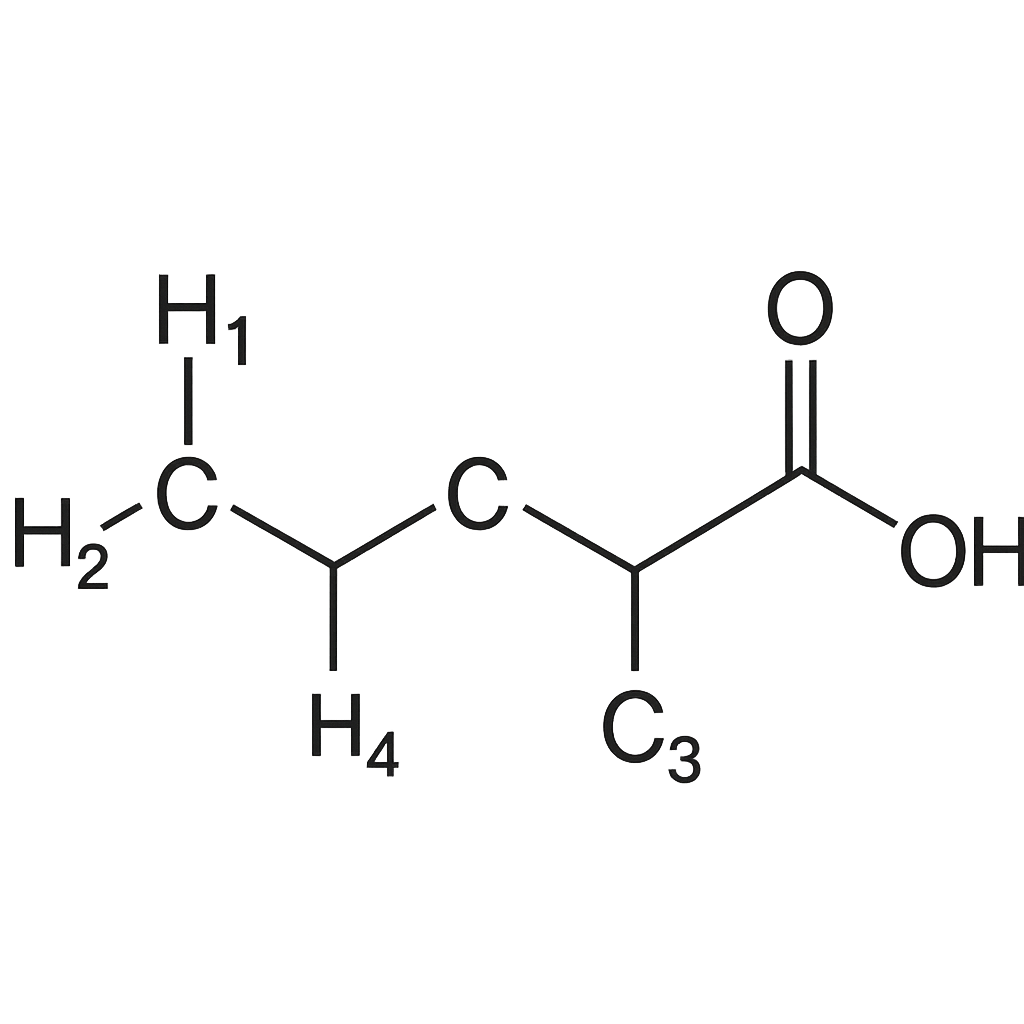
The diagram shows the structural formula of an organic compound X.
Question Parts
(a)
Write the molecular formula of compound X.
(b)
Calculate the molar mass of X (give your answer to two decimal places).
(c)
A 3.60 g sample of X is dissolved in water. Determine:
() The number of moles of X present.
() The number of molecules of X present (use 6.022×10²³ as Avogadro’s number).
(d)
When the entire sample reacts with excess NaOH in a 1:1 molar ratio, the chloride ion from X combines with Na⁺ to form NaCl. Calculate the mass of NaCl produced.
Detailed Essay Solution & Marking Scheme Available

Get the step-by-step mathematical proofs, key points required by examiners, and a comprehensive breakdown from our AI Tutor.

Question 5 View Details
Calcium carbonate reacts with hydrochloric acid according to the balanced equation: CaCO₃(s) + 2 HCl(aq) → CaCl₂(aq) + CO₂(g) + H₂O(l) A student mixes 12.0 g of CaCO₃ with 15.0 g of HCl in a conical flask. Answer the following:
Question Parts
(a)
Identify the limiting reagent and show the calculations used to reach the conclusion.
(b)
Calculate the theoretical mass of carbon dioxide that can be produced.
(c)
If 4.5 g of CO₂ were actually collected, calculate the percent yield and state the theoretical mass of CaCl₂ that should have formed.
Detailed Essay Solution & Marking Scheme Available

Get the step-by-step mathematical proofs, key points required by examiners, and a comprehensive breakdown from our AI Tutor.

Question 6 View Details
A pure substance X has a melting point of 150 °C and a boiling point of 300 °C at 1 atm. Its specific heat capacities are 0.50 J g⁻¹ K⁻¹ (solid) and 0.80 J g⁻¹ K⁻¹ (liquid). The latent heat of fusion is 60 kJ kg⁻¹ and the latent heat of vaporisation is 150 kJ kg⁻¹. A 200 g sample of X is initially at 25 °C and is heated at constant pressure. Answer the following:
Question Parts
(a)
Calculate the total amount of heat required to convert the whole sample into vapour and then raise the vapour temperature to 350 °C.
Detailed Essay Solution & Marking Scheme Available

Get the step-by-step mathematical proofs, key points required by examiners, and a comprehensive breakdown from our AI Tutor.

Question 7 View Details
A 0.200 mol sample of the weak monoprotic acid HA (Ka = 1.8 × 10⁻⁵) is dissolved in 500 mL of water. Afterwards 0.050 mol of its sodium salt NaA is added to the solution. Answer the following questions:
Question Parts
(a)
Calculate the pH of the resulting solution. Show clearly how you obtain the concentrations of HA and A⁻ before using any equation.
(b)
If 0.010 mol of a strong acid (HCl) is added to the above buffer, recalculate the pH of the solution. State the stoichiometric changes that occur before the pH calculation.
(c)
The original buffer solution (before adding HCl) is now neutralised by adding NaOH until the equivalence point is reached. Identify the salt formed and discuss its solubility behaviour in water.
Detailed Essay Solution & Marking Scheme Available

Get the step-by-step mathematical proofs, key points required by examiners, and a comprehensive breakdown from our AI Tutor.

Question 8 View Details
A solubility experiment for silver chloride (AgCl) was carried out as follows: - 250 mL of distilled water was placed in a beaker (labelled A) and the beaker was positioned on a water‑bath (labelled B) set to maintain a temperature of 60 °C. The density of water at this temperature is 0.983 g mL⁻¹. - A thermometer (C) was inserted into the beaker to monitor the temperature. - Excess solid AgCl (2.00 g) was added to the water and the mixture was stirred with a glass rod (D) until no further dissolution was observed. - The suspension was filtered using a filter funnel (E) fitted with filter paper (F). The filtrate was collected in a clean container. - The undissolved solid retained on the filter paper was transferred to a pre‑weighed weighing dish (G) and dried. The mass of the dried solid was recorded as 0.500 g on an analytical balance (H). - After filtration, the volume of the clear saturated solution was measured as 240 mL. The diagram of the apparatus is provided. Using the information above, answer the following questions:
Question Parts
(a)
Calculate the solubility of AgCl at 60 °C in mol L⁻¹. Show all steps, including how you determine the amount of AgCl that actually dissolved.
(b)
Using the solubility obtained in part (a), calculate the solubility‑product constant (Ksp) of AgCl at 60 °C. State any assumptions made.
(c)
If the temperature is raised to 80 °C and the solubility of AgCl is found to increase by 20 % relative to that at 60 °C, calculate the new Ksp at 80 °C. Then discuss qualitatively how temperature influences the solubility product of this salt.
(d)
Explain how the addition of 0.10 mol L⁻¹ NaCl to the saturated AgCl solution at 60 °C would affect its solubility. Include the common‑ion effect in your discussion and give the new equilibrium concentration of Ag⁺ ions.
Detailed Essay Solution & Marking Scheme Available

Get the step-by-step mathematical proofs, key points required by examiners, and a comprehensive breakdown from our AI Tutor.

Master the Exam!

You've seen a preview, but there are thousands more questions plus AI tutor to break down complex solutions.

Unlock Full Access Available for Android & Windows
Help others prepare! Share this practice hub:
Chat with Support