waec model questions vol1 2024 biology | Essay

Prepare for your exams with waec model questions vol1 questions? Reviewing past/model questions is one of the most effective ways to guarantee a high score. This practice hub features authentic 2024 biology (Essay) questions designed to simulate the real exam environment.

Practice these randomly selected questions to test your readiness.
Question 1 View Details
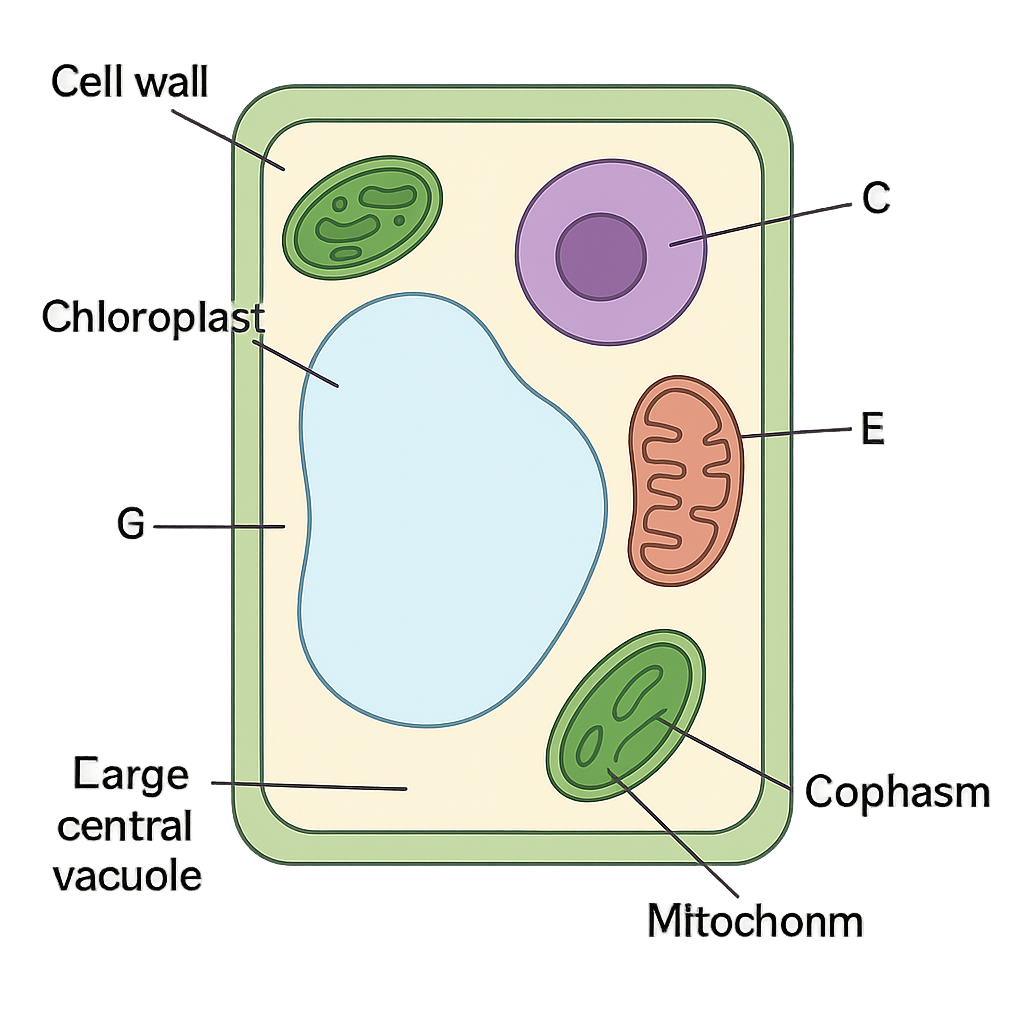
The labelled diagram depicts a typical plant cell. The labels are as follows: A – cell wall, B – cell membrane, C – nucleus, D – chloroplast, E – mitochondrion, F – large central vacuole, G – cytoplasm.
Question Parts
(a)
State the main function of each labelled structure (A–G).
(b)
Explain how the selective permeability of the cell membrane (label B) contributes to homeostasis in the plant cell.
(c)
Compare the roles of chloroplasts (label D) and mitochondria (label E) in the cell’s energy metabolism.
Detailed Essay Solution & Marking Scheme Available

Get the step-by-step mathematical proofs, key points required by examiners, and a comprehensive breakdown from our AI Tutor.
Question 2 View Details
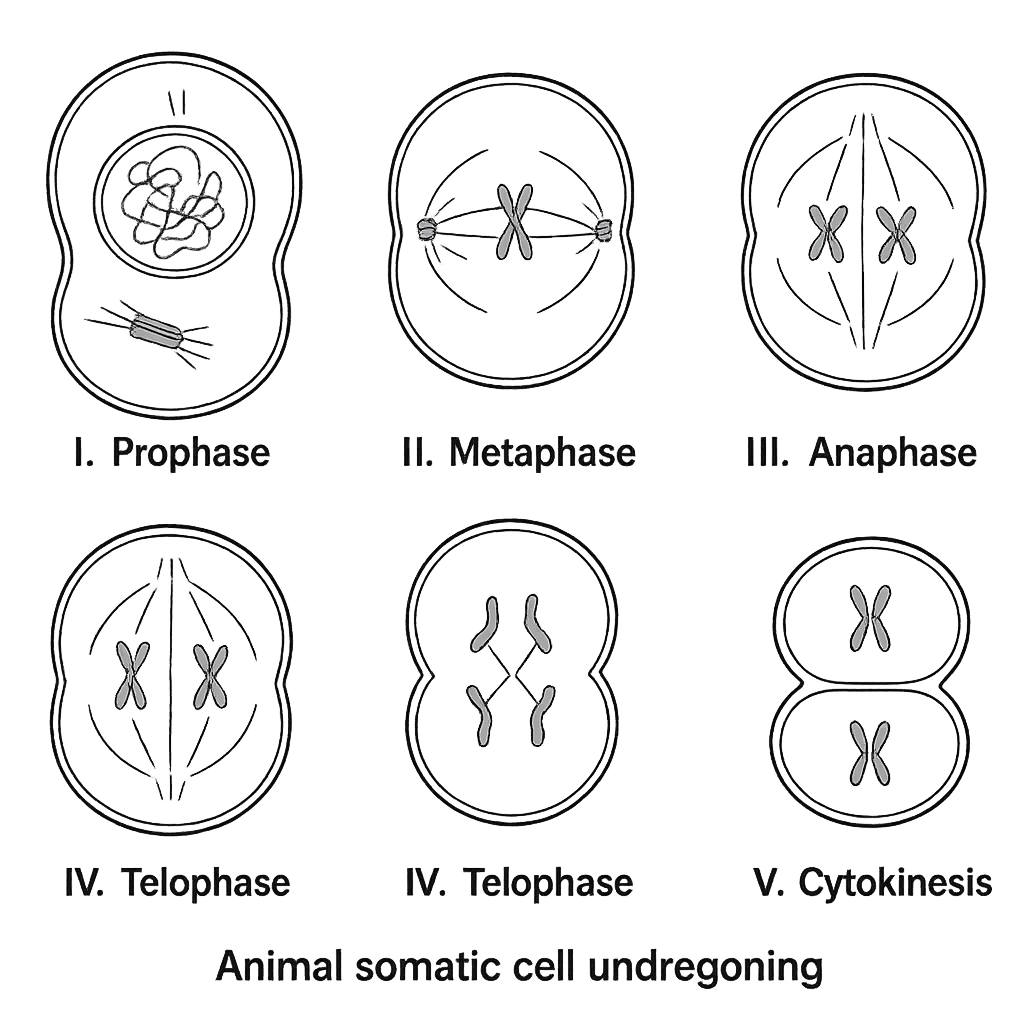
The diagram shows an animal somatic cell undergoing mitosis. Five sequential stages are labelled I to V.
Question Parts
(a)
Identify the stage represented by label I and list two major events that occur in this stage.
(b)
Stage III corresponds to anaphase. Explain how spindle fibres and kinetochore attachment ensure accurate segregation of sister chromatids.
(c)
Assume a mutation causes the cell to move directly from stage I to stage IV, bypassing stages II and III. Discuss two possible abnormalities that could arise in the resulting daughter cells.
Detailed Essay Solution & Marking Scheme Available

Get the step-by-step mathematical proofs, key points required by examiners, and a comprehensive breakdown from our AI Tutor.
Question 3 View Details
Cell structure and function are fundamental to understanding biology.
Question Parts
(a)
State two major differences between prokaryotic and eukaryotic cells.
(b)
Describe the structure and function of the mitochondrion.
(c)
Explain the role of the ribosome in protein synthesis.
Detailed Essay Solution & Marking Scheme Available

Get the step-by-step mathematical proofs, key points required by examiners, and a comprehensive breakdown from our AI Tutor.

Question 4 View Details
A group of secondary school students undertakes a three‑day trek to a mountain camp situated at an altitude of 3000 m above sea level. At sea level the ambient partial pressure of oxygen (PO₂) is 160 mmHg, giving an alveolar PO₂ of about 100 mmHg. At 3000 m the ambient PO₂ falls to 100 mmHg, resulting in an alveolar PO₂ of roughly 70 mmHg. Answer the following questions:
Question Parts
(a)
Explain the immediate respiratory response of the students when they first arrive at the altitude, describing the changes in ventilation rate and depth and the physiological basis for these changes.
(b)
Describe the longer‑term (acclimatization) respiratory adaptations that occur if the students remain at this altitude for several weeks.
(c)
Identify two health risks associated with high‑altitude exposure for adolescents and suggest one preventive measure for each risk.
Detailed Essay Solution & Marking Scheme Available

Get the step-by-step mathematical proofs, key points required by examiners, and a comprehensive breakdown from our AI Tutor.

Question 5 View Details
The circulatory system is essential for the transport of nutrients, gases and waste products in the human body.
Question Parts
(a)
Describe the structural features of the human heart that enable it to function as a double pump.
(b)
Explain how baroreceptors contribute to short‑term regulation of blood pressure.
(c)
A 25‑year‑old athlete becomes severely dehydrated after an intense training session. Predict the effect of this condition on blood volume and describe two physiological adjustments that help maintain circulatory homeostasis.
Detailed Essay Solution & Marking Scheme Available

Get the step-by-step mathematical proofs, key points required by examiners, and a comprehensive breakdown from our AI Tutor.

Question 6 View Details
The kidneys play a vital role in maintaining the chemical composition of body fluids through the processes of filtration, reabsorption and secretion.
Question Parts
(a)
Outline the three main steps involved in the formation of urine in a single nephron, indicating where each step occurs.
(b)
A person switches to a high‑protein diet that increases the daily production of urea. Explain how the nephron adjusts its function to cope with the increased urea load while conserving water.
(c)
Describe the mechanism by which antidiuretic hormone (ADH) increases water reabsorption in the kidneys and predict the likely urinary concentration in a patient with insufficient ADH secretion (e.g., diabetes insipidus).
Detailed Essay Solution & Marking Scheme Available

Get the step-by-step mathematical proofs, key points required by examiners, and a comprehensive breakdown from our AI Tutor.

Question 7 View Details
A 45‑year‑old man with type‑1 diabetes mellitus missed his morning insulin injection and presents with persistent hyperglycaemia. Using this situation, discuss the homeostatic control of blood glucose concentration in a healthy individual and explain the likely physiological disturbances that would arise from failure of pancreatic β‑cells.
Question Parts
(a)
Describe the normal sequence of events that maintain blood glucose within the narrow physiological range after a meal.
(b)
Explain how the negative‑feedback mechanism operates to prevent excessive hyperglycaemia.
(c)
Predict the short‑term and long‑term physiological consequences of complete loss of β‑cell function.
Detailed Essay Solution & Marking Scheme Available

Get the step-by-step mathematical proofs, key points required by examiners, and a comprehensive breakdown from our AI Tutor.

Question 8 View Details
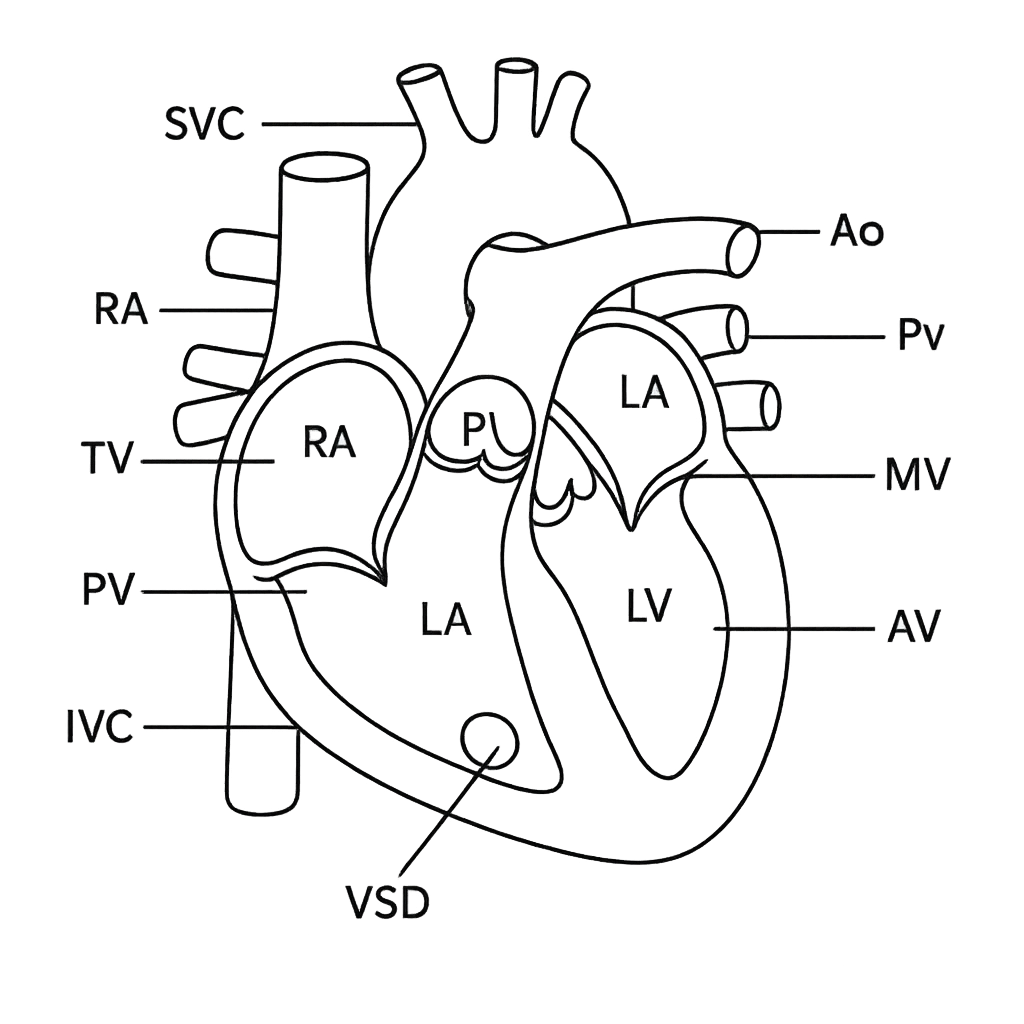
The labelled diagram of the human heart is provided. It shows the four chambers, the four major valves, the major vessels entering and leaving the heart and a marked hole in the interventricular septum indicating a ventricular septal defect (VSD).
Question Parts
(a)
Describe, in the correct sequential order, the complete pathway of blood through the heart starting from the systemic circulation (vena cava) to the pulmonary circulation (pulmonary artery). State the chambers and vessels involved at each step.
(b)
If the right ventricle pumps 5.0 L of blood per minute into the pulmonary artery and the heart rate is 75 beats per minute, calculate the stroke volume of the ventricle in millilitres per beat. Show the formula you use and the intermediate steps.
(c)
Discuss two physiological mechanisms that regulate heart rate during moderate to intense exercise, linking each mechanism to the autonomic nervous system.
(d)
The diagram indicates a ventricular septal defect (VSD). Explain how this defect alters the normal flow of blood through the heart and describe two possible clinical consequences of a large VSD.
Detailed Essay Solution & Marking Scheme Available

Get the step-by-step mathematical proofs, key points required by examiners, and a comprehensive breakdown from our AI Tutor.

Master the Exam!

You've seen a preview, but there are thousands more questions plus AI tutor to break down complex solutions.

Unlock Full Access Available for Android & Windows
Help others prepare! Share this practice hub:
Chat with Support