waec model questions vol1 2022 chemistry | Essay

Prepare for your exams with waec model questions vol1 questions? Reviewing past/model questions is one of the most effective ways to guarantee a high score. This practice hub features authentic 2022 chemistry (Essay) questions designed to simulate the real exam environment.

Practice these randomly selected questions to test your readiness.
Question 1 View Details
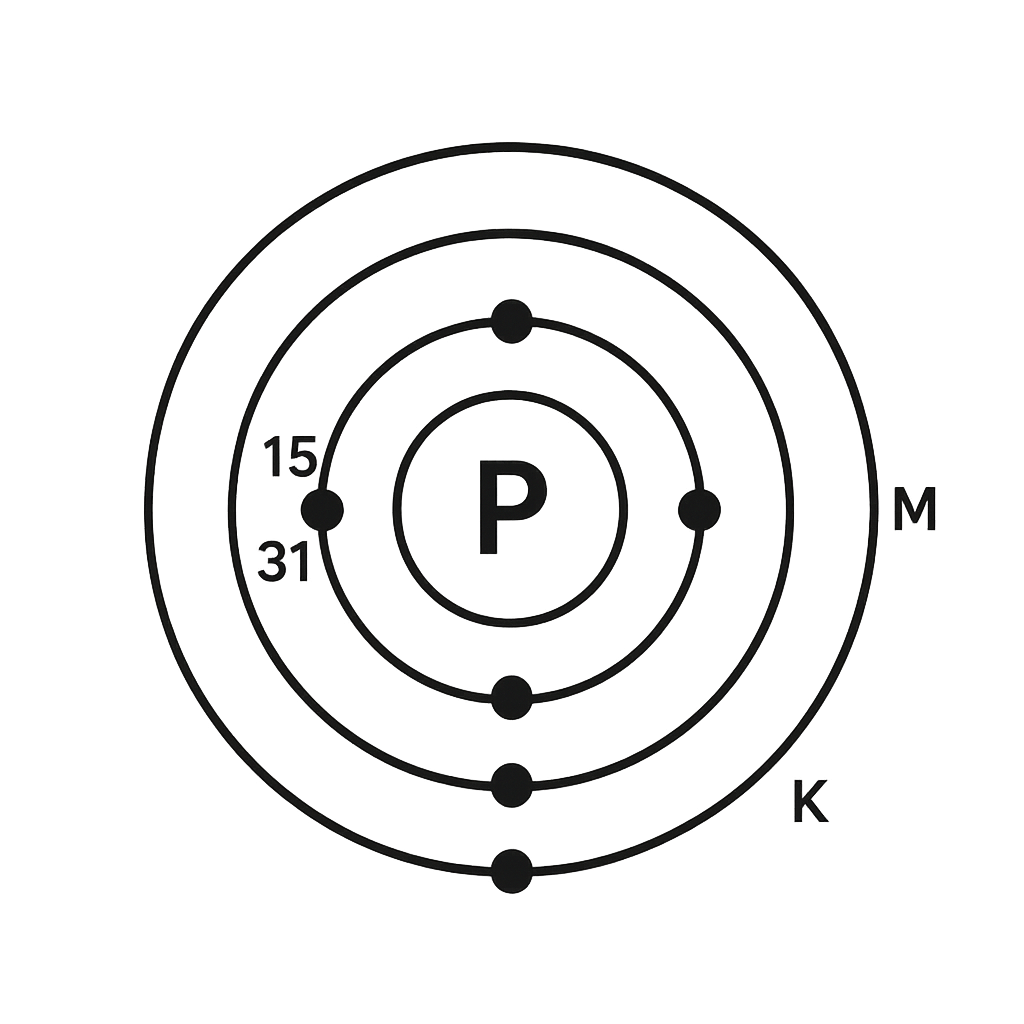
The diagram shows a Bohr model of a neutral atom of element X.
Question Parts
(a)
State the atomic number (Z) and the mass number (A) of element X as shown in the diagram.
(b)
Write the ground‑state electron configuration of element X using the (n, l) notation (e.g., (1s)², (2s)², …).
(c)
Explain why element X belongs to the same group as nitrogen (N), which has the outer‑most electron configuration (2s)²(2p)³.
Detailed Essay Solution & Marking Scheme Available

Get the step-by-step mathematical proofs, key points required by examiners, and a comprehensive breakdown from our AI Tutor.

Question 2 View Details
The diagram presents a section of the periodic table covering periods 2 and 3 with the symbols and atomic numbers of the elements.
Question Parts
(a)
State the atomic number and symbol of the element that is in period 3, group 2.
(b)
The diagram indicates that the atomic radius of the element in period 2, group 17 is 100 pm and that of the element in period 3, group 17 is 110 pm. Calculate the percentage increase in atomic radius when moving down this group.
(c)
Explain why the ionisation energy of the element in period 3, group 2 is lower than that of the element in period 2, group 2, using periodic trends.
Detailed Essay Solution & Marking Scheme Available

Get the step-by-step mathematical proofs, key points required by examiners, and a comprehensive breakdown from our AI Tutor.

Question 3 View Details
Calcium nitrate, Ca(NO₃)₂, is a white crystalline solid. In the solid state it has a high melting point and does not conduct electricity. When it is dissolved in water it dissociates completely and the aqueous solution conducts electricity.
Question Parts
(a)
State the type of chemical bonding present in solid calcium nitrate and give two pieces of evidence from the description to support your answer.
(b)
Write the formula of the nitrate ion and draw its Lewis structure, clearly indicating resonance.
(c)
Using VSEPR theory, predict the shape of the nitrate ion and give the expected bond angle(s).
(d)
Explain why an aqueous solution of calcium nitrate conducts electricity whereas the solid does not.
Detailed Essay Solution & Marking Scheme Available

Get the step-by-step mathematical proofs, key points required by examiners, and a comprehensive breakdown from our AI Tutor.

Question 4 View Details
The diagram shows an octahedral coordination complex. The central metal ion is cobalt (Co). Two ammonia (NH₃) ligands are positioned cis to each other, two chloride (Cl⁻) ligands are positioned trans to each other, a water (H₂O) ligand is trans to a nitro (NO₂⁻) ligand. The complex ion carries an overall charge of +1 and the compound is isolated as its chloride salt with two molecules of crystallisation water, giving the formula [Co(NH₃)₂Cl₂(H₂O)(NO₂)]Cl·2H₂O.
Question Parts
(a)
Determine the oxidation state of the cobalt ion in the complex.
(b)
Write the empirical formula of the isolated salt, including the waters of crystallisation.
(c)
Calculate the percentage by mass of cobalt in the compound. (Use atomic masses: Co = 58.93 g mol⁻¹, Cl = 35.45 g mol⁻¹, N = 14.01 g mol⁻¹, H = 1.008 g mol⁻¹, O = 16.00 g mol⁻¹.)
(d)
The complex exhibits ionisation isomerism. Write the formula of the ionisation isomer and briefly explain how it differs from the given compound.
Detailed Essay Solution & Marking Scheme Available

Get the step-by-step mathematical proofs, key points required by examiners, and a comprehensive breakdown from our AI Tutor.

Question 5 View Details
A student carries out the following reaction in a laboratory: CaCO₃ (s) + 2 HCl (aq) → CaCl₂ (aq) + H₂O (l) + CO₂ (g) The student weighs 2.00 g of calcium carbonate and adds excess hydrochloric acid. The molar masses are: CaCO₃ = 100.09 g·mol⁻¹, CO₂ = 44.01 g·mol⁻¹. The volume of carbon dioxide collected over water at 25 °C and 1.00 atm is 0.35 L. The vapour pressure of water at 25 °C is 23.8 mmHg. Answer the following:
Question Parts
(a)
Identify the limiting reagent and justify your choice.
(b)
Calculate the theoretical volume of CO₂ (at STP, 22.4 L·mol⁻¹) that could be produced from the given amount of calcium carbonate.
(c)
Determine the percent yield of CO₂ based on the volume actually collected (corrected to dry gas at STP).
(d)
Discuss at least two possible reasons why the experimental percent yield may be lower than 100 %.
Detailed Essay Solution & Marking Scheme Available

Get the step-by-step mathematical proofs, key points required by examiners, and a comprehensive breakdown from our AI Tutor.

Question 6 View Details
A solution is prepared by dissolving 5.00 g of a non‑volatile solute in 200.0 g of water at 25 °C. The boiling point of pure water is 100.0 °C and the ebullioscopic constant (K_b) of water is 0.512 °C·kg·mol⁻¹. The observed boiling point of the solution is 100.8 °C. The vapour pressure of pure water at 100 °C is 23.8 mmHg. Answer the following:
Question Parts
(a)
Calculate the molality of the solution using the observed boiling point elevation.
(b)
Determine the molar mass of the solute.
(c)
Using Raoult’s law, estimate the vapour pressure of the solution at 100 °C and state the magnitude of the vapour‑pressure lowering.
(d)
Explain why the solute also lowers the freezing point of water and relate this to the concept of colligative properties.
Detailed Essay Solution & Marking Scheme Available

Get the step-by-step mathematical proofs, key points required by examiners, and a comprehensive breakdown from our AI Tutor.

Question 7 View Details
A student prepares a buffer solution by dissolving 0.200 mol of acetic acid (CH₃COOH) and 0.150 mol of sodium acetate (CH₃COONa) in enough water to make 1.00 L of solution. The acid dissociation constant of acetic acid at 25 °C is Ka = 1.8 × 10⁻⁵. The student then adds 0.0050 mol of a strong acid (HCl) to the buffer and records the change in pH. Answer the following questions:
Question Parts
(a)
Calculate the initial pH of the buffer solution before any strong acid is added. Show all steps.
(b)
After the addition of 0.0050 mol HCl, calculate the new pH of the solution. State any assumptions made.
(c)
Explain qualitatively how an increase in temperature would affect the pH of this buffer solution. Relate your answer to the temperature dependence of Ka for acetic acid.
(d)
Using the data from parts (a) and (b), determine the buffer capacity (β) of the solution, defined as β = Δn / ΔpH, where Δn is the amount (in moles) of strong acid added.
Detailed Essay Solution & Marking Scheme Available

Get the step-by-step mathematical proofs, key points required by examiners, and a comprehensive breakdown from our AI Tutor.

Question 8 View Details
A student carried out a gravimetric determination of the solubility product of calcium fluoride, CaF₂, at 25 °C using the apparatus shown in the diagram. The procedure was: 1. A 250 mL beaker (label A) was filled with distilled water and excess solid CaF₂ was added. The mixture was stirred with a glass rod (label G) until equilibrium was reached at 25 °C (monitored with a thermometer, label F). 2. The saturated solution was filtered through a pre‑weighed filter paper (label C) placed in a filter funnel (label B) attached to a stand. 3. The filtrate was collected in a clean beaker, and the residue on the filter paper was washed with a small amount of cold distilled water. 4. The filter paper with the CaF₂ precipitate was transferred to a pre‑weighed drying crucible (label D) placed on a tripod and dried in an oven. 5. After cooling in a desiccator, the crucible was weighed on an analytical balance (label E). The mass of dried CaF₂ obtained was 0.345 g. 6. In a second trial the student added 0.10 mol of NaF to the saturated solution before filtration and repeated steps 3–5. Using the information above, answer the following questions.
Question Parts
(a)
Calculate the molar solubility (s) of CaF₂ in pure water at 25 °C from the experimental data of the first trial.
(b)
Using the molar solubility obtained in (a), determine the experimental value of Ksp for CaF₂ at 25 °C.
(c)
Predict qualitatively how the mass of CaF₂ precipitated in the second trial (with 0.10 mol NaF added) will compare with the first trial and explain the observation in terms of the common‑ion effect.
(d)
The literature Ksp of CaF₂ at 25 °C is 1.5 × 10⁻¹⁰. Discuss at least three possible sources of error in the experiment that could account for the large discrepancy between the experimental Ksp obtained in (b) and the literature value.
Detailed Essay Solution & Marking Scheme Available

Get the step-by-step mathematical proofs, key points required by examiners, and a comprehensive breakdown from our AI Tutor.

Master the Exam!

You've seen a preview, but there are thousands more questions plus AI tutor to break down complex solutions.

Unlock Full Access Available for Android & Windows
Help others prepare! Share this practice hub:
Chat with Support