waec model questions vol1 2022 biology | Essay

Prepare for your exams with waec model questions vol1 questions? Reviewing past/model questions is one of the most effective ways to guarantee a high score. This practice hub features authentic 2022 biology (Essay) questions designed to simulate the real exam environment.

Practice these randomly selected questions to test your readiness.
Question 1 View Details
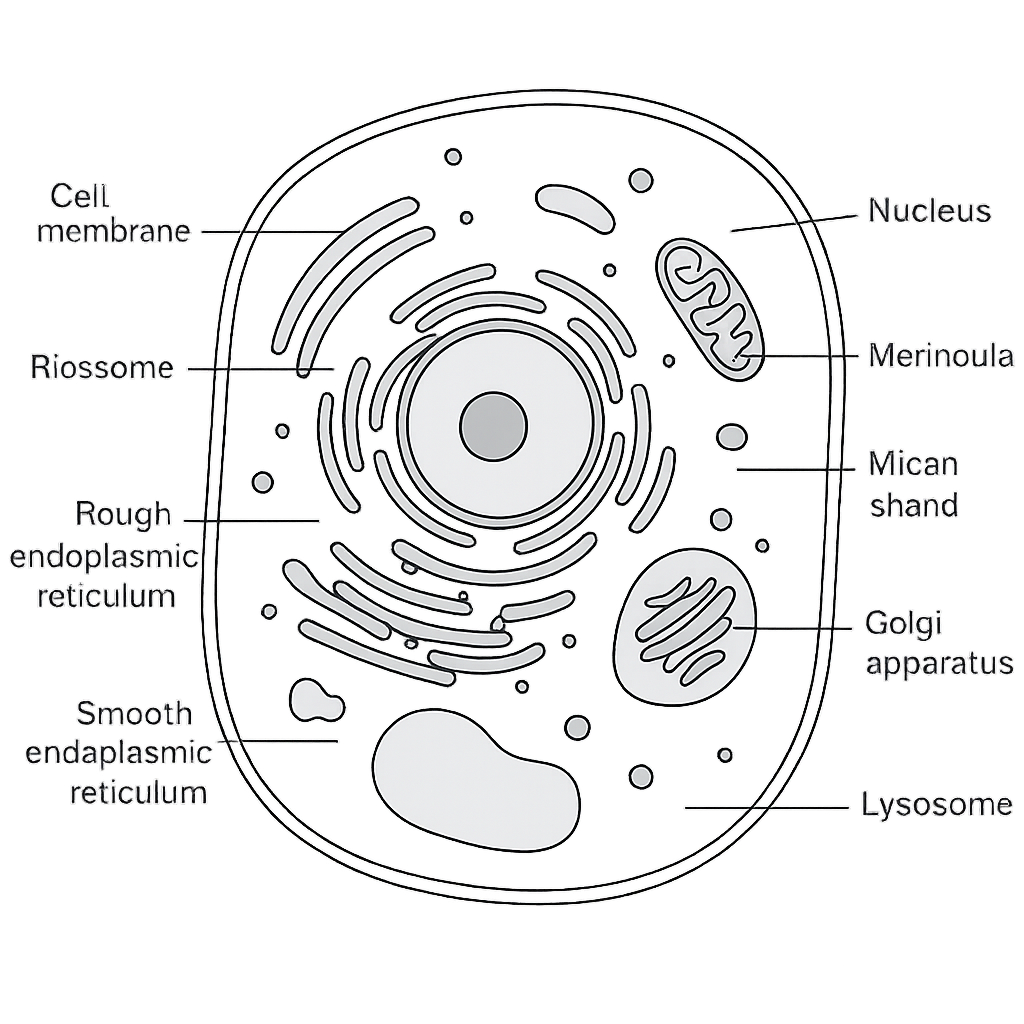
The diagram shows a typical animal cell.
Question Parts
(a)
Identify any four organelles shown in the diagram and state the main function of each.
(b)
Explain the role of the mitochondrion in cellular metabolism.
(c)
Compare the structure of the rough endoplasmic reticulum (RER) and the smooth endoplasmic reticulum (SER) and relate these structural differences to their respective functions.
(d)
Discuss how the cell membrane contributes to selective permeability in the cell.
Detailed Essay Solution & Marking Scheme Available

Get the step-by-step mathematical proofs, key points required by examiners, and a comprehensive breakdown from our AI Tutor.
Question 2 View Details
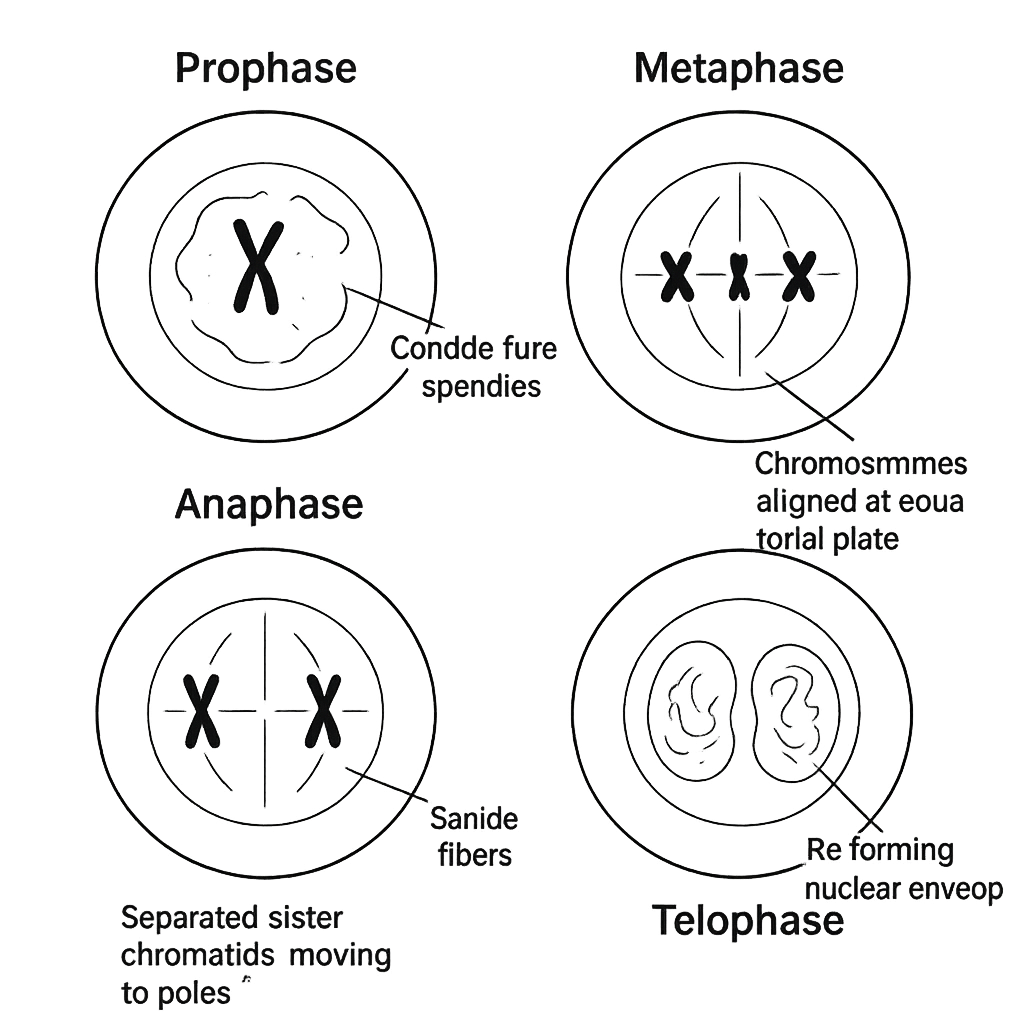
The diagram illustrates the stages of mitosis in a typical eukaryotic cell.
Question Parts
(a)
Name the four phases of mitosis in the order they occur.
(b)
For each phase, describe the principal chromosomal events that take place.
(c)
Explain the significance of cytokinesis and state how it differs between animal and plant cells.
(d)
During prophase the nucleolus disappears. Provide a mechanistic explanation for this observation.
Detailed Essay Solution & Marking Scheme Available

Get the step-by-step mathematical proofs, key points required by examiners, and a comprehensive breakdown from our AI Tutor.
Question 3 View Details
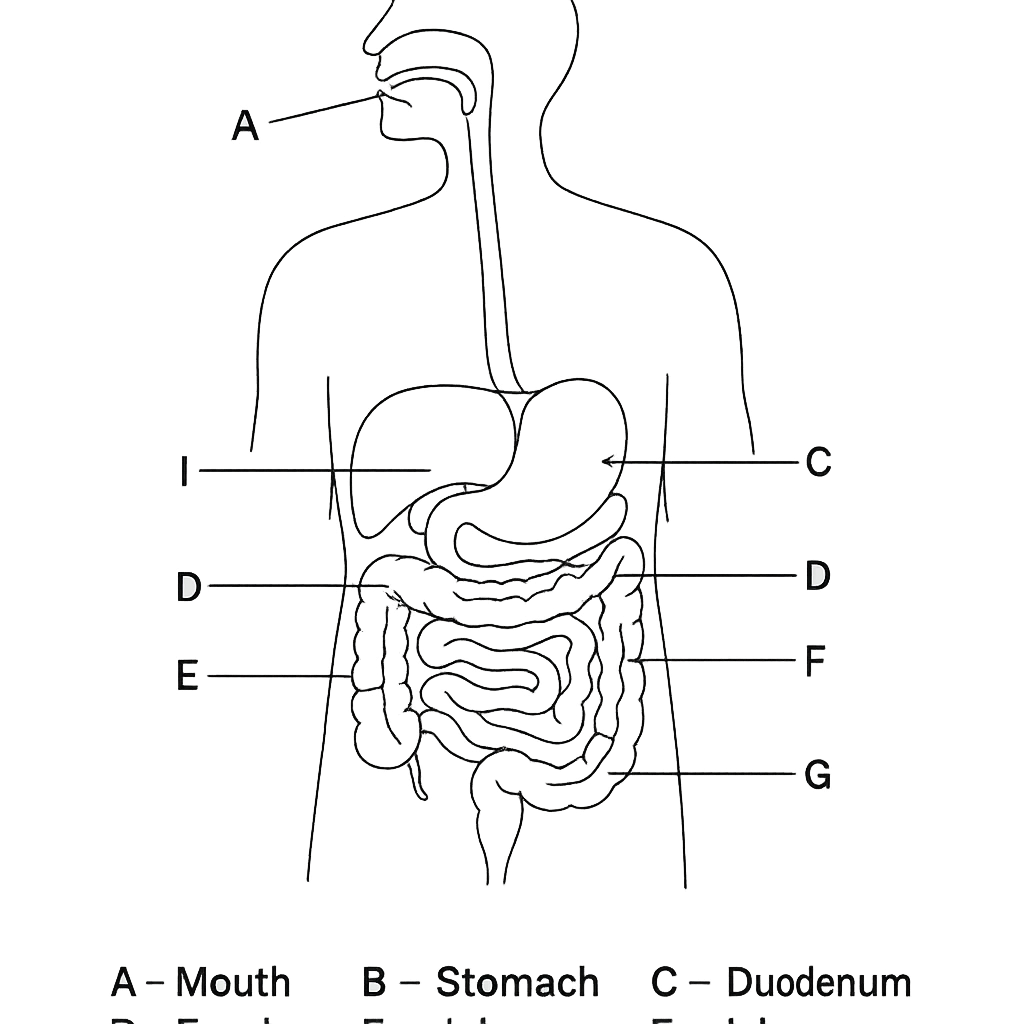
The labelled diagram shows the major parts of the human digestive system and the primary nutrients absorbed at each site.
Question Parts
(a)
Identify the organ where carbohydrate digestion begins and the organ where most carbohydrate absorption occurs.
(b)
Describe the role of pancreatic amylase and brush‑border enzymes in carbohydrate digestion.
(c)
A 70‑kg adult male requires 0.8 g protein per kilogram body weight per day. Calculate his daily protein requirement in grams. If his diet provides only 45 g protein per day, discuss two possible health consequences of this deficiency.
(d)
Using the diagram, match each of the following nutrients to the primary site of their absorption. Give the letter of the organ from the diagram. (i) Lipids (ii) Amino acids (iii) Monosaccharides (iv) Vitamin B12
Detailed Essay Solution & Marking Scheme Available

Get the step-by-step mathematical proofs, key points required by examiners, and a comprehensive breakdown from our AI Tutor.

Question 4 View Details
Cell structure and its significance in plant cells.
Question Parts
(a)
State the functions of the nucleus, mitochondrion and chloroplast.
(b)
Explain why most plant cells possess a large central vacuole and how it contributes to cell function.
Detailed Essay Solution & Marking Scheme Available

Get the step-by-step mathematical proofs, key points required by examiners, and a comprehensive breakdown from our AI Tutor.

Question 5 View Details
A mature dicotyledonous plant is growing in a greenhouse where the temperature is 30 °C and the relative humidity is 40 %. The plant is watered with a 0.5 % (w/v) NaCl solution and its leaf surface area is 150 cm². The measured transpiration rate under these conditions is 4 mg H₂O·cm⁻²·h⁻¹.
Question Parts
(a)
Describe the complete pathway that water follows from the soil to the guard cells of a leaf, naming all the anatomical structures it passes through.
(b)
Explain how the presence of 0.5 % NaCl in the irrigation water influences the movement of water through the root and the rate of transpiration, using the concepts of osmotic potential and overall water potential.
(c)
Given the transpiration rate of 4 mg H₂O·cm⁻²·h⁻¹, calculate the total volume of water lost by the plant in 6 hours. Then discuss two physiological adjustments the plant could make to reduce water loss if the drought persists for several weeks.
Detailed Essay Solution & Marking Scheme Available

Get the step-by-step mathematical proofs, key points required by examiners, and a comprehensive breakdown from our AI Tutor.

Question 6 View Details
A 25‑year‑old male presents with polyuria and polydipsia. Laboratory analysis of his urine shows the following concentrations: glucose 15 mmol L⁻¹, urea 12 mmol L⁻¹, sodium 140 mmol L⁻¹, potassium 4.5 mmol L⁻¹. Plasma osmolarity is 285 mOsm kg⁻¹, plasma sodium is 140 mmol L⁻¹ and plasma glucose concentration is 6 mmol L⁻¹. The glomerular filtration rate (GFR) is 120 mL min⁻¹.
Question Parts
(a)
Identify the most likely renal disorder responsible for the urine findings and justify your answer using the data provided.
(b)
Explain the normal role of the nephron segment(s) that reabsorb glucose, urea, sodium and potassium, and describe how dysfunction of these segments leads to the concentrations observed in the urine.
Detailed Essay Solution & Marking Scheme Available

Get the step-by-step mathematical proofs, key points required by examiners, and a comprehensive breakdown from our AI Tutor.

Question 7 View Details
A 25‑year‑old male trekker is walking in a desert where the ambient temperature rises to 42 °C. He drinks only small amounts of water and continues for three hours. Afterwards he reaches a shaded oasis where the temperature is 28 °C and he drinks a large volume of water.
Question Parts
(a)
Explain the physiological mechanisms that help maintain his core body temperature during the desert exposure. In your answer include the role of the hypothalamus, sweating, cutaneous vasodilation and any relevant behavioural responses.
(b)
Describe how the body restores fluid balance after he drinks the large volume of water at the oasis. Include the role of antidiuretic hormone (ADH) and the renal adjustments that follow.
(c)
The trekker’s plasma osmolality before reaching the oasis was 295 mOsm·kg⁻¹ and after drinking water it fell to 285 mOsm·kg⁻¹. Explain how this change in plasma osmolality is detected and how it influences ADH secretion.
Detailed Essay Solution & Marking Scheme Available

Get the step-by-step mathematical proofs, key points required by examiners, and a comprehensive breakdown from our AI Tutor.

Question 8 View Details
A 16‑year‑old basketball player is dribbling the ball while running down the court. Suddenly a referee blows a whistle, and the player must stop, catch the ball and change direction to defend an opponent.
Question Parts
(a)
Outline the neural pathway that carries the visual information of the whistle from the retina to the forearm muscles that contract to stop the ball. Mention the receptor, afferent neuron, central processing stations, interneuron (if any), efferent neuron and the target muscle fibre.
(b)
Compare the speed of this voluntary movement with the rapid withdrawal reflex that occurs when a person touches a hot surface. Explain why the reflex is faster, referring to the number of synaptic connections involved.
(c)
Explain the role of the cerebellum in fine‑tuning the player’s movements during the dribble and sudden change of direction. Include the type of information it receives and how it influences motor output.
Detailed Essay Solution & Marking Scheme Available

Get the step-by-step mathematical proofs, key points required by examiners, and a comprehensive breakdown from our AI Tutor.

Master the Exam!

You've seen a preview, but there are thousands more questions plus AI tutor to break down complex solutions.

Unlock Full Access Available for Android & Windows
Help others prepare! Share this practice hub:
Chat with Support