waec model questions vol1 2021 agricultural_science | Essay

Prepare for your exams with waec model questions vol1 questions? Reviewing past/model questions is one of the most effective ways to guarantee a high score. This practice hub features authentic 2021 agricultural_science (Essay) questions designed to simulate the real exam environment.

Practice these randomly selected questions to test your readiness.

Question 1 View Details
A farmer intends to convert a portion of his mixed‑crop farm into a more sustainable system.
Question Parts
(a)
Explain two ecological advantages of integrating leguminous cover crops into the cropping system.
(b)
Discuss how crop rotation can help break pest cycles and improve soil fertility, giving specific examples.
(c)
The farmer plans to allocate 20 % of the farm area to a perennial fruit orchard. Evaluate the likely impact of this change on biodiversity and ecosystem services in the farm.
Detailed Essay Solution & Marking Scheme Available

Get the step-by-step mathematical proofs, key points required by examiners, and a comprehensive breakdown from our AI Tutor.
Question 2 View Details
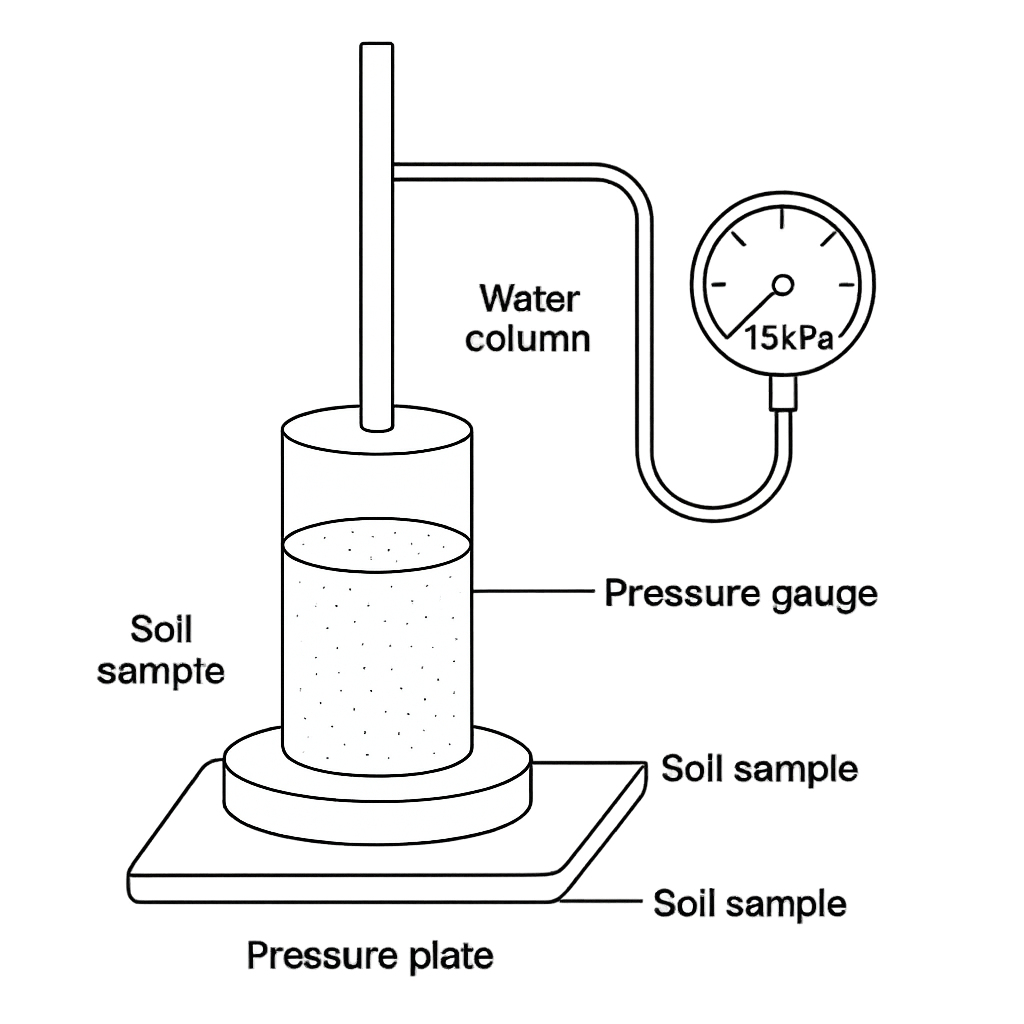
A soil laboratory technician is required to determine the field capacity (FC) of a soil sample using the pressure plate apparatus.
Question Parts
(a)
Describe the procedure for measuring field capacity with the pressure plate apparatus, including preparation of the soil sample and the pressure applied.
(b)
The technician records that the water retained in the soil after applying 15 kPa is 28 g for a 50 g oven‑dry soil sample. Calculate the field capacity expressed as a percentage of the soil's gravimetric water content.
(c)
Explain two limitations of using the pressure plate method for estimating field capacity in the field.
Detailed Essay Solution & Marking Scheme Available

Get the step-by-step mathematical proofs, key points required by examiners, and a comprehensive breakdown from our AI Tutor.

Question 3 View Details
Soil fertility is vital for sustainable crop production.
Question Parts
(a)
Identify and briefly explain three physical properties of soil that influence its fertility.
(b)
Discuss two chemical properties of soil that affect nutrient availability and suggest one management practice for each.
(c)
Explain how the practice of crop rotation contributes to maintaining soil fertility.
Detailed Essay Solution & Marking Scheme Available

Get the step-by-step mathematical proofs, key points required by examiners, and a comprehensive breakdown from our AI Tutor.

Question 4 View Details
A farmer rotates maize, soybean and groundnut on a 3‑ha field over three years.
Question Parts
(a)
State two agronomic benefits of this rotation sequence.
(b)
If the initial soil nitrogen (N) level is 50 kg ha⁻¹, soybean adds 30 kg ha⁻¹ of N, and groundnut removes 10 kg ha⁻¹, calculate the net change in soil N after the three‑year rotation. Show all steps.
Detailed Essay Solution & Marking Scheme Available

Get the step-by-step mathematical proofs, key points required by examiners, and a comprehensive breakdown from our AI Tutor.

Question 5 View Details
A farmer intends to increase the annual maize yield on a 1‑hectare field by adopting an improved planting arrangement and balanced fertilisation.
Question Parts
(a)
The farmer decides to plant the maize at a spacing of 75 cm between rows and 25 cm between plants on a row. Determine the optimum plant population per hectare.
(b)
If the average grain weight per plant at harvest is 150 g, estimate the expected grain yield per hectare in kilograms and tonnes.
(c)
Discuss how the application of a balanced N‑P‑K fertiliser influences maize yield and soil health.
Detailed Essay Solution & Marking Scheme Available

Get the step-by-step mathematical proofs, key points required by examiners, and a comprehensive breakdown from our AI Tutor.

Question 6 View Details
A small dairy farm keeps 20 lactating cows. Each cow currently produces an average of 22 L of milk per day. The farmer plans to increase the concentrate feed from 2 kg to 3 kg per cow per day. Research shows that each additional kilogram of concentrate raises milk yield by 0.5 L per cow. The cost of concentrate is ₦150 per kilogram, the price of milk is ₦120 per litre, and all other costs remain unchanged.
Question Parts
(a)
Calculate the new average daily milk yield per cow and the total daily milk production for the herd after the feed increase.
(b)
Determine the additional daily revenue from the extra milk, the additional daily cost of the extra concentrate, and the resulting change in net profit per day.
(c)
Besides increasing concentrate, name two management practices that can help sustain the higher milk production and briefly explain how each contributes.
Detailed Essay Solution & Marking Scheme Available

Get the step-by-step mathematical proofs, key points required by examiners, and a comprehensive breakdown from our AI Tutor.

Question 7 View Details
A farmer in the North Central zone of Nigeria cultivates maize on a 1‑hectare field. The predominant pest affecting the crop is the African stem borer (Chilo partellus).
Question Parts
(a)
Identify the pest and describe its complete life cycle, giving the approximate duration of each stage under typical Nigerian conditions.
(b)
Explain three cultural control methods that can be employed against this pest and discuss the principle behind each method.
(c)
The farmer estimates that each larva causes a 0.5 % loss of the yield of the individual plant it attacks. The average yield on the farm is 2 500 kg ha⁻¹ and the market price of maize is ₦30 kg⁻¹. The field contains 50 000 plants per hectare and the cost of applying an effective insecticide is ₦5 000 ha⁻¹. Calculate the economic threshold (number of larvae per plant) at which the farmer should apply the insecticide. Show all steps of your calculation.
Detailed Essay Solution & Marking Scheme Available

Get the step-by-step mathematical proofs, key points required by examiners, and a comprehensive breakdown from our AI Tutor.

Question 8 View Details
A smallholder in the South‑West region cultivates cassava and has observed a progressive increase in leaf symptoms over the past five years.
Question Parts
(a)
Identify the causal organism of Cassava Mosaic Disease (CMD) and describe its primary mode of transmission in the field.
(b)
The recorded incidence of CMD in the farmer’s field over five consecutive years is: Year 1 = 12 %, Year 2 = 15 %, Year 3 = 19 %, Year 4 = 24 %, Year 5 = 30 %. Calculate the average annual increase in incidence and predict the expected incidence for Year 6 if the same trend continues.
(c)
Propose an integrated disease management plan for CMD in this cassava farm. For each component (cultural, biological, chemical, and use of resistant varieties) give a brief justification of how it reduces disease spread or severity.
Detailed Essay Solution & Marking Scheme Available

Get the step-by-step mathematical proofs, key points required by examiners, and a comprehensive breakdown from our AI Tutor.

Master the Exam!

You've seen a preview, but there are thousands more questions plus AI tutor to break down complex solutions.

Unlock Full Access Available for Android & Windows
Help others prepare! Share this practice hub:
Chat with Support