waec model questions vol1 2020 biology | Essay

Prepare for your exams with waec model questions vol1 questions? Reviewing past/model questions is one of the most effective ways to guarantee a high score. This practice hub features authentic 2020 biology (Essay) questions designed to simulate the real exam environment.

Practice these randomly selected questions to test your readiness.
Question 1 View Details
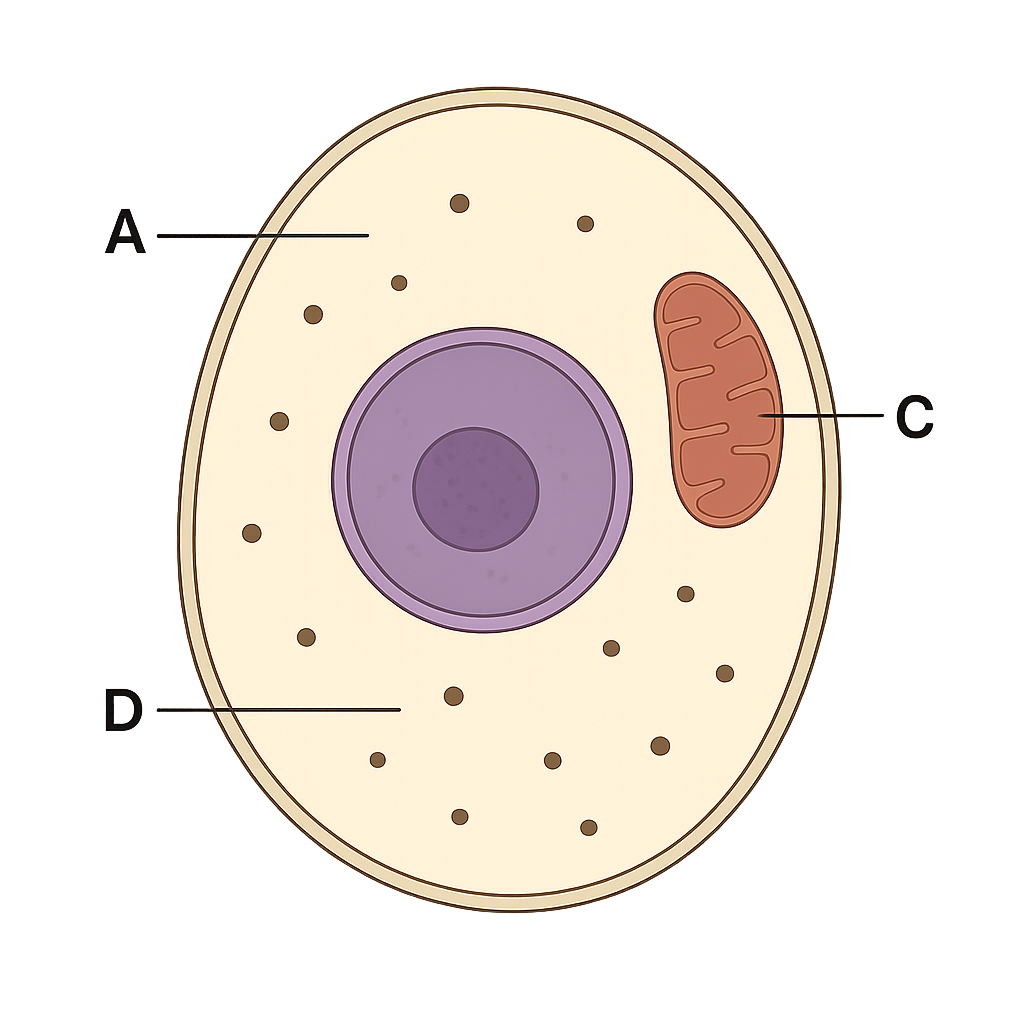
The labelled diagram shows a typical eukaryotic animal cell.
Question Parts
(a)
Identify four labelled structures in the diagram – the nucleus, mitochondrion, ribosome and cell membrane – and state one essential function of each.
(b)
Explain two mechanisms by which substances can cross the cell membrane, giving one key difference between them.
(c)
The diagram is of an animal cell. List two structural components that would be present in a typical plant cell but are absent here, and briefly describe the role each plays in the plant cell.
Detailed Essay Solution & Marking Scheme Available

Get the step-by-step mathematical proofs, key points required by examiners, and a comprehensive breakdown from our AI Tutor.
Question 2 View Details
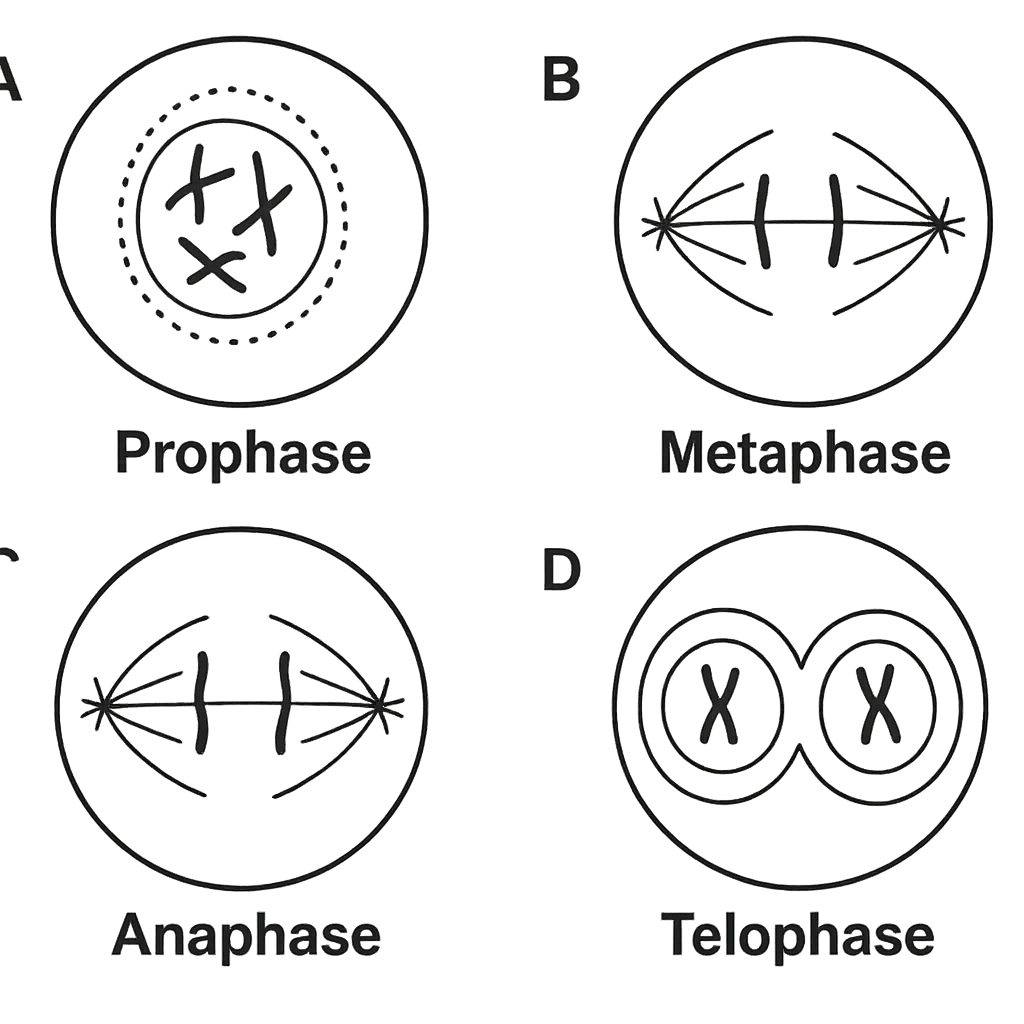
The labelled diagram depicts the successive stages of mitosis in a typical animal cell.
Question Parts
(a)
Arrange the four stages shown in the diagram in their correct chronological order and state the principal event that characterises each stage.
(b)
A mutagenic agent interferes with the formation of the spindle fibres. Which stage of mitosis would be most severely affected and what is the likely outcome for the daughter cells?
(c)
In this cell, the duration of the mitotic phases follows these relationships: prophase lasts twice as long as metaphase, anaphase lasts half as long as metaphase, and telophase lasts the same length as metaphase. If the total time for mitosis is 60 minutes, calculate the duration (in minutes) of each individual stage.
() Form the algebraic expression that relates the individual stage times to the total time.
() Solve for x and give the time for each stage to one decimal place.
Detailed Essay Solution & Marking Scheme Available

Get the step-by-step mathematical proofs, key points required by examiners, and a comprehensive breakdown from our AI Tutor.
Question 3 View Details
A 12‑year‑old pupil prepares a school lunch that contains the following amounts of macronutrients: - 55 g of carbohydrates - 22 g of protein - 18 g of fat The Recommended Dietary Allowance (RDA) for energy for a child of this age is 2,000 kcal per day. Answer the following:
Question Parts
(a)
Calculate the total energy (in kcal) supplied by the lunch.
(b)
Express the energy supplied by the lunch as a percentage of the RDA and comment on whether the meal meets the daily energy requirement of the pupil.
(c)
Explain why dietary fibre is important for the digestive health of school‑age children and list two health problems that may arise from a low‑fibre diet.
Detailed Essay Solution & Marking Scheme Available

Get the step-by-step mathematical proofs, key points required by examiners, and a comprehensive breakdown from our AI Tutor.

Question 4 View Details
In a controlled laboratory experiment, the effect of temperature on the rate of respiration in germinating beans was investigated. The beans were placed in sealed respirometers and the volume of carbon dioxide (CO₂) produced in 10 minutes was recorded at three different temperatures: - 20 °C → 12 mL CO₂ - 30 °C → 18 mL CO₂ - 40 °C → 15 mL CO₂ Answer the following:
Question Parts
(a)
Calculate the rate of CO₂ production (in mL min⁻¹) at each temperature and state the temperature at which the respiration rate is highest.
(b)
Explain the observed trend in respiration rate with increasing temperature, citing the role of enzymes.
(c)
Answer the following: (i) Outline the main stages of aerobic respiration in plant cells. (ii) State the net number of ATP molecules produced from one molecule of glucose during aerobic respiration.
() Outline the main stages of aerobic respiration in plant cells.
() State the net number of ATP molecules produced from one molecule of glucose during aerobic respiration.
Detailed Essay Solution & Marking Scheme Available

Get the step-by-step mathematical proofs, key points required by examiners, and a comprehensive breakdown from our AI Tutor.

Question 5 View Details
A 30‑metre‑tall tropical tree is growing in an area where the average atmospheric relative humidity is 70 % and the soil water potential is –0.05 MPa. The transpiration rate from the leaves is 5 × 10⁻⁵ m s⁻¹ and the cohesion‑tension theory states that a continuous water column can sustain a maximum tension of –0.2 MPa before cavitation occurs.
Question Parts
(a)
Describe the complete pathway that water follows from the soil to the leaves, naming the main tissues and processes involved.
(b)
Using the data given, estimate the greatest theoretical height to which water could be pulled up the tree before cavitation is likely to occur. Show the reasoning behind your calculation.
(c)
Identify two physiological or environmental factors that limit the actual maximum height of trees and explain how each factor reduces the height that can be achieved.
Detailed Essay Solution & Marking Scheme Available

Get the step-by-step mathematical proofs, key points required by examiners, and a comprehensive breakdown from our AI Tutor.

Question 6 View Details
The diagram shows the human excretory system with numbered parts.
Question Parts
(a)
Identify the structures indicated by the numbers 1–8 in the diagram.
(b)
State the primary function of each labelled structure.
() Kidney
() Ureter
() Urinary bladder
() Urethra
() Glomerulus
() Bowman's capsule
() Loop of Henle
() Collecting duct
(c)
Explain the process of urine formation, describing the role of each part of the nephron.
() Filtration in glomerulus and Bowman's capsule
() Reabsorption in proximal convoluted tubule
() Concentration in loop of Henle
() Secretion in distal convoluted tubule
() Collection in collecting duct
(d)
Compare the excretory mechanisms of humans with those of a freshwater fish, highlighting two major differences.
Detailed Essay Solution & Marking Scheme Available

Get the step-by-step mathematical proofs, key points required by examiners, and a comprehensive breakdown from our AI Tutor.

Question 7 View Details
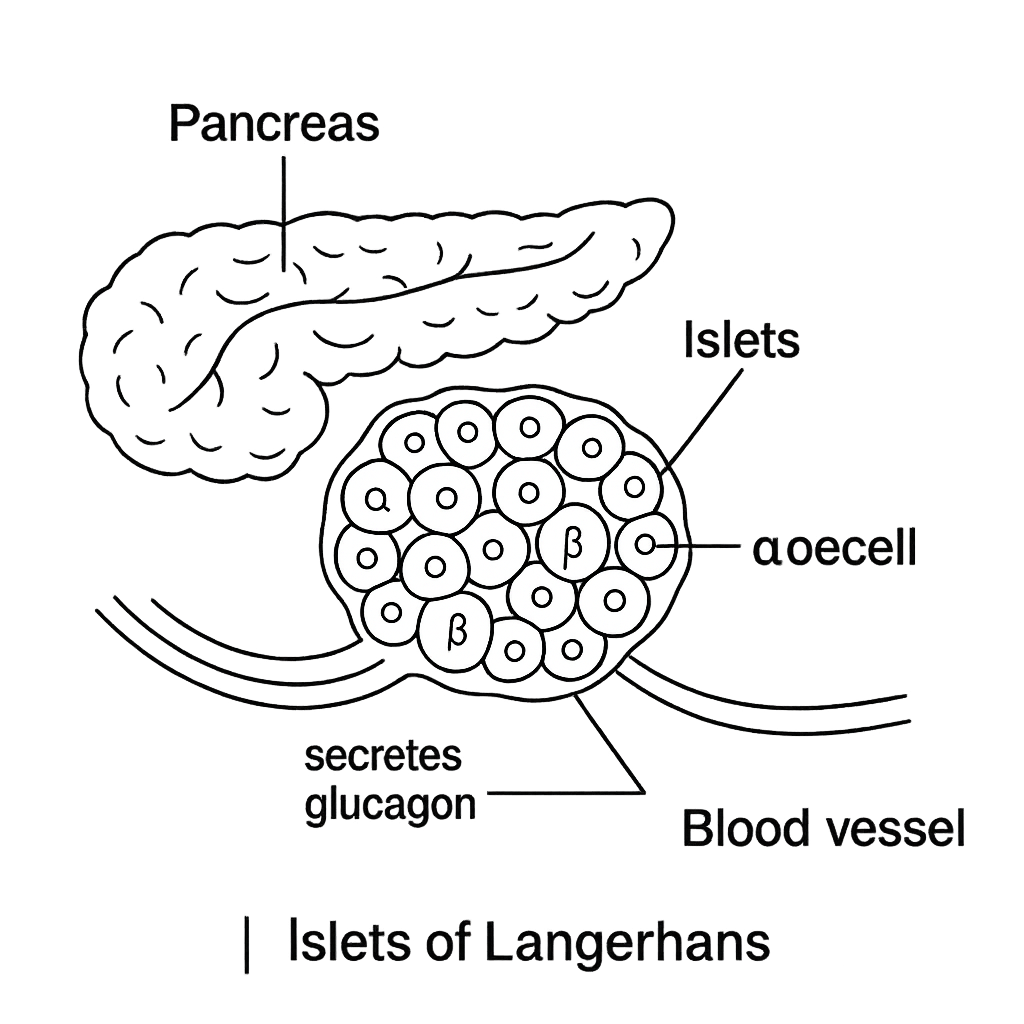
The diagram depicts the pancreas with its endocrine component – the islets of Langerhans – showing the α‑cells that secrete glucagon and the β‑cells that secrete insulin, together with the surrounding blood vessels.
Question Parts
(a)
Describe the negative‑feedback mechanism by which blood glucose concentration is kept within normal limits, referring specifically to the roles of the α‑cells and β‑cells shown in the diagram.
(b)
A defect prevents the β‑cells from releasing insulin. Predict the immediate effect on blood glucose level and discuss two physiological consequences that would arise if the hyperglycaemia persists.
(c)
Explain how the kidney contributes to the homeostasis of blood glucose in the situation described in part (b).
Detailed Essay Solution & Marking Scheme Available

Get the step-by-step mathematical proofs, key points required by examiners, and a comprehensive breakdown from our AI Tutor.

Question 8 View Details
In a laboratory investigation a 12‑year‑old child’s knee‑jerk (patellar) reflex is elicited by a gentle tap on the patellar tendon, producing a rapid extension of the lower leg.
Question Parts
(a)
Outline the sequence of events from the tap on the tendon to the contraction of the quadriceps muscle, naming all structures involved.
(b)
Explain why the knee‑jerk reflex is classified as a monosynaptic reflex and discuss the advantage of this arrangement for the speed of response.
(c)
Compare the neural pathway of the knee‑jerk reflex with that of a voluntary movement such as raising the foot, focusing on the role of the central nervous system and the level of control.
(d)
If the afferent (sensory) neuron of the reflex arc were damaged, predict the likely outcome on the reflex response and justify your answer.
Detailed Essay Solution & Marking Scheme Available

Get the step-by-step mathematical proofs, key points required by examiners, and a comprehensive breakdown from our AI Tutor.

Master the Exam!

You've seen a preview, but there are thousands more questions plus AI tutor to break down complex solutions.

Unlock Full Access Available for Android & Windows
Help others prepare! Share this practice hub:
Chat with Support