waec model questions vol1 2019 chemistry | Objective

Are you preparing for waec model questions vol1 exams? Reviewing past questions is one of the most effective ways to guarantee a high score. This practice hub features authentic 2019 chemistry (Objective) questions designed to simulate the real exam environment.

Practice these randomly selected questions to test your readiness.
Question 1 View Details
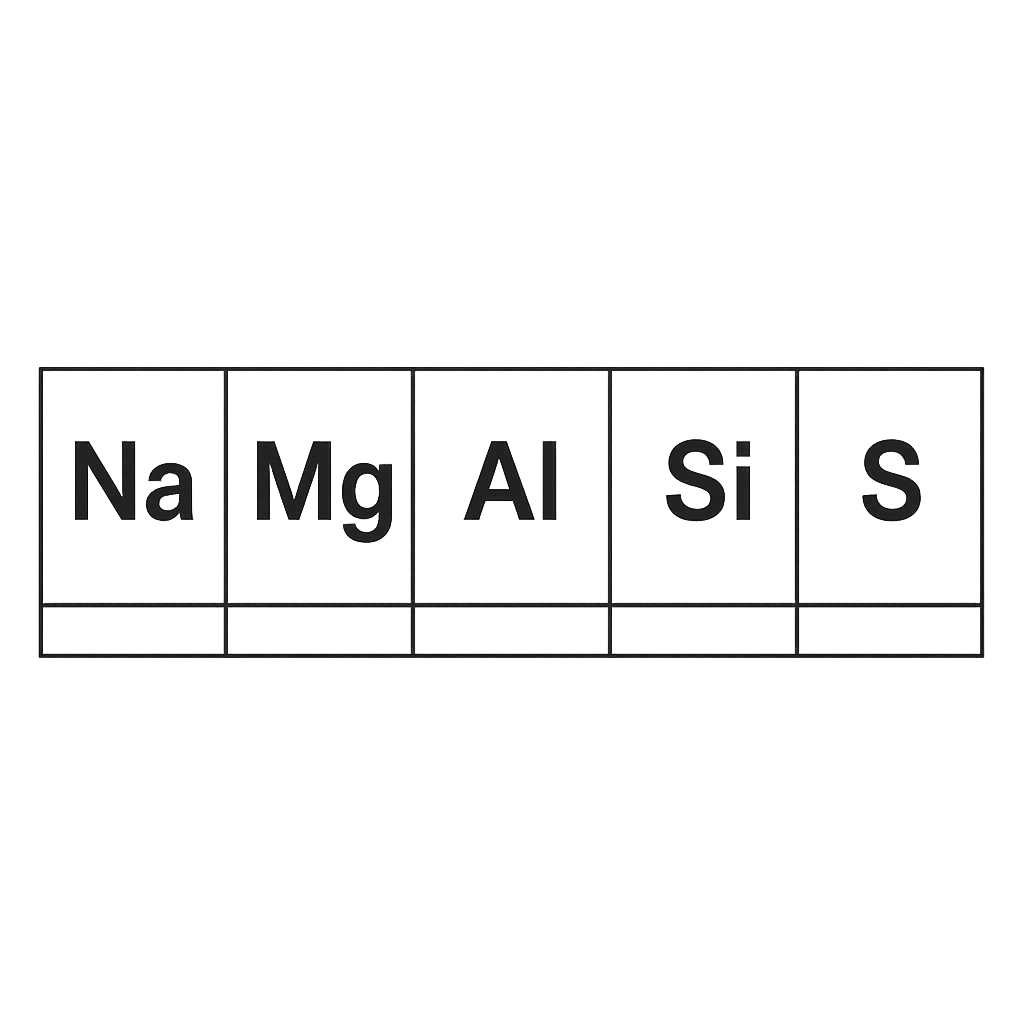
The diagram shows the first six elements of period 3 of the periodic table. Which element in the diagram has the highest first ionisation energy?
A. Silicon (Si)
B. Sulfur (S)
C. Aluminum (Al)
Correct D. Phosphorus (P)

Correct Answer: D

Want to see the full step-by-step solution? Unlock AI Explanation & Analytics
Question 2 View Details
What is the number of unpaired electrons in the ground‑state atom of chlorine (atomic number 17)?
A. 0
B. 3
C. 2
Correct D. 1

Correct Answer: D

Want to see the full step-by-step solution? Unlock AI Explanation & Analytics
Question 3 View Details
Which of the following compounds contains a polar covalent bond? (a) CH₄, (b) NaCl, (c) CO₂, (d) HCl
A. a
B. c
C. b
Correct D. d

Correct Answer: D

Want to see the full step-by-step solution? Unlock AI Explanation & Analytics
Question 4 View Details
A galvanic cell is constructed with the half‑reactions Zn²⁺ + 2e⁻ → Zn (E° = -0.76 V) and Cu²⁺ + 2e⁻ → Cu (E° = +0.34 V). The cell operates at 25 °C with [Cu²⁺] = 0.010 M and [Zn²⁺] = 0.10 M. Calculate the cell potential (Ecell) under these conditions.
A. 0.58 V
Correct B. 1.07 V
C. 1.23 V
D. 0.95 V

Correct Answer: B

Want to see the full step-by-step solution? Unlock AI Explanation & Analytics
Question 5 View Details
When 5.0 g of aluminium reacts with excess chlorine gas according to 2 Al + 3 Cl₂ → 2 AlCl₃, 20.0 g of aluminium chloride is obtained. What is the percent yield of the reaction?
Correct A. 81 %
B. 90 %
C. 65 %
D. 75 %

Correct Answer: A

Want to see the full step-by-step solution? Unlock AI Explanation & Analytics
Question 6 View Details
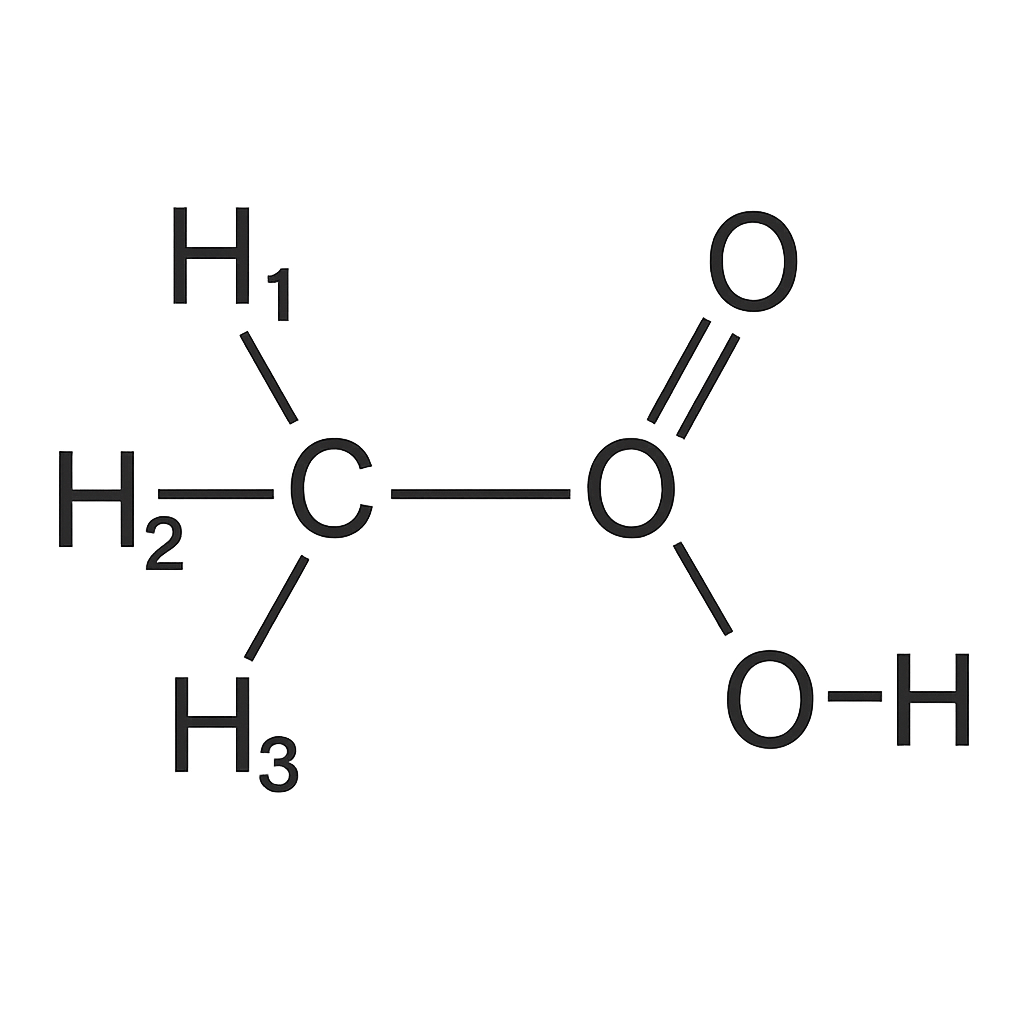
The diagram shows the Lewis structure of acetic acid (CH₃COOH). Identify the hybridisation of the carbon atom that is double‑bonded to oxygen.
A. sp
Correct B. sp²
C. sp⁴
D. sp³

Correct Answer: B

Want to see the full step-by-step solution? Unlock AI Explanation & Analytics
Question 7 View Details
A buffer solution is prepared by dissolving 0.20 mol of NH₄Cl and 0.10 mol of NH₃ in 1.00 L of water at 25 °C. (Ka for NH₄⁺ = 5.6 × 10⁻¹⁰.) Calculate the pH of the solution after 0.020 mol of HCl is added.
Correct A. 8.81
B. 8.61
C. 8.91
D. 9.01

Correct Answer: A

Want to see the full step-by-step solution? Unlock AI Explanation & Analytics
Question 8 View Details
In an acidic medium, 25.0 mL of 0.100 M Fe²⁺ solution is titrated with 0.0500 M KMnO₄ solution. Write the balanced redox equation and calculate the volume of KMnO₄ required to reach the endpoint.
A. 15.0 mL
B. 8.0 mL
Correct C. 10.0 mL
D. 12.5 mL

Correct Answer: C

Want to see the full step-by-step solution? Unlock AI Explanation & Analytics
Question 9 View Details
Cyclohexanol (M = 100.16 g mol⁻¹) is oxidised to cyclohexanone with a yield of 85 %. The cyclohexanone is then reduced with NaBD₄ to give cyclohexanol‑d₁ (M = 101.16 g mol⁻¹) with a yield of 90 %. If the starting mass of cyclohexanol is 10.0 g, calculate the mass of cyclohexanol‑d₁ obtained.
A. 8.50 g
B. 6.85 g
C. 7.00 g
Correct D. 7.74 g

Correct Answer: D

Want to see the full step-by-step solution? Unlock AI Explanation & Analytics
Question 10 View Details
When 2‑bromo‑2‑methylbutane (C₅H₁₁Br) is treated with aqueous NaOH at 25 °C, two products are formed: an alcohol by substitution and an alkene by elimination. Identify the major product and give its IUPAC name.
Correct A. 2-methyl-2-butanol
B. 3-methyl-2-butanol
C. 2-ethyl-2-butanol
D. 2-methyl-1-butanol

Correct Answer: A

Want to see the full step-by-step solution? Unlock AI Explanation & Analytics
Question 11 View Details
A 500 g sample of ice at -10 °C is heated with a supply of 500 kJ of energy. The specific heat capacity of ice is 2.1 kJ kg⁻¹ K⁻¹, the latent heat of fusion of ice is 334 kJ kg⁻¹, the specific heat capacity of liquid water is 4.18 kJ kg⁻¹ K⁻¹ and the latent heat of vapourisation of water is 2260 kJ kg⁻¹. Assuming the system is open to the atmosphere so that water may boil, calculate the mass of water that remains in the liquid state after the energy has been supplied.
A. 350 g
B. 400 g
C. 500 g
Correct D. 450 g

Correct Answer: D

Want to see the full step-by-step solution? Unlock AI Explanation & Analytics
Question 12 View Details
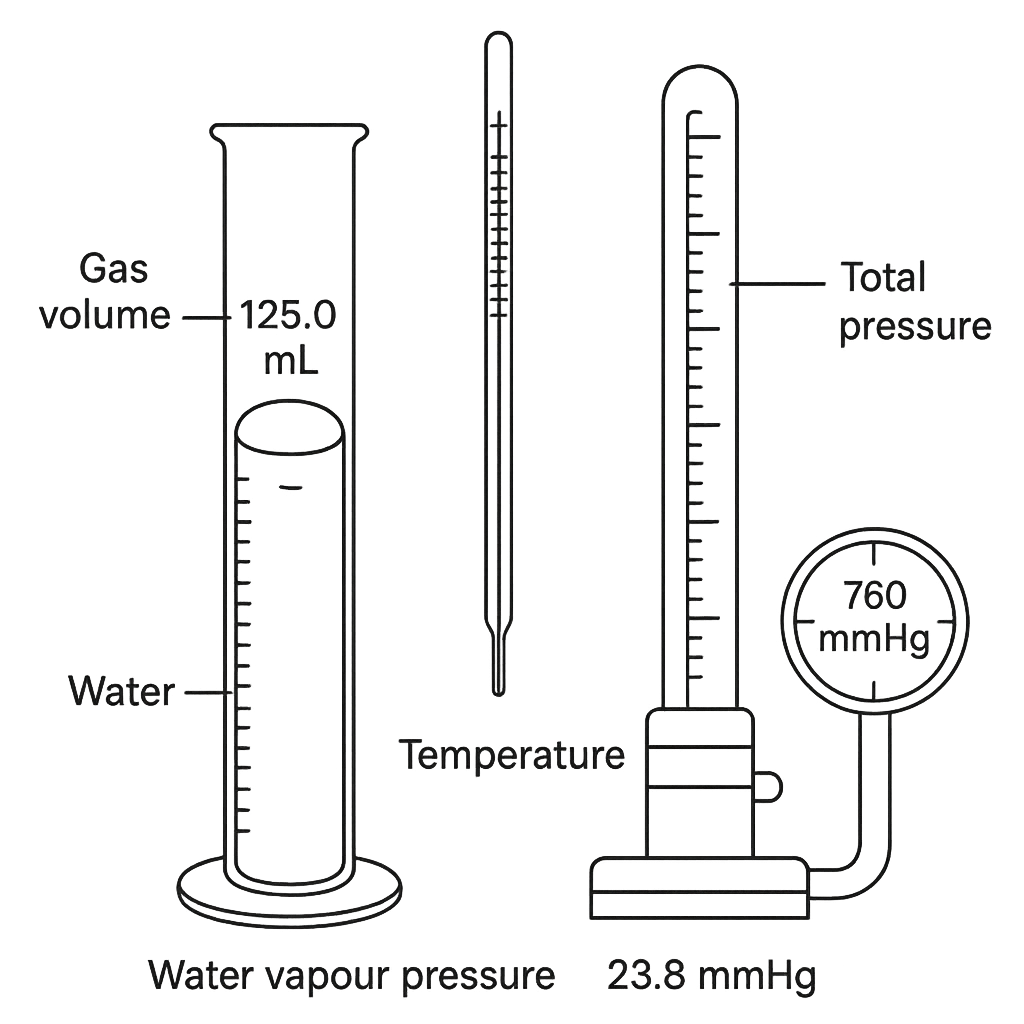
The diagram shows a eudiometer tube used to collect a gas over water. The volume of the gas collected is 125.0 mL at 25 °C. The total atmospheric pressure is 760 mmHg and the water vapour pressure at 25 °C is 23.8 mmHg. Using the diagram, calculate the number of moles of the dry gas collected.
Correct A. 4.95e-3 mol
B. 5.10e-3 mol
C. 4.80e-3 mol
D. 5.00e-3 mol

Correct Answer: A

Want to see the full step-by-step solution? Unlock AI Explanation & Analytics
Question 13 View Details
A 10.0 g piece of iron is placed in 250 mL of 0.200 M CuSO₄ solution. The reaction Fe + CuSO₄ → FeSO₄ + Cu(s) proceeds to completion. (i) Calculate the theoretical mass of copper that can be deposited. (ii) If the actual mass of copper obtained is 1.10 g, determine the percent yield of the reaction. (iii) Find the mass of iron remaining in the solution after the reaction.
A. 45.0 %
B. 31.2 %
Correct C. 34.6 %
D. 38.5 %

Correct Answer: C

Want to see the full step-by-step solution? Unlock AI Explanation & Analytics
Question 14 View Details
At 25 °C the solubility product of AgCl is $1.8\times10^{-10}$. A solution is prepared by dissolving 0.010 mol of NaCl in 1.0 L of water, after which excess solid AgCl is added and the mixture is allowed to reach equilibrium. Calculate the concentration of Ag⁺ ions in the solution at equilibrium.
Correct A. 1.8e-8 M
B. 3.6e-8 M
C. 1.2e-8 M
D. 2.0e-8 M

Correct Answer: A

Want to see the full step-by-step solution? Unlock AI Explanation & Analytics
Question 15 View Details
When 0.500 g of an unknown hydrocarbon containing only carbon and hydrogen is burnt completely in excess oxygen, 1.40 g of CO₂ and 0.560 g of H₂O are produced. Determine the empirical formula of the hydrocarbon.
A. C2H
B. CH3
Correct C. CH2
D. C2H2

Correct Answer: C

Want to see the full step-by-step solution? Unlock AI Explanation & Analytics
Question 16 View Details
Benzoic acid has a pK_a of 4.20. For a para‑nitro substituted benzoic acid the Hammett substituent constant σ_p for -NO₂ is +0.78 and the reaction constant ρ for the dissociation of benzoic acids is +1.0. Using the Hammett equation log(K/K₀)=ρσ, calculate the pK_a of p‑nitrobenzoic acid.
A. 5.00
Correct B. 3.42
C. 2.64
D. 4.20

Correct Answer: B

Want to see the full step-by-step solution? Unlock AI Explanation & Analytics
Question 17 View Details
A 2.00 L rigid container at 298 K contains a mixture of gases: 0.050 mol of H₂ and 0.075 mol of N₂. The mixture is heated to 350 K (volume remains constant) and a catalyst is added that allows the reaction N₂ + 3H₂ → 2NH₃ to proceed to completion. Assuming the reaction goes to completion limited only by the limiting reagent, calculate the mass of NH₃ formed. (Molar mass of NH₃ = 17.03 g·mol⁻¹)
A. 0.34 g
Correct B. 0.57 g
C. 0.85 g
D. 1.14 g

Correct Answer: B

Want to see the full step-by-step solution? Unlock AI Explanation & Analytics
Question 18 View Details
A buffer solution is prepared by dissolving 0.20 mol of acetic acid (CH₃COOH, K_a = 1.8×10⁻⁵) and 0.15 mol of sodium acetate (CH₃COONa) in 1.0 L of water. Calculate the pH of the buffer. Then, 0.050 mol of HCl is added to the solution (volume change is negligible). Calculate the new pH after the addition.
A. 4.04
Correct B. 4.34
C. 5.34
D. 4.64

Correct Answer: B

Want to see the full step-by-step solution? Unlock AI Explanation & Analytics
Question 19 View Details
A river receives wastewater containing phenol at a concentration of 0.80 mg·L⁻¹. The wastewater flow rate is 5.0×10³ L·day⁻¹ and the river flow rate is 2.0×10⁵ L·day⁻¹. Phenol degrades in the river by first‑order kinetics with a rate constant k = 0.15 day⁻¹. Assuming complete mixing, calculate the phenol concentration in the river water after the mixture has travelled for 3 days.
A. 0.015 mg\/L
Correct B. 0.012 mg/L
C. 0.020 mg\/L
D. 0.005 mg\/L

Correct Answer: B

Want to see the full step-by-step solution? Unlock AI Explanation & Analytics
Question 20 View Details
A lake has a volume of 1.5×10⁹ L and a surface area of 2.0×10⁶ m². The water temperature is 25 °C. The Henry's law constant for carbon monoxide (CO) at this temperature is H = 9.0×10⁻⁴ mol·L⁻¹·atm⁻¹. The partial pressure of CO in the atmosphere above the lake is 0.0001 atm. Assuming equilibrium between the lake water and the atmosphere, calculate (a) the total mass of CO (in grams) dissolved in the lake, and (b) the concentration of dissolved CO (in mg·L⁻¹) after 10 days if CO is consumed in the lake by a first‑order reaction with rate constant k = 0.02 day⁻¹.
A. Initial mass = 2.10×10^3 g; concentration after 10 days = 0.0035 mg\/L
B. Initial mass = 4.56×10^3 g; concentration after 10 days = 0.0012 mg\/L
Correct C. Initial mass = 3.78×10^3 g; concentration after 10 days = 0.0021 mg/L
D. Initial mass = 3.78×10^2 g; concentration after 10 days = 0.021 mg\/L

Correct Answer: C

Want to see the full step-by-step solution? Unlock AI Explanation & Analytics
Question 21 View Details
An ore sample weighing 150.0 g contains 30.0% by mass of the metal oxide M₂O₃ and the remainder is inert gangue. The ore is reduced with carbon at 1200 °C according to the reaction: M₂O₃ + 3 C → 2 M + 3 CO. After reduction, 12.5 g of CO gas is collected. (Atomic mass of the metal M = 55.0 u; atomic mass of O = 16.0 u; atomic mass of C = 12.0 u). Determine (a) the mass of metal obtained and (b) the overall percentage recovery of the metal relative to the theoretical maximum.
A. 12.9 g, 41.2 %
Correct B. 16.37 g, 52.3 %
C. 18.5 g, 59.0 %
D. 14.2 g, 45.6 %

Correct Answer: B

Want to see the full step-by-step solution? Unlock AI Explanation & Analytics
Question 22 View Details
A buffer solution is prepared by dissolving 0.200 mol of acetic acid (CH₃COOH, Ka = 1.8×10⁻⁵) and 0.150 mol of sodium acetate in 1.00 L of water. After the buffer is formed, 0.0500 mol of NaOH is added. Calculate the pH of the solution after the addition of NaOH.
A. 5.12
B. 4.55
C. 4.30
Correct D. 4.87

Correct Answer: D

Want to see the full step-by-step solution? Unlock AI Explanation & Analytics
Question 23 View Details
A pure primary alcohol CₙH₂ₙ₊₂O (molar mass 60.0 g mol⁻¹) is oxidised with excess acidic potassium dichromate according to the equation: 3 CₙH₂ₙ₊₂O + 2 K₂Cr₂O₇ + 8 H₂SO₄ → 3 CₙH₂ₙO + 2 Cr₂(SO₄)₃ + 2 K₂SO₄ + 8 H₂O. If 10.0 g of the alcohol is completely oxidised, calculate (a) the mass of the aldehyde produced and (b) the mass of chromium(III) sulfate formed. (Atomic masses: C = 12.0, H = 1.0, O = 16.0, Cr = 52.0, S = 32.0).
A. 10.2 g, 45.1 g
Correct B. 9.67 g, 43.6 g
C. 8.45 g, 38.2 g
D. 7.89 g, 40.0 g

Correct Answer: B

Want to see the full step-by-step solution? Unlock AI Explanation & Analytics
Question 24 View Details
An element X is a transition metal that belongs to the d‑block, has an atomic number of 29 and most commonly exhibits a +2 oxidation state in its compounds. What is the chemical symbol of element X?
A. Zn
B. Ni
C. Co
Correct D. Cu

Correct Answer: D

Want to see the full step-by-step solution? Unlock AI Explanation & Analytics
Question 25 View Details
A 5.00 g sample of a mixture of the two C₄H₁₀ isomers, n‑butane and isobutane, is burnt completely in excess O₂. The combustion of 1 mol n‑butane releases 2877 kJ of heat, whereas the combustion of 1 mol isobutane releases 2870 kJ. The total heat released by the sample is 247.0 kJ. Determine the mass percent of n‑butane present in the mixture.
A. 27.5
B. 24.0
Correct C. 29.9
D. 31.2

Correct Answer: C

Want to see the full step-by-step solution? Unlock AI Explanation & Analytics

Master the Exam!

You've seen a preview, but there are thousands more questions plus AI tutor to break down complex solutions.

Unlock Full Access Available for Android & Windows
Help others prepare! Share this practice hub:
Chat with Support