waec model questions vol1 2019 biology | Essay

Prepare for your exams with waec model questions vol1 questions? Reviewing past/model questions is one of the most effective ways to guarantee a high score. This practice hub features authentic 2019 biology (Essay) questions designed to simulate the real exam environment.

Practice these randomly selected questions to test your readiness.
Question 1 View Details
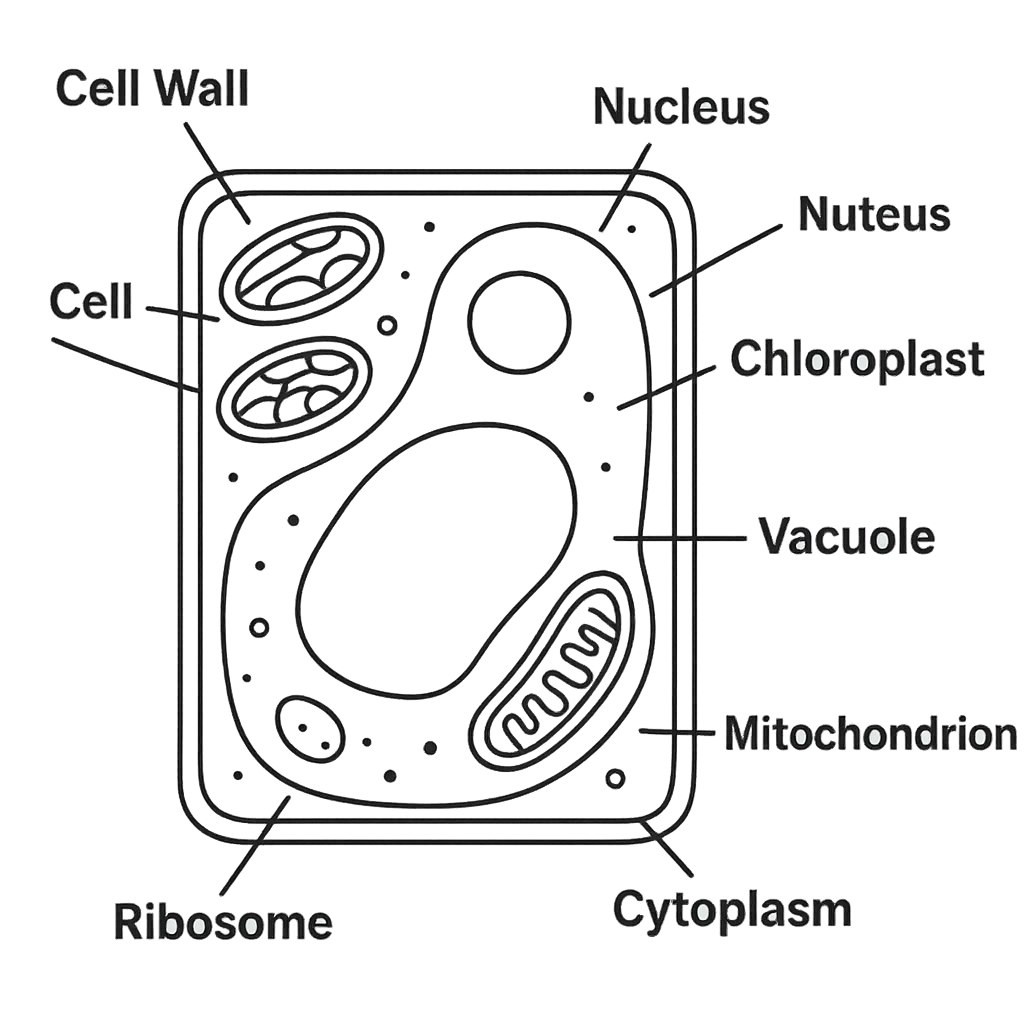
The diagram shows a typical plant cell with the structures labelled.
Question Parts
(a)
State the function of each of the following structures: cell wall, cell membrane, nucleus, chloroplast, vacuole and mitochondrion.
(b)
Explain how the internal structure of the chloroplast is related to its role in photosynthesis.
(c)
A plant cell is transferred to a hypertonic solution. Predict the changes that will occur to the vacuole and the cell membrane and give a brief explanation of the osmotic mechanism involved.
Detailed Essay Solution & Marking Scheme Available

Get the step-by-step mathematical proofs, key points required by examiners, and a comprehensive breakdown from our AI Tutor.
Question 2 View Details
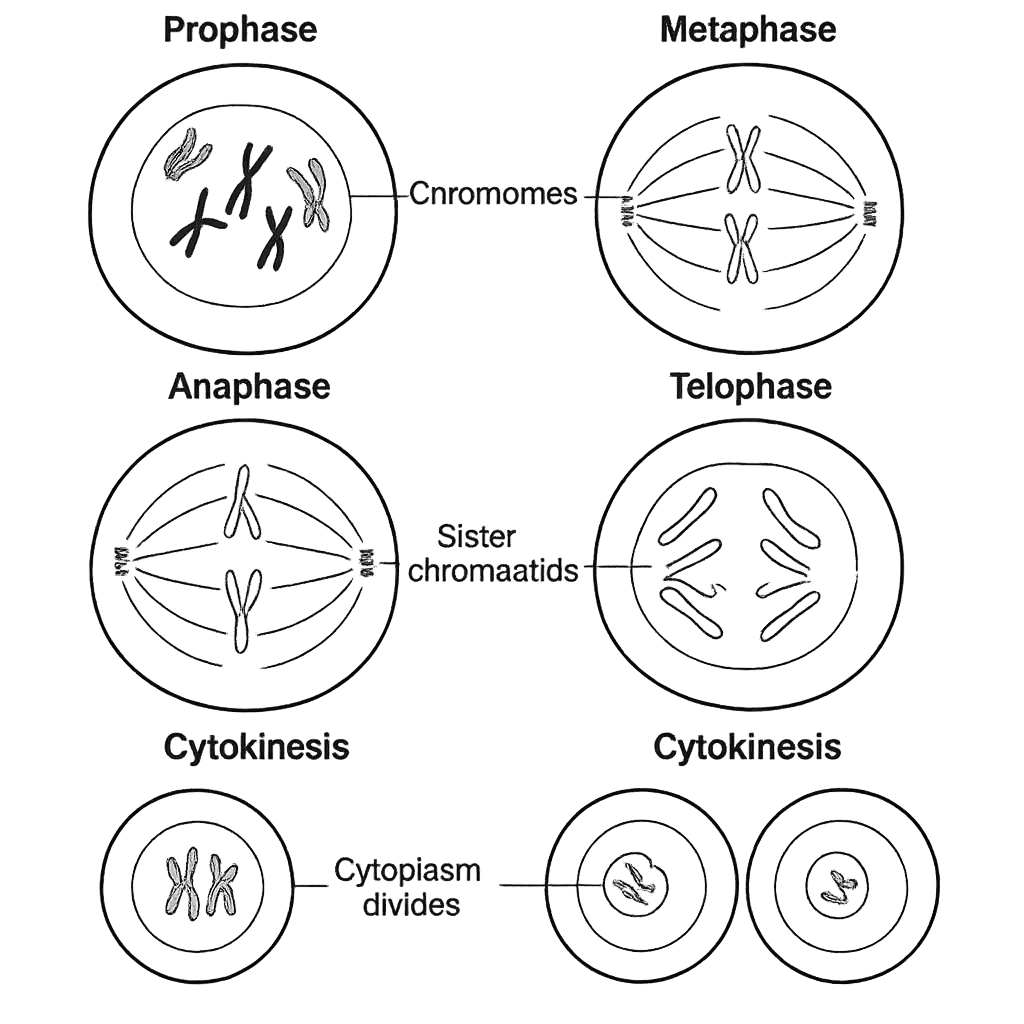
The illustration depicts the successive stages of mitosis in a diploid somatic cell.
Question Parts
(a)
For each stage shown (prophase, metaphase, anaphase, telophase, cytokinesis) list the principal chromosomal events that occur.
(b)
Explain the role of the spindle apparatus during metaphase and how it contributes to accurate chromosome segregation.
(c)
Compare mitosis with meiosis I with respect to (i) chromosome number in the daughter cells and (ii) the generation of genetic variation.
(d)
A researcher adds a drug that inhibits spindle fibre formation to a culture of dividing cells. Predict the effect of this treatment on cell division and indicate the stage at which the process would be arrested.
Detailed Essay Solution & Marking Scheme Available

Get the step-by-step mathematical proofs, key points required by examiners, and a comprehensive breakdown from our AI Tutor.
Question 3 View Details
Cellular organelles are specialised structures that perform distinct functions necessary for cell survival and activity.
Question Parts
(a)
Describe the structure and function of the nucleus and its role in protein synthesis.
(b)
Explain how ribosomes and the rough endoplasmic reticulum cooperate in the synthesis and processing of secretory proteins.
Detailed Essay Solution & Marking Scheme Available

Get the step-by-step mathematical proofs, key points required by examiners, and a comprehensive breakdown from our AI Tutor.
Question 4 View Details
Water movement in plants is driven by physical forces that operate from roots to leaves.
Question Parts
(a)
Explain the cohesion‑tension theory and how it accounts for the ascent of sap.
(b)
Given that the water potential (Ψ) in the leaf air spaces is –0.12 MPa and the water potential in the root xylem is –0.03 MPa, calculate the overall water potential gradient driving the flow and state whether it is sufficient for upward movement.
Detailed Essay Solution & Marking Scheme Available

Get the step-by-step mathematical proofs, key points required by examiners, and a comprehensive breakdown from our AI Tutor.

Question 5 View Details
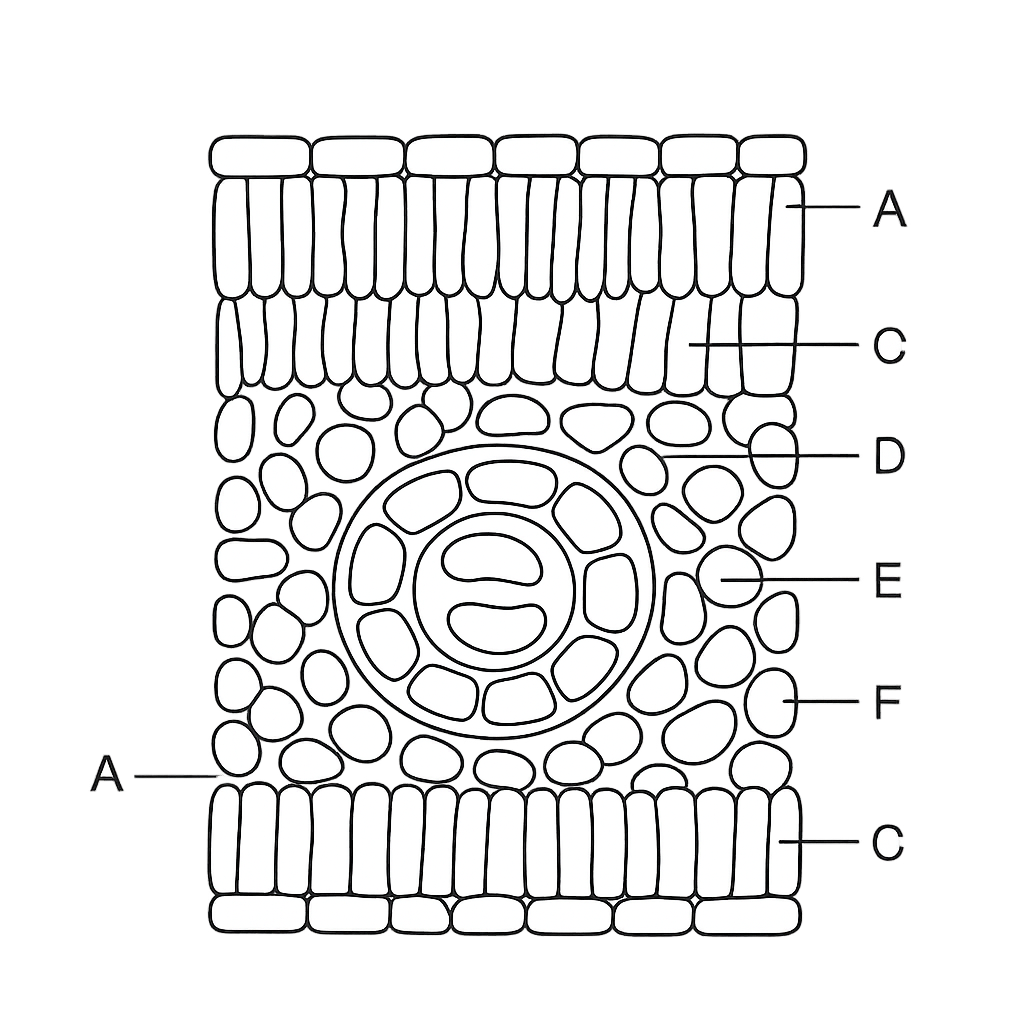
The labelled diagram shows a transverse section of a dicot leaf highlighting the main tissues involved in the transport of water and photosynthates.
Question Parts
(a)
Identify each structure labelled in the diagram.
(b)
Explain, using the diagram, the pathway that water follows from the xylem to the site of evaporation in the leaf.
(c)
Describe how the photosynthates produced in the mesophyll are transported to other parts of the plant.
(d)
Discuss two environmental factors that can increase the rate of transpiration in this leaf and explain how they affect the process.
Detailed Essay Solution & Marking Scheme Available

Get the step-by-step mathematical proofs, key points required by examiners, and a comprehensive breakdown from our AI Tutor.

Question 6 View Details
A 20‑year‑old male presents with polyuria and polydipsia. Laboratory investigations give the following results: fasting blood glucose = 12 mmol/L, urine specific gravity = 1.005, and 24‑hour urine volume = 3.0 L.
Question Parts
(a)
Identify the renal abnormality that most directly explains the low urine specific gravity and describe the physiological basis for this abnormality.
(b)
Estimate the approximate concentration of glucose in the urine (mmol/L). Show the reasoning and any assumptions you make.
(c)
Outline two long‑term complications that may arise from chronic uncontrolled excretion of glucose and suggest one dietary measure that could help mitigate each complication.
Detailed Essay Solution & Marking Scheme Available

Get the step-by-step mathematical proofs, key points required by examiners, and a comprehensive breakdown from our AI Tutor.

Question 7 View Details
A 25‑year‑old male athlete is training for a marathon. During a long run in hot weather (35 °C) his core temperature rises and he begins to sweat heavily. The data recorded at three time points are shown below. | Time (min) | Core temperature (°C) | Sweat rate (ml min⁻¹) | Plasma osmolarity (mOsm kg⁻¹) | |------------|-----------------------|----------------------|-------------------------------| | 0 | 37.0 | 0.0 | 285 | | 30 | 38.5 | 0.8 | 295 | | 60 | 38.0 | 1.2 | 300 | Using this information, answer the following questions.
Question Parts
(a)
Explain the role of the thermoregulatory centre in the hypothalamus in maintaining normal body temperature during the run. Include in your answer how negative feedback operates in this system.
(b)
Calculate the total volume of fluid lost through sweating during the 60‑minute run and discuss how this loss is reflected in the change in plasma osmolarity.
(c)
Compare the hormonal responses of antidiuretic hormone (ADH) and aldosterone that would be expected in this scenario, and explain how each contributes to the restoration of homeostasis.
(d)
i) Define positive feedback. ii) Provide an example of a positive‑feedback loop that does not involve childbirth, and explain why positive feedback mechanisms are relatively rare in homeostatic regulation.
Detailed Essay Solution & Marking Scheme Available

Get the step-by-step mathematical proofs, key points required by examiners, and a comprehensive breakdown from our AI Tutor.

Question 8 View Details
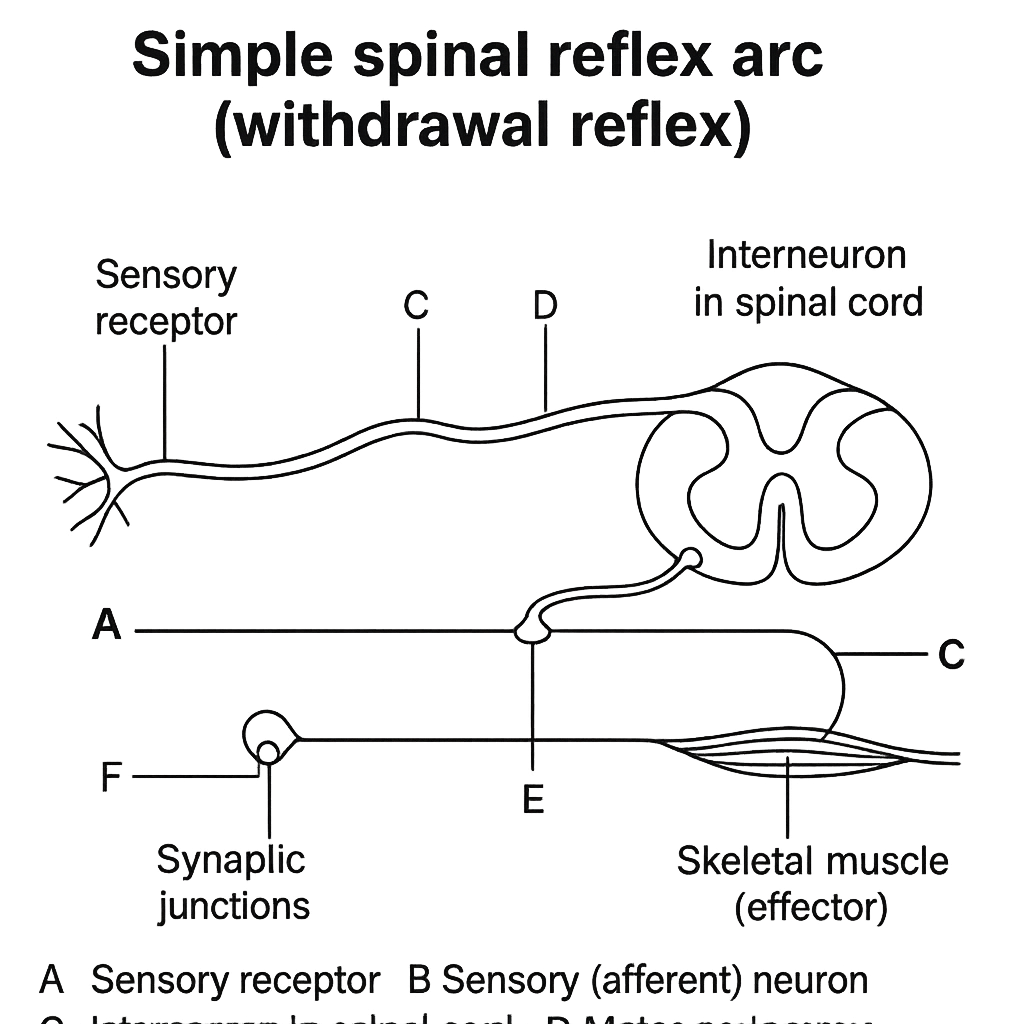
The diagram shows a simple spinal reflex arc that mediates the withdrawal response of a hand when it contacts a painful stimulus. The labelled parts are: A – sensory receptor, B – sensory (afferent) neuron, C – interneuron in the spinal cord, D – motor (efferent) neuron, E – skeletal muscle (effector), and F – synaptic junctions. The linear distances between successive parts are AB = 30 cm, BC = 10 cm and CD = 20 cm.
Question Parts
(a)
Identify each labelled part in the diagram and state its primary function in the reflex arc.
(b)
Explain, in order, the sequence of events that occur from the moment the receptor is stimulated until the muscle contracts.
(c)
If the conduction velocity of the sensory neuron is 80 m·s⁻¹, that of the motor neuron is 60 m·s⁻¹ and the synaptic delay at each junction is 0.5 ms, calculate the total time taken for the reflex response (from receptor activation to muscle contraction). Show all steps.
(d)
Discuss how demyelination of the sensory neuron would affect the reflex time calculated in part (c) and the possible clinical implications of such a change.
Detailed Essay Solution & Marking Scheme Available

Get the step-by-step mathematical proofs, key points required by examiners, and a comprehensive breakdown from our AI Tutor.

Master the Exam!

You've seen a preview, but there are thousands more questions plus AI tutor to break down complex solutions.

Unlock Full Access Available for Android & Windows
Help others prepare! Share this practice hub:
Chat with Support