waec model questions vol1 2019 agricultural_science | Essay

Prepare for your exams with waec model questions vol1 questions? Reviewing past/model questions is one of the most effective ways to guarantee a high score. This practice hub features authentic 2019 agricultural_science (Essay) questions designed to simulate the real exam environment.

Practice these randomly selected questions to test your readiness.

Question 1 View Details
A farmer wishes to adopt ecological principles to improve the sustainability of his mixed‑crop farm.
Question Parts
(a)
Define agricultural ecology and explain why it is important for modern farming.
(b)
Identify three major abiotic factors that affect crop productivity and describe one management practice for each factor.
(c)
Evaluate the role of biodiversity in achieving sustainable agriculture, giving two specific examples of beneficial organisms.
Detailed Essay Solution & Marking Scheme Available

Get the step-by-step mathematical proofs, key points required by examiners, and a comprehensive breakdown from our AI Tutor.
Question 2 View Details
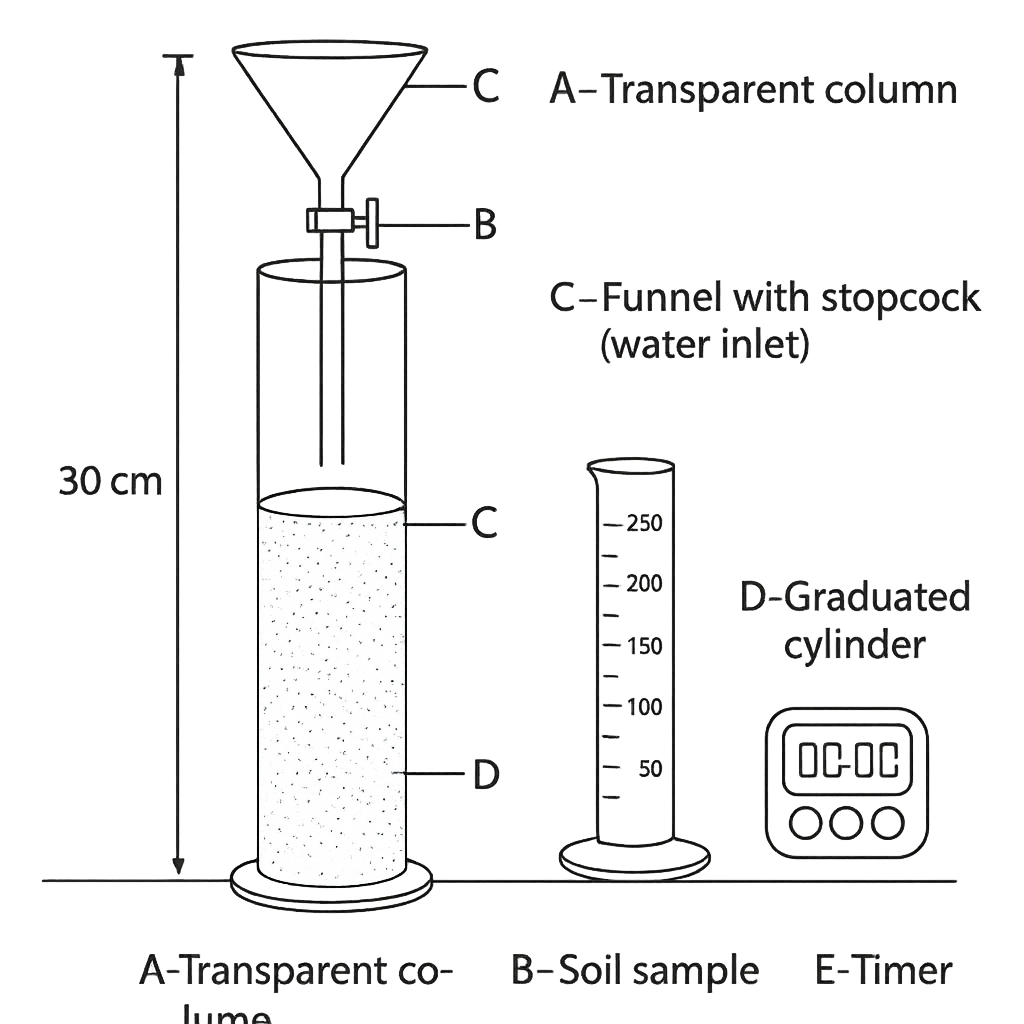
The illustration shows a simple soil‑column apparatus used to investigate the effect of soil texture on water infiltration rate.
Question Parts
(a)
Identify three components of the set‑up and state the function of each component.
(b)
The experiment is performed on three soil textures – sand, loam and clay. The time taken for 200 ml of water to infiltrate each column is recorded as follows: • Sand – 30 s • Loam – 70 s • Clay – 150 s Calculate the infiltration rate (ml s⁻¹) for each soil and rank the soils from highest to lowest infiltration rate.
(c)
Explain two physical reasons why the infiltration rates differ among sand, loam and clay.
Detailed Essay Solution & Marking Scheme Available

Get the step-by-step mathematical proofs, key points required by examiners, and a comprehensive breakdown from our AI Tutor.

Question 3 View Details
Soil fertility is fundamental to sustainable crop production. Discuss the major physical, chemical and biological factors that influence nutrient availability in tropical soils and recommend two management practices for each factor to improve soil fertility on a smallholder farm in Nigeria.
Detailed Essay Solution & Marking Scheme Available

Get the step-by-step mathematical proofs, key points required by examiners, and a comprehensive breakdown from our AI Tutor.

Question 4 View Details
Crop rotation helps maintain soil health and break pest cycles. Design a four‑year crop rotation plan for a 5‑hectare farm in the Sudan savanna zone of Nigeria. The farm currently grows maize, cowpea, and sorghum.
Question Parts
(a)
State three agronomic benefits of practising crop rotation on this farm.
(b)
Present a year‑by‑year rotation schedule indicating the main crop for each hectare and justify the sequence.
Detailed Essay Solution & Marking Scheme Available

Get the step-by-step mathematical proofs, key points required by examiners, and a comprehensive breakdown from our AI Tutor.

Question 5 View Details
A farmer has a 5‑hectare field currently cultivated with maize. The average yield is 2.5 tonnes per hectare. He intends to adopt a maize–soybean crop rotation over a 4‑year period and to apply the recommended dose of NPK fertilizer (120 kg N, 60 kg P₂O₅ and 40 kg K₂O per hectare) to the maize crop each year. The cost of N, P₂O₅ and K₂O are ₦30, ₦45 and ₦25 per kilogram respectively. The expected yield increase of maize due to the rotation and fertiliser is 20 % over the conventional practice. The market price of maize is ₦150 per kilogram.
Question Parts
(a)
Calculate the total cost of fertiliser applied to the maize crop each year.
(b)
Determine the expected total maize production (in tonnes) after the first year of rotation and fertiliser application.
(c)
Compute the gross revenue from the maize harvest after the first year and the net profit after deducting the fertiliser cost only.
(d)
Discuss two agronomic advantages of rotating maize with soybean and two possible constraints a farmer might face when implementing this system in the Sudan savanna zone.
Detailed Essay Solution & Marking Scheme Available

Get the step-by-step mathematical proofs, key points required by examiners, and a comprehensive breakdown from our AI Tutor.

Question 6 View Details
A smallholder layer farm keeps 200 Isa Brown hens. The recommended daily feed per hen is 110 g containing 16 % protein, 4 % calcium and 3 000 kcal metabolizable energy. The farmer formulates the feed using two ingredients: maize (15 % protein, 3 400 kcal kg⁻¹, ₦30 kg⁻¹) and fish meal (65 % protein, 2 800 kcal kg⁻¹, ₦200 kg⁻¹). Calcium is supplied separately by limestone and does not affect the cost of the feed mix.
Question Parts
(a)
Set up two linear equations to determine the kilograms of maize (x) and fish meal (y) required per kilogram of complete feed in order to meet the protein (16 %) and the total weight (x + y = 1) specifications.
(b)
Solve the equations to obtain the proportion of maize and fish meal in one kilogram of feed (expressed in kilograms to two decimal places).
(c)
Calculate the total daily cost of feed for the whole flock.
Detailed Essay Solution & Marking Scheme Available

Get the step-by-step mathematical proofs, key points required by examiners, and a comprehensive breakdown from our AI Tutor.

Question 7 View Details
A farmer cultivates maize on a 5‑hectare field. The stem borer (Busseola fusca) is a major pest in the region. Uncontrolled, the pest can cause an average yield loss of 0.8 tonnes per hectare. The current market price of maize is ₦150 per kilogram. The recommended insecticide treatment costs ₦12,000 per hectare and must be applied once during the cropping season.
Question Parts
(a)
Explain the life cycle of the stem borer and identify the stage that causes the most damage to the maize crop.
(b)
Using the data provided, calculate the monetary loss per hectare if the farmer does not treat the field.
(c)
Determine the economic threshold (in monetary terms) at which the insecticide treatment becomes justified. State whether the farmer should apply the insecticide for this field and justify your answer with calculations.
(d)
Outline an integrated pest management (IPM) strategy for stem borer that reduces reliance on chemical control.
Detailed Essay Solution & Marking Scheme Available

Get the step-by-step mathematical proofs, key points required by examiners, and a comprehensive breakdown from our AI Tutor.

Question 8 View Details
A cassava farmer observed leaf‑spot symptoms on a portion of his 500‑plant field. A systematic survey recorded that 120 plants showed typical lesions of Cassava Mosaic Disease (CMD). For each infected plant, the average severity (percentage of leaf area affected) was estimated at 30%.
Question Parts
(a)
Define disease incidence and disease severity, and show how they are calculated.
(b)
Calculate the disease incidence (%) and the disease severity index (DSI) for the field using the data provided.
Detailed Essay Solution & Marking Scheme Available

Get the step-by-step mathematical proofs, key points required by examiners, and a comprehensive breakdown from our AI Tutor.

Master the Exam!

You've seen a preview, but there are thousands more questions plus AI tutor to break down complex solutions.

Unlock Full Access Available for Android & Windows
Help others prepare! Share this practice hub:
Chat with Support