waec model questions vol1 2018 biology | Essay

Prepare for your exams with waec model questions vol1 questions? Reviewing past/model questions is one of the most effective ways to guarantee a high score. This practice hub features authentic 2018 biology (Essay) questions designed to simulate the real exam environment.

Practice these randomly selected questions to test your readiness.
Question 1 View Details
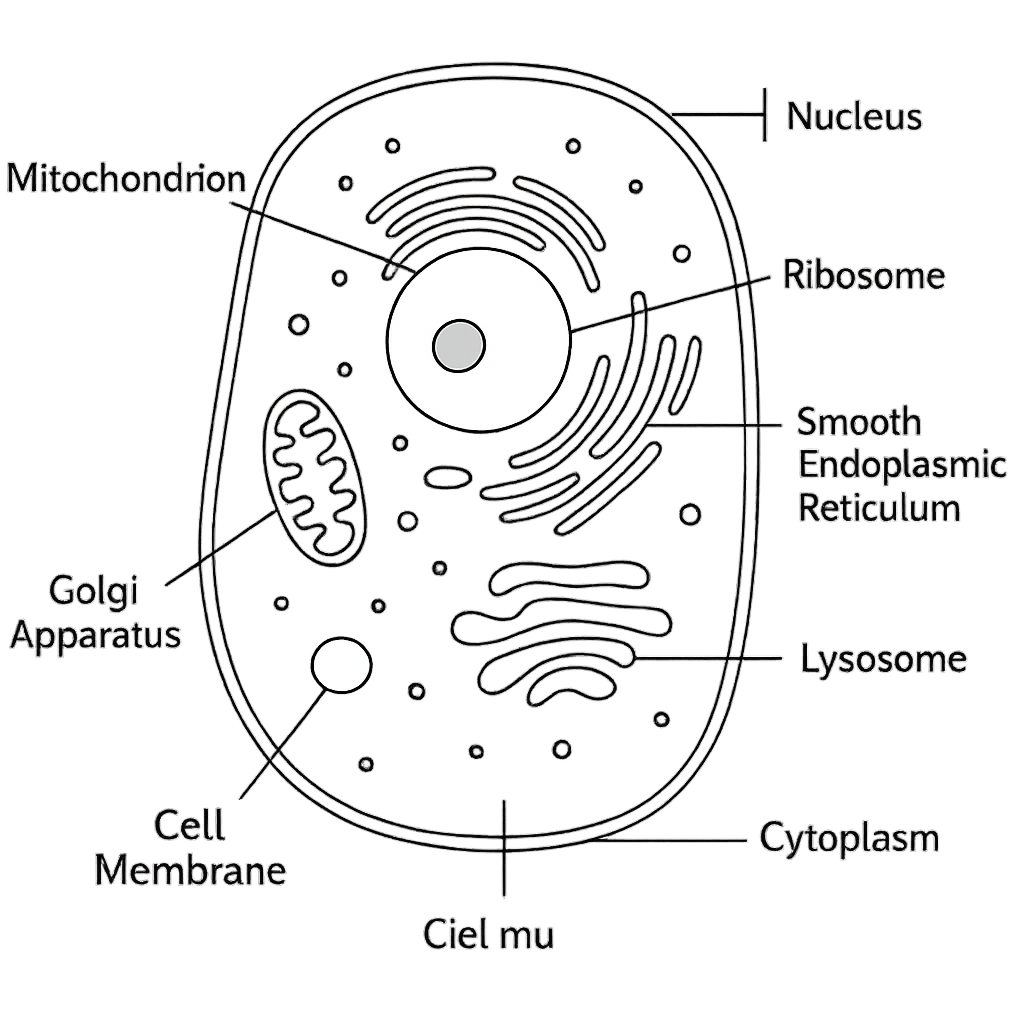
The diagram shows a typical animal cell with several labelled organelles.
Question Parts
(a)
List all the organelles shown in the diagram and give a brief description (2‑3 sentences) of the main function of each.
(b)
Compare the animal cell shown with a typical plant cell, stating at least three structural differences and explaining how each difference relates to the cell’s role.
(c)
Explain how the structure of the mitochondrion is adapted to its role in cellular respiration.
Detailed Essay Solution & Marking Scheme Available

Get the step-by-step mathematical proofs, key points required by examiners, and a comprehensive breakdown from our AI Tutor.
Question 2 View Details
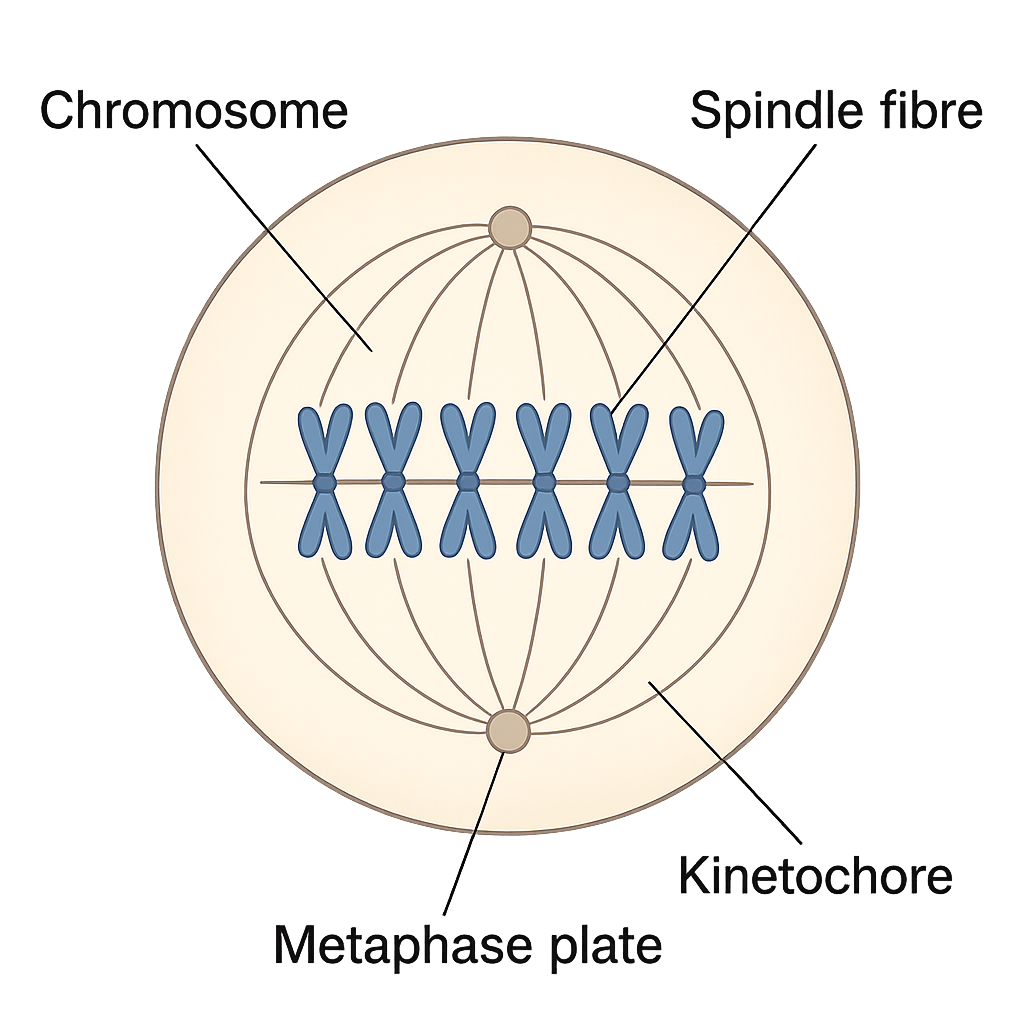
The diagram depicts a stage of mitosis in a eukaryotic cell with chromosomes and spindle fibres clearly labelled.
Question Parts
(a)
Identify the stage of mitosis shown in the diagram.
(b)
Describe the key events that occur during this stage.
(c)
Explain how the structure of spindle fibres ensures accurate segregation of chromosomes.
(d)
Discuss two possible consequences if errors occur during this stage of cell division.
Detailed Essay Solution & Marking Scheme Available

Get the step-by-step mathematical proofs, key points required by examiners, and a comprehensive breakdown from our AI Tutor.
Question 3 View Details
A senior secondary school student is studying human nutrition and is required to answer the following:
Question Parts
(a)
Explain the process of digestion and absorption of carbohydrates, stating the major enzymes involved and the specific sites where each step occurs.
(b)
The student’s daily diet provides 250 g of carbohydrate, 70 g of protein and 60 g of fat. Calculate the total caloric intake from this diet and state whether it meets the recommended daily allowance of 2500 kcal for a teenage male. Show all calculations and briefly discuss the possible health implications of a surplus or deficit.
(c)
Identify two nutritional disorders that result from deficiency of (i) vitamin A and (ii) iron. For each disorder, describe the principal symptoms, underlying cause and at least one preventive measure.
Detailed Essay Solution & Marking Scheme Available

Get the step-by-step mathematical proofs, key points required by examiners, and a comprehensive breakdown from our AI Tutor.
Question 4 View Details
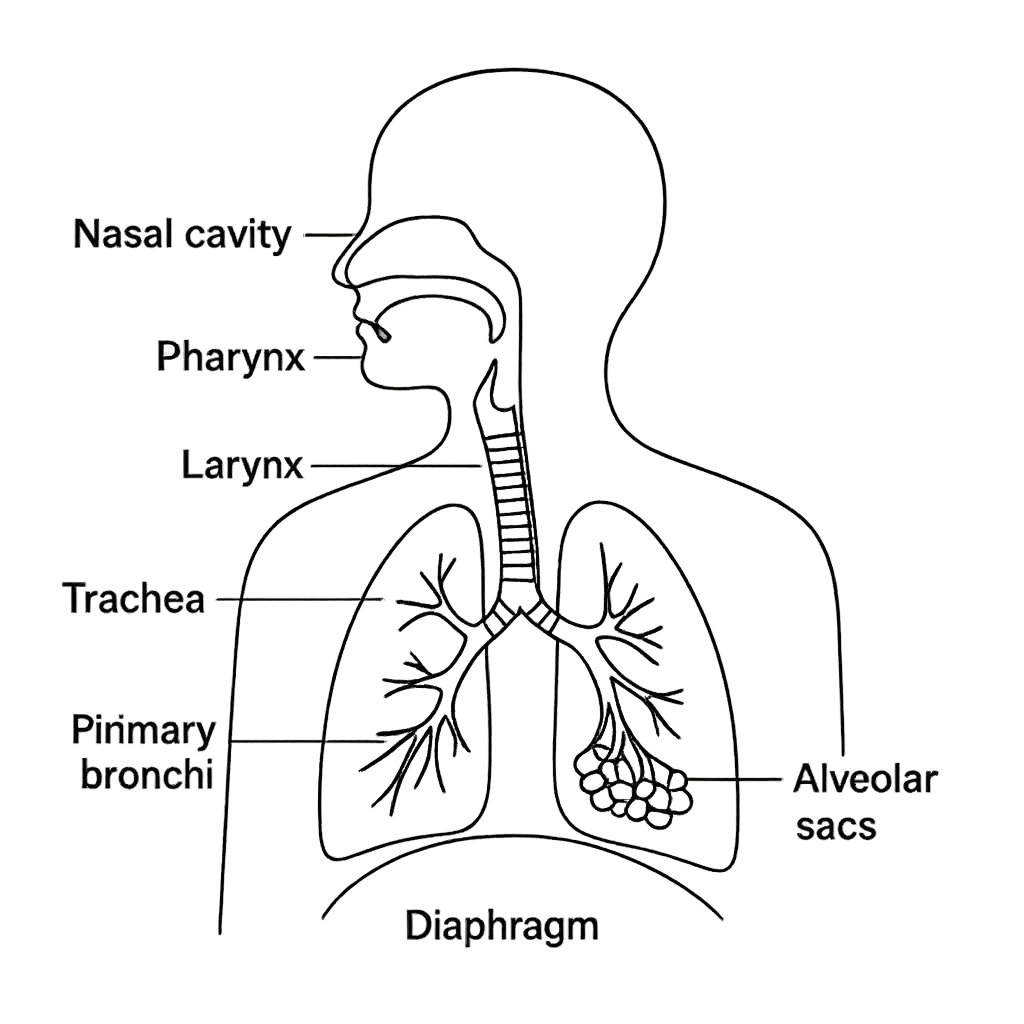
The diagram shows the major structures of the human respiratory system.
Question Parts
(a)
Describe the complete pathway that air follows from the external environment to the alveoli, naming each structure shown in the diagram.
(b)
Explain the mechanism of gas exchange at the alveolar‑capillary membrane, including the role of partial pressure gradients of oxygen and carbon dioxide.
(c)
A resting adult has a tidal volume of 500 mL and a respiratory rate of 12 breaths per minute. (i) Calculate the minute ventilation. (ii) Discuss two physiological factors that would increase minute ventilation during moderate exercise.
(d)
The diagram indicates a defect in the diaphragm. Explain how a paralysed diaphragm would affect ventilation and name one clinical condition in which this defect is commonly observed.
Detailed Essay Solution & Marking Scheme Available

Get the step-by-step mathematical proofs, key points required by examiners, and a comprehensive breakdown from our AI Tutor.

Question 5 View Details
Consider the processes of transport of water, minerals and organic nutrients in plants and the transport of gases and nutrients in the human circulatory system.
Question Parts
(a)
Explain the mechanism of upward movement of water in the xylem, including the role of transpiration pull and the cohesion‑tension theory.
(b)
A plant is growing in a region where the soil water potential is –0.15 MPa and the leaf water potential is –0.45 MPa. Assuming negligible resistance in the xylem, calculate the theoretical rate of water flow per unit cross‑sectional area if the hydraulic conductivity of the xylem is 5 × 10⁻⁴ m·s⁻¹·MPa⁻¹. Show all steps of your reasoning.
(c)
Compare the transport of glucose in the phloem (pressure‑flow hypothesis) with the transport of oxygen in the blood. Highlight two similarities and two differences.
(d)
A patient suffers from anaemia that reduces the haemoglobin concentration by 30 %. Discuss how this affects the efficiency of oxygen transport and what physiological compensations may occur.
Detailed Essay Solution & Marking Scheme Available

Get the step-by-step mathematical proofs, key points required by examiners, and a comprehensive breakdown from our AI Tutor.

Question 6 View Details
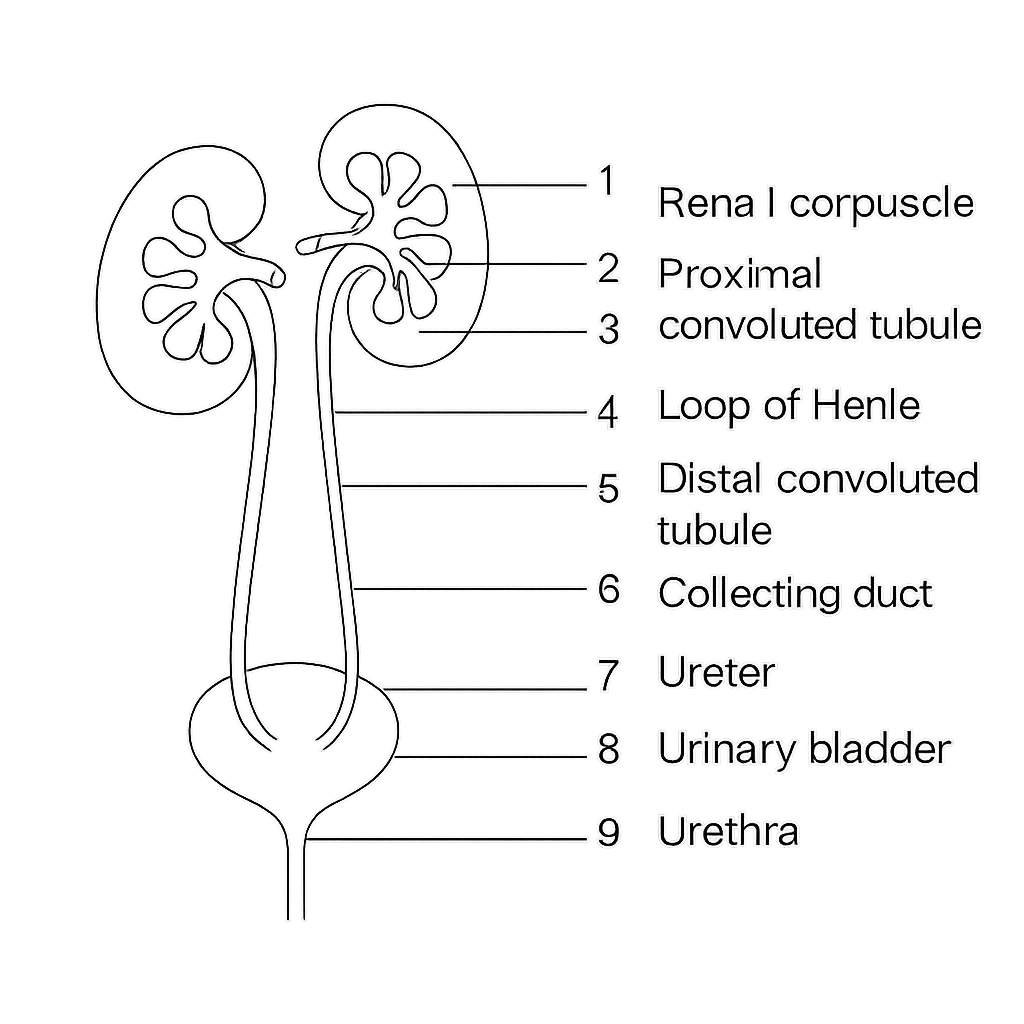
The diagram shows the major structures of the human excretory system, including the kidneys, ureters, urinary bladder and urethra, together with the internal components of a nephron (renal corpuscle, proximal convoluted tubule, loop of Henle, distal convoluted tubule and collecting duct).
Question Parts
(a)
Identify each labelled part in the diagram and state its primary function in the formation or transport of urine.
(b)
Discuss the process of glomerular ultrafiltration.
() State the three pressures that determine ultrafiltration and their typical values.
() Using the values above, calculate the net filtration pressure (NFP).
(c)
Explain how antidiuretic hormone (ADH) modifies water re‑absorption in the collecting duct and predict the effect on urine volume when ADH secretion is (i) high and (ii) low.
() Describe the cellular mechanism by which ADH acts on the collecting duct.
() State the expected change in urine volume for high versus low ADH secretion.
(d)
A patient has a 40 % reduction in glomerular filtration rate (GFR). Discuss the likely physiological consequences and at least two clinical signs that may be observed.
Detailed Essay Solution & Marking Scheme Available

Get the step-by-step mathematical proofs, key points required by examiners, and a comprehensive breakdown from our AI Tutor.

Question 7 View Details
Explain how the human body maintains internal stability (homeostasis) when exposed to a rise in ambient temperature.
Question Parts
(a)
Describe the role of the hypothalamus in detecting and initiating responses to elevated body temperature.
(b)
Outline the physiological mechanisms that are mobilised to dissipate excess heat from the body.
(c)
Explain how negative feedback operates in temperature regulation, naming the specific receptors, integrating centre and effectors involved.
Detailed Essay Solution & Marking Scheme Available

Get the step-by-step mathematical proofs, key points required by examiners, and a comprehensive breakdown from our AI Tutor.

Question 8 View Details
Discuss the coordination of movement in the human body, emphasizing the role of the nervous system.
Question Parts
(a)
Define sensory neuron, interneuron and motor neuron, and state the function of each in a reflex arc.
(b)
Explain the sequence of events that occur in the patellar (knee‑jerk) reflex, indicating the neural pathway and synaptic connections involved.
(c)
Evaluate how higher brain centres can modify a simple reflex, giving a specific example of such modulation.
Detailed Essay Solution & Marking Scheme Available

Get the step-by-step mathematical proofs, key points required by examiners, and a comprehensive breakdown from our AI Tutor.

Master the Exam!

You've seen a preview, but there are thousands more questions plus AI tutor to break down complex solutions.

Unlock Full Access Available for Android & Windows
Help others prepare! Share this practice hub:
Chat with Support