waec model questions vol1 2017 biology | Essay

Prepare for your exams with waec model questions vol1 questions? Reviewing past/model questions is one of the most effective ways to guarantee a high score. This practice hub features authentic 2017 biology (Essay) questions designed to simulate the real exam environment.

Practice these randomly selected questions to test your readiness.
Question 1 View Details
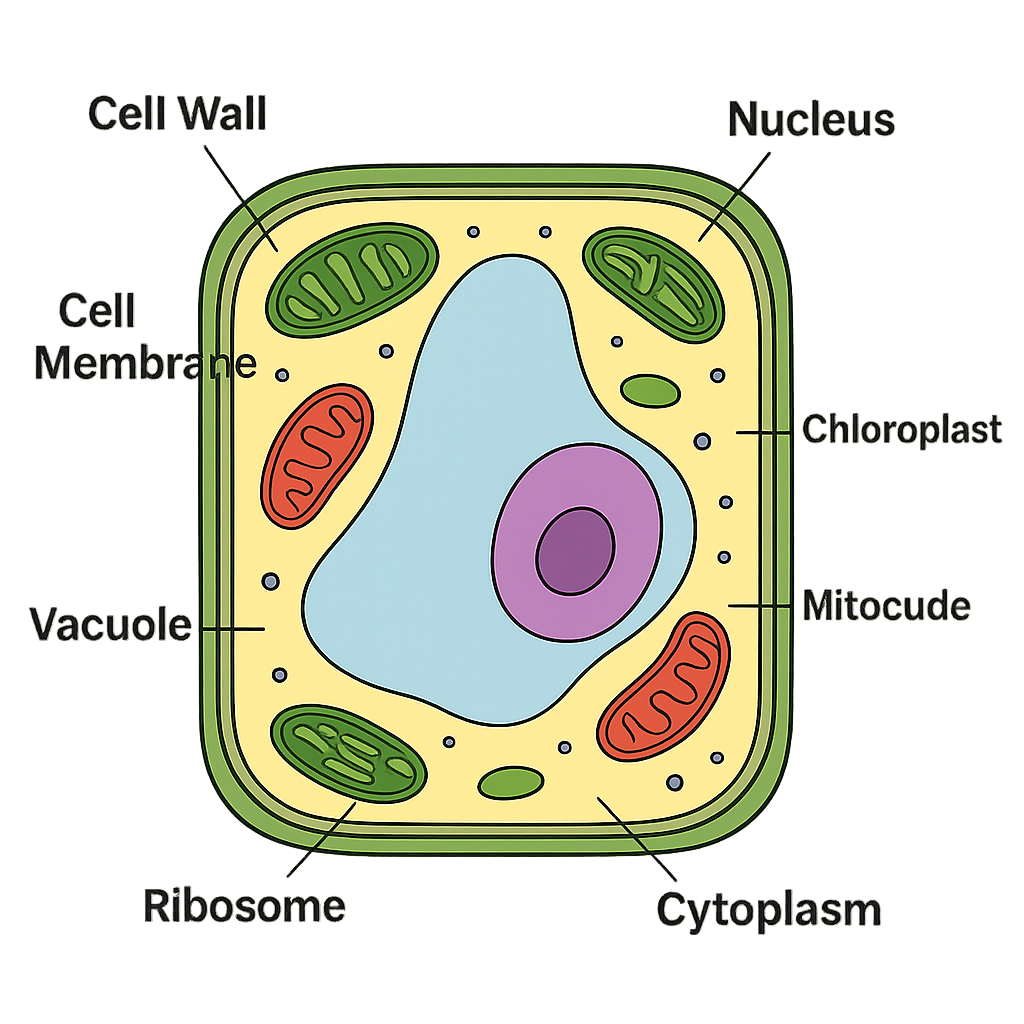
The labelled diagram shows a typical plant cell.
Question Parts
(a)
Identify three organelles shown in the diagram and state the main function of each.
(b)
Explain how the cell wall contributes to the maintenance of turgor pressure in the plant cell.
(c)
Compare a plant cell with an animal cell by mentioning at least four structural differences and explain the significance of each difference.
Detailed Essay Solution & Marking Scheme Available

Get the step-by-step mathematical proofs, key points required by examiners, and a comprehensive breakdown from our AI Tutor.
Question 2 View Details
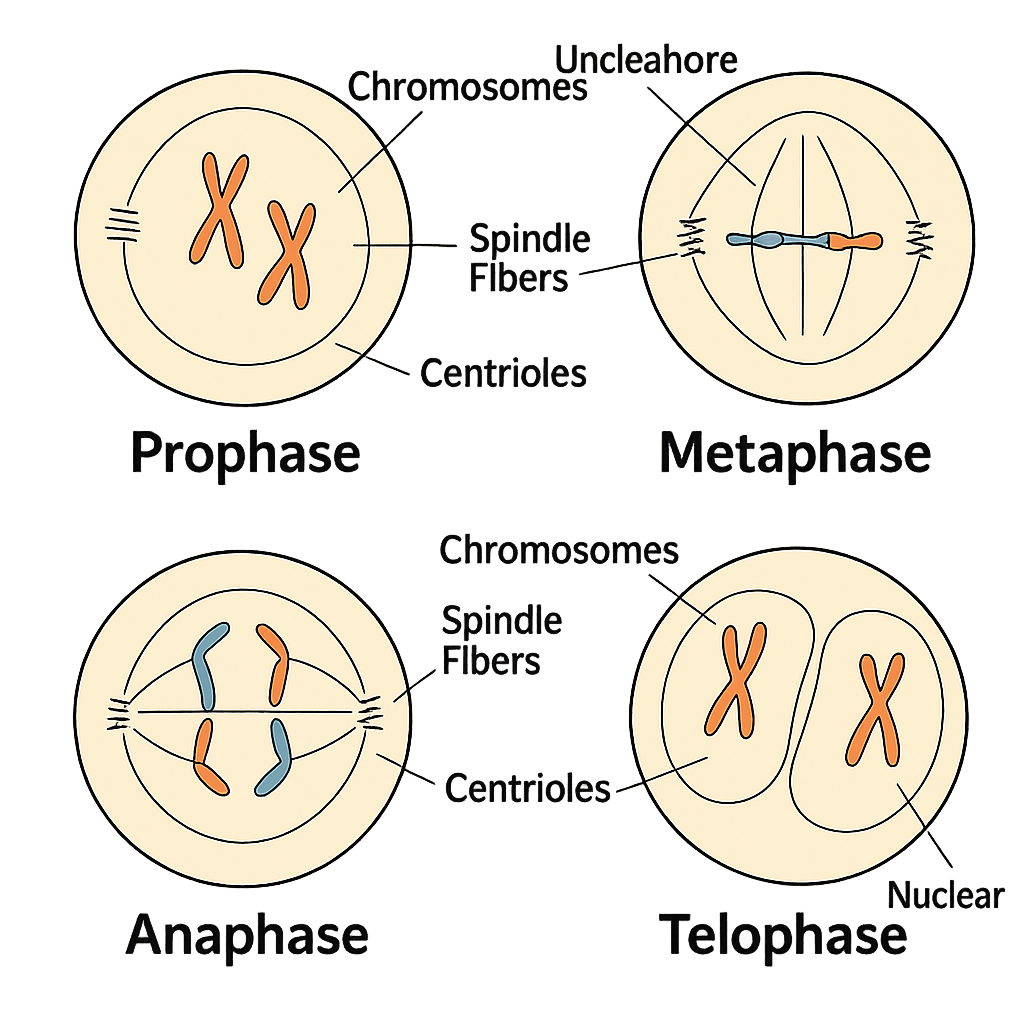
The labelled diagram depicts the stages of mitosis in a eukaryotic cell.
Question Parts
(a)
Arrange the stages of mitosis in their correct chronological order and label the diagram accordingly.
(b)
For each stage, describe the major cellular events that occur.
(c)
Explain the significance of cytokinesis and contrast how it is achieved in plant cells versus animal cells.
(d)
A cell is exposed to a mutagen that interferes with spindle‑fiber formation. Predict which stage of mitosis would be most severely affected and discuss the likely consequence for chromosome segregation.
Detailed Essay Solution & Marking Scheme Available

Get the step-by-step mathematical proofs, key points required by examiners, and a comprehensive breakdown from our AI Tutor.
Question 3 View Details
A mature dicot leaf is examined under a microscope. The observed cell shows a large central vacuole, numerous chloroplasts, a prominent nucleus and a well‑developed cell wall. Explain the structure and function of each of these organelles and discuss how the large vacuole contributes to maintaining turgor pressure in the leaf.
Detailed Essay Solution & Marking Scheme Available

Get the step-by-step mathematical proofs, key points required by examiners, and a comprehensive breakdown from our AI Tutor.
Question 4 View Details
A student investigates the effect of temperature and pH on the activity of amylase using starch as substrate. The following observations are recorded: - At 25 °C and pH 7.0, the reaction produces 12 mg of maltose in 5 min. - At 40 °C and pH 7.0, the reaction produces 18 mg of maltose in 5 min. - At 55 °C and pH 7.0, the reaction produces 6 mg of maltose in 5 min. - At 40 °C and pH 5.0, the reaction produces 9 mg of maltose in 5 min. - At 40 °C and pH 9.0, the reaction produces 8 mg of maltose in 5 min. Interpret the data to explain how temperature and pH influence amylase activity and relate your explanation to the enzyme’s structural properties.
Detailed Essay Solution & Marking Scheme Available

Get the step-by-step mathematical proofs, key points required by examiners, and a comprehensive breakdown from our AI Tutor.

Question 5 View Details
The circulatory system transports blood, nutrients and gases throughout the human body.
Question Parts
(a)
Describe the complete pathway of blood starting from the right atrium and ending at the left atrium, naming all major chambers and vessels encountered.
(b)
Explain how the structural features of capillaries enable efficient exchange of nutrients, gases and metabolic wastes between blood and tissues.
(c)
A person suffers a sudden fall in arterial blood pressure. Discuss the physiological mechanisms that are activated to restore normal pressure, indicating the role of receptors, nerves and hormones.
Detailed Essay Solution & Marking Scheme Available

Get the step-by-step mathematical proofs, key points required by examiners, and a comprehensive breakdown from our AI Tutor.

Question 6 View Details
The kidneys play a central role in maintaining the body's internal environment by excreting waste and regulating water balance.
Question Parts
(a)
Outline the three processes involved in urine formation and state the specific region of the nephron where each process primarily occurs.
(b)
Explain how antidiuretic hormone (ADH) modifies water reabsorption in the collecting duct and the resulting effect on urine volume.
(c)
A patient has a congenital defect that impairs the counter‑current multiplier mechanism of the loop of Henle. Predict the likely changes in the concentration of the urine produced and justify your answer.
Detailed Essay Solution & Marking Scheme Available

Get the step-by-step mathematical proofs, key points required by examiners, and a comprehensive breakdown from our AI Tutor.

Question 7 View Details
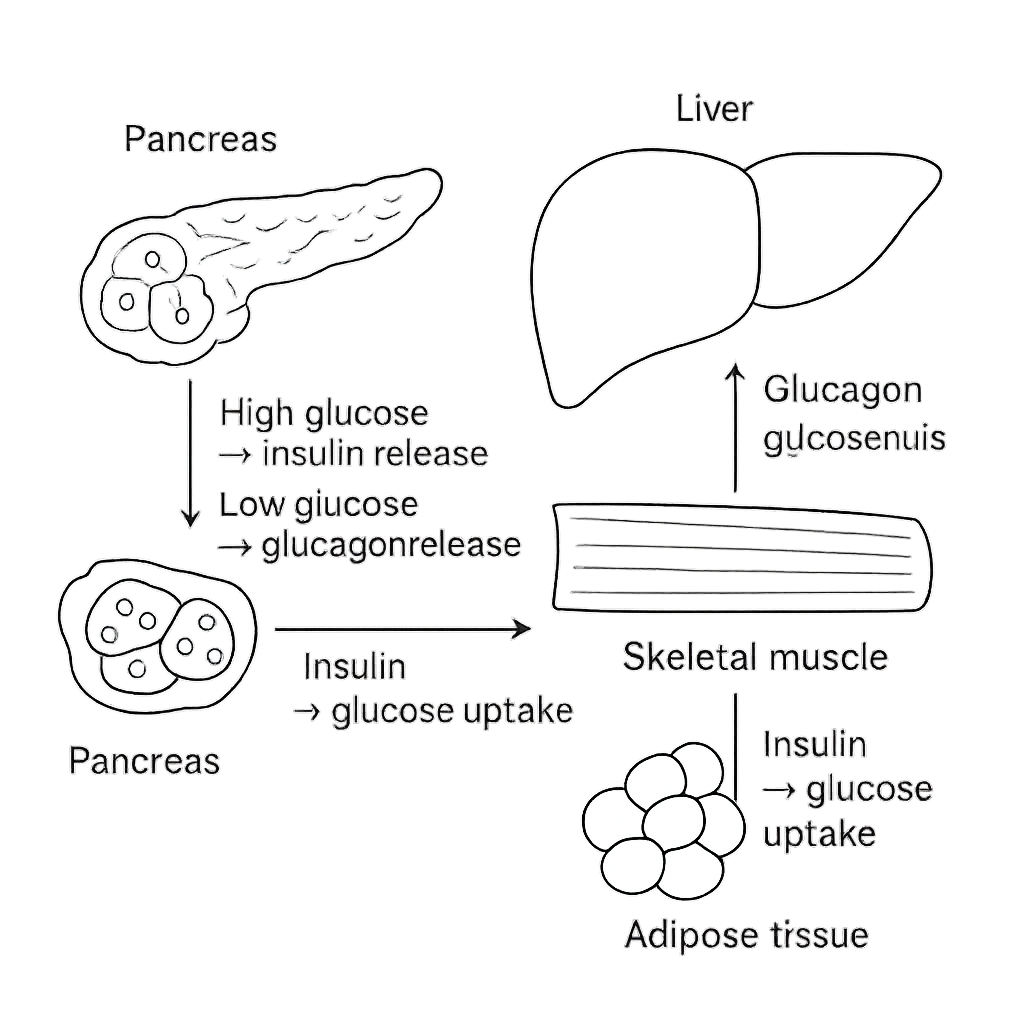
The labelled diagram shows the endocrine regulation of blood glucose concentration in the human body. It includes the pancreas with distinct alpha (α) and beta (β) cells, the liver, skeletal muscle and adipose tissue, and arrows indicating the actions of insulin and glucagon as well as feedback from blood glucose to the pancreas.
Question Parts
(a)
Identify the two hormones shown in the diagram and the specific pancreatic cells that secrete each hormone.
(b)
Explain, with reference to the diagram, how blood glucose concentration is restored to normal after a meal.
(c)
A person has a defect that prevents β‑cells from secreting insulin. Predict the likely effect on blood glucose level and describe two physiological consequences of this condition.
(d)
Describe the components of the feedback loop shown in the diagram and explain why it is classified as a negative feedback mechanism.
Detailed Essay Solution & Marking Scheme Available

Get the step-by-step mathematical proofs, key points required by examiners, and a comprehensive breakdown from our AI Tutor.

Question 8 View Details
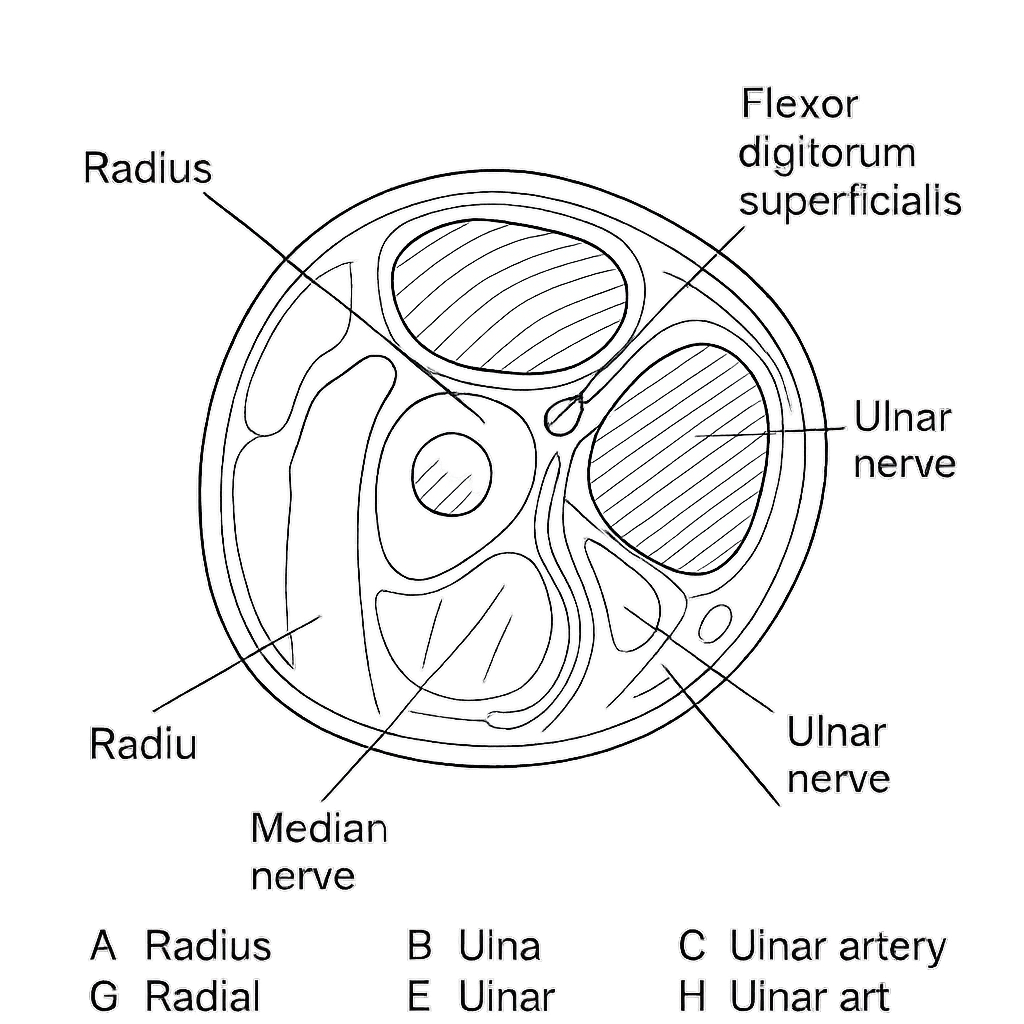
The diagram shows a cross‑section of the human forearm with the structures labelled A to H.
Question Parts
(a)
Identify each labelled structure (A–H) in the diagram.
(b)
Describe the complete pathway of a motor impulse that results in flexion of the middle finger, starting from the cerebral cortex to the muscle that performs the movement. Include all neural and muscular structures shown in the diagram.
(c)
A lesion has damaged the median nerve at the level shown in the diagram. Predict the resulting functional deficits in terms of (i) muscle actions and (ii) sensory loss in the forearm and hand. Explain the basis for each deficit.
(d)
If the diameter of the radial artery is 3 mm and that of the ulnar artery is 2 mm, calculate the ratio of their cross‑sectional areas (radial : ulnar). Show your working.
Detailed Essay Solution & Marking Scheme Available

Get the step-by-step mathematical proofs, key points required by examiners, and a comprehensive breakdown from our AI Tutor.

Master the Exam!

You've seen a preview, but there are thousands more questions plus AI tutor to break down complex solutions.

Unlock Full Access Available for Android & Windows
Help others prepare! Share this practice hub:
Chat with Support