UTME 2020 Biology | Objective

Practice these randomly selected questions to test your readiness.

Question 1
Which one of the following options is not true for Mucor of Rhizopus? It
A. grows on moist dead organic matter
B. is a plant
C. has cellulose cell wall
D. reproduces asexually by producing spores.
Question 2
The water cycle is maintained mainly by
A. evaporation of water in the environment
B. evaporation and condensation of water in the environment
C. condensation of water in the environment
D. transpiration and respiration in plants.
Question 3
The correct sequence of tissues in the anatomy of a young dicotyledonous stem from the inside to the outside is
A. pith, phloem, cambium, xylem, parenchyma, collenchyma and epidermis
B. xylem, phloem, cambium, cortex, endodermis, collenchyma and epidermis
C. pith, xylem, cambium, phloem, collenchyma, parenchyma and epidermis
D. phloem, xylem, cambium, cortex, endodermis, collenchyma and epidermis.
Question 4
Water retention is highest in soils which are rich in
A. sand, poor in humus and devoid of clay
B. clay and sand, but poor in humus
C. clay and humus, but poor in sand
D. clay, poor in humus and devoid of sand
Question 5
An example of monohybrid inheritance in man is
A. astigmatism
B. cretinism
C. hyperthyroidism
D. albinism.
Question 6
The inner ear contains two main organs, namely,
A. eardrum and eustachian tube
B. cochlea and semicircular canals
C. oval window and ossicles
D. pinna and cochlea.
Question 7
The process of deamination is essential for the
A. digestion of protein
B. secretion of bile
C. formation of urea
D. formation of antibody
Question 8
The small masses of nervous tissue in which many neurons have their nuclei are called
A. dorsal roots
B. ventral roots
C. ganglia
D. synapses.
Question 9
An example of an endospermous seed is
A. cotton seed
B. bean seed
C. maize grain
D. cashew nut.
Question 10
The flow of air and water in or out of the mesophyll layer of a leaf is controlled by the
A. stomata
B. lenticels
C. air spaces
D. guard cells.
Question 11
The disaster that would have the least destructive impact on animal life and balance in nature is
A. chemical pollution
B. forest fires
C. oil spillage
D. grasshopper pests.
Question 12
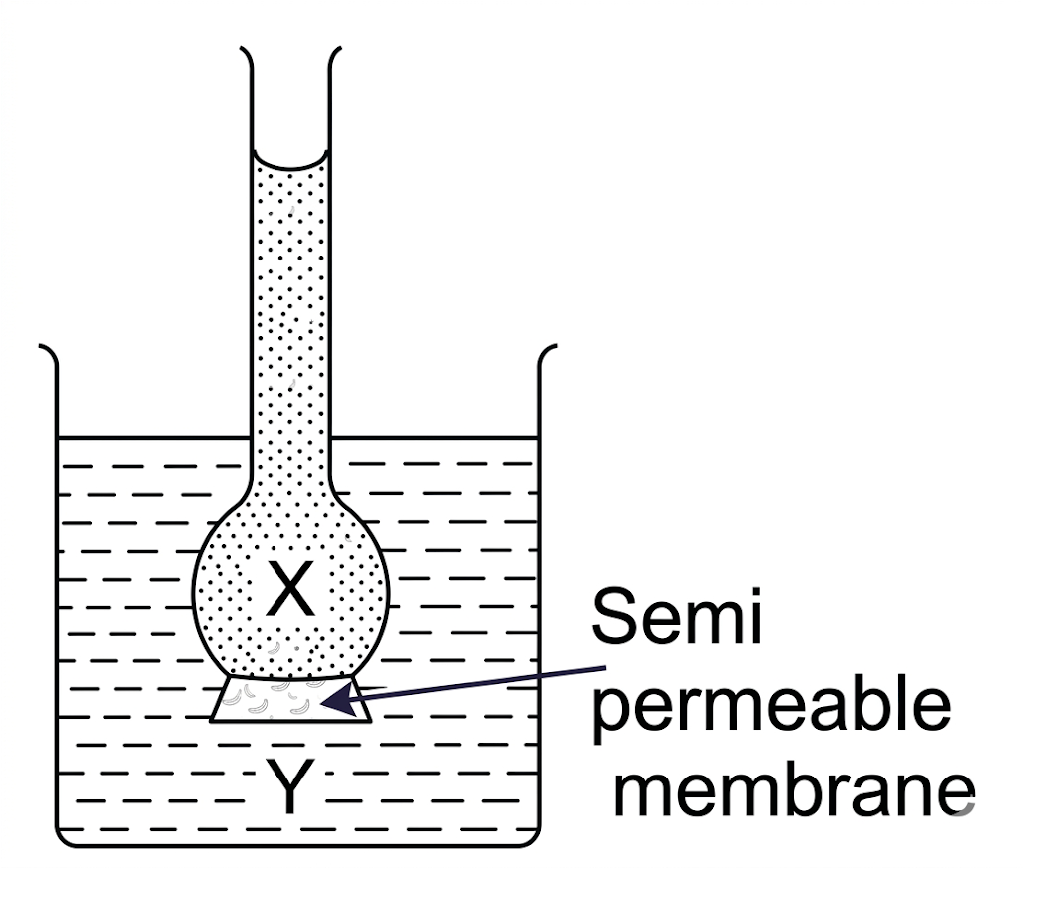
What would happen if solution Y is more concentrated than solution X in the figure above?
A. The level of X would rise, Y would fall
B. The level of X would rise, Y would rise
C. The levels of X and Y would stay the same
D. The level of Y would rise, X would fall
Question 13
According to Darwin, the driving force behind evolutionary change is
A. natural selection
B. genetic drift
C. mutation
D. gene flow
Question 14
Mammals acclimatize to reduced oxygen content at high altitudes by
A. the stimulation of marrow to reduce the amount of erythrocytes produced
B. increasing the rate at which erythrocytes are destroyed
C. the stimulation of marrow to produce more erythrocytes
D. increasing the breakdown of the protein portion of the erythrocytes.
Question 15
A boy who is fond of swimming in a pond finds himself passing urine with traces of blood. He is likely to have contracted
A. schistosomiasis
B. onchocerciasis
C. poliomyelitis
D. salmonellosis

Master the Exam!

You've seen a preview, but there are thousands more questions plus AI tutor to break down complex solutions.

Unlock Full Access Available for Android & Windows
Help others prepare! Share this practice hub: