neco model questions vol1 2025 chemistry | Essay

Prepare for your exams with neco model questions vol1 questions? Reviewing past/model questions is one of the most effective ways to guarantee a high score. This practice hub features authentic 2025 chemistry (Essay) questions designed to simulate the real exam environment.

Practice these randomly selected questions to test your readiness.
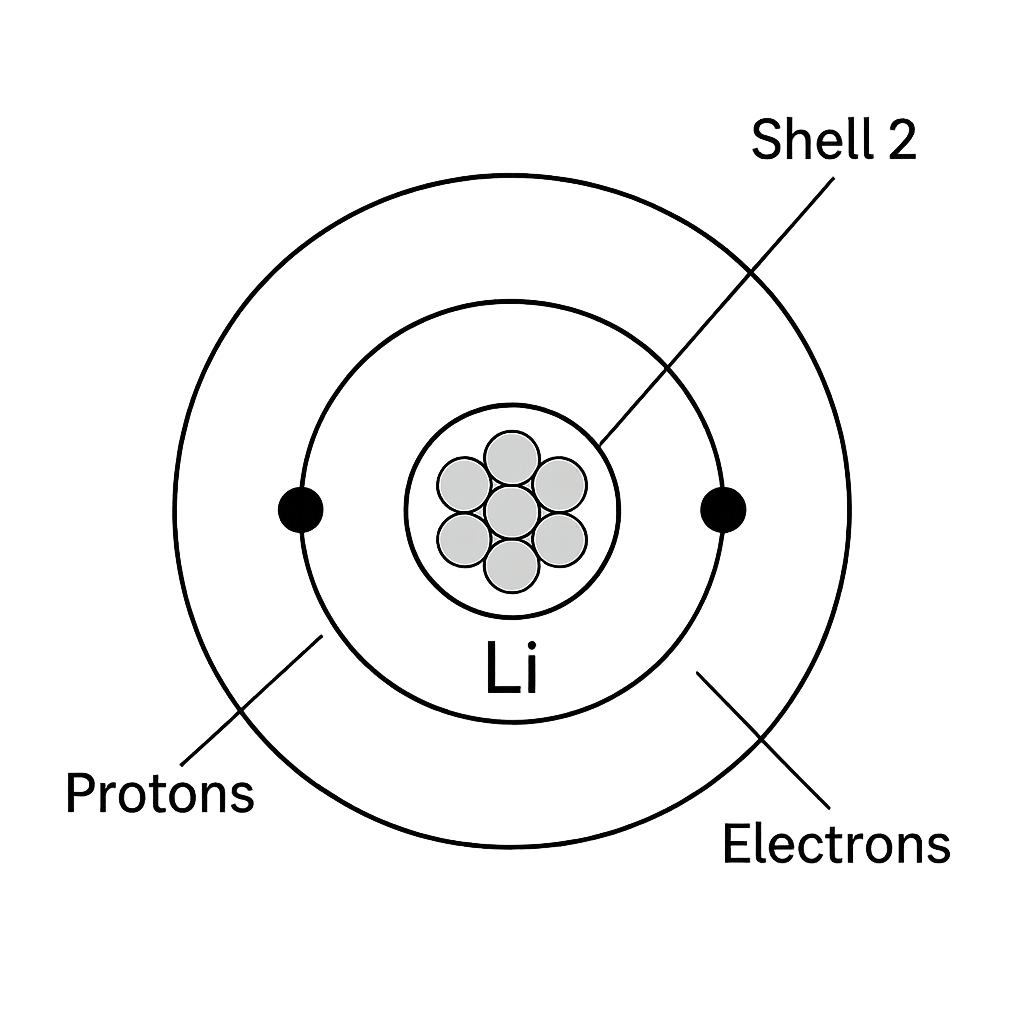
Question 1 View Details
The diagram shows a lithium atom (Z = 3) drawn in the Bohr model. The nucleus is labelled with the numbers of protons and neutrons, and the electron shells are labelled with the electrons occupying each shell.
Question Parts
(a)
State the number of protons, neutrons and electrons present in the atom shown.
(b)
Write the electron configuration of the atom using the Bohr model notation.
(c)
Explain how the diagram illustrates the concept of isotopes and give one example of another naturally occurring isotope of lithium.
Detailed Essay Solution & Marking Scheme Available

Get the step-by-step mathematical proofs, key points required by examiners, and a comprehensive breakdown from our AI Tutor.
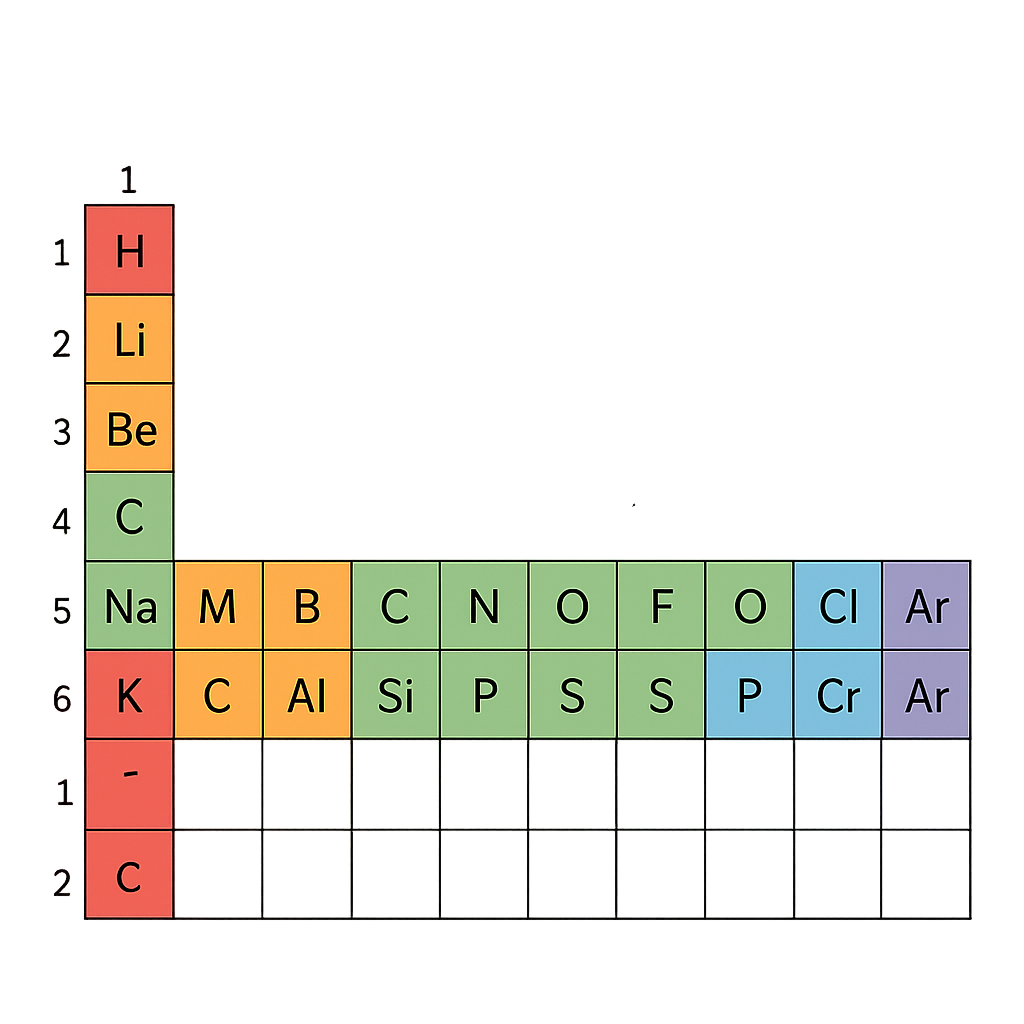
Question 2 View Details
The diagram presents the first twenty elements of the periodic table (hydrogen to calcium). Groups 1, 2, 16, 17 and 18 are highlighted in different colours, and the periods are clearly marked.
Question Parts
(a)
Identify the period and group of sulphur (S) and explain two chemical properties of sulphur that follow from its position in the table.
(b)
Using the diagram, describe the trend in atomic radius across period 3 from sodium (Na) to argon (Ar) and give a brief explanation for the observed pattern.
(c)
Predict the type of oxide formed when magnesium (Mg) reacts with oxygen and justify your prediction using periodic trends shown in the diagram.
Detailed Essay Solution & Marking Scheme Available

Get the step-by-step mathematical proofs, key points required by examiners, and a comprehensive breakdown from our AI Tutor.
Question 3 View Details
A sample of an unknown solid compound X is a white crystalline material with a high melting point (≈ 800 °C). It dissolves readily in water to give a colourless solution that conducts electricity. On evaporating the solution, colourless crystals of X reappear. Spectroscopic analysis shows that X contains only sodium (Na), chlorine (Cl) and oxygen (O) atoms.
Question Parts
(a)
Identify the predominant type of chemical bonding present in X and justify your choice using the observations given.
(b)
A 100 g sample of X was analysed and found to contain 23.0 g Na, 35.5 g Cl and 48.0 g O. Determine the empirical formula of X, showing all steps of your calculation.
(c)
Discuss how the nature of the bonding you identified in part (a) influences each of the following physical properties of X: (i) its high melting point, (ii) its solubility in water, and (iii) the electrical conductivity of its aqueous solution.
Detailed Essay Solution & Marking Scheme Available

Get the step-by-step mathematical proofs, key points required by examiners, and a comprehensive breakdown from our AI Tutor.

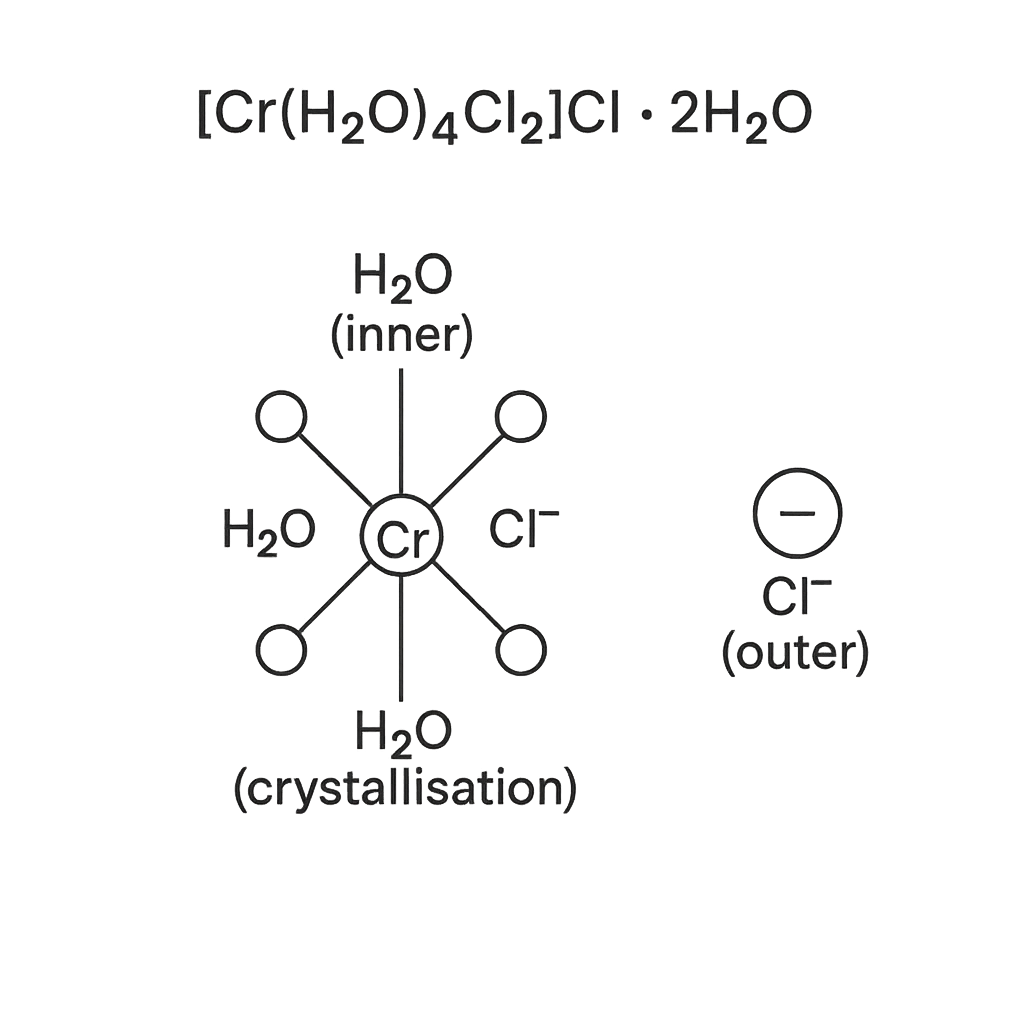
Question 4 View Details
The structural diagram of a coordination compound is shown.
Question Parts
(a)
From the diagram, determine the empirical formula of the compound.
(b)
Given that the molar mass of the compound is 266.0 g mol⁻¹, state its molecular formula.
(c)
A 5.00 g sample of the compound is dissolved in water and treated with excess silver nitrate solution. Calculate the mass of silver chloride precipitated.
Detailed Essay Solution & Marking Scheme Available

Get the step-by-step mathematical proofs, key points required by examiners, and a comprehensive breakdown from our AI Tutor.

Question 5 View Details
A 12.0 g sample of calcium carbonate is heated strongly in a closed container of volume 2.00 L. The decomposition reaction is CaCO₃(s) → CaO(s) + CO₂(g). After heating, the temperature of the system is 500 °C and the pressure inside the container is 1.00 atm. The volume of carbon dioxide actually collected is 1.85 L.
Question Parts
(a)
Calculate the number of moles of CaCO₃ that decompose.
(b)
Using the ideal gas law, determine the theoretical volume of CO₂ (in litres) that would be produced at 500 °C and 1.00 atm.
(c)
Calculate the percent yield of CO₂ based on the actual volume collected (1.85 L).
(d)
Briefly explain two possible reasons why the decomposition of CaCO₃ did not go to completion under the given conditions.
Detailed Essay Solution & Marking Scheme Available

Get the step-by-step mathematical proofs, key points required by examiners, and a comprehensive breakdown from our AI Tutor.

Question 6 View Details
A 250.0 g sample of a non‑volatile solute (molar mass = 58.44 g mol⁻¹) is dissolved in 500.0 g of water. The solution is heated at 1 atm until it boils, and the observed boiling point is 102.5 °C.
Question Parts
(a)
Calculate the molality of the solution.
(b)
Using the ebullioscopic constant of water (K_b = 0.512 °C kg mol⁻¹), calculate the expected elevation in boiling point (ΔT_b) and the predicted boiling point of the solution.
(c)
Compare the calculated boiling‑point elevation with the observed boiling point (102.5 °C). Suggest two plausible reasons for the discrepancy.
Detailed Essay Solution & Marking Scheme Available

Get the step-by-step mathematical proofs, key points required by examiners, and a comprehensive breakdown from our AI Tutor.

Question 7 View Details
A 0.500 mol sample of a weak monoprotic acid HA (Ka = 1.2 ×10⁻⁵) is dissolved in 1.00 L of water at 25 °C. The solution is then partially neutralised by adding 0.200 mol L⁻¹ NaOH until the pH of the mixture becomes exactly 5.00.
Question Parts
(a)
Calculate the volume of the NaOH solution that must be added to attain pH 5.00.
(b)
State the concentrations of the undissociated acid HA and its conjugate base A⁻ in the buffer solution obtained after the addition of NaOH.
(c)
A small amount of strong acid (0.010 mol HCl) is added to the buffer. Calculate the new pH and comment on the buffer’s capacity to resist this addition.
(d)
Explain qualitatively how the common‑ion effect would influence the solubility of a sparingly soluble salt of the conjugate base, such as NaA, if it were added to the buffer solution prepared in part (a).
Detailed Essay Solution & Marking Scheme Available

Get the step-by-step mathematical proofs, key points required by examiners, and a comprehensive breakdown from our AI Tutor.

Question 8 View Details
A student carried out a solubility experiment to determine the solubility of calcium sulphate (CaSO4) in water at two different temperatures using the saturated‑solution method. The apparatus shown in the diagram was used.
Question Parts
(a)
Write the balanced dissolution equation for calcium sulphate in water.
(b)
Explain why excess solid CaSO4 was added to the water and why the mixture was stirred for 30 minutes before filtration.
(c)
At 25 °C, 0.845 g of CaSO4 was recovered after filtration, washing, drying and weighing. The volume of water used to prepare the saturated solution was 250.0 mL. Calculate the solubility of CaSO4 in grams per 100 mL of water at 25 °C. Show all steps.
(d)
The experiment was repeated at 50 °C and 0.970 g of CaSO4 was recovered from the same 250.0 mL of water. Using the solubilities obtained, calculate the solubility product (Ksp) of CaSO4 at each temperature and comment on the effect of temperature on its solubility, relating your answer to Le Chatelier’s principle.
(e)
Suggest two possible sources of experimental error that could affect the accuracy of the solubility values and propose a method to minimise each error.
Detailed Essay Solution & Marking Scheme Available

Get the step-by-step mathematical proofs, key points required by examiners, and a comprehensive breakdown from our AI Tutor.

Master the Exam!

You've seen a preview, but there are thousands more questions plus AI tutor to break down complex solutions.

Unlock Full Access Available for Android & Windows
Help others prepare! Share this practice hub:
Chat with Support