neco model questions vol1 2025 biology | Essay

Prepare for your exams with neco model questions vol1 questions? Reviewing past/model questions is one of the most effective ways to guarantee a high score. This practice hub features authentic 2025 biology (Essay) questions designed to simulate the real exam environment.

Practice these randomly selected questions to test your readiness.
Question 1 View Details
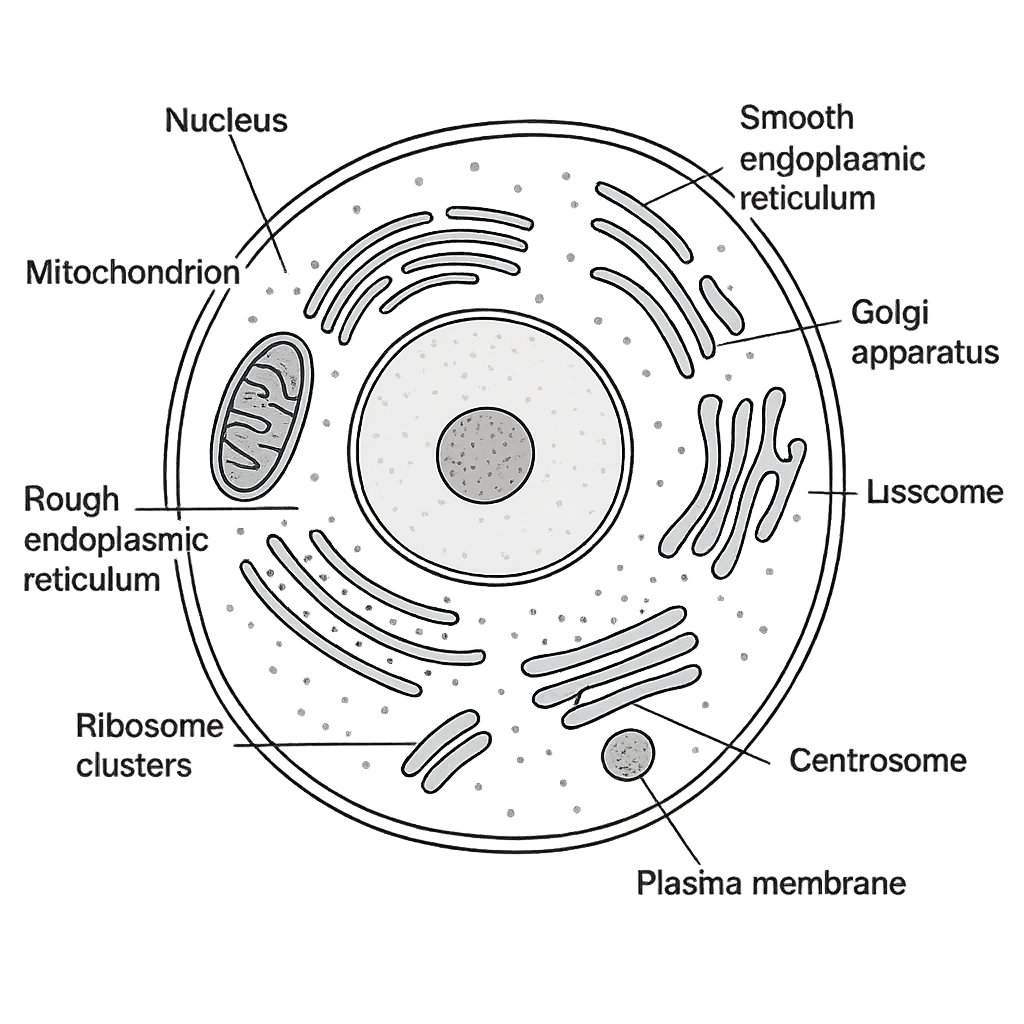
The diagram shows a typical animal cell with the labelled organelles.
Question Parts
(a)
Describe the role of the nucleus and explain how its structure supports its function.
(b)
Compare the functions of the rough and smooth endoplasmic reticulum, and give one example of a cellular process that primarily involves each.
(c)
A student claims that mitochondria are the “powerhouses” of the cell because they produce ATP only through aerobic respiration. Critically evaluate this statement, mentioning at least one anaerobic pathway that also generates ATP in the cell.
Detailed Essay Solution & Marking Scheme Available

Get the step-by-step mathematical proofs, key points required by examiners, and a comprehensive breakdown from our AI Tutor.
Question 2 View Details
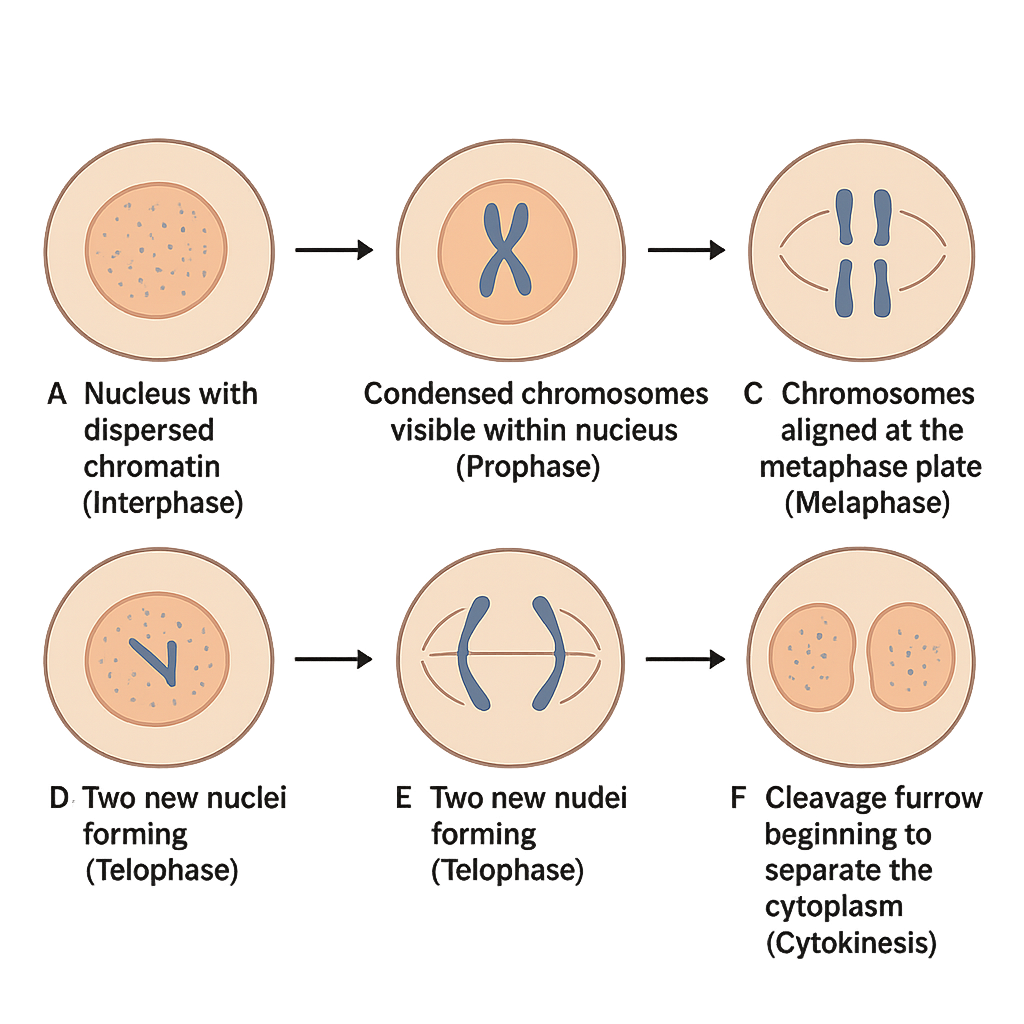
The labelled diagram shows a typical animal cell progressing through the stages of cell division.
Question Parts
(a)
Identify the stage of cell division represented by each label (A, B, C, D, E, F) in the diagram.
(b)
For each identified stage, briefly describe the key cellular events that occur.
(c)
If the total duration of one complete cell cycle is 24 hours and the cell spends 40 % of this time in interphase, while the remaining time is divided equally among prophase, metaphase, anaphase, telophase and cytokinesis, calculate the duration (in hours, to one decimal place) of each of these five later stages.
Detailed Essay Solution & Marking Scheme Available

Get the step-by-step mathematical proofs, key points required by examiners, and a comprehensive breakdown from our AI Tutor.
Question 3 View Details
A 12‑year‑old secondary school student weighs 45 kg and has a daily energy requirement of about 2000 kcal. The student’s typical breakfast and lunch consist of the following foods:
Question Parts
(a)
Calculate the total amount of energy (in kCal) and total protein (in grams) supplied by the foods listed below: - 2 slices of whole‑wheat bread (each 80 kCal, 3 g protein) - 1 cup of whole milk (150 kCal, 8 g protein) - 1 boiled egg (78 kCal, 6 g protein) - 1 banana (105 kCal, 1.3 g protein) - 1 serving of fried rice (250 kCal, 5 g protein).
(b)
The Recommended Dietary Allowance (RDA) for protein for a child of this age is 0.95 g kg⁻¹ body weight per day. State whether the student’s protein intake meets the RDA and justify your answer.
(c)
Briefly discuss two possible health consequences of prolonged protein deficiency in early adolescents.
(d)
Suggest two additional food items (including realistic portion sizes) that could be added to the student’s diet to meet the protein RDA without exceeding the total daily energy requirement of 2000 kCal. Show that the revised diet satisfies both energy and protein criteria.
Detailed Essay Solution & Marking Scheme Available

Get the step-by-step mathematical proofs, key points required by examiners, and a comprehensive breakdown from our AI Tutor.
Question 4 View Details
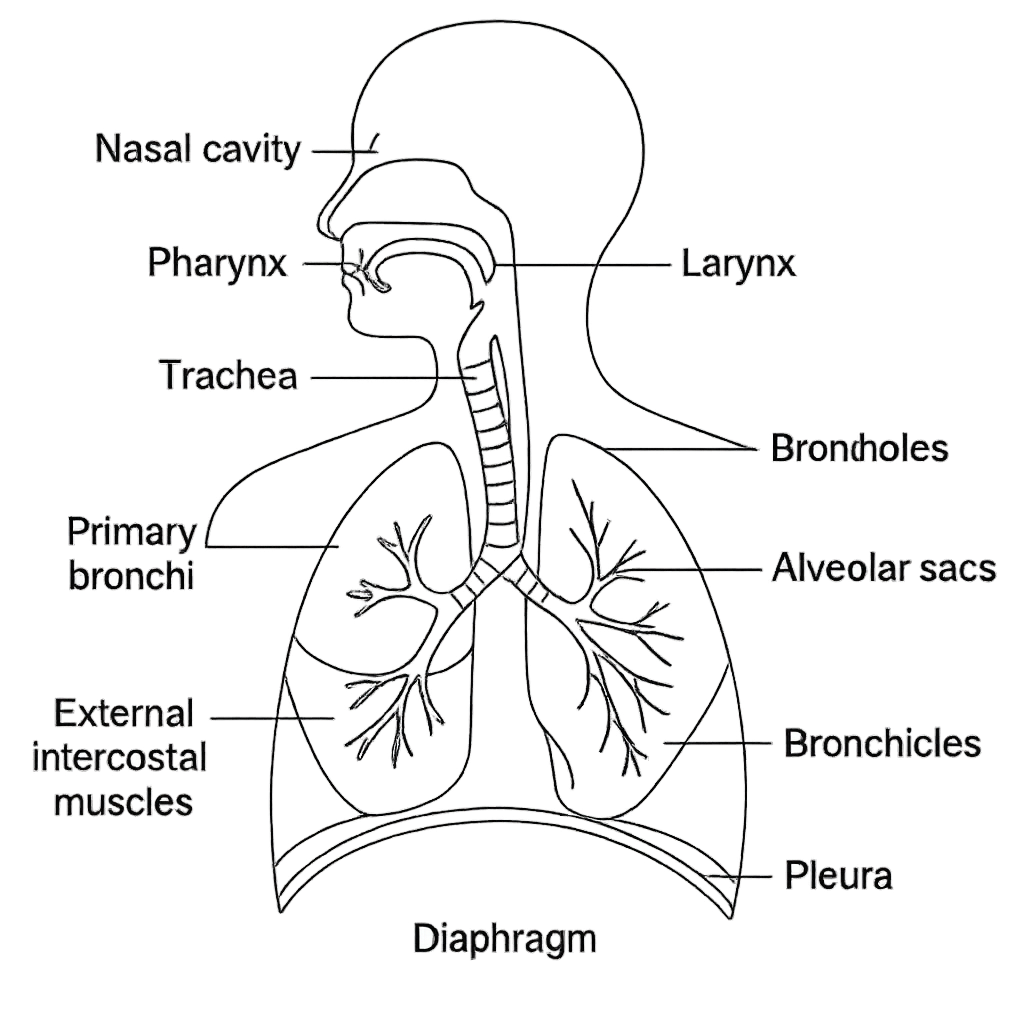
The diagram shows a labelled cross‑section of the human respiratory system.
Question Parts
(a)
Identify and label the following structures in the diagram: (i) the passage that conducts air from the external environment to the lungs; (ii) the site where external respiration (gas exchange) occurs; (iii) the muscle that is the primary driver of inspiration.
(b)
Explain, in a concise paragraph, the pathway of air from the external environment to the alveoli, indicating the functional role of each structure named in part (a).
(c)
Given the following data for a resting adult: - Tidal volume (V_T) = 500 mL per breath - Respiratory rate (f) = 12 breaths min⁻¹ - Anatomical dead‑space volume (V_D) = 150 mL per breath Calculate: (i) the minute ventilation (V̇_E) in litres per minute; (ii) the alveolar ventilation (V̇_A) in litres per minute. Show all steps and state any formula used.
(d)
Discuss two physiological mechanisms that increase the rate of diffusion of gases across the alveolar membrane during moderate‑to‑intense exercise.
Detailed Essay Solution & Marking Scheme Available

Get the step-by-step mathematical proofs, key points required by examiners, and a comprehensive breakdown from our AI Tutor.

Question 5 View Details
A tropical fruit tree is growing in a region where the soil water content has decreased significantly due to a prolonged dry season. The tree shows wilting of young leaves while older leaves remain turgid.
Question Parts
(a)
Explain the complete pathway of water movement from the soil to a leaf in a typical dicotyledonous plant, mentioning the specific role of each tissue involved (roots, xylem and leaves).
(b)
Considering the situation described, discuss two physiological adjustments the tree might make to maintain water transport under drought stress.
(c)
If the solute concentration in the root cortical cells increases from 0.15 mol L⁻¹ to 0.30 mol L⁻¹, calculate the change in the water potential (Ψw) of the root cells, assuming the temperature is 25 °C and the pressure potential remains unchanged. Use Ψs = –i C R T (i = 1, R = 0.0831 L·bar·K⁻¹·mol⁻¹, T = 298 K). State the new water potential value and explain how this change influences water uptake from the soil.
Detailed Essay Solution & Marking Scheme Available

Get the step-by-step mathematical proofs, key points required by examiners, and a comprehensive breakdown from our AI Tutor.

Question 6 View Details
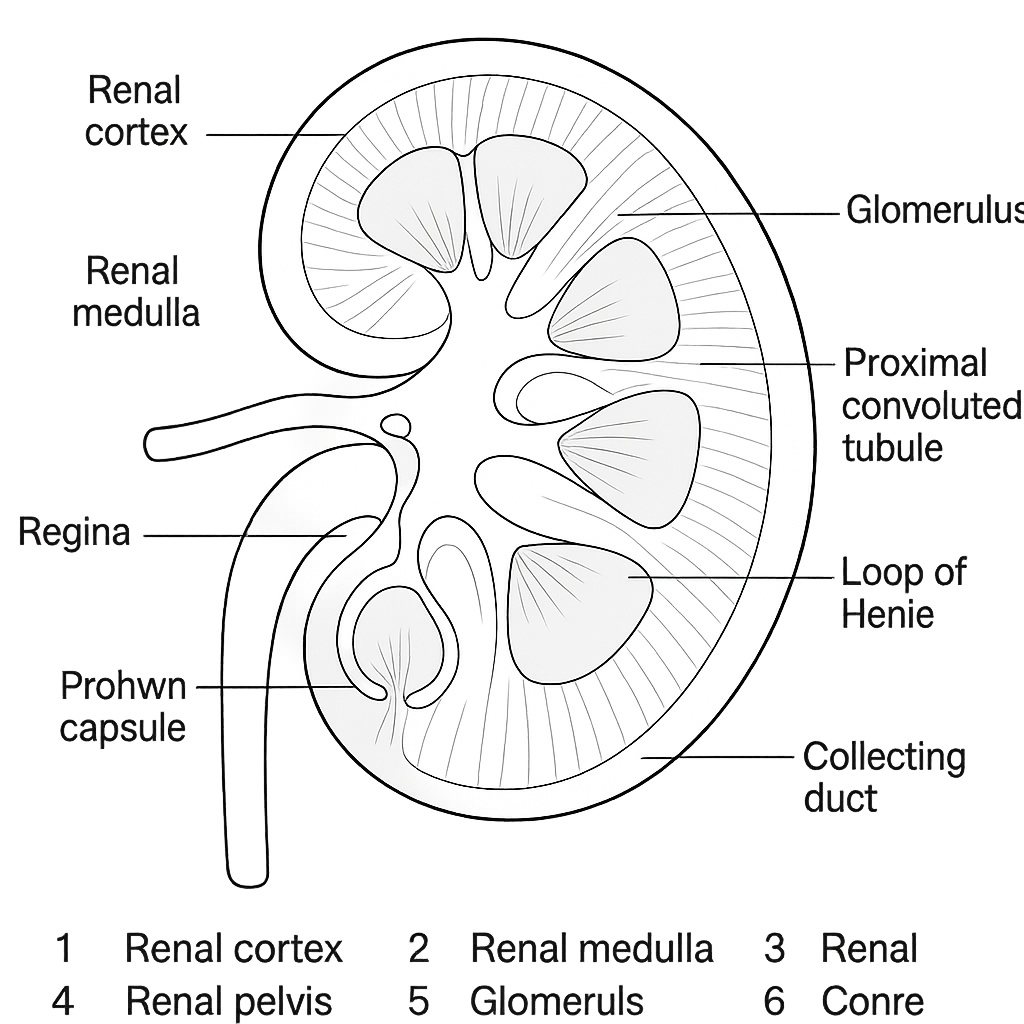
The diagram shows a longitudinal section of a human kidney with the major regions and the nephron components numbered 1–8.
Question Parts
(a)
Write the correct name of each structure indicated by the numbers 1–8 on the diagram.
(b)
State the primary function of each of the following nephron parts in urine formation:
() Glomerulus
() Proximal convoluted tubule
() Loop of Henle
() Distal convoluted tubule
() Collecting duct
(c)
Explain how antidiuretic hormone (ADH) modifies the activity of the collecting duct to influence urine concentration. Include the role of water‑permeable channels and the medullary osmotic gradient.
(d)
A congenital defect shortens the loop of Henle by 40 % of its normal length. Predict the likely effect on the kidney’s ability to produce highly concentrated urine and give a physiological explanation.
Detailed Essay Solution & Marking Scheme Available

Get the step-by-step mathematical proofs, key points required by examiners, and a comprehensive breakdown from our AI Tutor.

Question 7 View Details
During a 30‑minute moderate‑intensity run in a hot and humid environment (35 °C, 80 % humidity), a 25‑year‑old male experiences a rise in core body temperature. The body activates several physiological responses to restore thermal balance.
Question Parts
(a)
Explain, with a clear sequence of events, how negative feedback regulates body temperature in the situation described.
(b)
Describe two other homeostatic mechanisms that operate in the human body, stating the variable controlled, the primary sensor, the effector organ and whether the feedback is negative or positive. Compare the feedback type of each with that described in part (a).
(c)
Predict the physiological consequences if the hypothalamic temperature centre were damaged and could not receive or send signals. Discuss how this impairment would affect the mechanisms mentioned in parts (a) and (b).
() Immediate effects on core temperature regulation during exercise.
() Long‑term implications for other homeostatic systems (e.g., glucose and water balance).
Detailed Essay Solution & Marking Scheme Available

Get the step-by-step mathematical proofs, key points required by examiners, and a comprehensive breakdown from our AI Tutor.

Question 8 View Details
A 15‑year‑old sprinter abruptly changes direction after 20 m of a 100‑m sprint, relying on rapid neuromuscular adjustments to maintain speed and balance.
Question Parts
(a)
Outline the complete neural pathway that begins with the activation of muscle‑spindle receptors in the hamstring and ends with the corrective contraction of the quadriceps that re‑aligns the body. Include all major neurons, synapses and the type of signal transmitted at each stage.
(b)
Discuss the role of the cerebellum in fine‑tuning this rapid change of direction. In your answer, give two specific mechanisms by which the cerebellum improves movement accuracy.
() Error detection and correction through the spinocerebellar pathways.
() Timing and coordination of agonist‑antagonist muscle activity via Purkinje cell output.
(c)
Explain how muscular fatigue, developed after repeated sprints, can impair neuromuscular coordination during such rapid directional changes. Provide two physiological changes that occur with fatigue and how each affects the neural control of movement.
Detailed Essay Solution & Marking Scheme Available

Get the step-by-step mathematical proofs, key points required by examiners, and a comprehensive breakdown from our AI Tutor.

Master the Exam!

You've seen a preview, but there are thousands more questions plus AI tutor to break down complex solutions.

Unlock Full Access Available for Android & Windows
Help others prepare! Share this practice hub:
Chat with Support