neco model questions vol1 2024 biology | Essay

Prepare for your exams with neco model questions vol1 questions? Reviewing past/model questions is one of the most effective ways to guarantee a high score. This practice hub features authentic 2024 biology (Essay) questions designed to simulate the real exam environment.

Practice these randomly selected questions to test your readiness.
Question 1 View Details
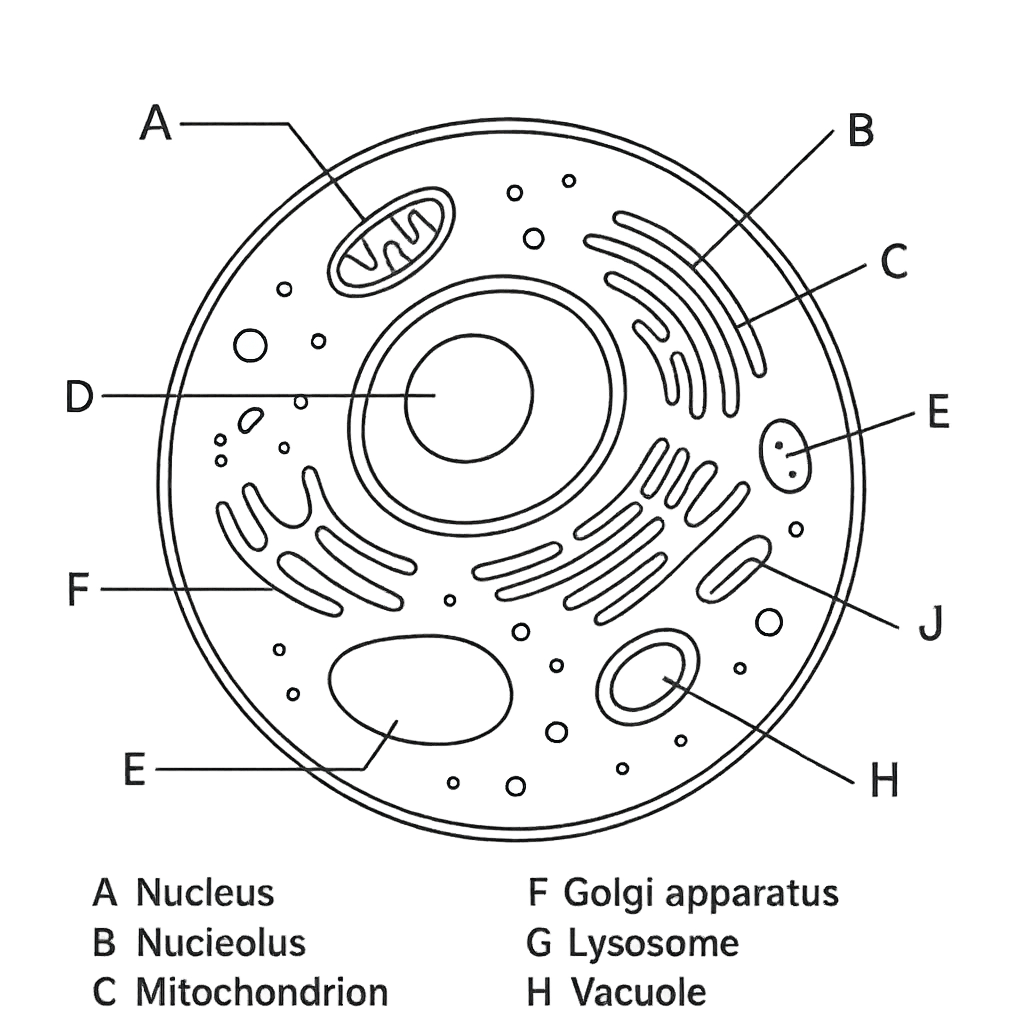
The diagram shows a typical animal cell with the parts labelled A–K as given in the accompanying illustration.
Question Parts
(a)
Explain how the structure of the mitochondrion (label C) enables it to perform its role in cellular respiration.
(b)
Compare the roles of the rough endoplasmic reticulum (label D) and the smooth endoplasmic reticulum (label E) in the cell, giving one specific function for each.
(c)
Predict the effect on the cell if the Golgi apparatus (label F) were non‑functional. Support your answer by describing the normal pathway of a secretory protein.
Detailed Essay Solution & Marking Scheme Available

Get the step-by-step mathematical proofs, key points required by examiners, and a comprehensive breakdown from our AI Tutor.
Question 2 View Details
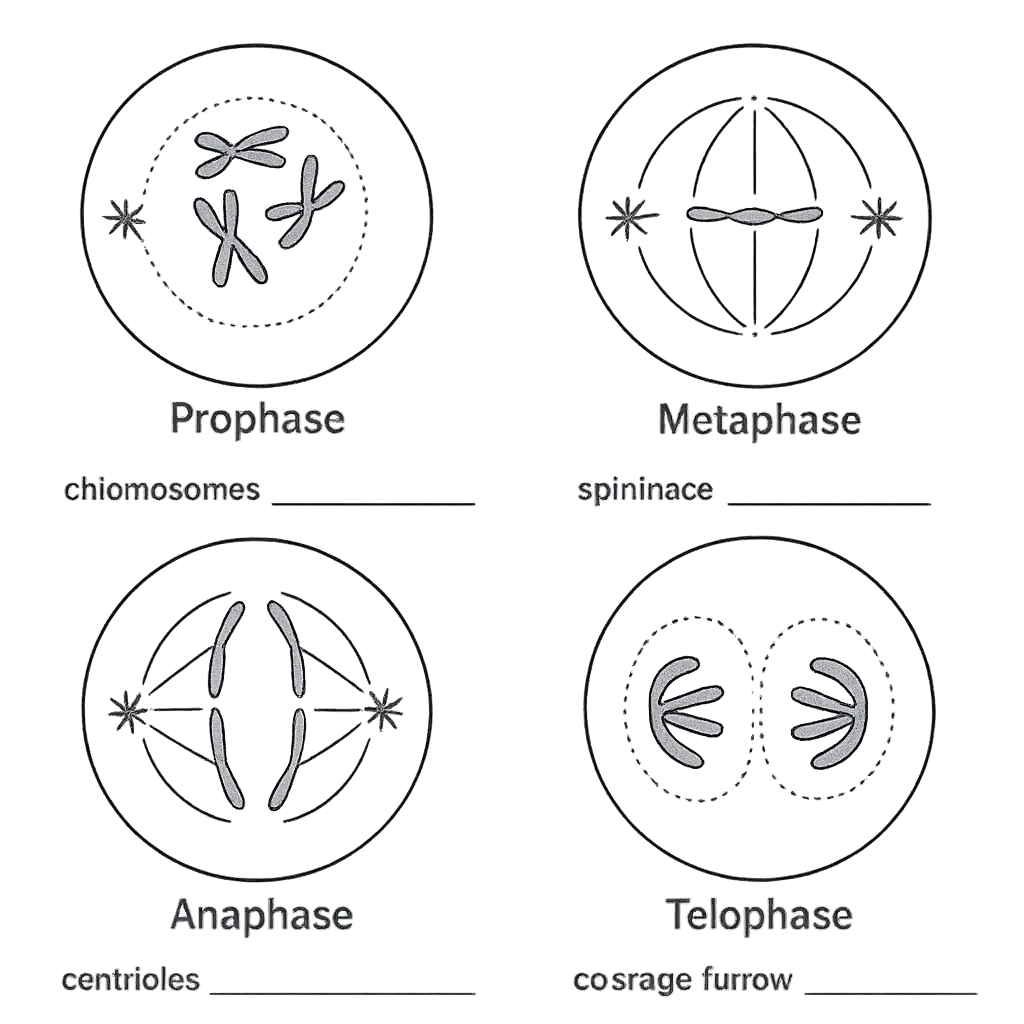
The diagram shows a typical animal somatic cell undergoing mitosis. Using the illustration, answer the following questions.
Question Parts
(a)
Identify the four stages of mitosis shown in the diagram and write their names in the correct sequential order.
(b)
State two major events that occur in each stage of mitosis.
() Prophase
() Metaphase
() Anaphase
() Telophase
(c)
Explain why mitosis is essential for growth and repair in multicellular organisms.
(d)
Compare mitosis with meiosis in terms of chromosome number in the daughter cells and the generation of genetic variation. Give two clear differences.
(e)
A diploid human somatic cell (2n = 46) undergoes mitosis. How many chromosomes are present in each daughter cell at the end of telophase?
Detailed Essay Solution & Marking Scheme Available

Get the step-by-step mathematical proofs, key points required by examiners, and a comprehensive breakdown from our AI Tutor.
Question 3 View Details
A 60‑kg adult male follows the daily meal plan shown below. | Food item | Quantity | Energy (kcal) per quantity | Protein (g) per quantity | |-----------|----------|----------------------------|--------------------------| | Rice (white) | 100 g | 130 | 2.7 | | Beans (cooked) | 150 g | 340 | 21 | | Chicken (grilled) | 200 g | 330 | 30 | | Banana (medium) | 1 | 105 | 1.3 | | Milk (whole) | 250 ml | 150 | 8 | The recommended daily allowance (RDA) for protein for an adult is 0.8 g kg⁻¹ body weight and the recommended energy intake is 2000 kcal per day.
Question Parts
(a)
Calculate the total energy (in kcal) supplied by the above meal plan.
(b)
Determine the total protein intake (in grams) and state whether it meets the RDA for this individual.
(c)
Discuss two possible health consequences if the individual consistently consumes the same amount of energy but fails to meet the recommended daily energy intake.
Detailed Essay Solution & Marking Scheme Available

Get the step-by-step mathematical proofs, key points required by examiners, and a comprehensive breakdown from our AI Tutor.
Question 4 View Details
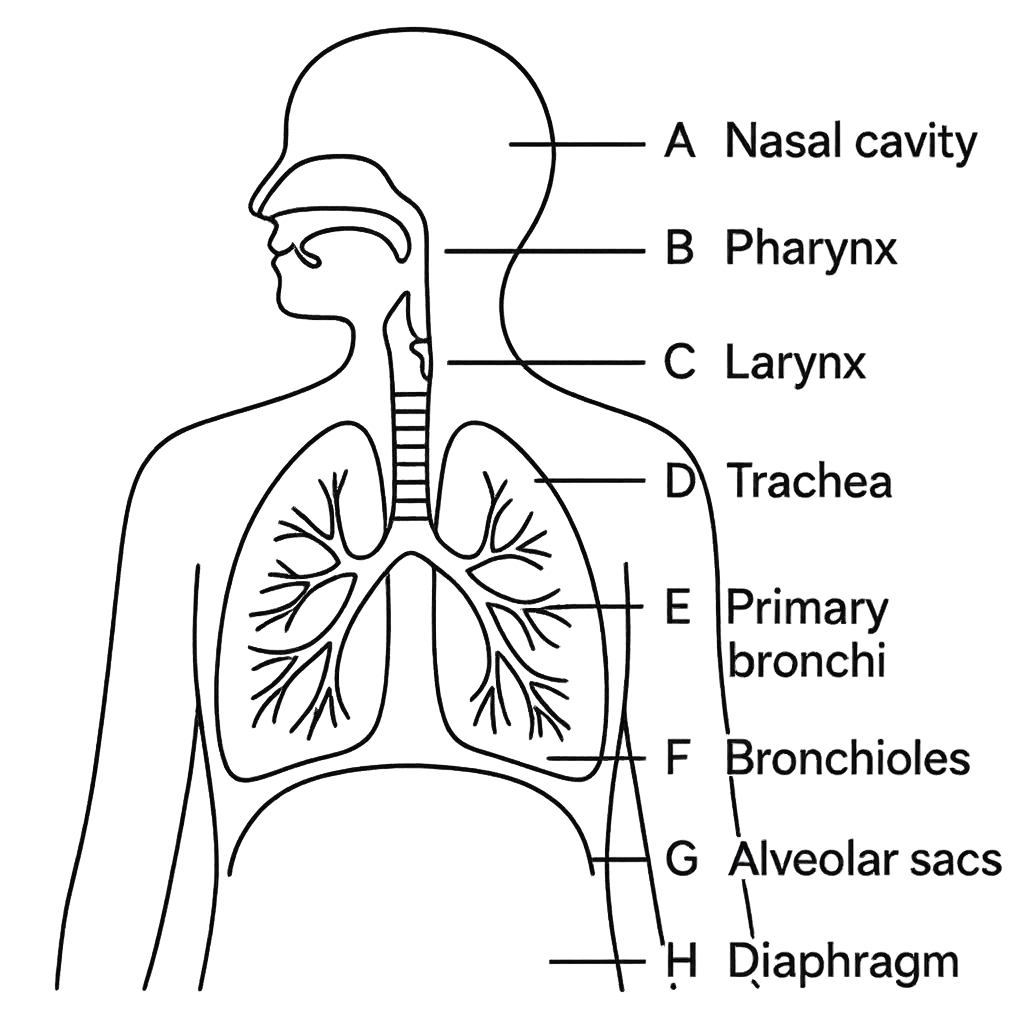
The diagram shows the major structures of the human respiratory system with the labels indicated.
Question Parts
(a)
Identify the structures labelled A–H in the diagram.
(b)
Explain the process of external respiration, describing how oxygen and carbon dioxide are transferred between the alveolar air and the blood. In your answer, refer to at least three labelled structures from the diagram.
(c)
During vigorous exercise a person’s tidal volume rises from 0.5 L to 1.5 L per breath and the respiratory rate increases from 12 to 30 breaths per minute. (i) Calculate the change in minute ventilation (in litres per minute). (ii) Discuss how the diaphragm (label H) and the intercostal muscles contribute to achieving the increased tidal volume, referring to the diagram where appropriate.
Detailed Essay Solution & Marking Scheme Available

Get the step-by-step mathematical proofs, key points required by examiners, and a comprehensive breakdown from our AI Tutor.

Question 5 View Details
A 17‑year‑old student performed a step‑test to investigate the effect of moderate exercise on the circulatory transport system. The data obtained are: - Resting heart rate (HR₁): 72 beats per minute (bpm) - Heart rate after exercise (HR₂): 110 bpm - Resting stroke volume (SV₁): 70 mL per beat - Stroke volume after exercise (SV₂): 90 mL per beat Using this information, answer the following questions.
Question Parts
(a)
Calculate the cardiac output (CO) at rest and after exercise. Express your answers in litres per minute (L min⁻¹).
(b)
State two physiological mechanisms that cause the increase in stroke volume during moderate exercise and briefly explain how each mechanism works.
(c)
Discuss how the increase in cardiac output assists in the delivery of oxygen to, and removal of carbon dioxide from, the active skeletal muscles during exercise.
(d)
Compare the transport of water in plants (through the xylem) with the transport of blood in animals, focusing on the principal driving forces and the structural adaptations that facilitate each type of transport.
Detailed Essay Solution & Marking Scheme Available

Get the step-by-step mathematical proofs, key points required by examiners, and a comprehensive breakdown from our AI Tutor.

Question 6 View Details
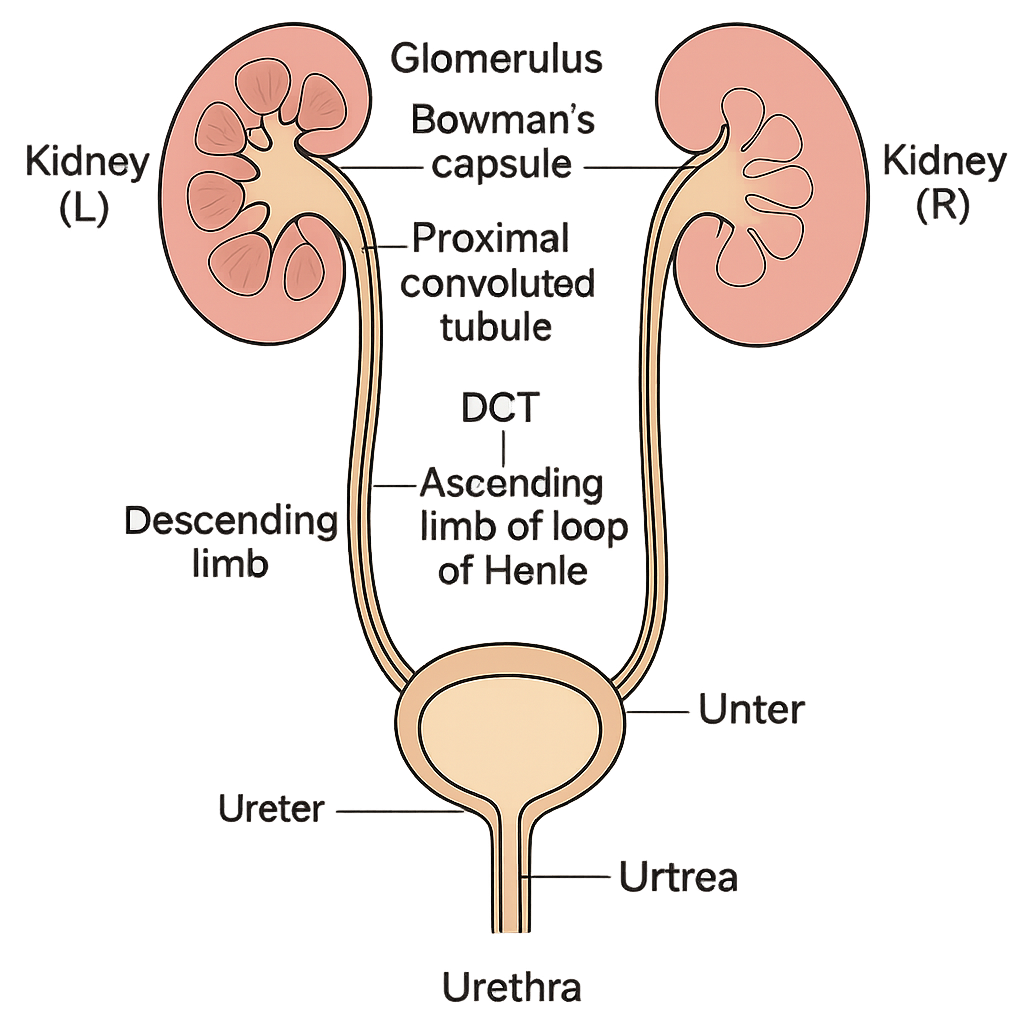
The diagram shows a labelled illustration of the human urinary system, including the kidneys (cortex, medulla and renal pelvis), a complete nephron (glomerulus, Bowman's capsule, proximal convoluted tubule, descending and ascending limbs of the loop of Henle, distal convoluted tubule and collecting duct), the ureters, urinary bladder and urethra.
Question Parts
(a)
Using the labelled diagram, describe the sequential steps involved in the formation of urine, starting from the filtration of blood in the kidney to the elimination of urine from the body.
(b)
Explain how antidiuretic hormone (ADH) influences water re‑absorption in the nephron. Indicate which segment of the nephron is primarily affected and describe the change in its permeability.
(c)
A patient presents with a blockage in the left ureter. Based on the diagram, discuss the likely physiological effects on kidney function and the possible clinical manifestations that may arise.
Detailed Essay Solution & Marking Scheme Available

Get the step-by-step mathematical proofs, key points required by examiners, and a comprehensive breakdown from our AI Tutor.

Question 7 View Details
Blood glucose concentration is tightly regulated in humans to ensure adequate energy supply to cells while preventing harmful hyperglycaemia or hypoglycaemia.
Question Parts
(a)
Describe the roles of insulin and glucagon in the short‑term regulation of blood glucose.
(b)
Explain how liver glycogen storage and breakdown assist in maintaining glucose homeostasis.
(c)
Discuss how negative feedback operates in this regulatory system, identifying the sensor, integrator and effector components.
(d)
Evaluate the likely physiological consequences if this regulatory mechanism fails, giving at least two examples of disorders that may arise.
Detailed Essay Solution & Marking Scheme Available

Get the step-by-step mathematical proofs, key points required by examiners, and a comprehensive breakdown from our AI Tutor.

Question 8 View Details
A sudden fall in arterial blood pressure activates both neural and hormonal mechanisms to restore perfusion.
Question Parts
(a)
Outline the baroreceptor reflex pathway that rapidly corrects the fall in blood pressure, naming the receptors, afferent, central and efferent components.
(b)
Describe the renin‑angiotensin‑aldosterone system (RAAS) that provides a longer‑term correction, indicating the organs involved and the specific actions of renin, angiotensin II and aldosterone.
(c)
Compare the time scales and mechanisms of the neural and hormonal responses, and explain why both are required for effective blood‑pressure regulation.
(d)
Propose a clinical scenario in which damage to one component of this system (e.g., baroreceptors) impairs regulation, and state a likely symptom that would be observed.
Detailed Essay Solution & Marking Scheme Available

Get the step-by-step mathematical proofs, key points required by examiners, and a comprehensive breakdown from our AI Tutor.

Master the Exam!

You've seen a preview, but there are thousands more questions plus AI tutor to break down complex solutions.

Unlock Full Access Available for Android & Windows
Help others prepare! Share this practice hub:
Chat with Support