neco model questions vol1 2022 biology | Essay

Prepare for your exams with neco model questions vol1 questions? Reviewing past/model questions is one of the most effective ways to guarantee a high score. This practice hub features authentic 2022 biology (Essay) questions designed to simulate the real exam environment.

Practice these randomly selected questions to test your readiness.
Question 1 View Details
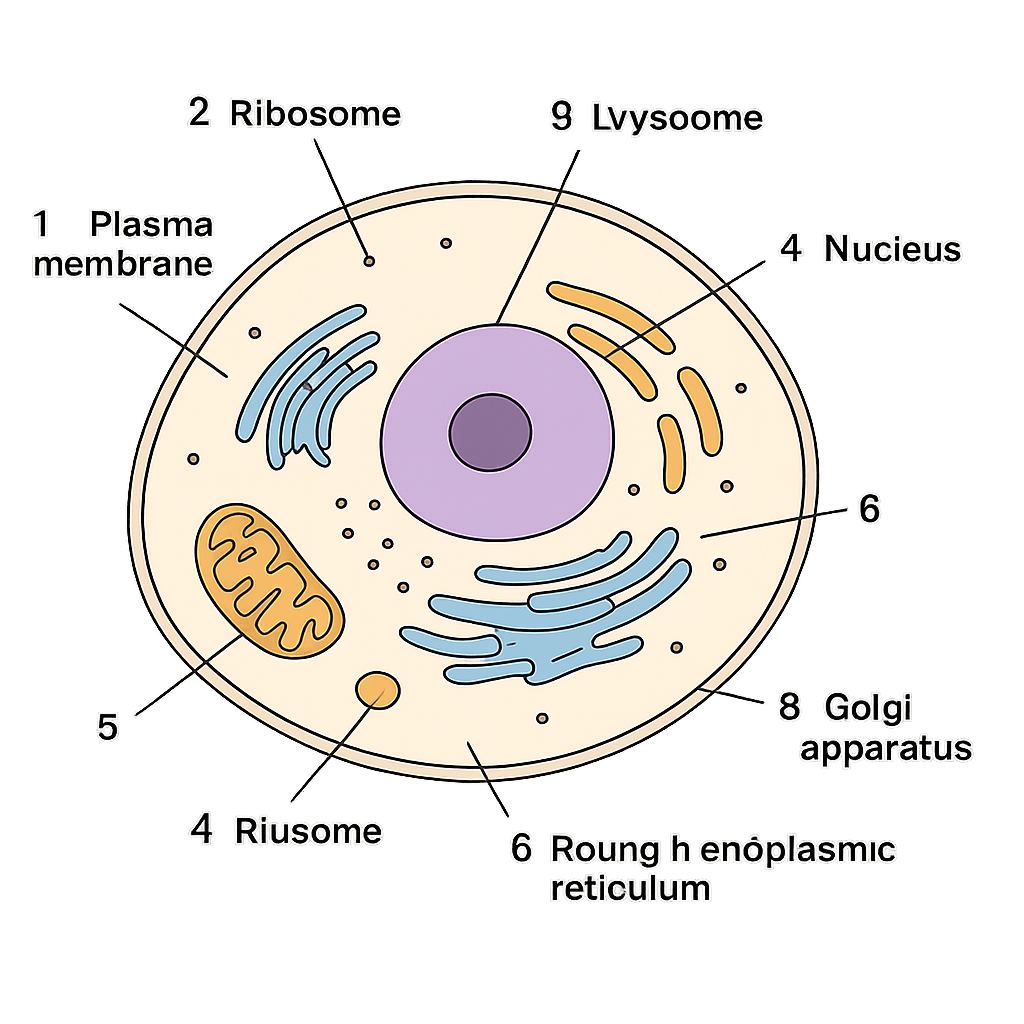
The diagram shows a typical animal cell with the structures numbered 1 to 9.
Question Parts
(a)
Write the name of each structure corresponding to the numbers 1‑9.
(b)
State two functions of the nucleus and two functions of the mitochondrion.
(c)
Compare the rough and smooth endoplasmic reticulum in terms of structure and function.
Detailed Essay Solution & Marking Scheme Available

Get the step-by-step mathematical proofs, key points required by examiners, and a comprehensive breakdown from our AI Tutor.
Question 2 View Details
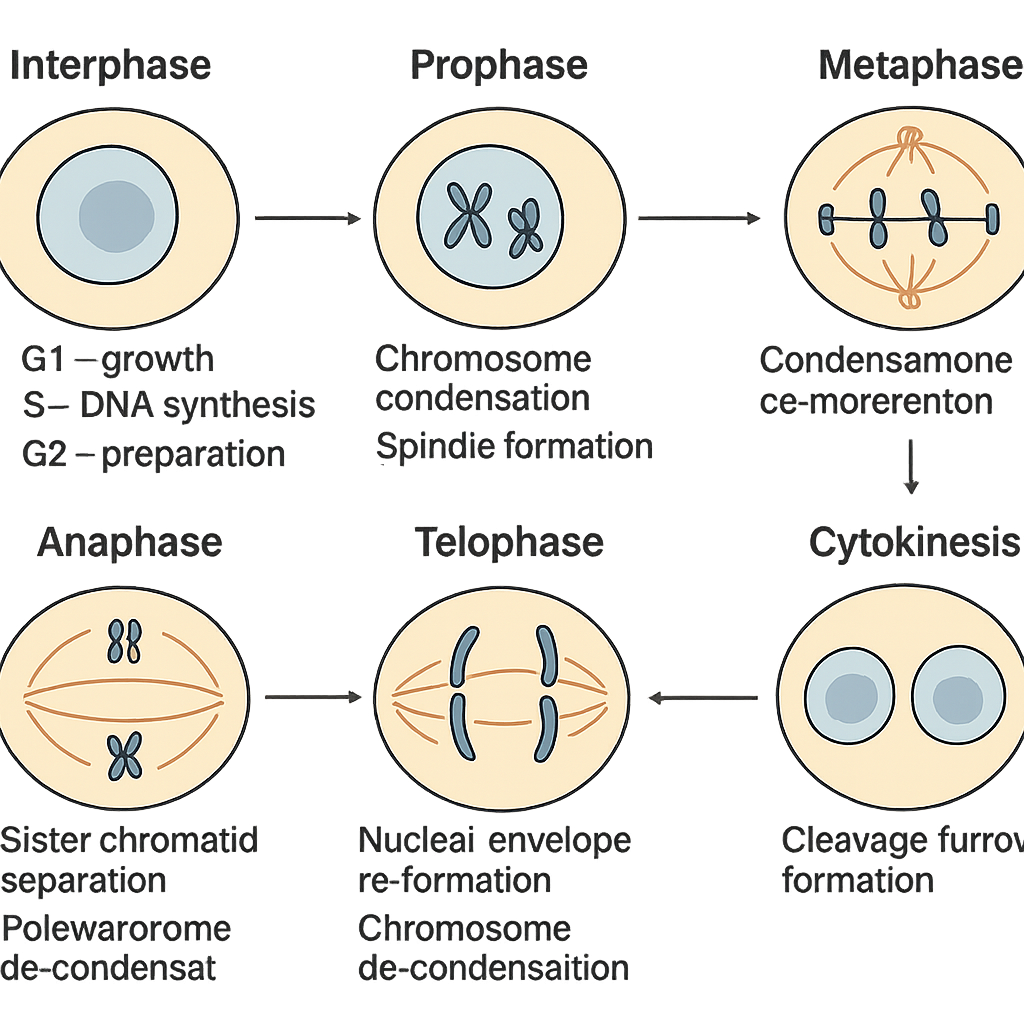
The labelled diagram shows an animal cell at successive stages of the cell cycle: Interphase (sub‑divided into G1, S and G2), Prophase, Metaphase, Anaphase, Telophase and Cytokinesis.
Question Parts
(a)
Describe the principal events that occur in each of the six stages shown in the diagram.
(b)
Explain why the spindle‑assembly checkpoint operating in metaphase is essential for the fidelity of cell division.
(c)
The total duration of the cell cycle for this cell type is 20 h. The proportion of time spent in G1, S, G2 and M phases are 40 %, 30 %, 20 % and 10 % respectively. (i) Calculate the duration (in hours) of each phase. (ii) A mutation lengthens the G2 phase by 50 % while the other phases remain unchanged. Determine the new total cell‑cycle time and discuss one possible cellular consequence of this lengthened G2 period.
() Calculate the duration (in hours) of each phase.
() Determine the new total cell‑cycle time and discuss one possible cellular consequence of this lengthened G2 period.
Detailed Essay Solution & Marking Scheme Available

Get the step-by-step mathematical proofs, key points required by examiners, and a comprehensive breakdown from our AI Tutor.
Question 3 View Details
A secondary school student consumes the following foods in a typical lunch: - 300 g of boiled white rice (per 100 g: 28 g carbohydrate, 2.7 g protein, 0.3 g fat) - 150 g of boiled beans (per 100 g: 21 g carbohydrate, 9 g protein, 0.5 g fat) - 50 g of fried plantain (per 100 g: 31 g carbohydrate, 1.3 g protein, 0.4 g fat) Using the Atwater factors (carbohydrate = 4 kcal · g⁻¹, protein = 4 kcal · g⁻¹, fat = 9 kcal · g⁻¹), answer the questions below.
Question Parts
(a)
Calculate the total energy (in kilocalories) supplied by the lunch.
(b)
Vitamin A is essential for normal vision and immune function. Discuss the consequences of a prolonged vitamin A deficiency in school‑age children, including clinical manifestations and preventive measures.
(c)
Explain how blood glucose concentration is regulated in the body immediately after a carbohydrate‑rich meal.
Detailed Essay Solution & Marking Scheme Available

Get the step-by-step mathematical proofs, key points required by examiners, and a comprehensive breakdown from our AI Tutor.
Question 4 View Details
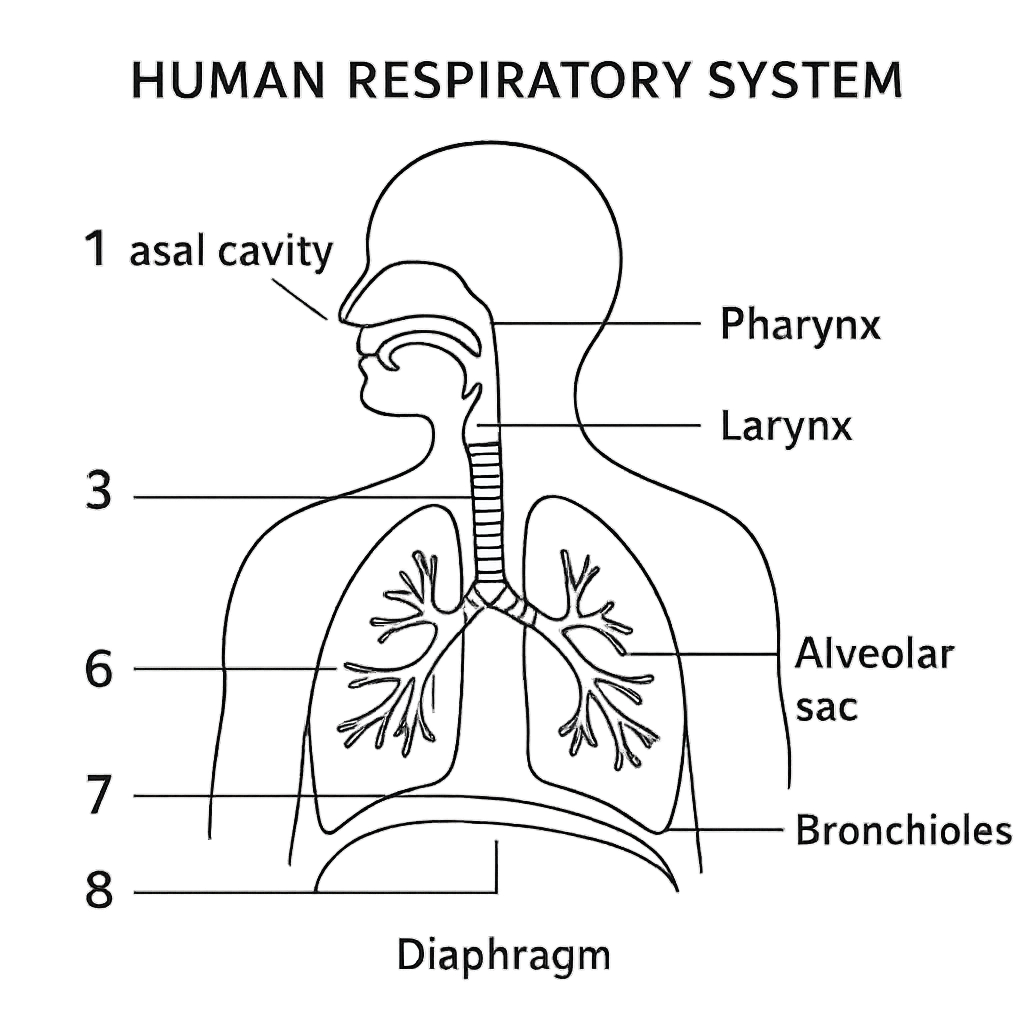
The diagram shows the major structures of the human respiratory system. Using the numbered parts in the diagram, answer the following questions.
Question Parts
(a)
Identify and label the structures indicated by numbers 1–8 in the diagram.
(b)
Trace the route of a single breath of air from entry to exit, describing the function of each structure it passes through.
(c)
Explain the mechanism of gas exchange at the alveolar level, mentioning the roles of partial pressures and the respiratory membrane.
(d)
Discuss how the rate and depth of breathing are regulated by the central nervous system, including the role of chemoreceptors.
Detailed Essay Solution & Marking Scheme Available

Get the step-by-step mathematical proofs, key points required by examiners, and a comprehensive breakdown from our AI Tutor.

Question 5 View Details
A mature tree 20 m tall is growing in a region where the average daytime transpiration pull at the leaf surface is –0.2 MPa. The tree loses water through its leaves at a rate of 150 g per hour. Root pressure measured in the same tree is 0.15 MPa.
Question Parts
(a)
Describe two structural adaptations of xylem vessels that enable the continuous upward movement of water in tall trees.
(b)
Calculate the theoretical tension (in N m⁻²) that must be generated to lift water from the roots to the top of the tree against gravity, using the given transpiration pull. Explain why root pressure alone cannot achieve this height.
(c)
Given the water loss of 150 g h⁻¹, estimate the volume of water (in mL) that must be absorbed by the roots each hour. Discuss two physiological mechanisms the tree employs to maintain water balance under this transpiration demand.
Detailed Essay Solution & Marking Scheme Available

Get the step-by-step mathematical proofs, key points required by examiners, and a comprehensive breakdown from our AI Tutor.

Question 6 View Details
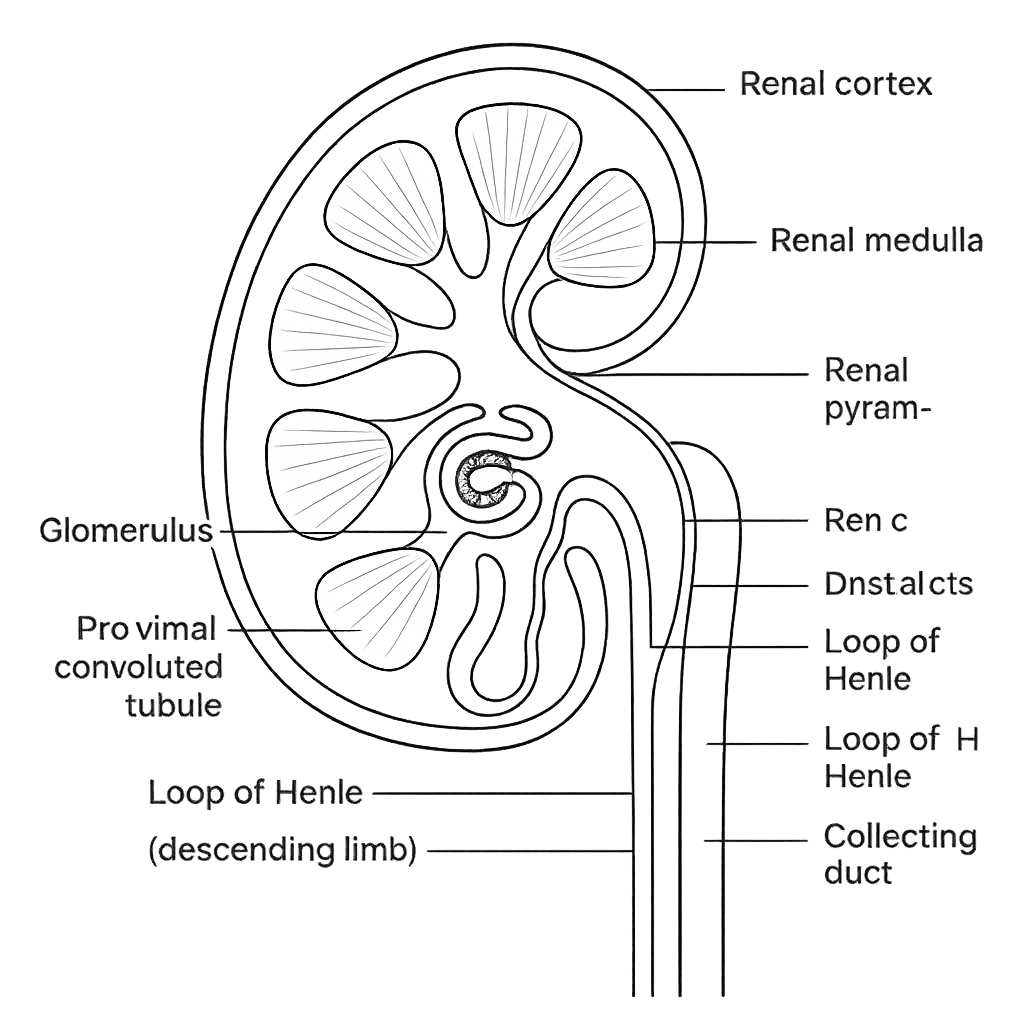
The diagram shows a longitudinal section of a human kidney with the nephron and associated structures labelled from A to L.
Question Parts
(a)
State the anatomical name represented by each label (A–L) in the diagram.
(b)
Explain the specific role of each of the following structures in the formation of urine:
(c)
Describe how the hormone antidiuretic hormone (ADH) regulates water reabsorption in the nephron, indicating the segment(s) affected and the cellular mechanism involved.
(d)
Compare secretion and reabsorption in the nephron, giving one specific example of a substance that is secreted and one that is reabsorbed.
Detailed Essay Solution & Marking Scheme Available

Get the step-by-step mathematical proofs, key points required by examiners, and a comprehensive breakdown from our AI Tutor.

Question 7 View Details
Homeostasis is essential for maintaining the internal environment of the human body within narrow limits.
Question Parts
(a)
Describe the general principle of negative feedback and give two distinct examples of negative feedback mechanisms in humans, explaining the sensor, integrator and effector in each.
(b)
Compare negative feedback with positive feedback by discussing (i) the physiological situations in which each operates, (ii) the consequences for the controlled variable, and (iii) why positive feedback is limited in duration.
(c)
A patient suffers from a defect in the pancreatic β‑cells that reduces insulin secretion by 60 % of normal. Predict the short‑term and long‑term effects on blood glucose concentration, glycogen storage, and body weight. Justify your predictions with reference to the relevant feedback loops.
Detailed Essay Solution & Marking Scheme Available

Get the step-by-step mathematical proofs, key points required by examiners, and a comprehensive breakdown from our AI Tutor.

Question 8 View Details
Coordination of movement in humans involves the integration of sensory information and motor output by the nervous system.
Question Parts
(a)
Outline the pathway of a monosynaptic stretch reflex, naming the type of neuron at each synapse and the role of the spinal cord.
(b)
The cerebellum contributes to the coordination of voluntary movements. Explain (i) how the cerebellum receives input, (ii) the type of information it processes, and (iii) the effect of cerebellar damage on gait and limb movement.
(c)
A researcher records the reaction time of a subject performing a simple visual reaction task under two conditions: (i) with eyes open, (ii) with eyes closed. The mean reaction times are 210 ms and 260 ms respectively. Using appropriate statistical reasoning, discuss what these results suggest about the contribution of visual information to the coordination of movement. Include in your discussion the concept of variability and possible sources of error.
Detailed Essay Solution & Marking Scheme Available

Get the step-by-step mathematical proofs, key points required by examiners, and a comprehensive breakdown from our AI Tutor.

Master the Exam!

You've seen a preview, but there are thousands more questions plus AI tutor to break down complex solutions.

Unlock Full Access Available for Android & Windows
Help others prepare! Share this practice hub:
Chat with Support