neco model questions vol1 2021 biology | Essay

Prepare for your exams with neco model questions vol1 questions? Reviewing past/model questions is one of the most effective ways to guarantee a high score. This practice hub features authentic 2021 biology (Essay) questions designed to simulate the real exam environment.

Practice these randomly selected questions to test your readiness.
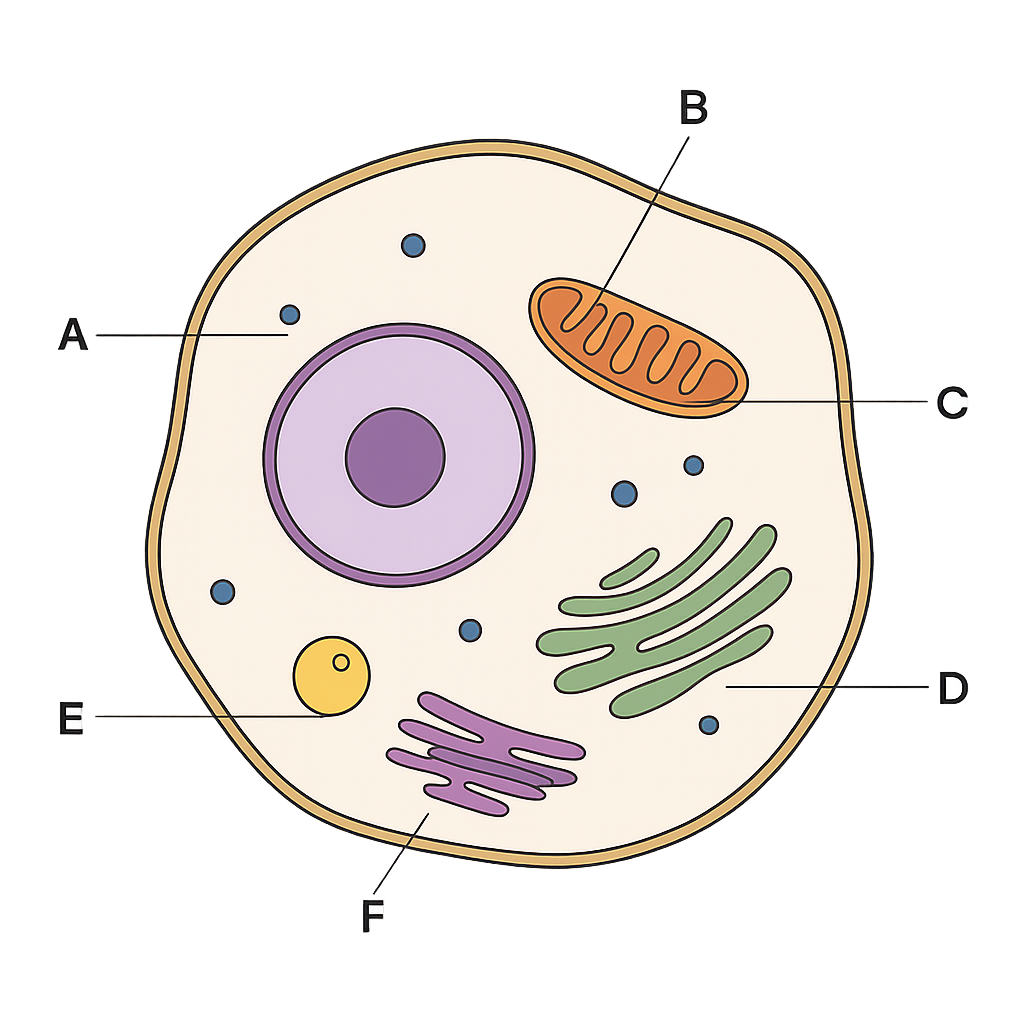
Question 1 View Details
The labelled diagram below depicts a typical animal cell.
Question Parts
(a)
Identify each labelled structure (A–F) and state its main function.
(b)
Explain how the structure of the mitochondrion is related to its function in cellular respiration.
(c)
A drug inhibits protein synthesis at the ribosome. Predict the likely effect on the cell’s activities and justify your answer.
Detailed Essay Solution & Marking Scheme Available

Get the step-by-step mathematical proofs, key points required by examiners, and a comprehensive breakdown from our AI Tutor.
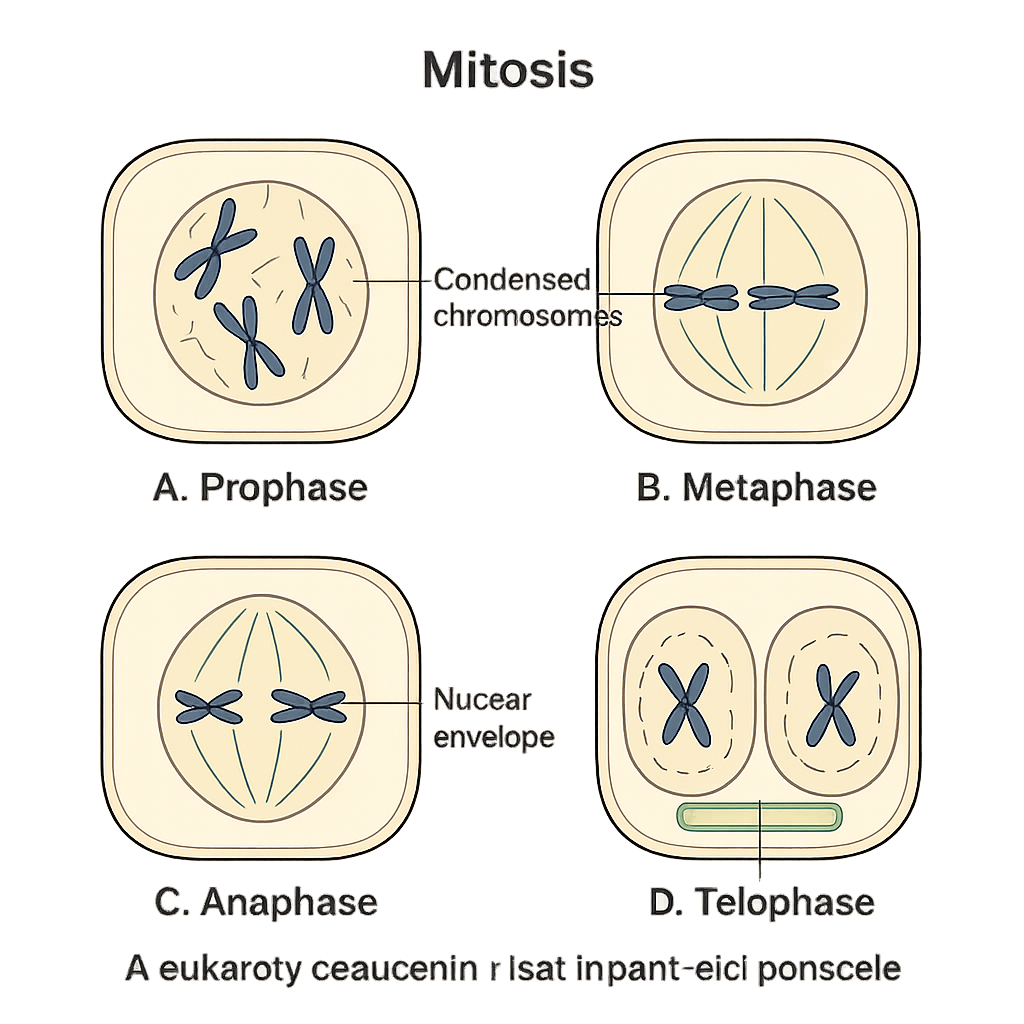
Question 2 View Details
The labelled diagram illustrates a eukaryotic cell undergoing mitosis.
Question Parts
(a)
State the four stages of mitosis in the correct order as labelled in the diagram.
(b)
For each stage, describe the main events that occur in the nucleus and in the cytoplasm.
(c)
Compare mitosis with meiosis in terms of chromosome number of the daughter cells and the generation of genetic variation.
(d)
The diagram shows a plant cell forming a cell plate during cytokinesis. Explain why cytokinesis differs between plant and animal cells, referring to the structures shown.
Detailed Essay Solution & Marking Scheme Available

Get the step-by-step mathematical proofs, key points required by examiners, and a comprehensive breakdown from our AI Tutor.
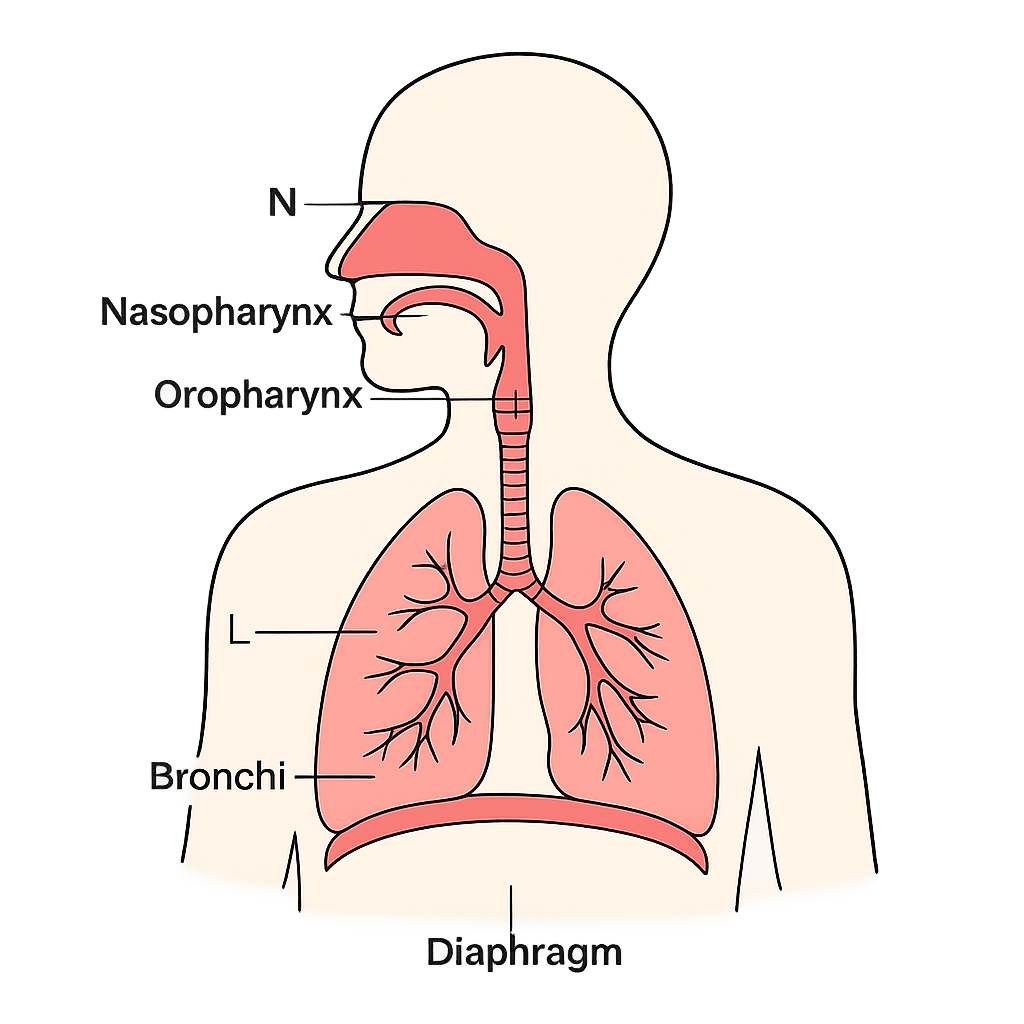
Question 3 View Details
The labelled diagram shows the major organs of the human digestive system involved in the processing of food.
Question Parts
(a)
List the labels shown in the diagram and give the common name of each organ.
(b)
State the primary site(s) of digestion and the main enzyme(s) involved for each of the following nutrients:
(c)
A meal consists of 150 g of rice (80 % carbohydrate, 7 % protein, 1 % fat), 100 g of grilled chicken (30 % protein, 5 % fat) and 30 g of avocado (15 % fat). Using 4 kcal g⁻¹ for carbohydrate and protein and 9 kcal g⁻¹ for fat, calculate the total caloric value of the meal. Show all steps.
(d)
Deficiency of vitamin B₁₂ leads to a specific disease. Name the disease and explain why the deficiency produces the observed clinical condition.
(e)
In a community whose staple diet is predominantly plant‑based, propose two dietary strategies to reduce the risk of iron‑deficiency anaemia. For each strategy, give a brief scientific justification.
Detailed Essay Solution & Marking Scheme Available

Get the step-by-step mathematical proofs, key points required by examiners, and a comprehensive breakdown from our AI Tutor.

Question 4 View Details
The diagram shows the major structures of the human respiratory system.
Question Parts
(a)
Describe the complete pathway that air follows from the external environment to the alveoli, naming each structure shown in the diagram and stating its principal function in the process of respiration.
(b)
The partial pressure of oxygen in alveolar air (PAO₂) is 100 mmHg while that in the pulmonary capillary blood (PvO₂) is 40 mmHg. Using Fick’s law of diffusion, discuss the factors that determine the rate of diffusion of O₂ across the alveolar–capillary membrane.
(c)
In emphysema the effective alveolar surface area is reduced by 30 % and the thickness of the alveolar membrane is increased by 20 %. Assuming all other variables in Fick’s law remain unchanged, calculate the percentage change in the rate of O₂ diffusion compared with a healthy lung.
(d)
Answer the following:
() Define ventilation, perfusion and the V/Q ratio.
() Explain the physiological consequences when ventilation is 80 % of normal but perfusion is only 50 % of normal.
Detailed Essay Solution & Marking Scheme Available

Get the step-by-step mathematical proofs, key points required by examiners, and a comprehensive breakdown from our AI Tutor.

Question 5 View Details
Transport processes are essential for the survival of both plants and animals. Answer the following questions, giving clear, concise explanations and using appropriate biological terminology.
Question Parts
(a)
Describe the complete pathway that water follows from the soil to the leaf blade in a typical dicotyledonous plant. In your answer, identify the major tissues involved and explain the physical forces that drive the movement of water at each stage.
(b)
Compare the mechanisms by which nutrients are transported in the phloem of a plant with the way oxygen is transported in human blood. Highlight the driving forces, the role of carrier molecules or proteins, and how concentration gradients are maintained in each system.
(c)
A student measures the rate of transpiration from a leaf at three different relative humidity levels: 30 %, 60 % and 90 %. Explain how increasing humidity influences the rate of transpiration and discuss the physiological basis for this effect.
Detailed Essay Solution & Marking Scheme Available

Get the step-by-step mathematical proofs, key points required by examiners, and a comprehensive breakdown from our AI Tutor.

Question 6 View Details
Excretion removes metabolic waste products and helps maintain internal homeostasis. Answer the following questions, providing detailed explanations and appropriate biological terminology.
Question Parts
(a)
Describe the structure of a mammalian nephron and explain where the processes of filtration, reabsorption and secretion occur. Indicate the direction of fluid flow through each region.
(b)
Explain how antidiuretic hormone (ADH) influences water reabsorption in the collecting duct and discuss the resulting effect on urine concentration and volume.
(c)
Compare the excretory system of mammals with that of a terrestrial insect (e.g., a beetle). Highlight at least two structural or functional adaptations each organism has evolved to conserve water in a dry environment.
Detailed Essay Solution & Marking Scheme Available

Get the step-by-step mathematical proofs, key points required by examiners, and a comprehensive breakdown from our AI Tutor.

Question 7 View Details
Homeostasis is essential for maintaining the internal environment of the human body within narrow limits.
Question Parts
(a)
Explain how negative feedback regulates the concentration of glucose in the blood. In your answer, identify the principal hormones involved, describe the sequence of events that occur when blood glucose rises, and state what would happen if this feedback loop were disrupted.
(b)
A patient with type‑1 diabetes has severely reduced insulin secretion. Analyse how other homeostatic mechanisms attempt to compensate for the loss of insulin and explain why these mechanisms are ultimately inadequate.
(c)
Suggest two lifestyle interventions that could help improve the effectiveness of the remaining homeostatic controls in this patient, and justify each suggestion with reference to physiological mechanisms.
Detailed Essay Solution & Marking Scheme Available

Get the step-by-step mathematical proofs, key points required by examiners, and a comprehensive breakdown from our AI Tutor.

Question 8 View Details
Coordination of activities in the human body is achieved through the nervous and endocrine systems.
Question Parts
(a)
Describe the complete pathway of a stretch (myotatic) reflex, naming all neuronal components, synapses and the muscles involved, and explain how this reflex contributes to the maintenance of posture.
(b)
Compare the speed and duration of responses mediated by the nervous system with those mediated by the endocrine system. Provide one example for each system to illustrate your points.
(c)
A toxin blocks acetylcholine receptors at the neuromuscular junction. Predict the effect of this blockage on muscle coordination and explain the underlying mechanism. Suggest one pharmacological intervention that could mitigate the toxin’s action.
Detailed Essay Solution & Marking Scheme Available

Get the step-by-step mathematical proofs, key points required by examiners, and a comprehensive breakdown from our AI Tutor.

Master the Exam!

You've seen a preview, but there are thousands more questions plus AI tutor to break down complex solutions.

Unlock Full Access Available for Android & Windows
Help others prepare! Share this practice hub:
Chat with Support