neco model questions vol1 2020 physics | Essay

Prepare for your exams with neco model questions vol1 questions? Reviewing past/model questions is one of the most effective ways to guarantee a high score. This practice hub features authentic 2020 physics (Essay) questions designed to simulate the real exam environment.

Practice these randomly selected questions to test your readiness.
Question 1 View Details
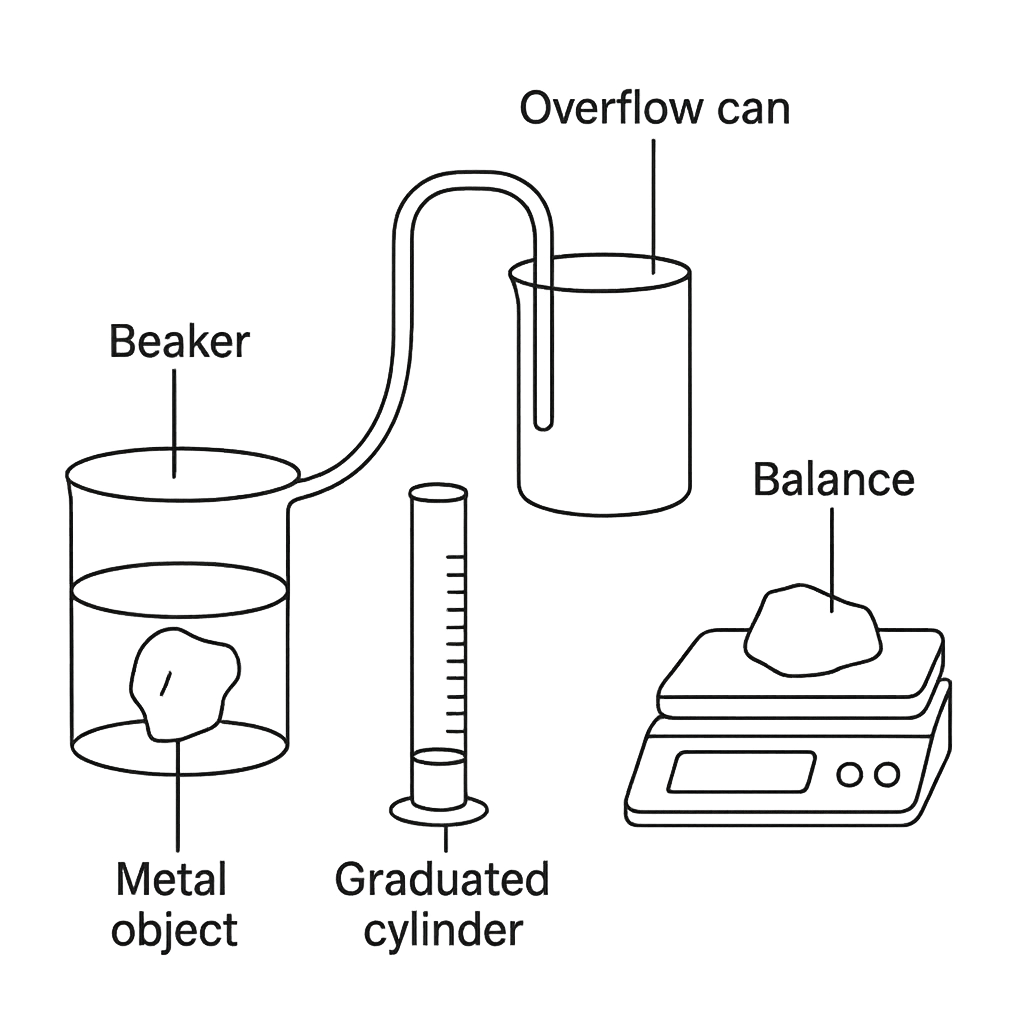
A student is required to determine the density of an irregularly shaped metal object using the water‑displacement method. The laboratory arrangement is shown in the diagram.
Question Parts
(a)
Calculate the volume of the metal object in cubic centimetres (cm³).
(b)
Using the mass of the object, determine its density and give the answer in g cm⁻³ (to two decimal places).
(c)
State the SI unit for density and discuss two possible sources of experimental error that could affect the result.
Detailed Essay Solution & Marking Scheme Available

Get the step-by-step mathematical proofs, key points required by examiners, and a comprehensive breakdown from our AI Tutor.
Question 2 View Details
A ball is projected from the top of a cliff that is 45.0 m above sea level. The ball leaves the hand with a speed of 20.0 m s⁻¹ making an angle of 30° above the horizontal. Air resistance is negligible and g = 9.8 m s⁻².
Question Parts
(a)
Resolve the initial velocity into its horizontal (vₓ) and vertical (vᵧ) components, stating each to two decimal places.
(b)
Determine the total time taken for the ball to reach the ground.
Detailed Essay Solution & Marking Scheme Available

Get the step-by-step mathematical proofs, key points required by examiners, and a comprehensive breakdown from our AI Tutor.

Question 3 View Details
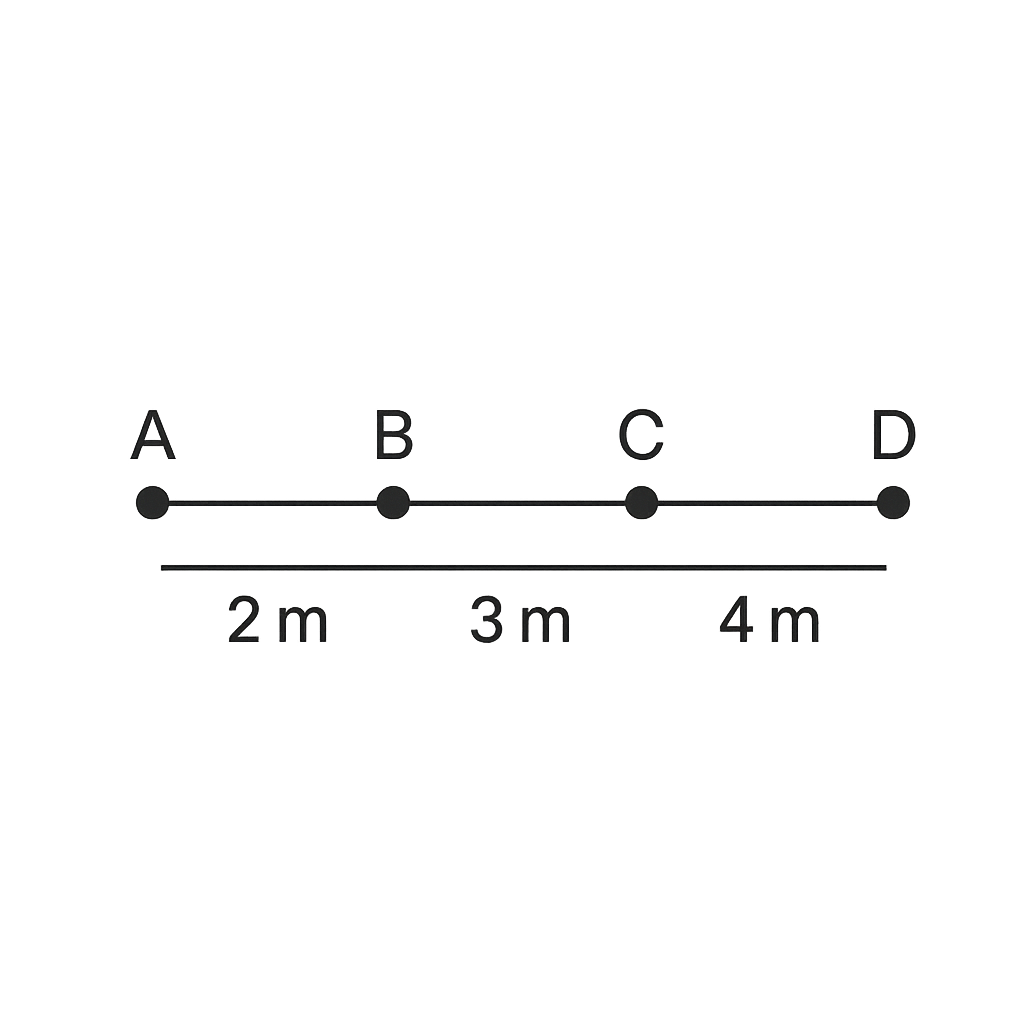
A car moves in a straight line. The motion diagram shown represents the positions of the car at successive 1‑second intervals.
Question Parts
(a)
Determine the average speed of the car over the 3‑second interval.
(b)
Assuming the car started from rest and moved with constant acceleration, calculate the magnitude of the acceleration.
(c)
Predict the position of the car at t = 5 s under the same constant acceleration and state the distance it will travel between t = 3 s and t = 5 s.
(d)
Explain, using the motion diagram, how the pattern of increasing separations between successive positions indicates acceleration.
Detailed Essay Solution & Marking Scheme Available

Get the step-by-step mathematical proofs, key points required by examiners, and a comprehensive breakdown from our AI Tutor.

Question 4 View Details
A block of mass 5.0 kg rests on a rough horizontal surface. It is attached to a light spring of spring constant k = 200 N m⁻¹ fixed to a wall on its left. The block is pulled to the right by a constant horizontal force and then released from rest.
Question Parts
(a)
If the block is pulled 0.10 m to the right from its equilibrium position and then released, determine the maximum speed of the block assuming the surface is frictionless.
(b)
Now the surface has a coefficient of kinetic friction µₖ = 0.20. When the block is released from the same displaced position, calculate the total distance the block travels before coming to rest.
Detailed Essay Solution & Marking Scheme Available

Get the step-by-step mathematical proofs, key points required by examiners, and a comprehensive breakdown from our AI Tutor.

Question 5 View Details
A 5.0 kg block is pulled up a rough inclined plane that is 8.0 m long and makes an angle of 30° with the horizontal. The block is attached to a rope that makes an angle of 20° above the plane. The magnitude of the pulling force varies linearly from 30 N at the bottom of the plane to 50 N at the top. The coefficient of kinetic friction between the block and the plane is 0.20. The diagram below shows the arrangement.
Question Parts
(a)
Derive an expression for the net work done on the block after it has moved a distance \(x\) up the plane (\(0 \le x \le 8\) m). Show the steps you use.
(b)
Calculate the total work done by the pulling force over the whole 8.0 m incline.
(c)
Determine the total work done against kinetic friction over the whole incline.
(d)
Using the work‑energy theorem, find the speed of the block at the top of the incline. The block starts from rest.
(e)
Answer the following:
() If the coefficient of kinetic friction were zero, what would be the final speed of the block at the top?
Detailed Essay Solution & Marking Scheme Available

Get the step-by-step mathematical proofs, key points required by examiners, and a comprehensive breakdown from our AI Tutor.

Question 6 View Details
A system of two ideal pulleys is used to lift a load weighing 150 N. The upper pulley is fixed to the ceiling, the lower pulley is attached to the load, and a single rope is wound around the fixed pulley, passes under the movable pulley and is pulled vertically upward.
Question Parts
(a)
Determine the ideal mechanical advantage of this arrangement.
(b)
If the effort force applied is 80 N, calculate the acceleration of the load.
(c)
Assuming the rope and pulleys together have an overall efficiency of 75%, find the distance the effort must move to raise the load through 2.0 m.
(d)
Briefly discuss two practical reasons why real pulley systems rarely achieve 100 % efficiency.
Detailed Essay Solution & Marking Scheme Available

Get the step-by-step mathematical proofs, key points required by examiners, and a comprehensive breakdown from our AI Tutor.

Question 7 View Details
A stone is projected from ground level with an initial speed \(v_0\) at an angle \(\theta\) above the horizontal. It lands back on the ground after 6.0 s and its horizontal range is 90.0 m. Determine:
Question Parts
(a)
The magnitude of the initial speed \(v_0\).
(b)
The angle of projection \(\theta\) (to the nearest degree).
Detailed Essay Solution & Marking Scheme Available

Get the step-by-step mathematical proofs, key points required by examiners, and a comprehensive breakdown from our AI Tutor.

Question 8 View Details
A 5.0 kg block rests on a rough inclined plane that makes an angle of \(30^{\circ}\) with the horizontal. The coefficient of static friction between the block and the plane is \(\mu_s\). The block is just about to start moving up the plane when a horizontal force \(F\) of 20 N is applied to the block (as shown in the diagram). Determine:
Question Parts
(a)
The minimum value of the coefficient of static friction \(\mu_s\).
(b)
If the coefficient of kinetic friction is \(\mu_k = 0.25\), find the acceleration of the block when the same horizontal force of 20 N is applied and the block moves up the plane.
Detailed Essay Solution & Marking Scheme Available

Get the step-by-step mathematical proofs, key points required by examiners, and a comprehensive breakdown from our AI Tutor.

Master the Exam!

You've seen a preview, but there are thousands more questions plus AI tutor to break down complex solutions.

Unlock Full Access Available for Android & Windows
Help others prepare! Share this practice hub:
Chat with Support