neco model questions vol1 2018 chemistry | Essay

Prepare for your exams with neco model questions vol1 questions? Reviewing past/model questions is one of the most effective ways to guarantee a high score. This practice hub features authentic 2018 chemistry (Essay) questions designed to simulate the real exam environment.

Practice these randomly selected questions to test your readiness.
Question 1 View Details
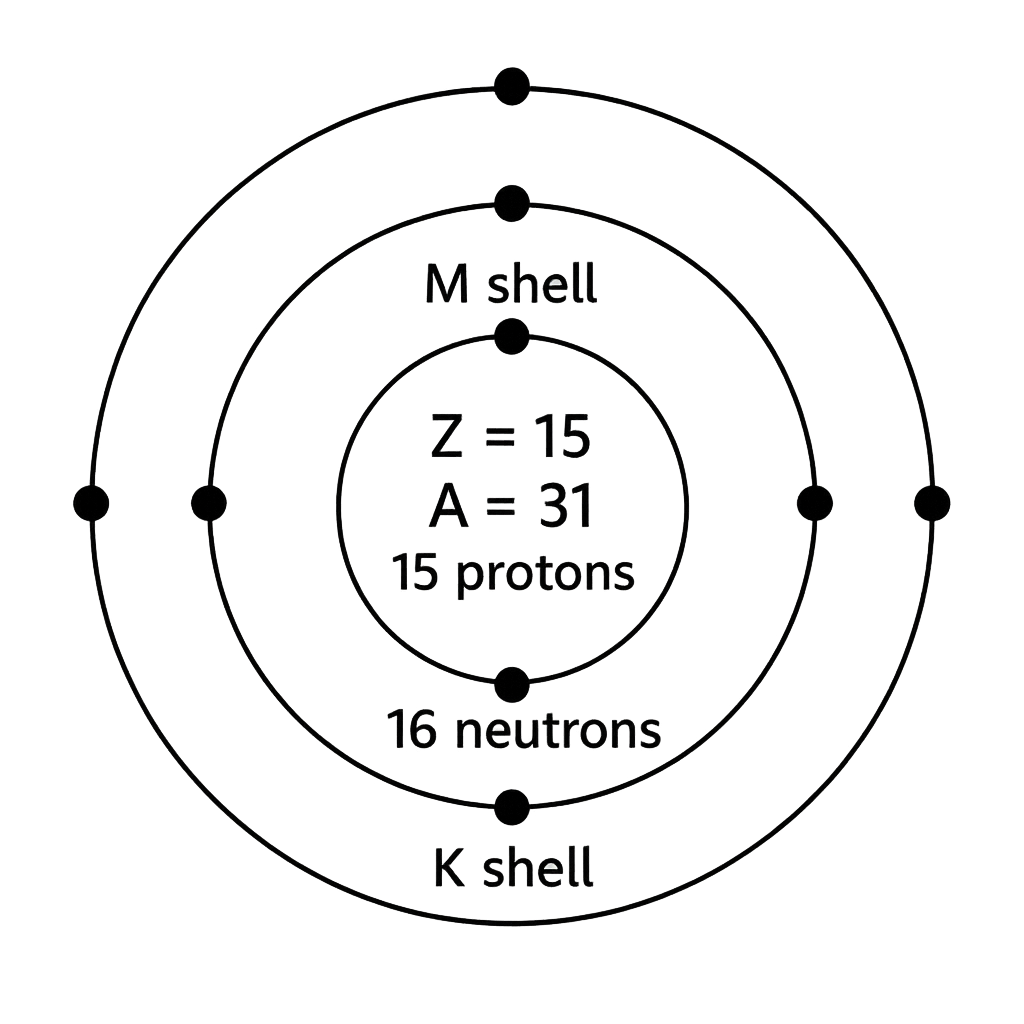
The diagram shows a simplified Bohr model of a neutral atom of element X.
Question Parts
(a)
Identify the element and write its chemical symbol.
(b)
Write the ground‑state electron configuration of the atom using (n, l) notation.
(c)
If one electron is removed from the outermost shell, state the resulting ion’s charge and give its electron configuration (in the same notation).
(d)
Based on its position in the periodic table, would this atom be more likely to form a cation or an anion in a chemical reaction? Justify your answer.
Detailed Essay Solution & Marking Scheme Available

Get the step-by-step mathematical proofs, key points required by examiners, and a comprehensive breakdown from our AI Tutor.
Question 2 View Details
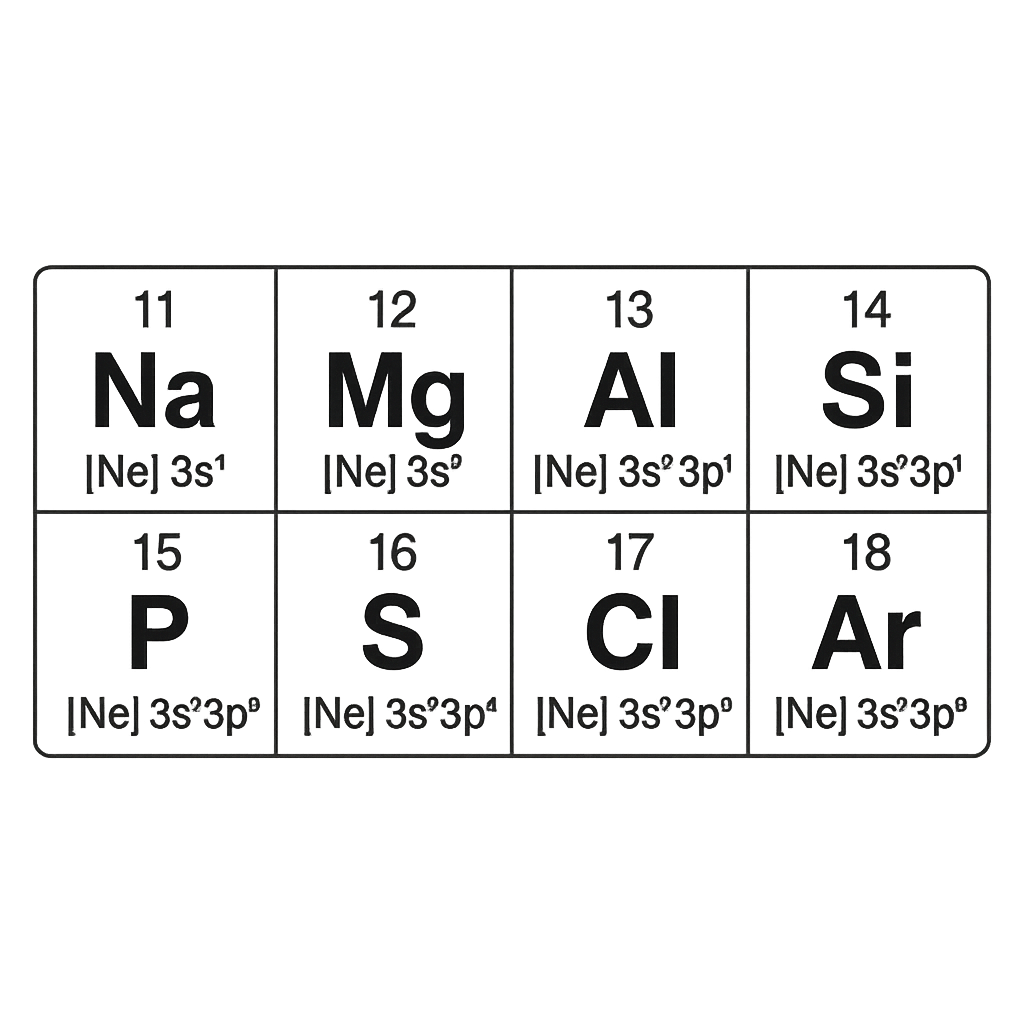
The diagram shows a fragment of the periodic table containing the elements Na, Mg, Al, Si, P, S, Cl and Ar together with their electron configurations.
Question Parts
(a)
Identify the element whose electron configuration is [Ne] 3s² 3p⁴. State its group number and at least two of its common oxidation states.
(b)
Using the periodic trends illustrated in the diagram, explain which of the following compounds would have the highest boiling point and why: NaCl, MgO, Al₂O₃, SiO₂.
(c)
The element phosphorus (P) in Group 15 can exhibit oxidation states –3, +3 and +5. Explain why the +5 oxidation state becomes increasingly stable as we move down the group (compare phosphorus with its heavier congener arsenic).
Detailed Essay Solution & Marking Scheme Available

Get the step-by-step mathematical proofs, key points required by examiners, and a comprehensive breakdown from our AI Tutor.
Question 3 View Details
Aluminium chloride (AlCl₃) is a solid at room temperature and is known to exist as a covalent compound in the gaseous state.
Question Parts
(a)
Explain, with appropriate diagrams, the type of bonding present in AlCl₃ and justify your answer.
(b)
Using VSEPR theory, predict the shape of an AlCl₃ molecule in the gas phase and explain the reasoning.
(c)
AlCl₃ reacts with excess water to give aluminium hydroxide and hydrochloric acid. Write the balanced chemical equation for this reaction and explain, in terms of bond breaking and formation, why the reaction proceeds spontaneously.
Detailed Essay Solution & Marking Scheme Available

Get the step-by-step mathematical proofs, key points required by examiners, and a comprehensive breakdown from our AI Tutor.

Question 4 View Details
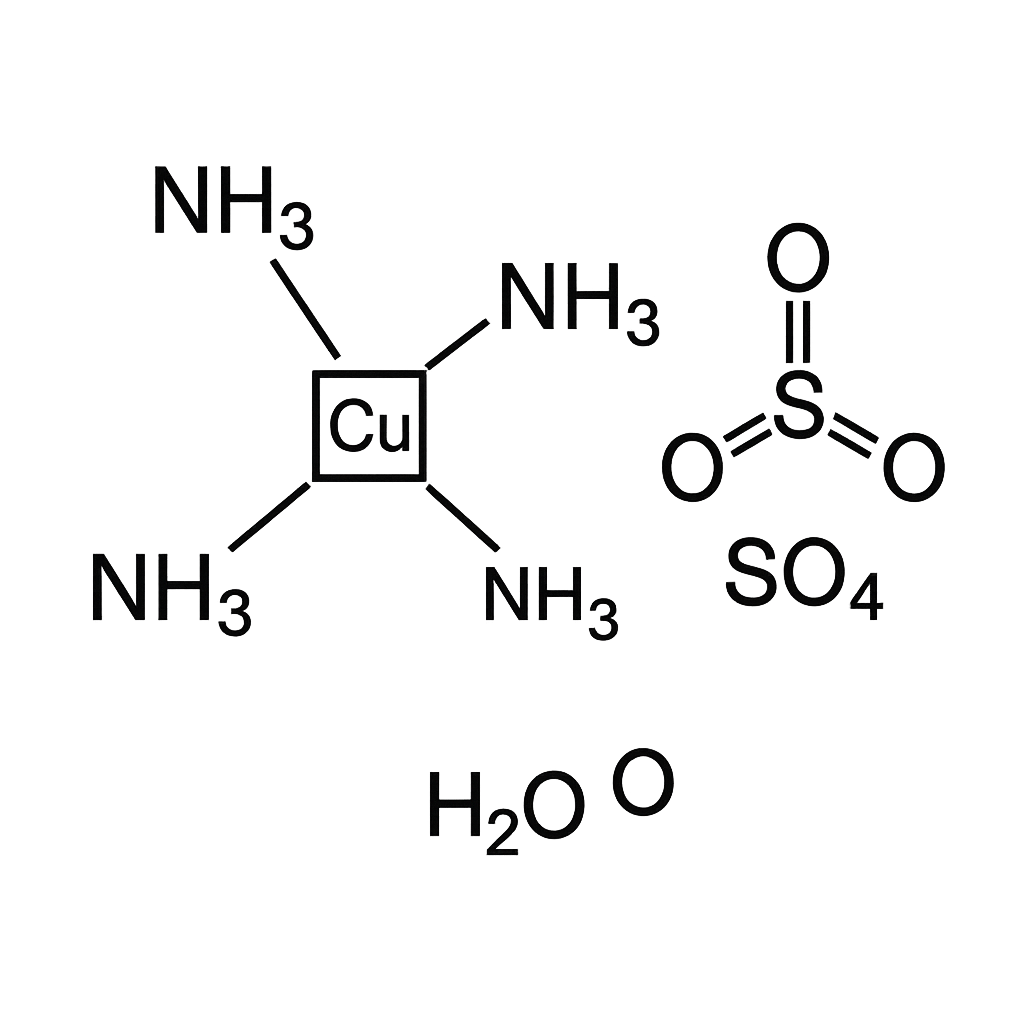
The labelled diagram shows the structure of a solid coordination compound consisting of a central copper ion surrounded by four ammonia ligands, a sulfate counter‑ion and one molecule of water of crystallisation.
Question Parts
(a)
Write the correct molecular formula of the compound shown in the diagram.
(b)
Calculate the molar mass of the compound (give your answer to three significant figures).
(c)
A sample weighing 2.50 g of the compound is dissolved in excess water. Calculate:
() Number of moles of Cu present.
() Mass of NH3 present.
() Mass percent of Cu in the compound.
(d)
The compound is used as a source of Cu²⁺ ions in a reaction. If 0.025 mol of the compound is added to a solution, how many moles of Cu²⁺ ions will be released? State any assumptions you make.
Detailed Essay Solution & Marking Scheme Available

Get the step-by-step mathematical proofs, key points required by examiners, and a comprehensive breakdown from our AI Tutor.

Question 5 View Details
Calcium carbonate reacts with excess hydrochloric acid according to the equation: CaCO3 + 2HCl → CaCl2 + CO2 + H2O.
Question Parts
(a)
If 12.5 g of CaCO3 is used, calculate the theoretical volume of CO2 gas that would be produced at 25 °C and 1.00 atm.
(b)
The actual volume of CO2 collected over water is 260 mL at the same temperature and pressure. The vapour pressure of water at 25 °C is 23.8 mmHg. Calculate the percent yield of CO2.
(c)
The dry CO2 obtained in part (b) is transferred into a sealed 2.00 L container kept at 25 °C. Determine the final pressure in the container after the transfer, assuming ideal behaviour.
Detailed Essay Solution & Marking Scheme Available

Get the step-by-step mathematical proofs, key points required by examiners, and a comprehensive breakdown from our AI Tutor.

Question 6 View Details
A 0.500 mol sample of an unknown volatile liquid is placed in a 1.00 L sealed container at 298 K. The vapour pressure of the liquid at this temperature is 0.35 atm.
Question Parts
(a)
Calculate the fraction of the substance that exists as vapour in the container at equilibrium.
(b)
The liquid is heated to 350 K. Using the Clausius–Clapeyron relation ln(P2/P1) = –ΔHvap/R (1/T2 – 1/T1) and ΔHvap = 30.0 kJ mol⁻¹, calculate the new vapour pressure at 350 K.
(c)
Assuming the container volume remains 1.00 L, determine the total pressure in the container after heating and comment on whether the pressure exceeds the safety limit of 1.5 atm.
Detailed Essay Solution & Marking Scheme Available

Get the step-by-step mathematical proofs, key points required by examiners, and a comprehensive breakdown from our AI Tutor.

Question 7 View Details
A 0.250 mol sample of a weak monoprotic acid HA (Ka = 1.2 × 10⁻⁵) is dissolved in 1.00 L of water at 25 °C. The solution is then partially neutralised by adding 1.00 M NaOH until the pH becomes 5.00.
Question Parts
(a)
Calculate the concentrations of the undissociated acid HA and its conjugate base A⁻ present in the solution at pH 5.00.
(b)
Determine the volume (in mL) of the 1.00 M NaOH solution that must be added to obtain the pH of part (a).
(c)
Explain why the buffer prepared in part (b) resists a change in pH when a small amount of a strong acid is added, referring to the relevant equilibrium.
Detailed Essay Solution & Marking Scheme Available

Get the step-by-step mathematical proofs, key points required by examiners, and a comprehensive breakdown from our AI Tutor.

Question 8 View Details
A saturated solution of calcium fluoride, CaF₂, at 25 °C contains 0.016 g of CaF₂ per 100 mL of solution. The solution is then heated to 45 °C where the solubility becomes 0.025 g per 100 mL.
Question Parts
(a)
Calculate the solubility product constant (Ksp) of CaF₂ at 25 °C.
(b)
Determine the Ksp at 45 °C and comment on how temperature affects the solubility of CaF₂.
(c)
If 0.010 mol of NaF is added to 1.00 L of the saturated solution at 25 °C, calculate the new concentration of Ca²⁺ ions remaining in solution.
Detailed Essay Solution & Marking Scheme Available

Get the step-by-step mathematical proofs, key points required by examiners, and a comprehensive breakdown from our AI Tutor.

Master the Exam!

You've seen a preview, but there are thousands more questions plus AI tutor to break down complex solutions.

Unlock Full Access Available for Android & Windows
Help others prepare! Share this practice hub:
Chat with Support