neco model questions vol1 2018 biology | Essay

Prepare for your exams with neco model questions vol1 questions? Reviewing past/model questions is one of the most effective ways to guarantee a high score. This practice hub features authentic 2018 biology (Essay) questions designed to simulate the real exam environment.

Practice these randomly selected questions to test your readiness.
Question 1 View Details
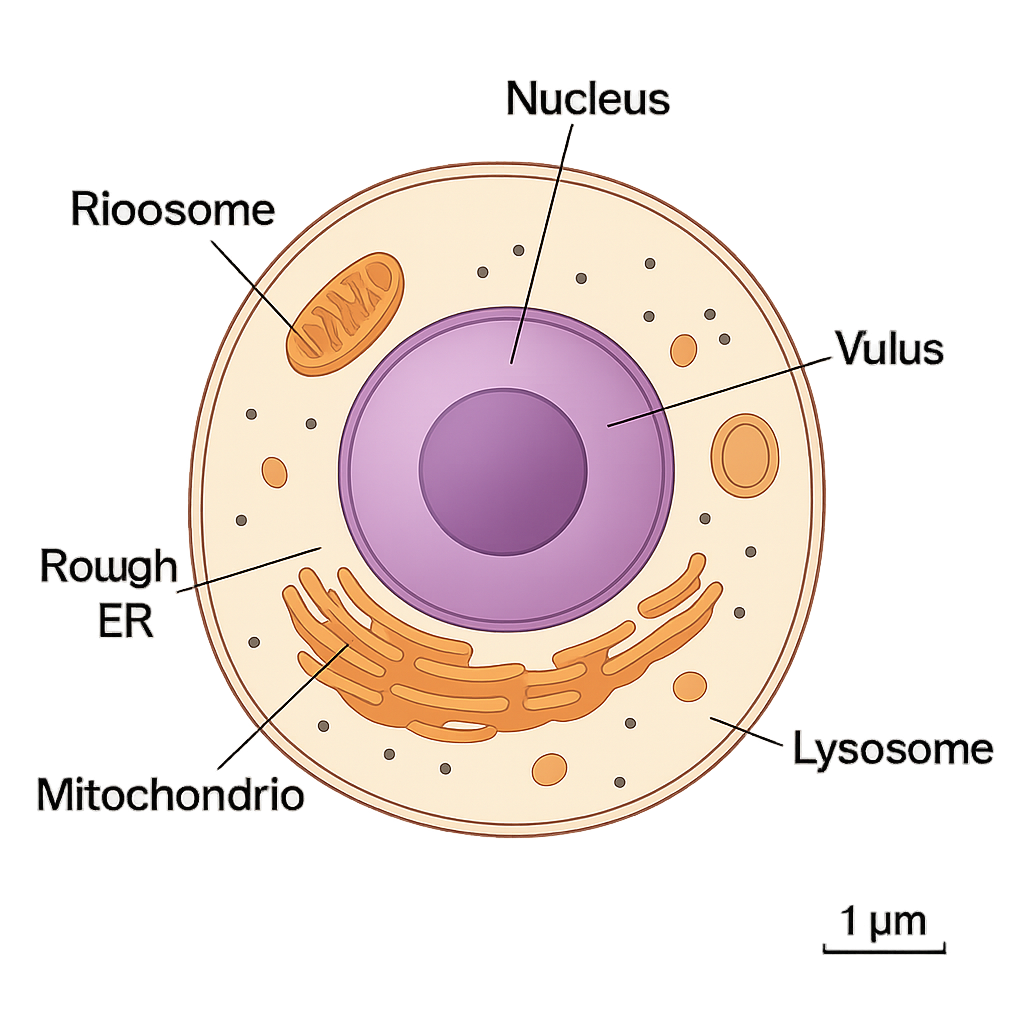
Examine the labelled diagram of a typical animal cell provided.
Question Parts
(a)
Identify and label six cellular structures shown in the diagram: cell membrane, nucleus, nucleolus, mitochondrion, ribosome and lysosome.
(b)
State the main function of each of the six structures you have labelled.
(c)
Explain how the selective permeability of the cell membrane contributes to homeostasis in the cell.
Detailed Essay Solution & Marking Scheme Available

Get the step-by-step mathematical proofs, key points required by examiners, and a comprehensive breakdown from our AI Tutor.
Question 2 View Details
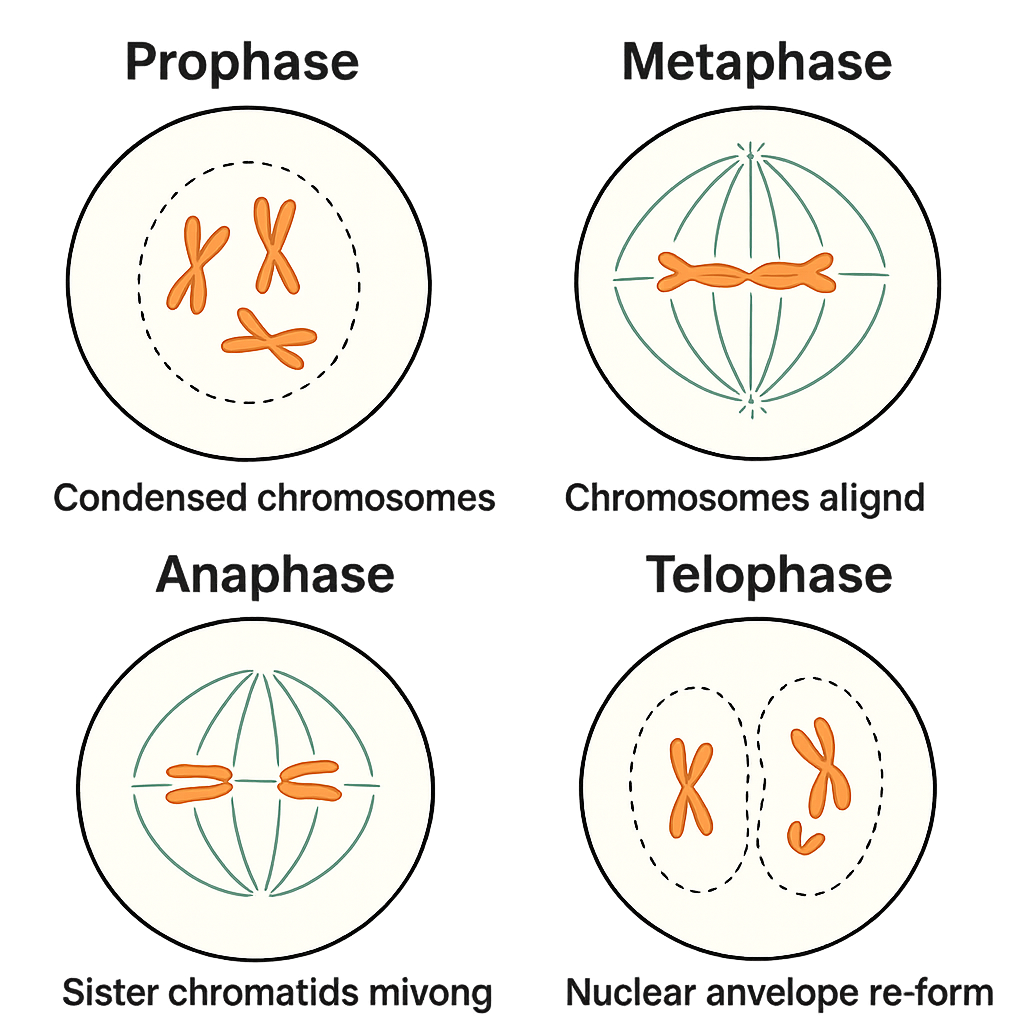
Refer to the labelled diagram of a cell undergoing mitosis.
Question Parts
(a)
Label the four successive stages of mitosis shown in the diagram in the correct chronological order.
(b)
For each stage, briefly describe one key event that characterises that stage.
(c)
Compare mitosis with meiosis I, highlighting two major differences in outcome and process.
Detailed Essay Solution & Marking Scheme Available

Get the step-by-step mathematical proofs, key points required by examiners, and a comprehensive breakdown from our AI Tutor.
Question 3 View Details
A 25‑year‑old male office worker consumes a daily diet that provides 250 g of carbohydrate, 80 g of protein and 70 g of fat. The caloric values of the macronutrients are: carbohydrate = 4 kcal g⁻¹, protein = 4 kcal g⁻¹, fat = 9 kcal g⁻¹. Answer the following:
Question Parts
(a)
Explain the role of salivary amylase and pancreatic amylase in the digestion of dietary carbohydrates, indicating where each enzyme acts and the type of reaction it catalyses.
(b)
Calculate the percentage of the total daily caloric intake that is supplied by protein. Show all steps of your calculation.
(c)
Discuss two health consequences that may arise from a chronic deficiency of vitamin A, linking each consequence to the underlying physiological role of the vitamin.
Detailed Essay Solution & Marking Scheme Available

Get the step-by-step mathematical proofs, key points required by examiners, and a comprehensive breakdown from our AI Tutor.

Question 4 View Details
The diagram shows the major structures of the human respiratory system.
Question Parts
(a)
Identify the structure where external gas exchange occurs. Describe at least three structural adaptations of this structure that enhance the efficiency of diffusion of gases.
(b)
Assuming each alveolus is a perfect sphere with a mean diameter of 0.2 mm and that an adult human has 480 million alveoli, estimate the total surface area available for gas exchange. Take into account that only 70 % of the alveolar surface is effectively available because of surfactant coating. Show all steps and give your answer in square metres (m²) to two significant figures.
(c)
Using the diagram, explain how the partial pressure gradients of oxygen (O₂) and carbon dioxide (CO₂) are established and maintained during a normal resting breath.
(d)
Briefly discuss the physiological response of the respiratory centre to a sudden decrease in atmospheric PO₂ (as experienced at high altitude). Include the role of chemoreceptors and the resulting change in breathing pattern.
Detailed Essay Solution & Marking Scheme Available

Get the step-by-step mathematical proofs, key points required by examiners, and a comprehensive breakdown from our AI Tutor.

Question 5 View Details
A 25‑metre‑tall mango tree growing in a tropical savanna experiences a daytime average relative humidity of 45 % and a temperature of 30 °C. The leaf area of the tree is approximately 150 m² and the measured rate of transpiration is 4 L day⁻¹.
Question Parts
(a)
Describe the complete pathway of water from soil to the leaves in this tree, naming the main tissues involved and the driving forces.
(b)
Assuming the water column in the xylem extends the full height of the tree, calculate the minimum tension (negative pressure) that must be generated in the xylem to raise water to the top of the tree. Use ρ = 1000 kg m⁻³ and g = 9.8 m s⁻². Express your answer in kilopascals (kPa).
(c)
Using the transpiration rate given, estimate the average volumetric flow rate of water through the xylem (in mL min⁻¹). Discuss whether the tension calculated in part (b) is sufficient to sustain this flow, considering the cohesion‑tension theory.
Detailed Essay Solution & Marking Scheme Available

Get the step-by-step mathematical proofs, key points required by examiners, and a comprehensive breakdown from our AI Tutor.

Question 6 View Details
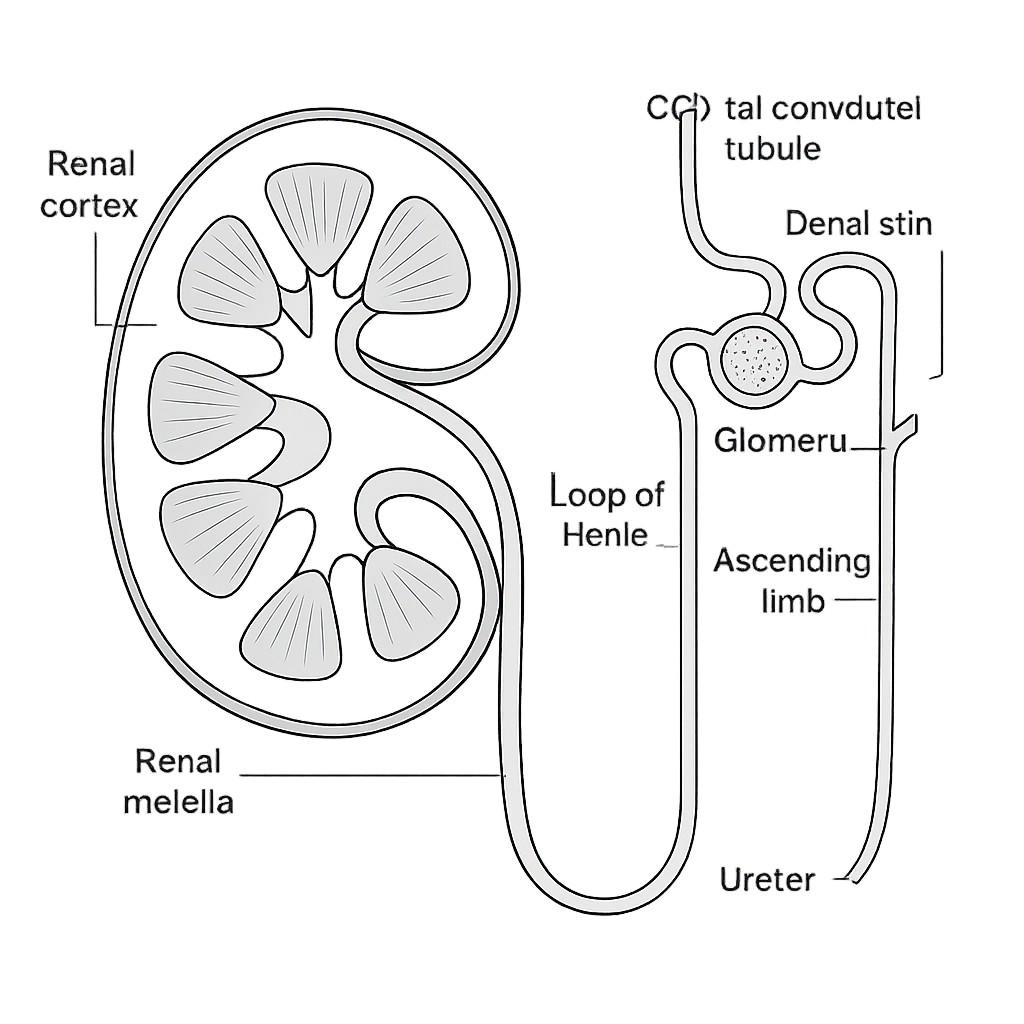
The labelled diagram shows the structure of a human kidney together with a single nephron. Using the diagram, answer the following questions.
Question Parts
(a)
Describe, in the correct order, the pathway that the filtrate follows from its formation to its exit from the kidney. State each anatomical part it passes through.
(b)
Explain how active transport of glucose occurs in the proximal convoluted tubule and why this process is important for maintaining normal blood glucose levels.
(c)
A patient has a hereditary defect that reduces the permeability of the descending limb of the loop of Henle to water. Predict the effect of this defect on the concentration of the urine produced and give a brief physiological explanation.
Detailed Essay Solution & Marking Scheme Available

Get the step-by-step mathematical proofs, key points required by examiners, and a comprehensive breakdown from our AI Tutor.

Question 7 View Details
The human body maintains internal stability through various homeostatic mechanisms.
Question Parts
(a)
Explain how the regulation of blood glucose concentration is achieved, describing the roles of at least two hormones, the target organs, and the feedback nature of the control.
(b)
A diabetic patient has impaired insulin secretion. Predict the short‑term and long‑term physiological consequences of this defect on:
() blood glucose level
() cellular metabolism
() kidney function
(c)
Compare the homeostatic control of body temperature with that of blood calcium concentration, highlighting one similarity and one difference in the type of feedback involved and the effectors used.
Detailed Essay Solution & Marking Scheme Available

Get the step-by-step mathematical proofs, key points required by examiners, and a comprehensive breakdown from our AI Tutor.

Question 8 View Details
The coordination of activities in the human body involves the nervous and endocrine systems.
Question Parts
(a)
Describe the pathway of a typical somatic reflex arc, from sensory reception to motor response, naming each neuron type and synapse involved.
(b)
The hormone cortisol is released in response to stress. Explain how cortisol action exemplifies a slower, longer‑lasting form of coordination compared with a reflex, citing at least two target tissues and the nature of the feedback regulation.
(c)
A patient suffers a lesion in the hypothalamic supraoptic nucleus. Predict the effect on water balance, specifying the hormone affected, its normal action, and the expected clinical symptom.
Detailed Essay Solution & Marking Scheme Available

Get the step-by-step mathematical proofs, key points required by examiners, and a comprehensive breakdown from our AI Tutor.

Master the Exam!

You've seen a preview, but there are thousands more questions plus AI tutor to break down complex solutions.

Unlock Full Access Available for Android & Windows
Help others prepare! Share this practice hub:
Chat with Support