neco 2025 chemistry | Essay

Prepare for your exams with neco questions? Reviewing past/model questions is one of the most effective ways to guarantee a high score. This practice hub features authentic 2025 chemistry (Essay) questions designed to simulate the real exam environment.

Practice these randomly selected questions to test your readiness.
Question 1 View Details
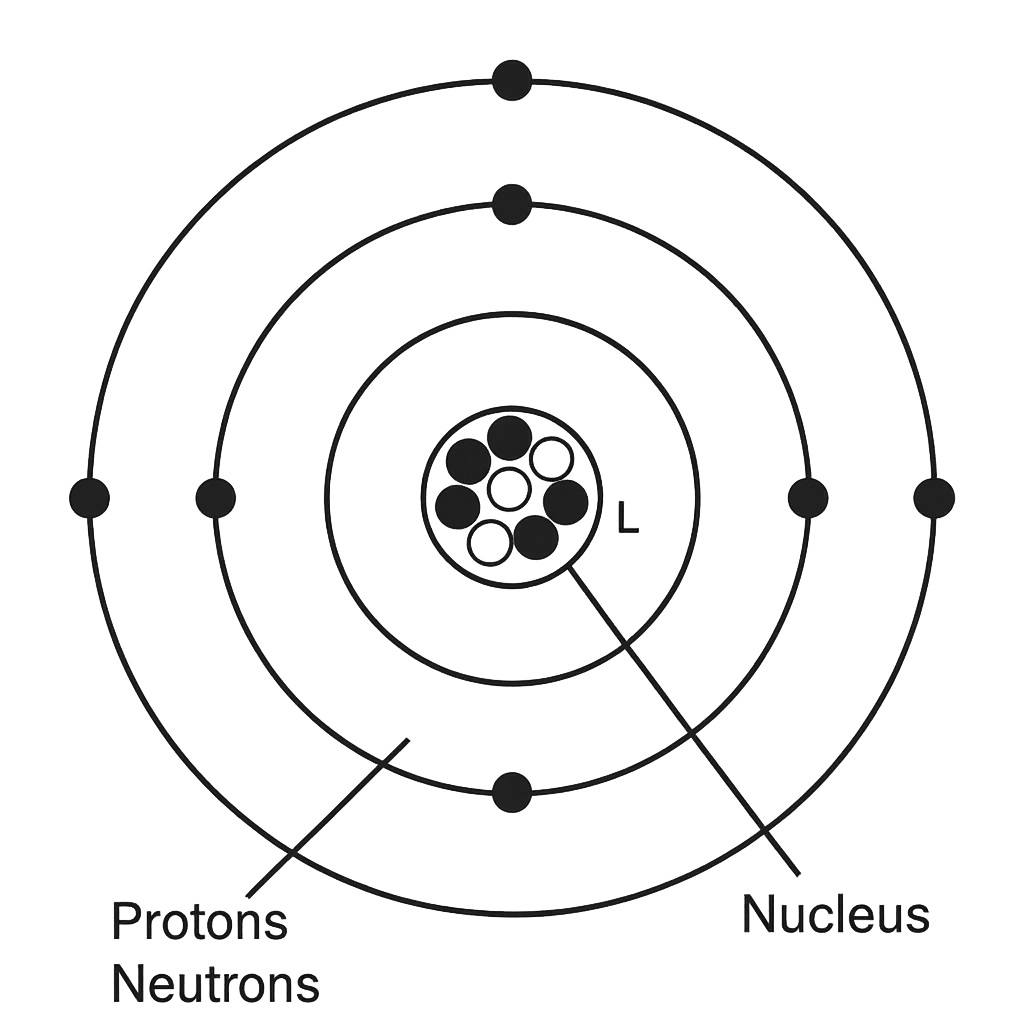
The diagram shows a Bohr model of a sodium (Na) atom. The nucleus contains 11 protons and the mass number is 23. The electrons are distributed in three shells: the K‑shell contains 2 electrons, the L‑shell contains 8 electrons and the M‑shell contains 1 electron.
Question Parts
(a)
State the number of protons, neutrons and electrons present in a neutral sodium atom.
(b)
Write the ground‑state electron configuration of sodium using the notation 1s, 2s, 2p, 3s …
(c)
Explain, with reference to the diagram, why sodium readily loses one electron to form the Na⁺ ion. State one physical property that changes when Na becomes Na⁺.
(d)
The first ionisation energy of sodium is 496 kJ mol⁻¹. Calculate the amount of energy required to remove one outermost electron from a single sodium atom. Express your answer in joules (J) in scientific notation.
Detailed Essay Solution & Marking Scheme Available

Get the step-by-step mathematical proofs, key points required by examiners, and a comprehensive breakdown from our AI Tutor.
Question 2 View Details
The illustration presents a section of the periodic table covering period 3 (elements Na to Ar). The atomic radii (in picometres) of the first and last elements in the period are given: Na = 186 pm, Ar = 71 pm.
Question Parts
(a)
State the group number and the family name of chlorine (Cl) as shown in the diagram.
(b)
Using the diagram, determine the number of valence electrons of sulphur (S).
(c)
Assuming a linear decrease in atomic radius across period 3, estimate the atomic radius of phosphorus (P, atomic number 15). Show your working and give the answer to the nearest picometre.
(d)
Briefly explain the observed trend in atomic radii across period 3, referencing effective nuclear charge.
Detailed Essay Solution & Marking Scheme Available

Get the step-by-step mathematical proofs, key points required by examiners, and a comprehensive breakdown from our AI Tutor.
Question 3 View Details
Element X has an electronegativity of 1.5 and element Y has an electronegativity of 3.0. They combine to form a binary compound XY. The compound is a solid at room temperature, conducts electricity when molten, and is highly soluble in water.
Question Parts
(a)
Calculate the electronegativity difference (ΔEN) between X and Y and use Pauling's empirical formula \(\text{Percent ionic character}=\left(1-e^{-0.25(\Delta EN)^2}\right)\times100\) to determine the percent ionic character of the XY bond. Show all steps.
(b)
Based on the percent ionic character obtained, classify the XY bond as ionic, polar covalent or non‑polar covalent. Justify your classification with reference to typical percentage ranges.
(c)
Predict three physical properties of XY – (i) melting point, (ii) electrical conductivity in the molten state, and (iii) solubility in water – and explain how the polar covalent nature of the bond influences each property.
Detailed Essay Solution & Marking Scheme Available

Get the step-by-step mathematical proofs, key points required by examiners, and a comprehensive breakdown from our AI Tutor.

Question 4 View Details
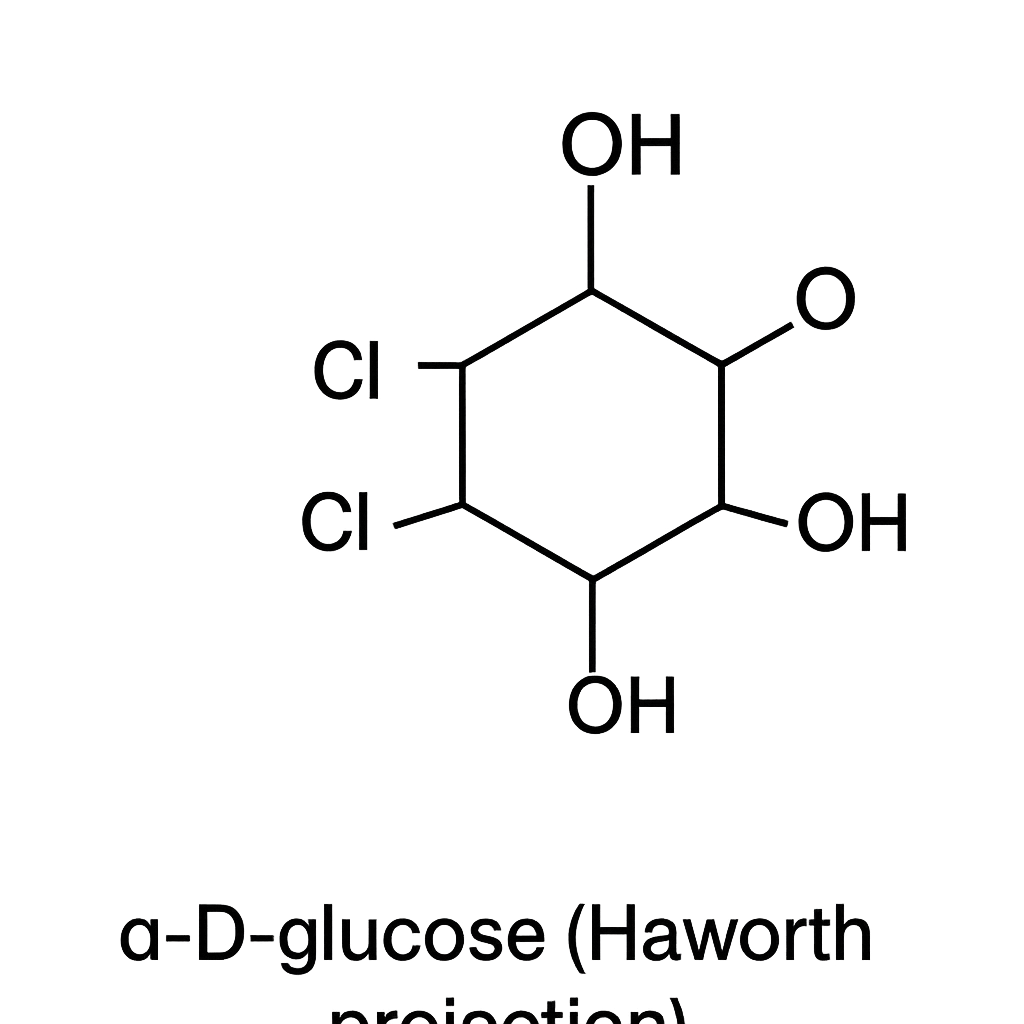
The structural diagram of an unknown organic compound is shown in the illustration. The diagram depicts a six‑membered ring containing six carbon atoms, each bearing appropriate hydrogen atoms and hydroxyl groups, together with a CH₂OH side group attached to one carbon. No other atoms are present. Using the information from the diagram, answer the following questions.
Question Parts
(a)
Determine the empirical formula of the compound directly from the structural diagram.
(b)
The experimentally determined molar mass of the compound is 180 g·mol⁻¹. Using the empirical formula obtained in part (a), calculate the molecular formula of the compound.
(c)
When the compound undergoes complete combustion in excess oxygen, it yields carbon dioxide and water. (i) Write the balanced chemical equation for the combustion of one mole of the compound. (ii) Calculate the volume (in litres at STP) of CO₂ produced when 2.00 g of the compound is burnt completely.
(d)
In a laboratory synthesis, 0.50 mol of the compound reacts with excess reagent X to give product Y (molar mass of Y = 150 g·mol⁻¹) with an isolated yield of 80 %. (i) Calculate the theoretical mass of product Y that could be obtained. (ii) Calculate the actual mass of product Y obtained after the reaction.
Detailed Essay Solution & Marking Scheme Available

Get the step-by-step mathematical proofs, key points required by examiners, and a comprehensive breakdown from our AI Tutor.

Question 5 View Details
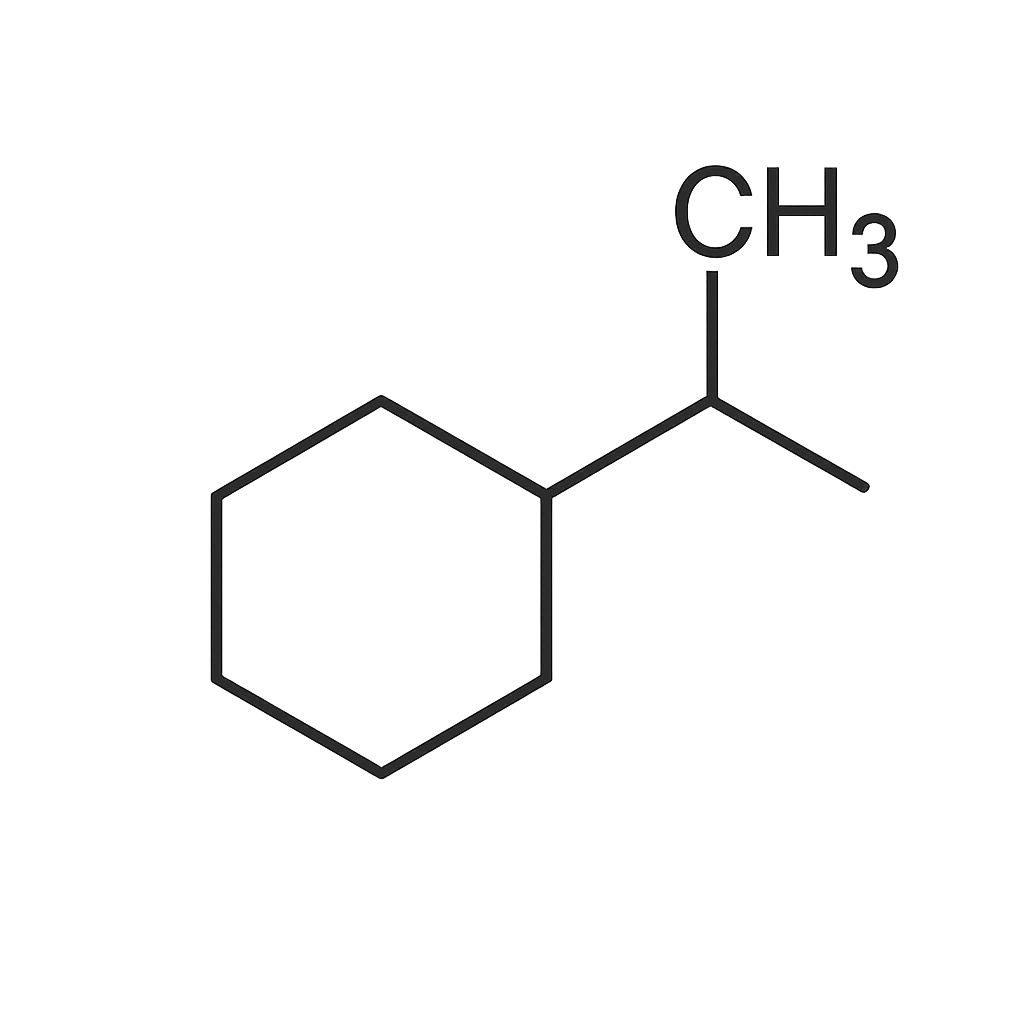
The diagram shows the line‑angle structural formula of a hydrocarbon compound. Using the information from the diagram, answer the following questions.
Question Parts
(a)
Determine the molecular formula of the hydrocarbon shown in the diagram.
(b)
Write the balanced chemical equation for the complete combustion of one mole of this hydrocarbon in oxygen.
(c)
If 10.0 g of the hydrocarbon are burnt completely, calculate the volume of oxygen gas required at STP (22.4 L mol⁻¹). Give your answer to two significant figures.
(d)
Calculate the mass of carbon dioxide produced when the 10.0 g of hydrocarbon are completely combusted. Give your answer to three significant figures.
Detailed Essay Solution & Marking Scheme Available

Get the step-by-step mathematical proofs, key points required by examiners, and a comprehensive breakdown from our AI Tutor.

Question 6 View Details
A rigid sealed container of volume 2.00 L contains a mixture of nitrogen gas (N2) and oxygen gas (O2) at 298 K. The total pressure of the mixture is 1.20 atm and the partial pressure of O2 is 0.45 atm. Answer the following questions:
Question Parts
(a)
Calculate the number of moles of N2 and O2 present in the container.
(b)
The container is heated to 350 K while remaining sealed. Assuming ideal behaviour, calculate the new total pressure of the gas mixture.
(c)
The mixture is now cooled until the temperature reaches the condensation point of O2 (90.2 K) at which O2 begins to liquefy while N2 remains gaseous. Determine the pressure exerted by the remaining N2 gas at this temperature.
(d)
Explain qualitatively how the presence of both gases affects the temperature at which condensation begins compared with a container holding pure O2, referring to Dalton’s law of partial pressures.
Detailed Essay Solution & Marking Scheme Available

Get the step-by-step mathematical proofs, key points required by examiners, and a comprehensive breakdown from our AI Tutor.

Question 7 View Details
A student is required to prepare a buffer solution using acetic acid (CH\(_3\)COOH) and sodium acetate (CH\(_3\)COONa) and to determine its pH. The student also titrates a weak base with a strong acid and later adds a soluble salt to the titrated mixture. Answer the following.
Question Parts
(a)
Calculate the pH of a buffer that contains 0.250 mol of acetic acid and 0.150 mol of sodium acetate dissolved in 1.00 L of water. Given \(K_a\) of acetic acid = 1.8 \times 10^{-5}.
(b)
The student titrates 25.0 mL of 0.100 M ammonia (NH\(_3\)) with 0.100 M hydrochloric acid (HCl). Determine the pH of the solution at the half‑equivalence point, showing all reasoning.
(c)
After the titration is complete, the student adds 0.020 mol of NaCl to the solution. Explain qualitatively how the pH will be affected and why, referring to the common‑ion effect.
Detailed Essay Solution & Marking Scheme Available

Get the step-by-step mathematical proofs, key points required by examiners, and a comprehensive breakdown from our AI Tutor.

Question 8 View Details
A laboratory investigation studies the solubility of calcium fluoride (CaF\(_2\)) and the effect of adding a soluble fluoride source and of raising the temperature. Answer the following questions.
Question Parts
(a)
Given \(K_{sp}\) of CaF\(_2\) = 1.5 \times 10^{-10} at 25°C, calculate its molar solubility (s) in pure water at this temperature.
(b)
If 0.10 mol of NaF is added to 1.00 L of water, calculate the new solubility of CaF\(_2\) in this solution at 25°C.
(c)
The solution from part (b) is then heated to 35°C where the \(K_{sp}\) of CaF\(_2\) becomes 3.0 \times 10^{-10}. Assuming the fluoride concentration from NaF remains essentially unchanged, calculate the solubility of CaF\(_2\) at 35°C in the presence of the added NaF.
Detailed Essay Solution & Marking Scheme Available

Get the step-by-step mathematical proofs, key points required by examiners, and a comprehensive breakdown from our AI Tutor.

Master the Exam!

You've seen a preview, but there are thousands more questions plus AI tutor to break down complex solutions.

Unlock Full Access Available for Android & Windows
Help others prepare! Share this practice hub:
Chat with Support