neco 2024 biology | Essay

Prepare for your exams with neco questions? Reviewing past/model questions is one of the most effective ways to guarantee a high score. This practice hub features authentic 2024 biology (Essay) questions designed to simulate the real exam environment.

Practice these randomly selected questions to test your readiness.
Question 1 View Details
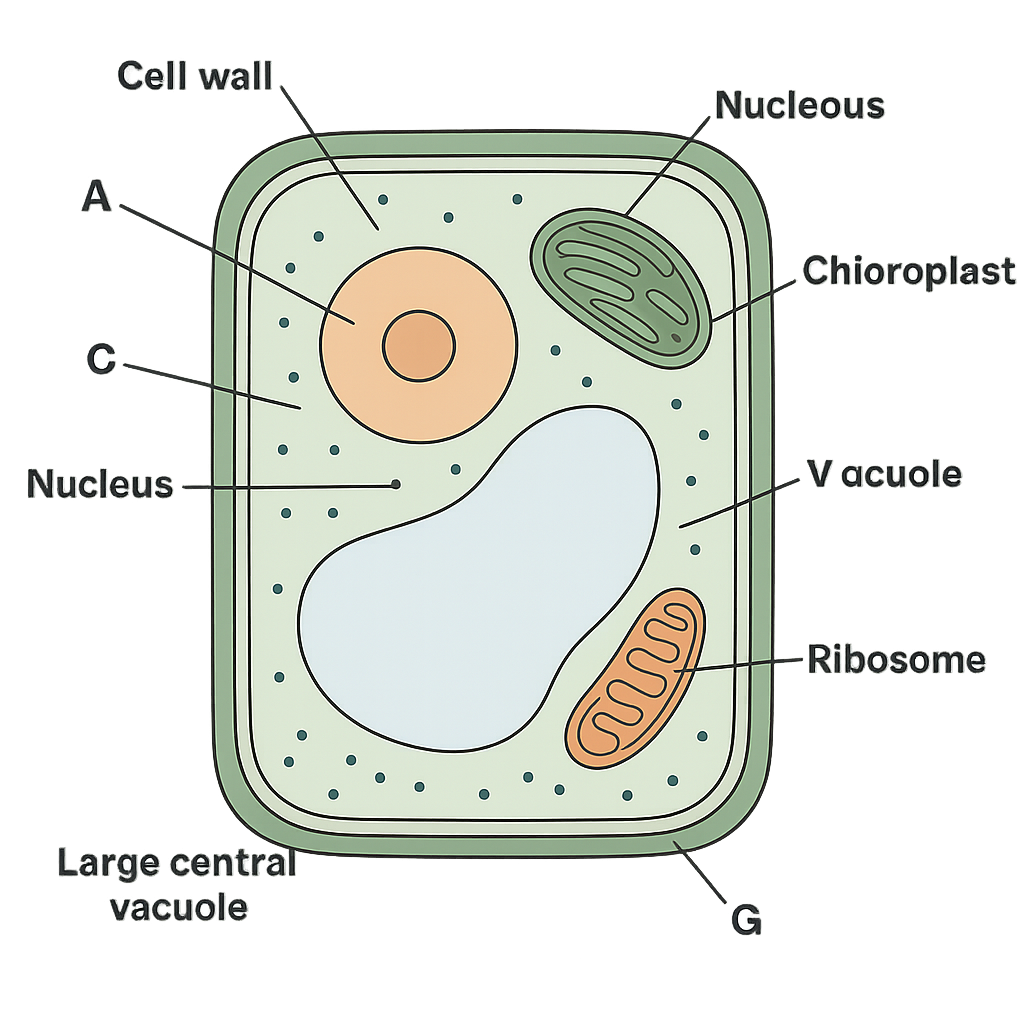
The labelled diagram shows a typical plant cell.
Question Parts
(a)
Identify three structures that are directly involved in protein synthesis and describe the role of each.
(b)
Which organelle is the site of photosynthesis? Explain why this organelle is absent in animal cells.
(c)
During plasmolysis, which cellular component is directly affected? Describe the changes that occur in the cell.
(d)
Compare the relative size of the vacuole to the nucleus and discuss the significance of this difference for the plant cell's physiology.
Detailed Essay Solution & Marking Scheme Available

Get the step-by-step mathematical proofs, key points required by examiners, and a comprehensive breakdown from our AI Tutor.
Question 2 View Details
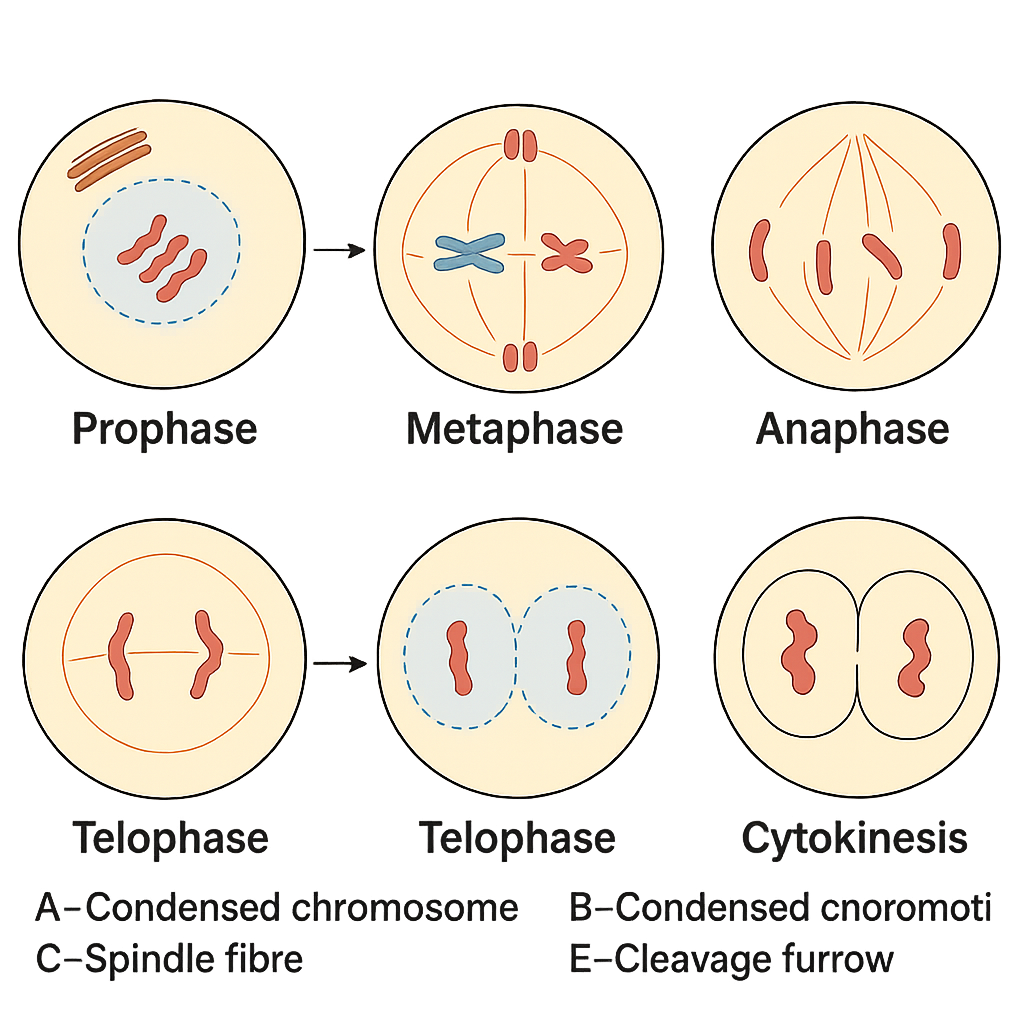
The diagram shows an animal somatic cell undergoing cell division. The cell is at successive stages of mitosis and cytokinesis, and key structures are labelled A–F.
Question Parts
(a)
State the name of each structure indicated by the labels A, B, C, D, E and F in the diagram.
(b)
For each of the four stages of mitosis shown – prophase, metaphase, anaphase and telophase – describe two key events that occur.
(c)
Compare mitosis with meiosis I, highlighting three major differences.
(d)
Explain how errors in chromosome segregation during anaphase can lead to genetic disorders. Give two specific examples of disorders that may result.
Detailed Essay Solution & Marking Scheme Available

Get the step-by-step mathematical proofs, key points required by examiners, and a comprehensive breakdown from our AI Tutor.
Question 3 View Details
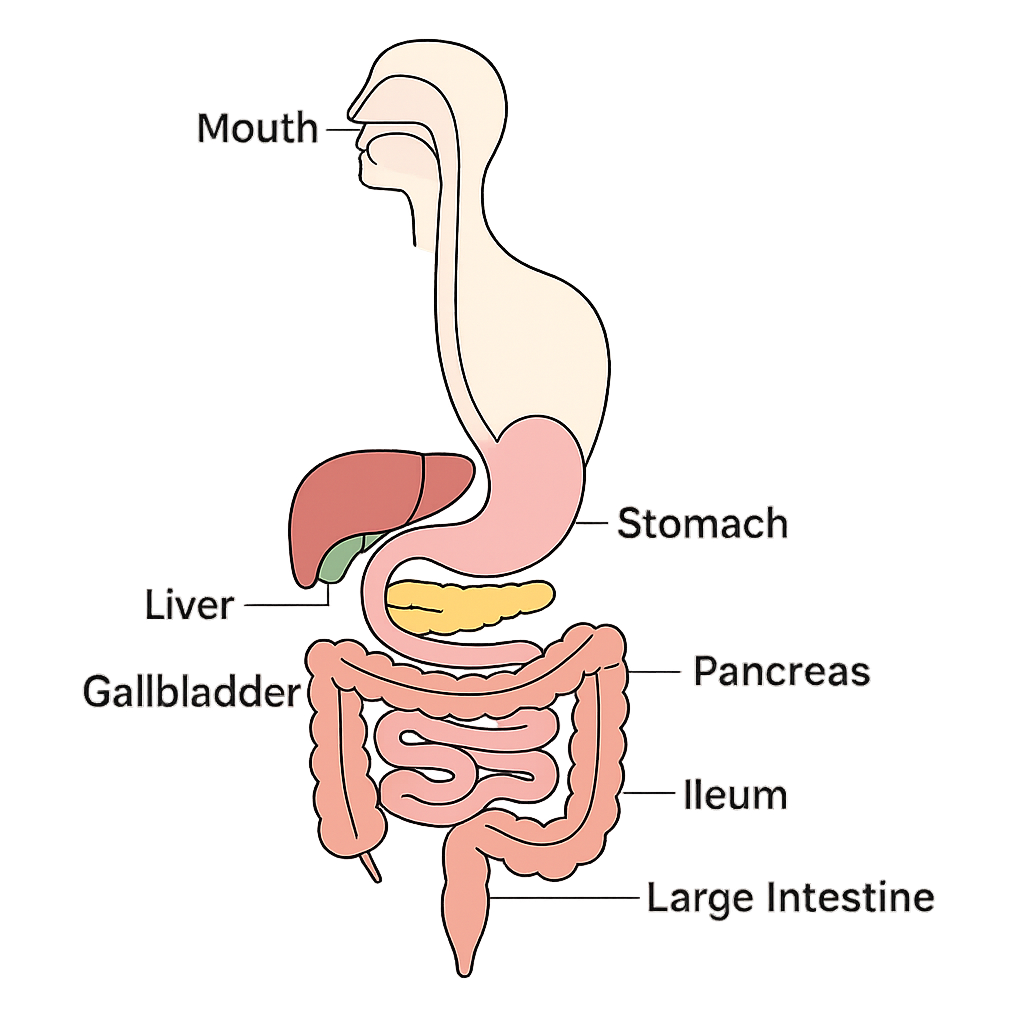
The diagram shows a labelled human digestive system highlighting the major organs involved in the processing of food.
Question Parts
(a)
Identify three major sites where digestion of nutrients begins and state the primary type of nutrient that is predominantly digested at each site.
(b)
Using the labelled diagram, trace the pathway of a carbohydrate molecule from ingestion to absorption. In your answer, mention the sequential organs it passes through, the enzymes that act on it, and the site where the final monosaccharides are absorbed into the bloodstream.
(c)
A person consumes a daily diet containing 250 g of carbohydrate, 80 g of protein and 70 g of fat. Calculate: (i) The total caloric intake from the diet. (ii) The percentage contribution of each macronutrient to the total calories.
(d)
If pancreatic amylase secretion is markedly reduced, predict the likely effect on carbohydrate digestion and suggest one practical dietary adjustment to compensate for this deficiency.
Detailed Essay Solution & Marking Scheme Available

Get the step-by-step mathematical proofs, key points required by examiners, and a comprehensive breakdown from our AI Tutor.
Question 4 View Details
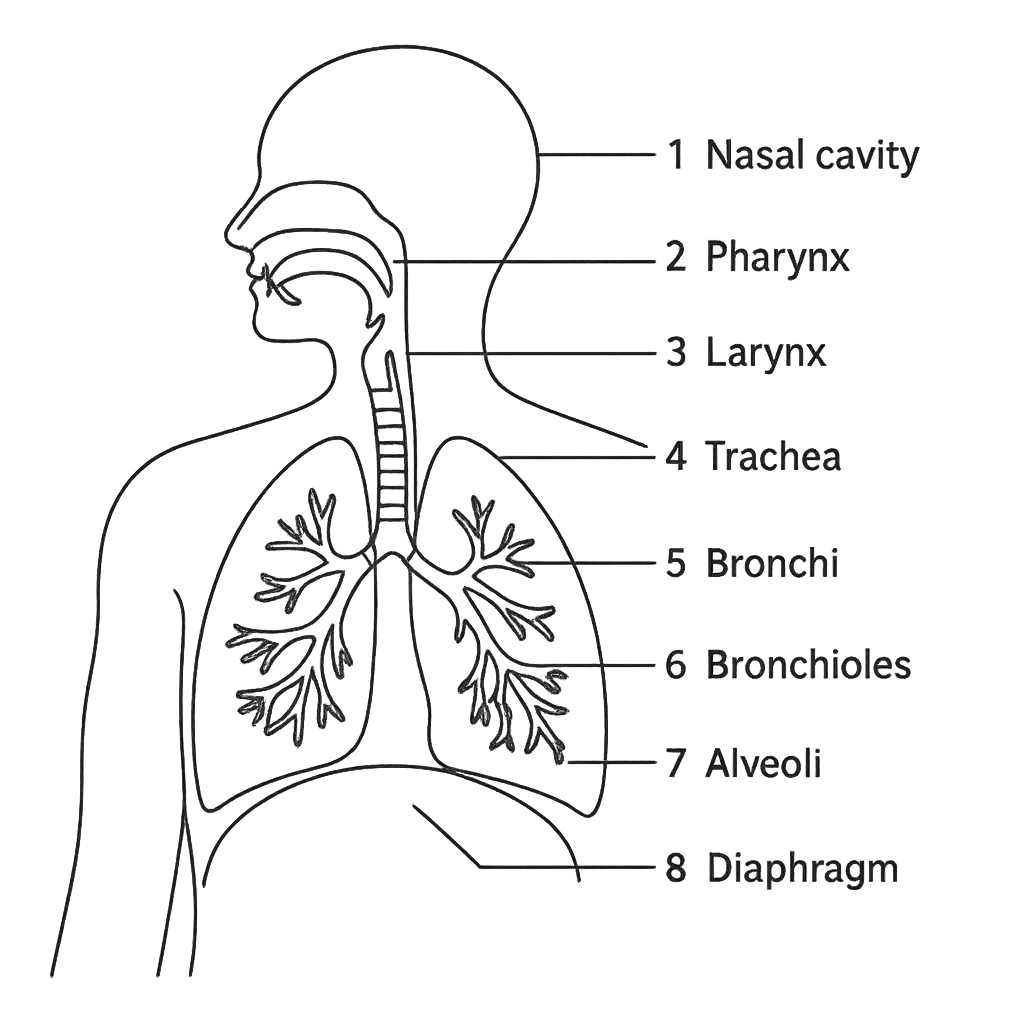
The diagram shows the human respiratory system with its major structures labelled 1 to 8.
Question Parts
(a)
State the name of each structure corresponding to the labels 1–8 in the diagram.
(b)
Describe, in order, the pathway that air follows from the external environment to the alveoli, referring to the labelled parts in your answer.
(c)
Explain the process of gas exchange that occurs in the alveoli, including the role of partial pressures of oxygen and carbon dioxide.
(d)
Discuss how contraction of the diaphragm (label 8) alters thoracic volume and pressure, and how this change drives inhalation, applying Boyle’s law.
Detailed Essay Solution & Marking Scheme Available

Get the step-by-step mathematical proofs, key points required by examiners, and a comprehensive breakdown from our AI Tutor.
Question 5 View Details
The diagram shows a mature dicotyledonous plant with the parts labelled as follows: A – root hairs, B – endodermis, C – xylem vessels, D – phloem sieve tubes, E – leaf blade, F – stomata, G – guard cells, H – transpiration stream. Using this diagram, answer the following questions.
Question Parts
(a)
Describe the complete pathway of water from the soil to the leaf, referring to the labelled parts in the diagram and explaining the role of each part in the movement of water.
(b)
Answer the following:
() Explain how the plant regulates water loss through stomata when ambient temperature is high.
() Predict the effect on the rate of transpiration if atmospheric humidity decreases, and justify your prediction.
(c)
A researcher measured the water potential in the root cortex as -0.2 MPa and in the leaf mesophyll as -0.8 MPa. Assuming steady flow, (i) calculate the magnitude of the water potential gradient and the equivalent height of a water column that would produce this gradient (use \rho = 1000 kg·m⁻³, g = 9.8 m·s⁻²). (ii) Discuss how this gradient supports the cohesion‑tension theory.
() Calculate the gradient and equivalent water‑column height.
() Discuss the relevance of this gradient to the cohesion‑tension theory.
Detailed Essay Solution & Marking Scheme Available

Get the step-by-step mathematical proofs, key points required by examiners, and a comprehensive breakdown from our AI Tutor.

Question 6 View Details
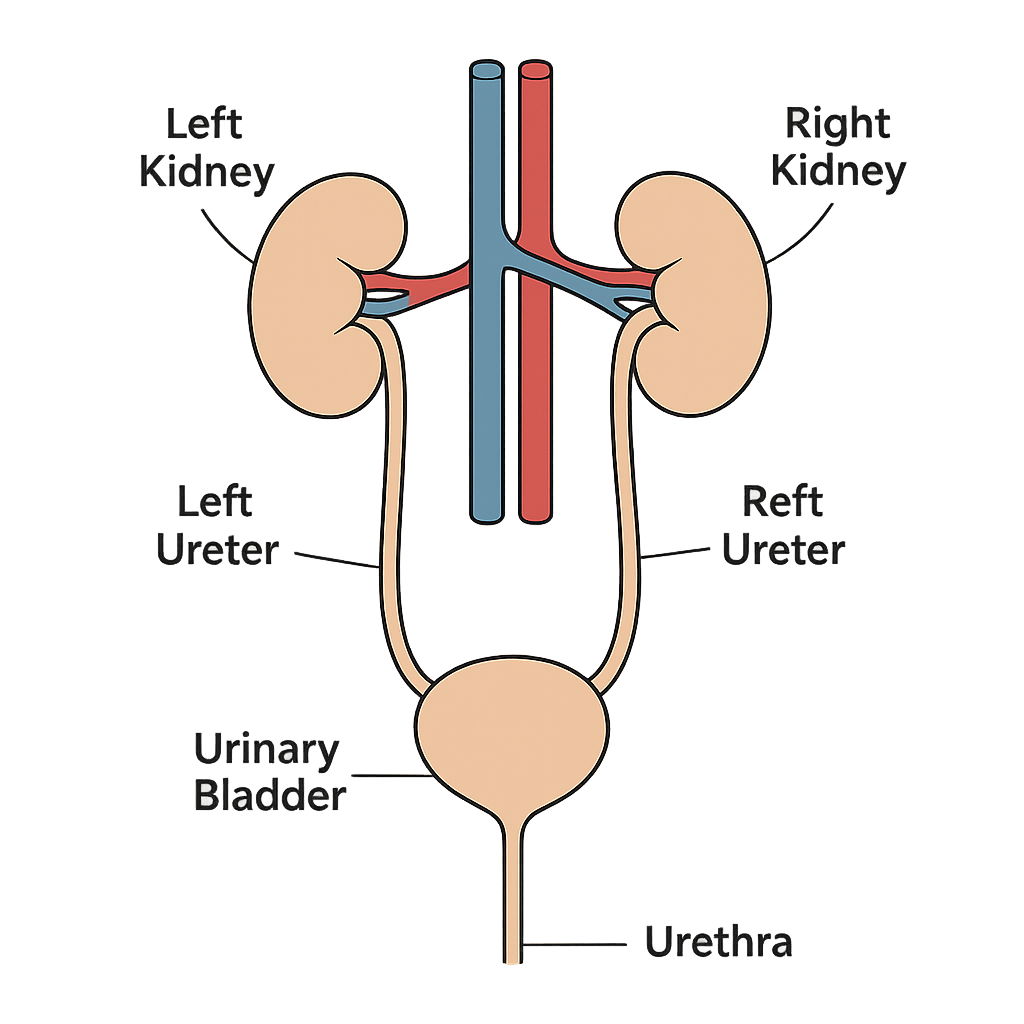
The diagram shows the human excretory system with the parts labelled: left kidney, right kidney, left ureter, right ureter, urinary bladder, urethra, renal artery and renal vein.
Question Parts
(a)
Describe the complete pathway of urine formation from the filtration of blood to its excretion, naming the major processes and structures involved.
(b)
Each kidney contains about 1,000,000 nephrons. If each nephron filters approximately 120 \mu L of plasma per minute, calculate: (i) the total volume of filtrate produced by both kidneys in one hour (express your answer in millilitres), (ii) the total volume of filtrate produced in one day (express in litres), (iii) assuming 99% of the filtrate is re‑absorbed, the net volume of urine excreted in a day (in litres).
(c)
A patient suffers a partial obstruction in the right ureter that reduces urine flow through that ureter by 30% compared with the normal unilateral flow of 0.5 L per hour. (i) Calculate the reduced flow rate through the obstructed ureter (in L per hour). (ii) Discuss two possible physiological consequences of a prolonged reduction in urine flow through a ureter.
Detailed Essay Solution & Marking Scheme Available

Get the step-by-step mathematical proofs, key points required by examiners, and a comprehensive breakdown from our AI Tutor.

Question 7 View Details
Explain how homeostatic control maintains blood glucose concentration within a narrow range in the human body.
Question Parts
(a)
Describe the negative feedback mechanism involving insulin and glucagon, including the organs that secrete these hormones and their target tissues.
(b)
Explain how the liver contributes to this regulation through glycogenolysis and gluconeogenesis, indicating the conditions under which each process is activated.
(c)
Predict the physiological consequences if the pancreatic β‑cells are unable to release insulin, and justify how this affects at least two organ systems.
Detailed Essay Solution & Marking Scheme Available

Get the step-by-step mathematical proofs, key points required by examiners, and a comprehensive breakdown from our AI Tutor.

Question 8 View Details
Discuss the role of the nervous system in coordinating rapid protective movements.
Question Parts
(a)
Describe the structural components and sequence of events in a simple monosynaptic reflex arc such as the patellar (knee‑jerk) reflex.
(b)
Explain the process of synaptic transmission at the neuromuscular junction, naming the neurotransmitter, receptor type, and mechanism that terminates the signal.
(c)
Predict the effect on the reflex response if the dorsal root ganglion supplying sensory input is damaged, and explain the underlying reason.
Detailed Essay Solution & Marking Scheme Available

Get the step-by-step mathematical proofs, key points required by examiners, and a comprehensive breakdown from our AI Tutor.

Master the Exam!

You've seen a preview, but there are thousands more questions plus AI tutor to break down complex solutions.

Unlock Full Access Available for Android & Windows
Help others prepare! Share this practice hub:
Chat with Support