neco 2023 chemistry | Essay

Prepare for your exams with neco questions? Reviewing past/model questions is one of the most effective ways to guarantee a high score. This practice hub features authentic 2023 chemistry (Essay) questions designed to simulate the real exam environment.

Practice these randomly selected questions to test your readiness.
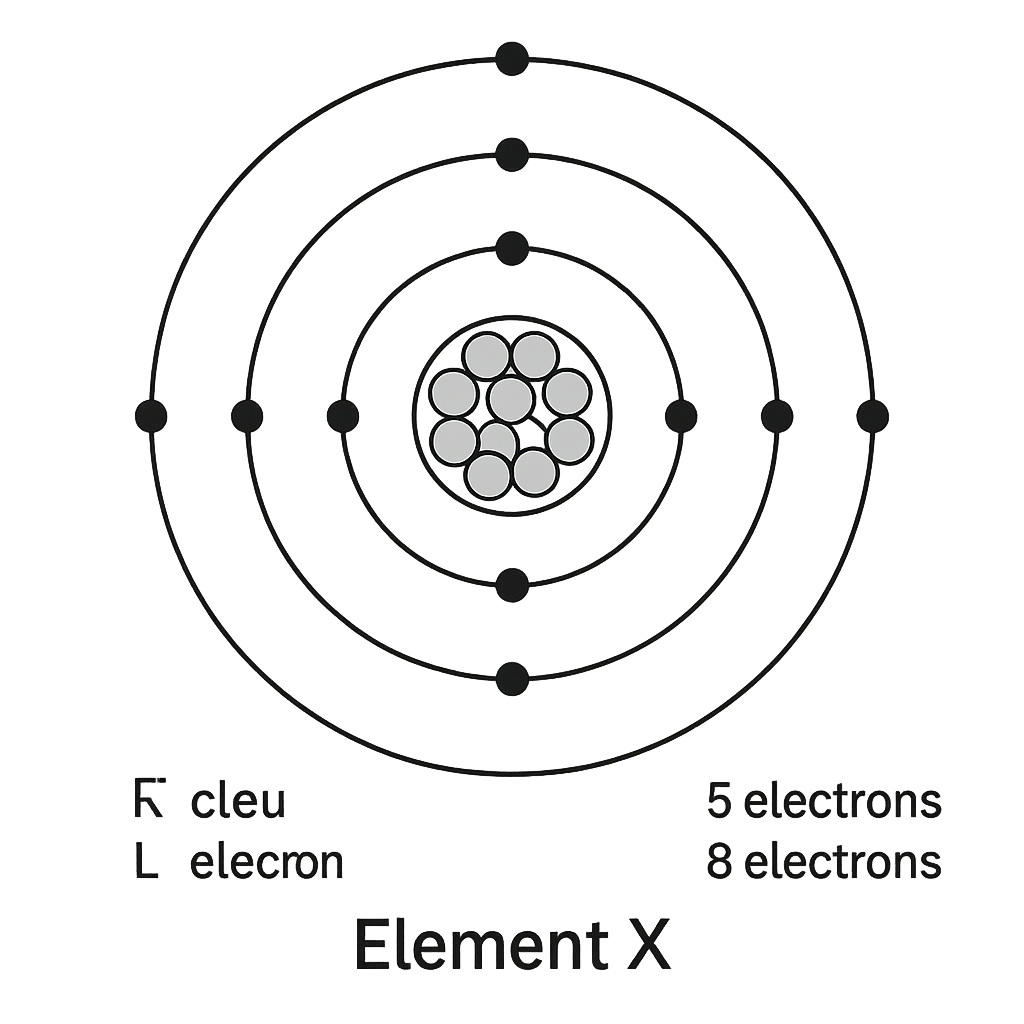
Question 1 View Details
The diagram shows a Bohr model of a neutral atom of an element X. The nucleus contains 15 protons and 15 neutrons. The electron shells are labelled K, L and M. The K‑shell holds 2 electrons, the L‑shell holds 8 electrons and the M‑shell holds 5 electrons.
Question Parts
(a)
State the atomic number, mass number and the number of neutrons in the atom.
(b)
Write the ground‑state electron configuration of element X using the Aufbau principle (list the distribution of electrons in shells).
(c)
Identify the group (family) and period of element X in the periodic table and give one characteristic property of this group.
Detailed Essay Solution & Marking Scheme Available

Get the step-by-step mathematical proofs, key points required by examiners, and a comprehensive breakdown from our AI Tutor.
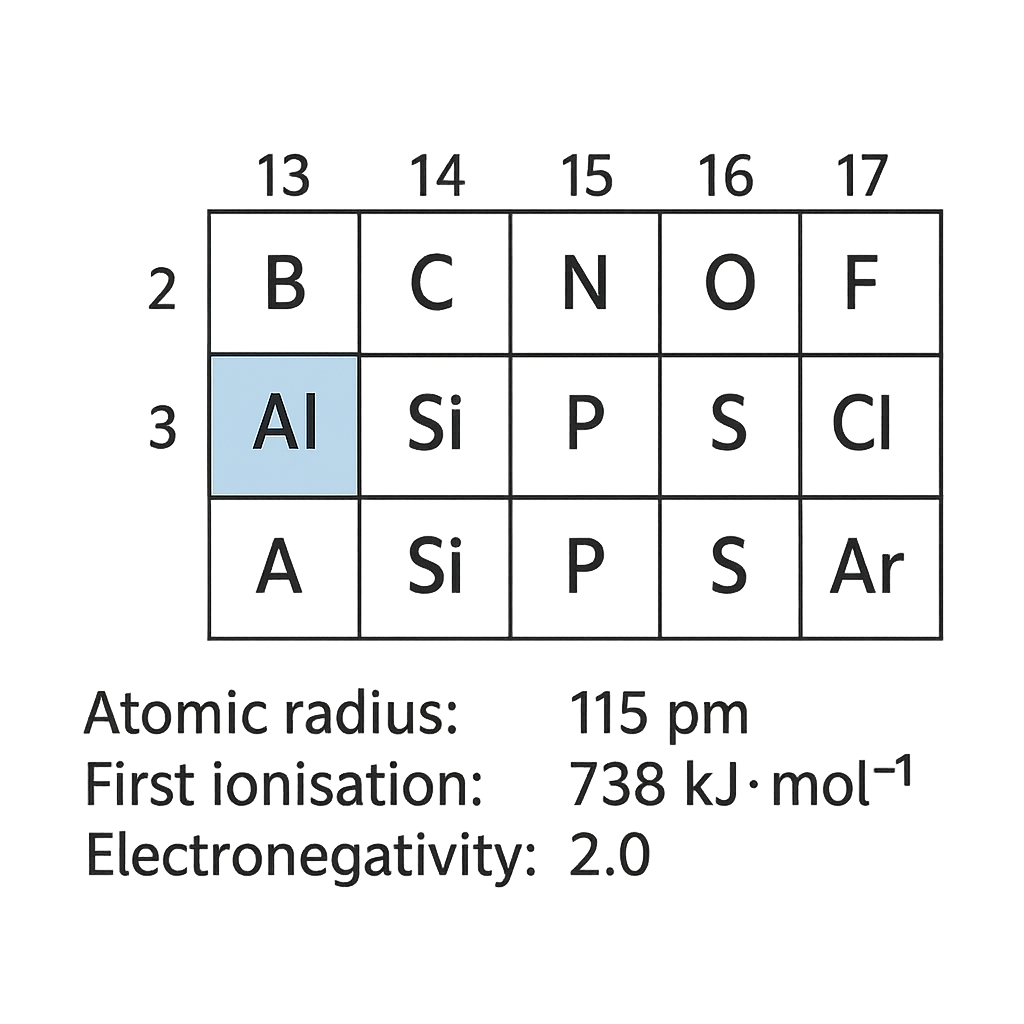
Question 2 View Details
The diagram shows a fragment of the periodic table containing periods 2 and 3 and groups 13 to 18. Element Y is highlighted in the diagram. The following data are given for element Y: atomic radius = 115 pm, first ionisation energy = 738 kJ·mol⁻¹, electronegativity (Pauling) = 2.0.
Question Parts
(a)
Identify element Y (give its name and symbol).
(b)
State the most common oxidation state of element Y and write the formula of the oxide formed when Y reacts with oxygen.
(c)
Write a balanced chemical equation for the reaction of element Y with water, indicating the physical states of all reactants and products.
Detailed Essay Solution & Marking Scheme Available

Get the step-by-step mathematical proofs, key points required by examiners, and a comprehensive breakdown from our AI Tutor.
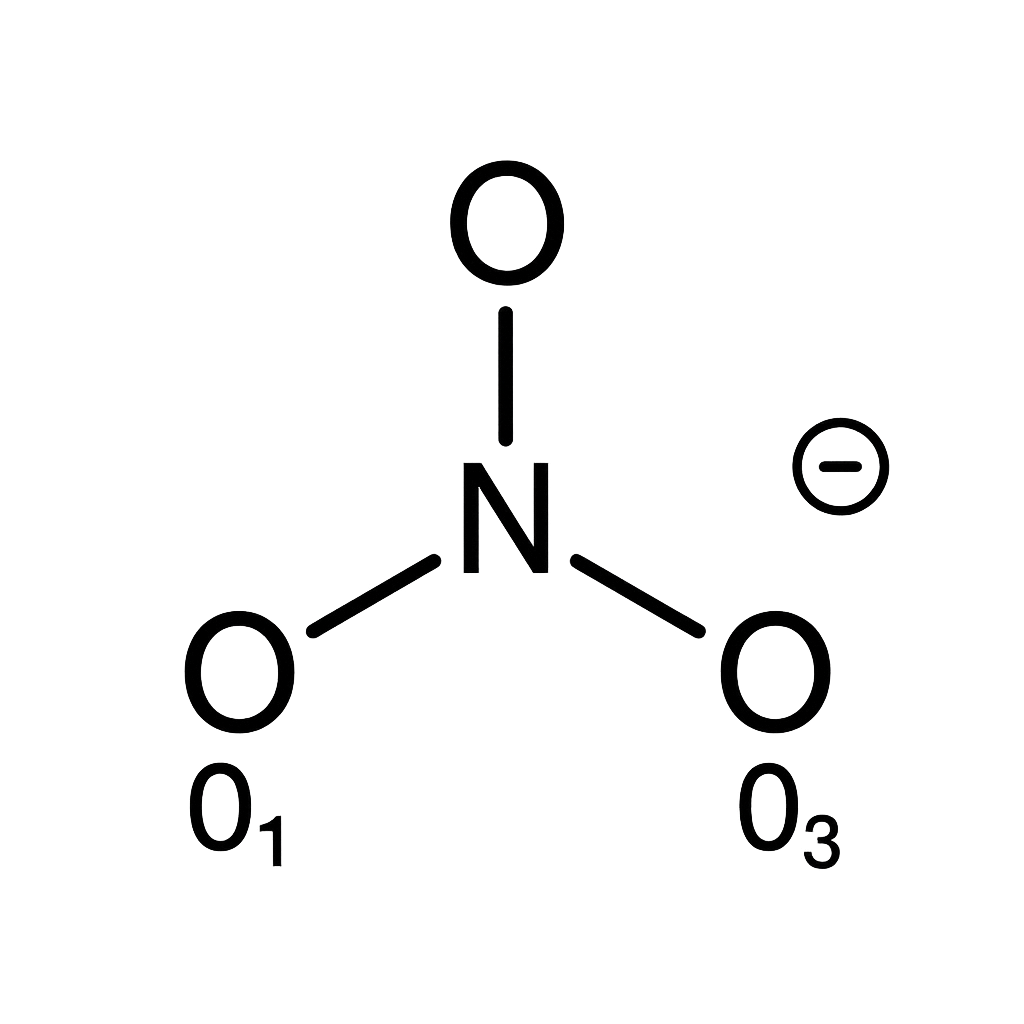
Question 3 View Details
The diagram shows the skeletal structure of the nitrate ion (NO₃⁻). Nitrogen is at the centre and is bonded to three oxygen atoms. The bond order between N and O₁ is shown as a double bond, while the bonds to O₂ and O₃ are shown as single bonds. Lone pairs on the atoms are not drawn.
Question Parts
(a)
Complete the Lewis structure of the nitrate ion by adding all lone pairs and indicating the formal charge on each atom.
(b)
State the type of bond (single, double or coordinate) present between nitrogen and each oxygen atom.
(c)
Calculate the formal charge on each atom using the formula: FC = valence electrons – (non‑bonding electrons + ½ bonding electrons). Show your calculation for one atom only; the others may be stated directly.
(d)
Explain why the nitrate ion exhibits resonance and discuss how resonance affects the N–O bond lengths observed experimentally.
Detailed Essay Solution & Marking Scheme Available

Get the step-by-step mathematical proofs, key points required by examiners, and a comprehensive breakdown from our AI Tutor.
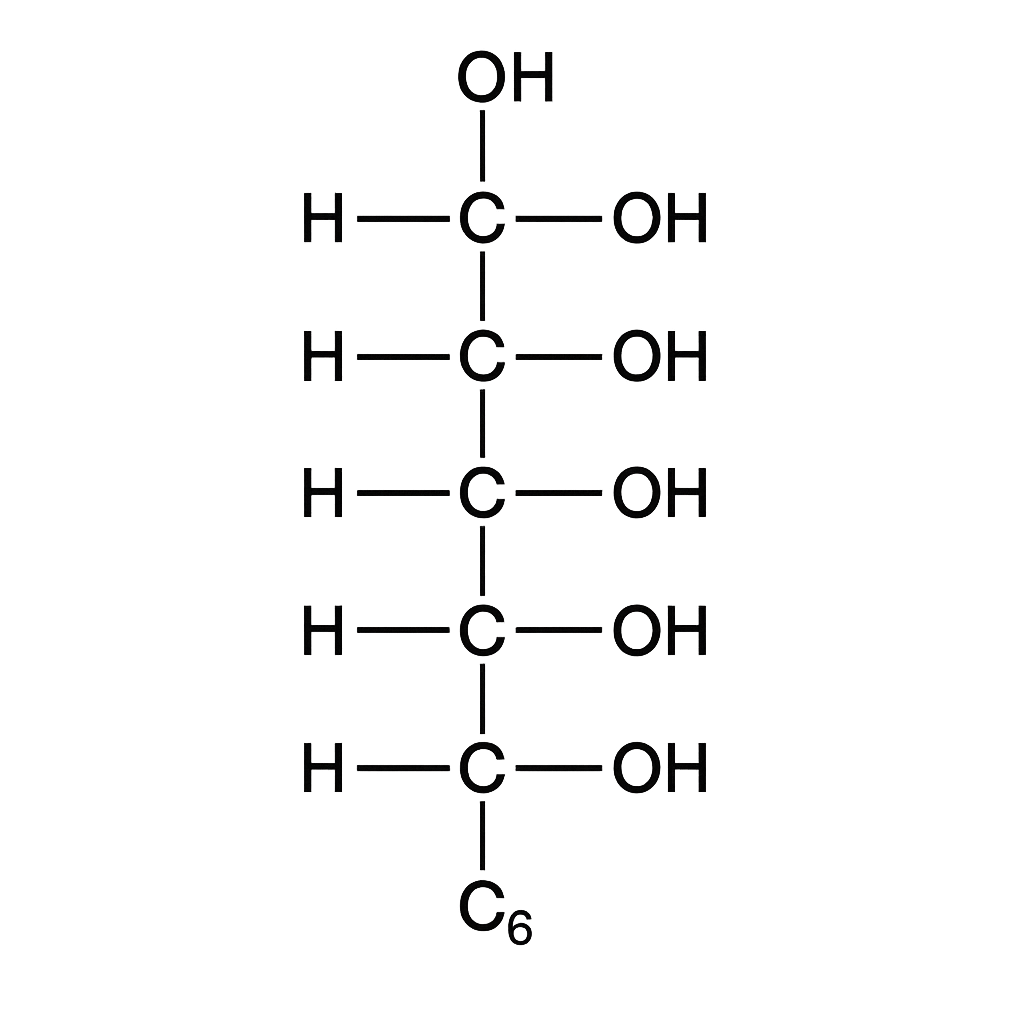
Question 4 View Details
The diagram shows the structural formula of an organic compound X.
Question Parts
(a)
Write the molecular formula of X as indicated by the diagram.
(b)
Calculate the percent by mass of carbon in X. Show all steps.
(c)
A 180 g sample of X is dissolved in water. (i) Determine the number of moles of X present. (ii) Using the mole concept, calculate the mass of carbon contained in this sample.
(d)
When X undergoes complete combustion with excess oxygen, it follows the balanced equation: C6H12O6 + 6 O2 → 6 CO2 + 6 H2O. If 0.25 mol of X reacts completely, calculate the volume (in litres) of CO2 gas produced at STP (22.4 L·mol⁻¹).
Detailed Essay Solution & Marking Scheme Available

Get the step-by-step mathematical proofs, key points required by examiners, and a comprehensive breakdown from our AI Tutor.

Question 5 View Details
A 5.00 g sample of a heterogeneous mixture containing magnesium metal (Mg) and calcium carbonate (CaCO3) is heated strongly in a crucible. The magnesium reacts with oxygen from the air to form magnesium oxide (MgO) while calcium carbonate decomposes to calcium oxide (CaO) and carbon dioxide gas (CO2). After heating, the solid residue remaining in the crucible is collected and weighed as 4.12 g.
Question Parts
(a)
Write the balanced chemical equations for the reactions that occur on heating the mixture.
(b)
Determine which component of the original mixture is the limiting reagent for the overall solid‑product formation.
(c)
Calculate the mass of magnesium metal that was present in the original 5.00 g mixture.
(d)
If the actual mass of MgO obtained after heating is 2.30 g, calculate the percent yield of MgO.
Detailed Essay Solution & Marking Scheme Available

Get the step-by-step mathematical proofs, key points required by examiners, and a comprehensive breakdown from our AI Tutor.

Question 6 View Details
A 2.00 L sealed container is initially at 25 °C and contains only water vapour at a pressure equal to the saturated vapour pressure of water at that temperature (23.8 mmHg). The container is then heated to 75 °C and the total pressure inside rises to 150 mmHg. Assume that no water condenses during heating and that water vapour behaves as an ideal gas.
Question Parts
(a)
Write the expression that relates the amount of water vapour (in moles) to the pressure, volume and temperature of the gas.
(b)
Calculate the number of moles of water vapour present in the container at 25 °C.
(c)
Determine the number of moles of water vapour present after the container has been heated to 75 °C.
(d)
Calculate the mass of water that has evaporated during the heating process.
(e)
Briefly explain why the ideal‑gas assumption is reasonable for water vapour in this experiment.
Detailed Essay Solution & Marking Scheme Available

Get the step-by-step mathematical proofs, key points required by examiners, and a comprehensive breakdown from our AI Tutor.

Question 7 View Details
A 0.250 mol sample of sodium carbonate (Na₂CO₃) is dissolved in 500.0 mL of water to give a clear solution. The solution is titrated with 0.1000 M hydrochloric acid (HCl). The carbonate ion (CO₃²⁻) behaves as a diprotic base in water. The acid‑dissociation constants for carbonic acid are Ka₁ = 4.3×10⁻⁷ and Ka₂ = 5.6×10⁻¹¹.
Question Parts
(a)
Write the balanced chemical equations for the stepwise neutralisation of the carbonate ion by HCl.
(b)
Calculate the pH of the solution after the addition of 12.5 mL of the 0.1000 M HCl solution. (Hint: at this stage the system consists of the conjugate base CO₃²⁻ and its conjugate acid HCO₃⁻, forming a buffer.)
(c)
Determine the volume of 0.1000 M HCl required to reach the equivalence point for the second neutralisation (complete conversion of HCO₃⁻ to H₂CO₃) and state the pH of the solution at that point.
(d)
Discuss qualitatively how the titration curve would change if the initial sodium carbonate solution were diluted to 1.00 L before titration, keeping the amount of Na₂CO₃ the same.
Detailed Essay Solution & Marking Scheme Available

Get the step-by-step mathematical proofs, key points required by examiners, and a comprehensive breakdown from our AI Tutor.

Question 8 View Details
A saturated solution of calcium fluoride (CaF₂) at 25 °C is in equilibrium with solid CaF₂. The solubility product constant at this temperature is Ksp = 1.46×10⁻¹⁰. The formation constant for the complex ion [CaF]⁺ is Kf = 1.0×10³.
Question Parts
(a)
Calculate the molar solubility of CaF₂ in pure water at 25 °C.
Detailed Essay Solution & Marking Scheme Available

Get the step-by-step mathematical proofs, key points required by examiners, and a comprehensive breakdown from our AI Tutor.

Master the Exam!

You've seen a preview, but there are thousands more questions plus AI tutor to break down complex solutions.

Unlock Full Access Available for Android & Windows
Help others prepare! Share this practice hub:
Chat with Support