neco 2020 chemistry | Essay

Prepare for your exams with neco questions? Reviewing past/model questions is one of the most effective ways to guarantee a high score. This practice hub features authentic 2020 chemistry (Essay) questions designed to simulate the real exam environment.

Practice these randomly selected questions to test your readiness.
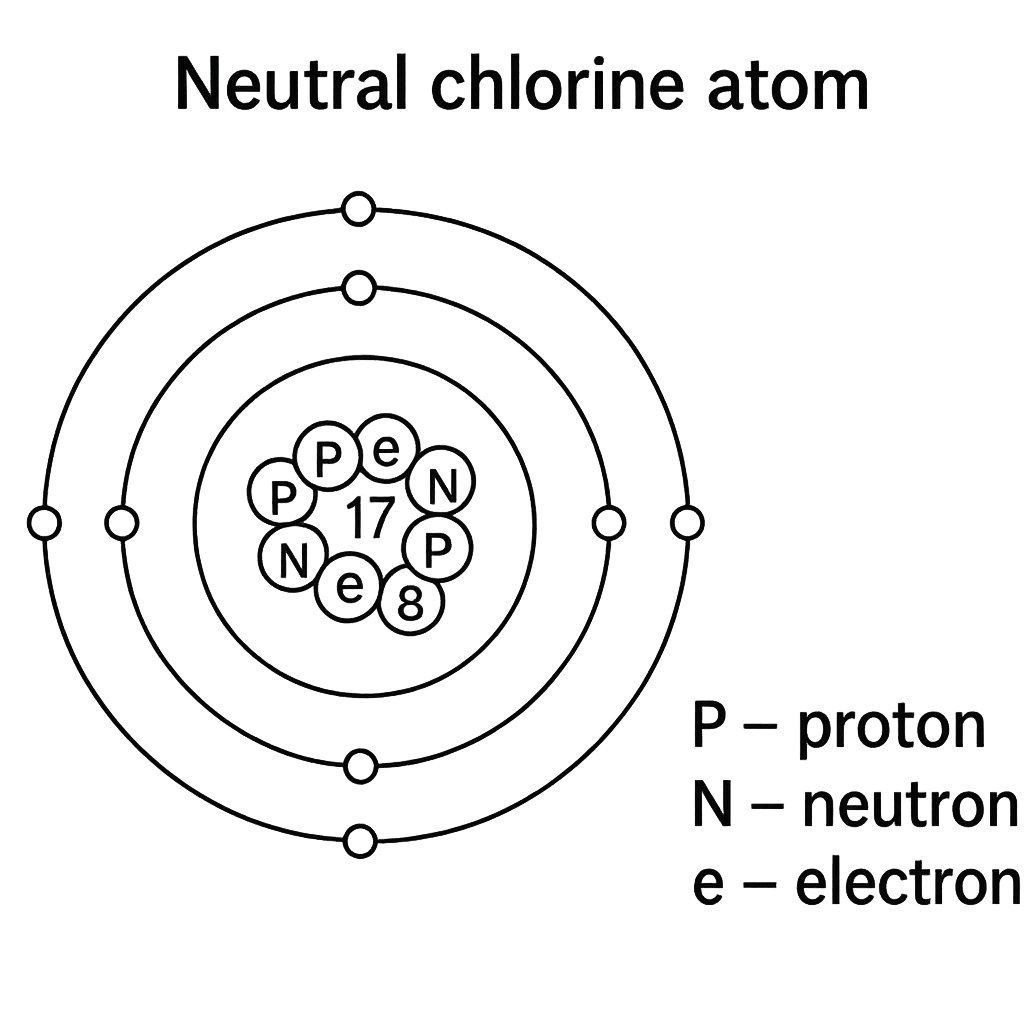
Question 1 View Details
The diagram shows a neutral atom of an unknown element. All sub‑atomic particles are labelled and the electrons are shown in their respective energy shells.
Question Parts
(a)
State the name and symbol of the element shown in the diagram.
(b)
Calculate the mass number (A) of the atom and write the standard notation for this isotope.
(c)
Write the ground‑state electron configuration of the element using the Aufbau principle.
(d)
Explain, with reference to the diagram, how isotopes of this element would be represented and why they have the same chemical properties.
Detailed Essay Solution & Marking Scheme Available

Get the step-by-step mathematical proofs, key points required by examiners, and a comprehensive breakdown from our AI Tutor.
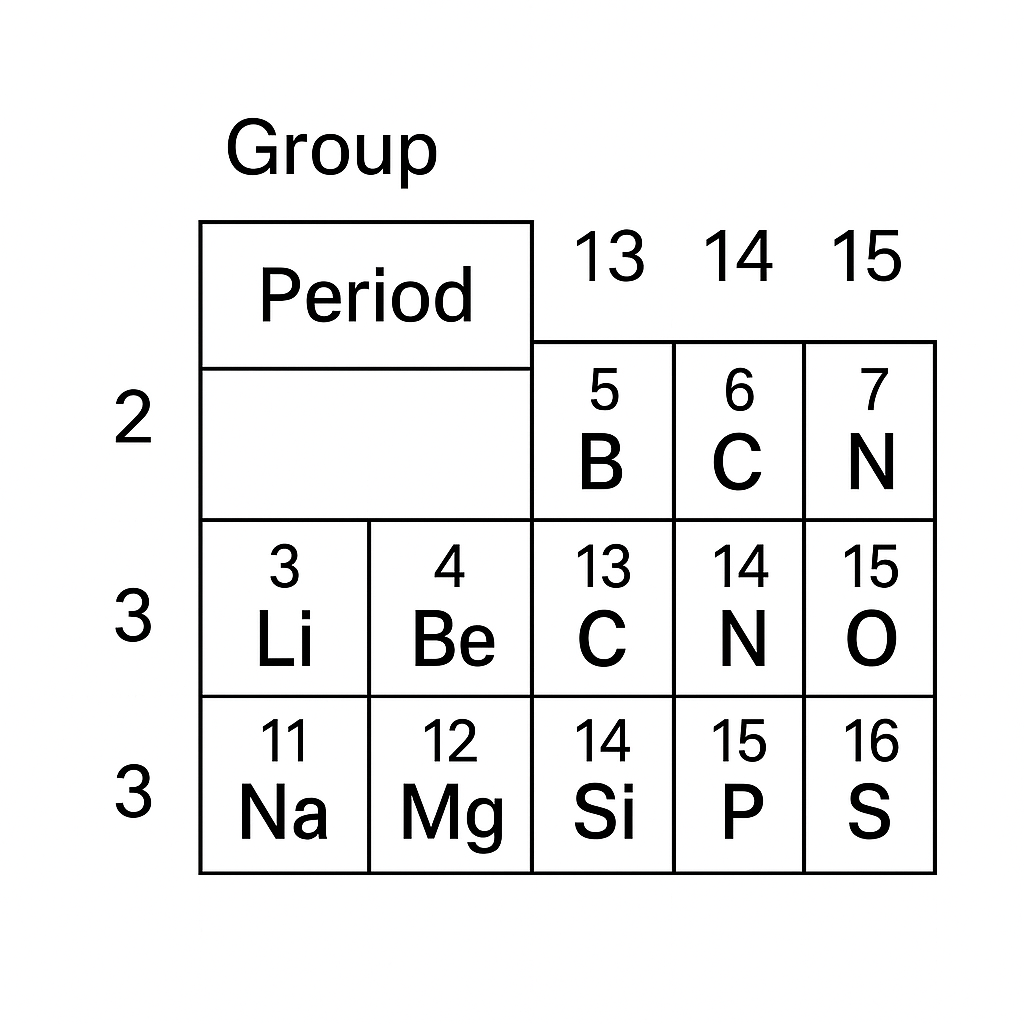
Question 2 View Details
The diagram presents a portion of the periodic table covering periods 2 and 3 and groups 1, 2, 13, 14, 15, and 16. The elements are shown with their atomic numbers and standard symbols.
Question Parts
(a)
Identify the element that lies in period 3, group 15 and write its electronic configuration up to the valence shell.
(b)
Using the data from the diagram, compare the atomic radius of the element in period 2, group 1 with that of the element in period 3, group 1. Explain the observed trend.
(c)
The diagram shows that the ionisation energy of the element in period 3, group 16 is higher than that of the element in period 2, group 16. Provide a reason for this observation.
(d)
Predict the type of oxide (acidic, basic or amphoteric) formed by the element in period 2, group 13 and justify your answer using periodic trends.
Detailed Essay Solution & Marking Scheme Available

Get the step-by-step mathematical proofs, key points required by examiners, and a comprehensive breakdown from our AI Tutor.
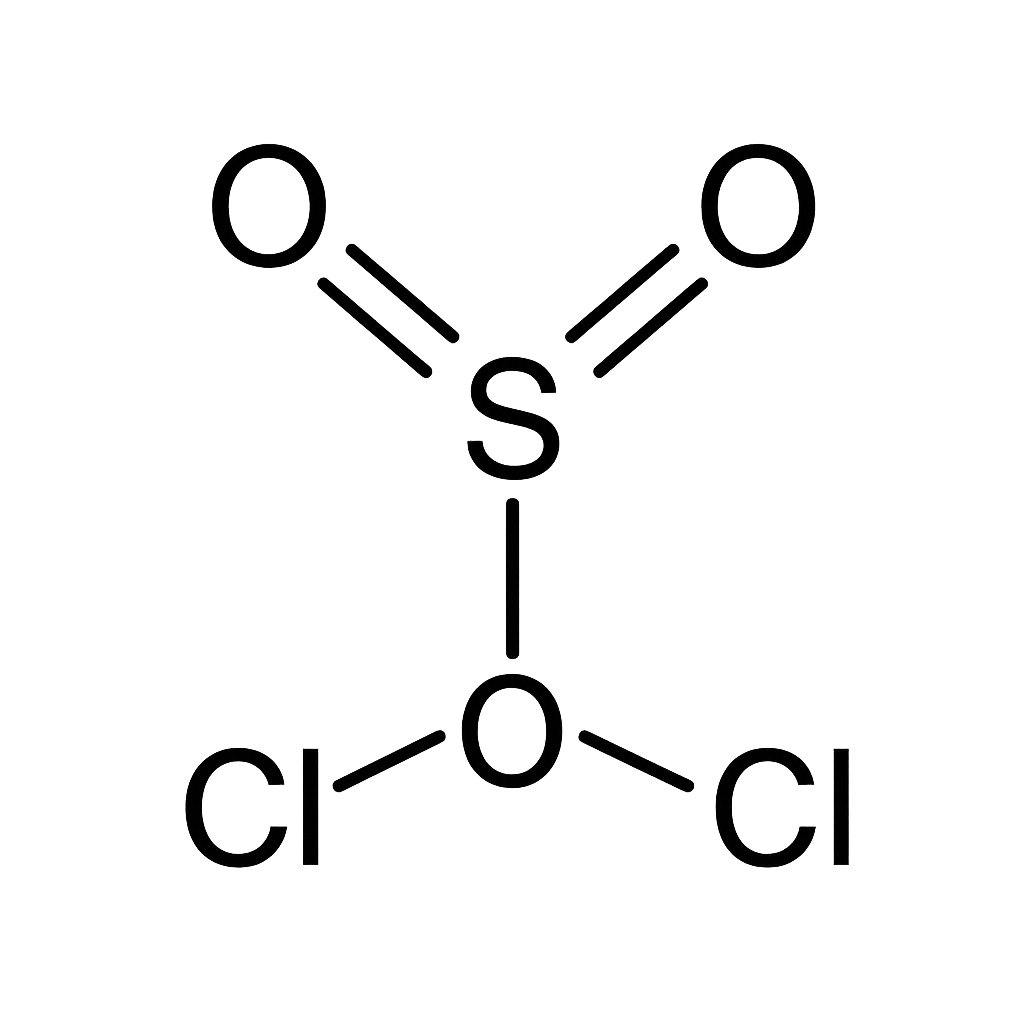
Question 3 View Details
The diagram shows the Lewis structure of sulfuryl chloride, SO2Cl2. The central sulfur atom (S) is double‑bonded to two oxygen atoms (O) and single‑bonded to two chlorine atoms (Cl). All lone pairs on the oxygen atoms are shown. Answer the following questions:
Question Parts
(a)
Determine the oxidation state of the sulphur atom in SO2Cl2.
(b)
State the hybridisation of the sulphur atom and describe the molecular geometry of SO2Cl2.
(c)
Discuss the polarity of the molecule. Indicate the direction of the net dipole moment and give a brief justification based on the electronegativity of the atoms and the molecular shape.
(d)
Classify the type of covalent bonds present between sulphur and oxygen, and between sulphur and chlorine. State the number of sigma (σ) and pi (π) bonds in each S–O and S–Cl linkage.
Detailed Essay Solution & Marking Scheme Available

Get the step-by-step mathematical proofs, key points required by examiners, and a comprehensive breakdown from our AI Tutor.
Question 4 View Details
A laboratory technician mixes 3.00 g of sodium carbonate (Na₂CO₃) with excess hydrochloric acid (HCl) in a sealed flask. The reaction proceeds according to: Na₂CO₃ + 2 HCl → 2 NaCl + CO₂ + H₂O After the reaction is complete, the flask is opened and the volume of the released carbon dioxide gas is measured at 25 °C and 1.00 atm. The volume recorded is 0.560 L. Answer the following questions:
Question Parts
(a)
Calculate the number of moles of Na₂CO₃ initially placed in the flask.
(b)
Using the ideal gas equation, determine the number of moles of CO₂ that were collected. Show all steps.
(c)
Identify the limiting reactant and calculate the theoretical mass of NaCl that could be formed from the reaction.
(d)
Explain why the mass of NaCl obtained experimentally might differ from the theoretical value calculated in part (c). List at least three possible sources of error.
Detailed Essay Solution & Marking Scheme Available

Get the step-by-step mathematical proofs, key points required by examiners, and a comprehensive breakdown from our AI Tutor.

Question 5 View Details
A mixture of nitrogen gas and hydrogen gas is placed in a sealed container at 298 K and 1 atm. The container initially contains 5.0 L of N₂ and 8.0 L of H₂. The gases react according to the equation: N₂(g) + 3 H₂(g) → 2 NH₃(g). After the reaction is complete, 1.20 g of NH₃ is collected.
Question Parts
(a)
Calculate the number of moles of N₂ and H₂ present initially in the container. (Use R = 0.0821 L·atm·mol⁻¹·K⁻¹)
(b)
Identify the limiting reagent and calculate the theoretical mass of NH₃ that could be formed.
(c)
Calculate the percent yield of NH₃ obtained in the experiment.
Detailed Essay Solution & Marking Scheme Available

Get the step-by-step mathematical proofs, key points required by examiners, and a comprehensive breakdown from our AI Tutor.

Question 6 View Details
A 2.00 g sample of a pure substance (molar mass = 80.0 g·mol⁻¹) is heated in a calorimeter. The substance has a melting point of 20°C and a boiling point of 100°C. Its specific heat capacities are: solid = 0.45 J·g⁻¹·K⁻¹, liquid = 0.80 J·g⁻¹·K⁻¹, gas = 1.04 J·g⁻¹·K⁻¹. The enthalpy of fusion is 12.0 kJ·mol⁻¹ and the enthalpy of vaporisation is 30.0 kJ·mol⁻¹. The sample is initially at –20°C and is heated until it reaches 150°C.\n\nAnswer the following:
Question Parts
(a)
Calculate the amount of heat (in joules) required for each of the following stages:\n(i) heating the solid from –20°C to its melting point,\n(ii) melting the solid,\n(iii) heating the liquid from the melting point to the boiling point,\n(iv) vaporising the liquid, and\n(v) heating the gas from the boiling point to 150°C.
(b)
Determine the total heat absorbed by the sample to reach 150°C.
(c)
Briefly describe the changes in molecular arrangement and motion that occur in the substance during each of the five stages listed in part (a).
Detailed Essay Solution & Marking Scheme Available

Get the step-by-step mathematical proofs, key points required by examiners, and a comprehensive breakdown from our AI Tutor.

Question 7 View Details
Amira is preparing a buffer solution using acetic acid (CH3COOH) and its salt sodium acetate (CH3COONa). The acid dissociation constant of acetic acid at 25 °C is Ka = 1.8 × 10⁻⁵.
Question Parts
(a)
Write the balanced molecular equation for the neutralisation of acetic acid with sodium hydroxide and derive the net ionic equation.
(b)
Amira dissolves 0.250 mol of CH3COOH and 0.150 mol of CH3COONa in enough water to make 1.00 L of solution. Calculate the pH of the resulting buffer solution. Show all steps and state any assumptions made.
(c)
She then adds 0.050 mol of HCl to the buffer solution (the volume remains 1.00 L).
() Determine the new pH of the solution after the addition of HCl.
() Explain, using the concept of buffer capacity, why the pH change is relatively small compared with adding the same amount of HCl to pure water.
Detailed Essay Solution & Marking Scheme Available

Get the step-by-step mathematical proofs, key points required by examiners, and a comprehensive breakdown from our AI Tutor.

Question 8 View Details
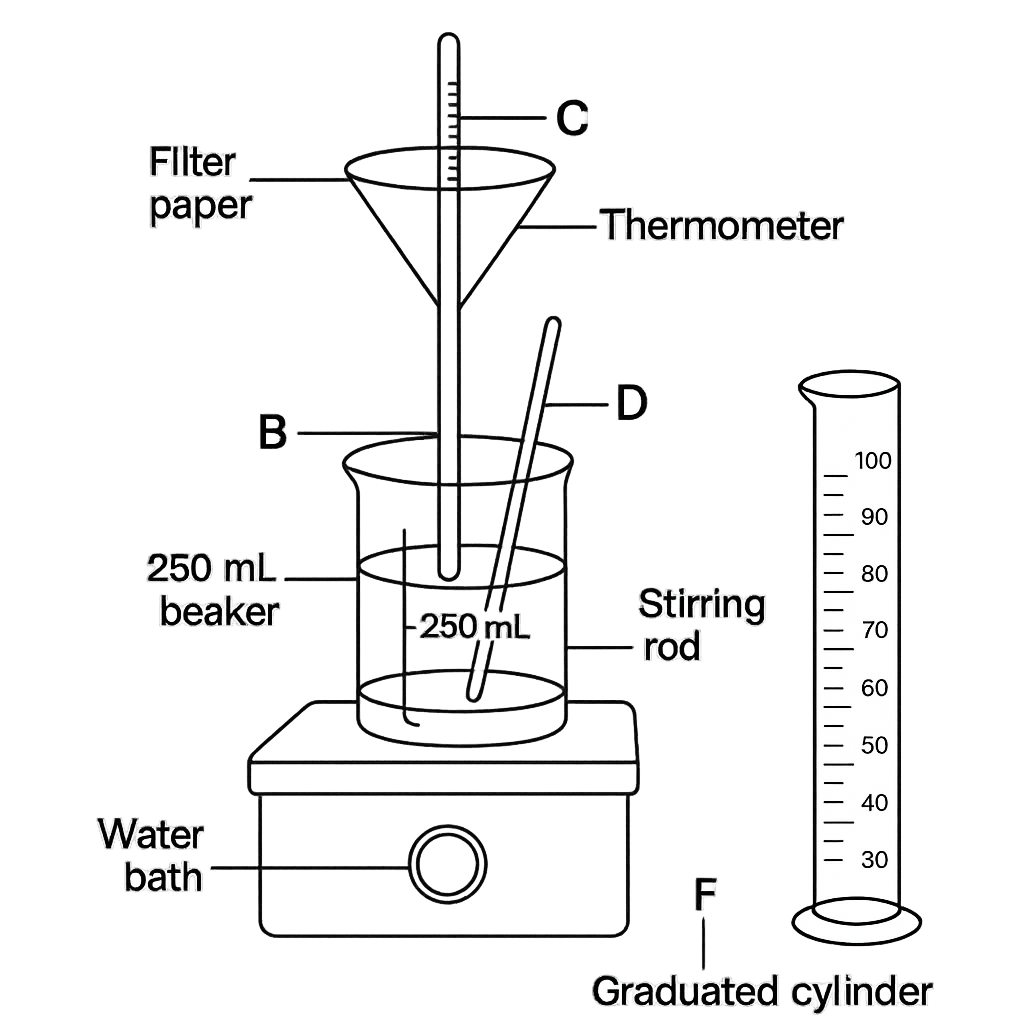
A student is investigating the solubility of potassium nitrate (KNO₃) in water at different temperatures using the apparatus shown. The set‑up consists of a 250 mL beaker placed on a thermostatically controlled water bath, a thermometer, a stirring rod, a filter funnel with filter paper, and a 100 mL graduated cylinder. The student adds excess solid KNO₃ to 100 mL of distilled water in the beaker, heats the mixture to a chosen temperature, stirs until no more solid dissolves, then filters the solution into the graduated cylinder and records the volume of the saturated solution. The experiment is repeated at 20 °C, 40 °C, 60 °C and 80 °C and the masses of KNO₃ that dissolve are found to be 13.0 g, 22.5 g, 33.0 g and 45.0 g respectively.
Question Parts
(a)
Calculate the solubility of KNO₃ in grams per 100 mL of water at each of the four temperatures.
(b)
Describe the trend shown by the solubility values and explain, using Le Chatelier’s principle, why the solubility of KNO₃ changes with temperature.
(c)
The student wishes to prepare 250 mL of a saturated KNO₃ solution at 60 °C. Assuming the density of the saturated solution is 1.10 g mL⁻¹, calculate the mass of KNO₃ required and the volume of water that must be used. Show all steps.
(d)
Identify two possible sources of experimental error in this determination of solubility and suggest a practical method to minimise each error.
Detailed Essay Solution & Marking Scheme Available

Get the step-by-step mathematical proofs, key points required by examiners, and a comprehensive breakdown from our AI Tutor.

Master the Exam!

You've seen a preview, but there are thousands more questions plus AI tutor to break down complex solutions.

Unlock Full Access Available for Android & Windows
Help others prepare! Share this practice hub:
Chat with Support