neco 2019 biology | Essay

Prepare for your exams with neco questions? Reviewing past/model questions is one of the most effective ways to guarantee a high score. This practice hub features authentic 2019 biology (Essay) questions designed to simulate the real exam environment.

Practice these randomly selected questions to test your readiness.
Question 1 View Details
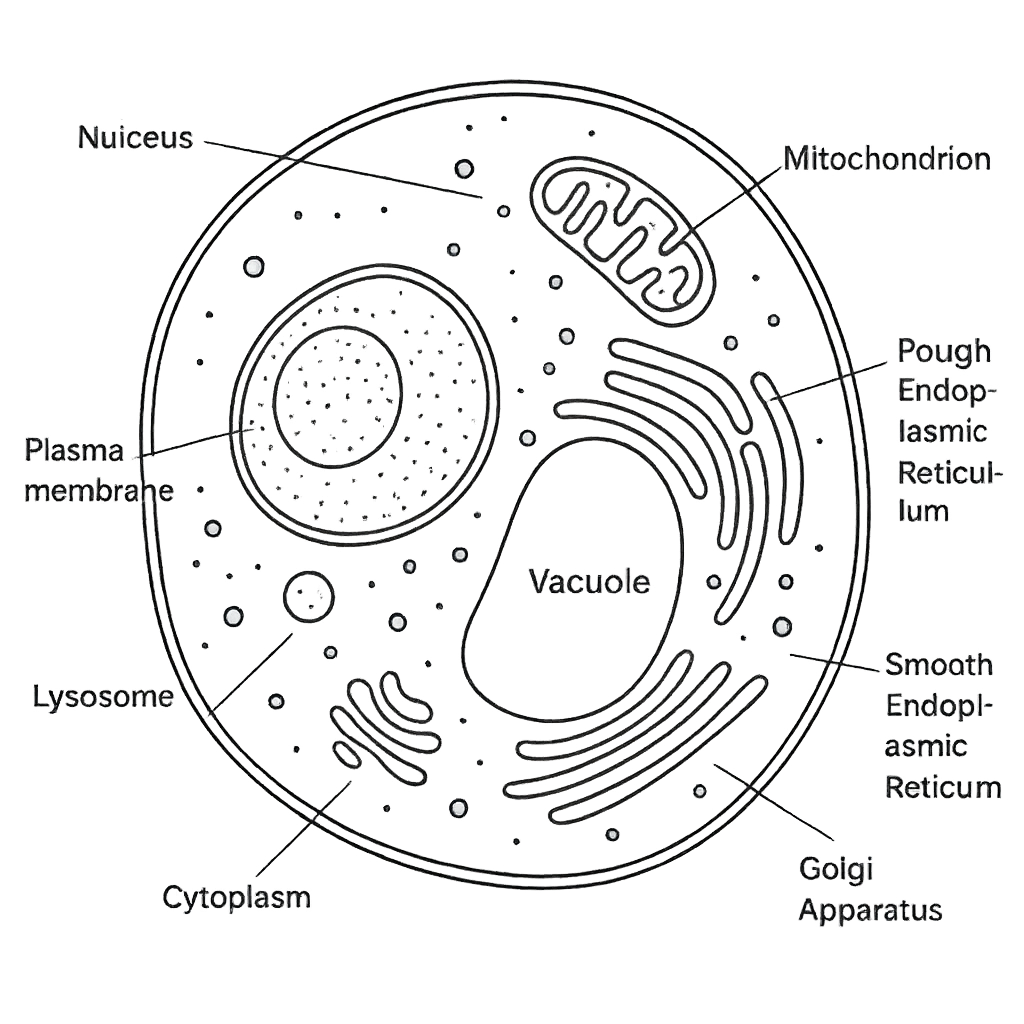
The diagram shows a typical animal cell with the organelles labelled as indicated.
Question Parts
(a)
Identify the function of each of the following organelles: mitochondrion, nucleus, ribosome, lysosome.
(b)
Explain how the structure of the plasma membrane enables it to regulate the movement of substances into and out of the cell.
(c)
Compare and contrast the roles of the rough endoplasmic reticulum (RER) and the smooth endoplasmic reticulum (SER) in the cell.
(d)
Predict the effect on cellular respiration if the number of mitochondria in a skeletal muscle cell is reduced by 50 %.
Detailed Essay Solution & Marking Scheme Available

Get the step-by-step mathematical proofs, key points required by examiners, and a comprehensive breakdown from our AI Tutor.
Question 2 View Details
The labelled diagram illustrates the stages of mitosis in an animal cell.
Question Parts
(a)
Describe the key events that occur in each of the four stages shown: prophase, metaphase, anaphase and telophase.
(b)
Explain the role of spindle fibers during mitosis.
(c)
If a mutation prevents cytokinesis from occurring after telophase, what would be the likely result in the daughter cells regarding chromosome number?
(d)
During interphase the cell contains 46 chromosomes (23 pairs). By the end of telophase the DNA content has doubled while the chromosome number remains 46. Calculate the percentage increase in DNA content from interphase to telophase.
Detailed Essay Solution & Marking Scheme Available

Get the step-by-step mathematical proofs, key points required by examiners, and a comprehensive breakdown from our AI Tutor.
Question 3 View Details
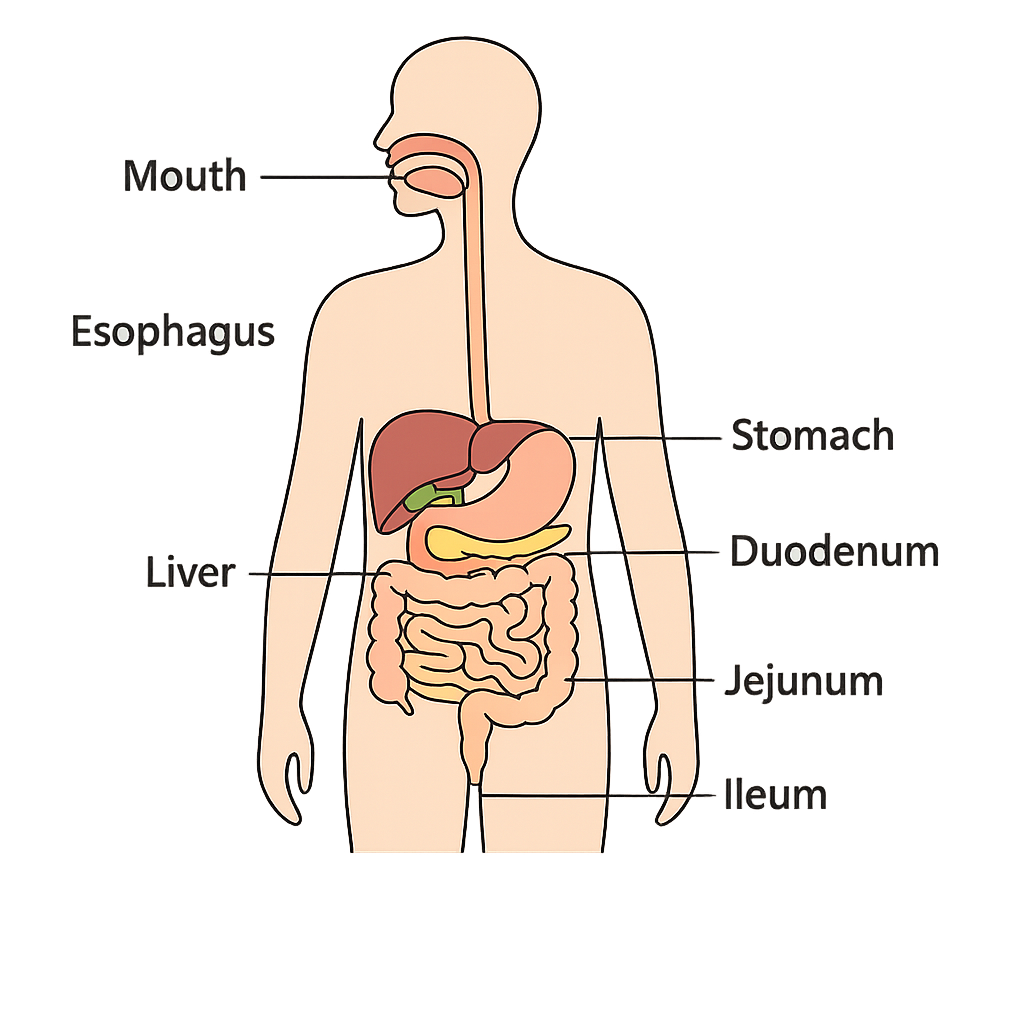
The diagram shows the major parts of the human digestive system.
Question Parts
(a)
Identify the organ where the majority of carbohydrate digestion occurs and describe the specific enzymes secreted there and their actions.
(b)
A 70‑kg adult consumes a daily diet consisting of 250 g carbohydrates, 80 g protein and 70 g fat.
() Calculate the total energy supplied by the diet (use 4 kcal g⁻¹ for carbohydrate and protein, 9 kcal g⁻¹ for fat).
() Determine the percentage contribution of each macronutrient to the total energy.
() Using the diagram, discuss briefly how the digestive system processes each macronutrient and why a balanced intake is important for health.
(c)
Vitamin B12 deficiency impairs a specific step in the digestive process. Identify that step, explain the physiological consequence, and suggest a dietary strategy to prevent the deficiency, referring to the relevant organ(s) in the diagram.
Detailed Essay Solution & Marking Scheme Available

Get the step-by-step mathematical proofs, key points required by examiners, and a comprehensive breakdown from our AI Tutor.
Question 4 View Details
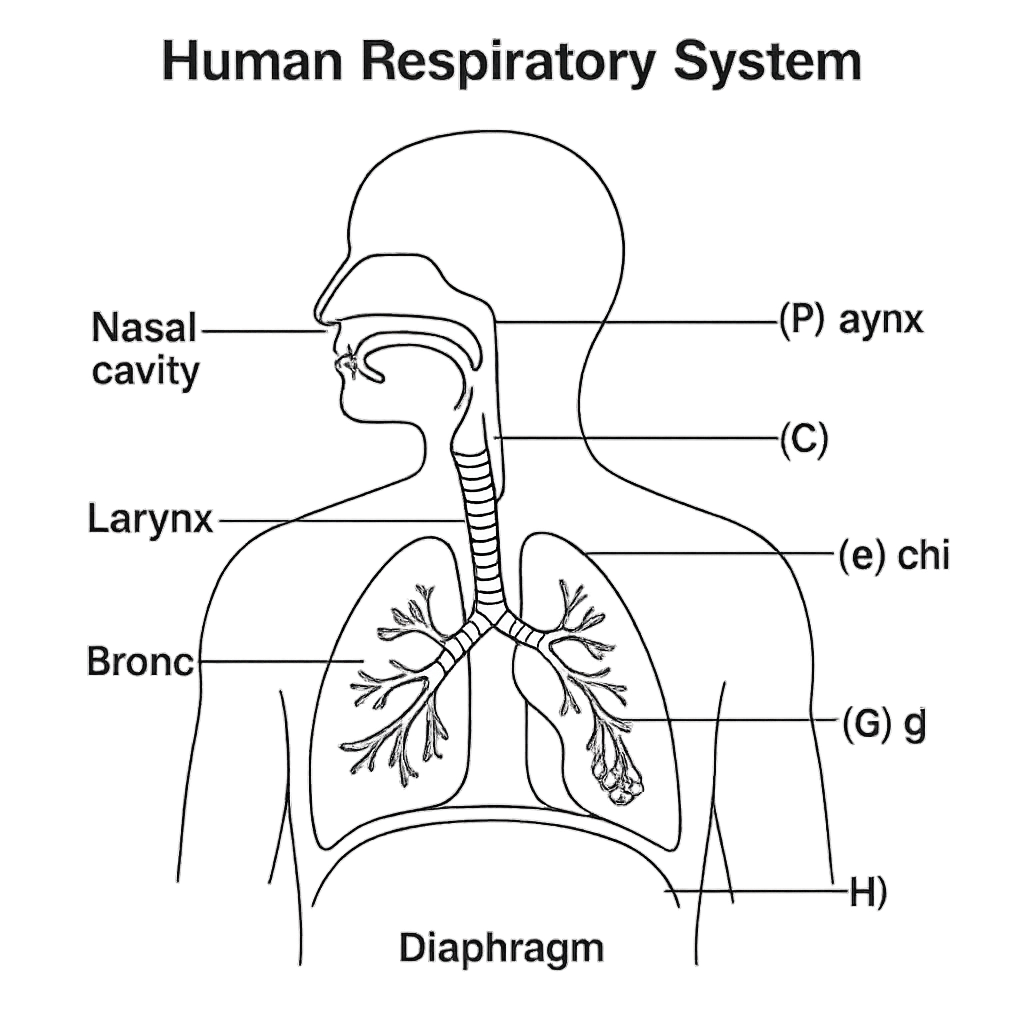
The diagram shows the major structures of the human respiratory system, labelled A–H.
Question Parts
(a)
Describe the pathway of air from the external environment to the site of gas exchange, mentioning each labelled structure in the correct order.
(b)
Explain the role of the diaphragm (H) in ventilation, describing how its movement alters thoracic volume and pressure.
(c)
The partial pressure of oxygen (PO₂) in alveolar air is 100 mmHg while in the blood of pulmonary capillaries it is 40 mmHg. Using Fick’s law, discuss how this gradient influences the rate of diffusion of oxygen and state two factors that could affect this rate.
(d)
A person moves from sea level (atmospheric pressure 760 mmHg) to an altitude where the atmospheric pressure is 560 mmHg. Assuming alveolar PO₂ is directly proportional to atmospheric pressure, estimate the new alveolar PO₂ and discuss one physiological adaptation that helps maintain oxygen supply at high altitude.
Detailed Essay Solution & Marking Scheme Available

Get the step-by-step mathematical proofs, key points required by examiners, and a comprehensive breakdown from our AI Tutor.
Question 5 View Details
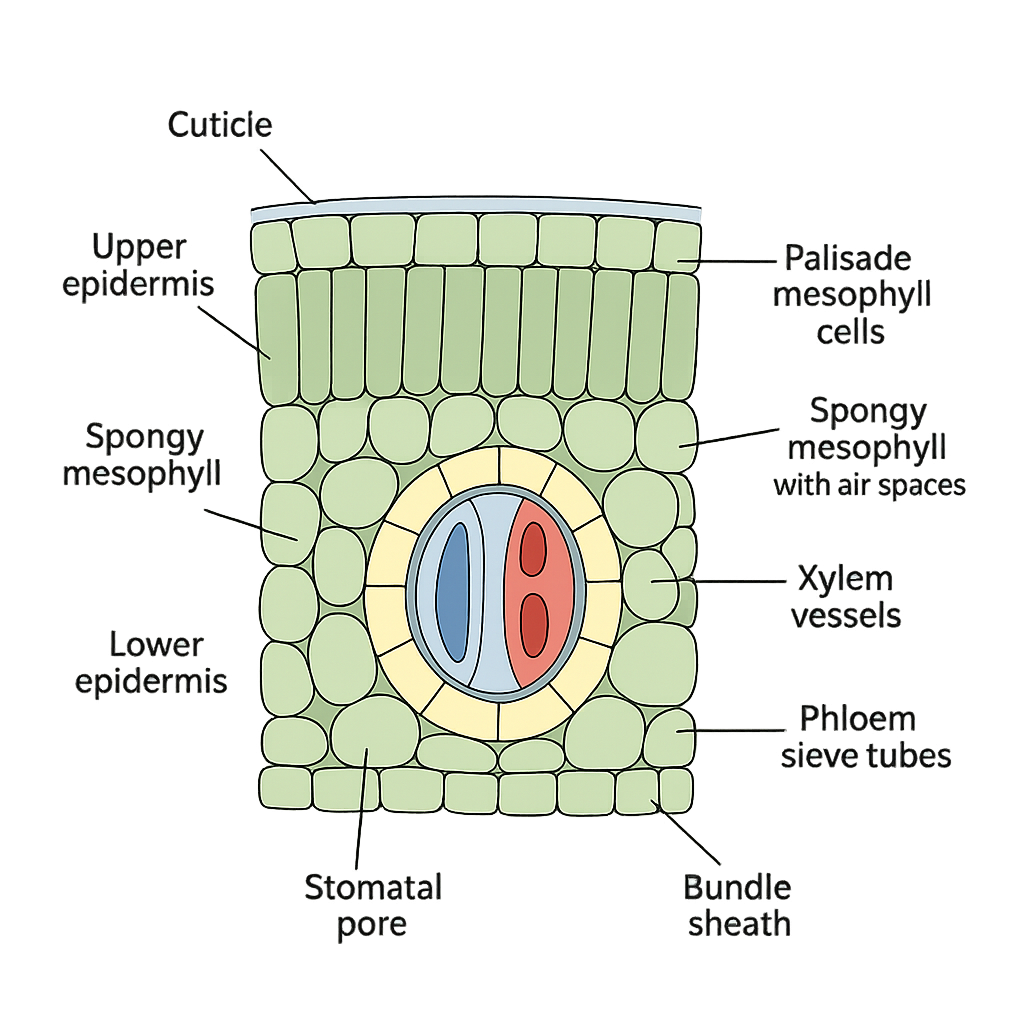
A cross‑section of a typical dicot leaf is shown in the labelled diagram.
Question Parts
(a)
Identify and label on the diagram the structures that are directly involved in the upward movement of water from the roots to the leaves.
(b)
Explain, using the cohesion‑tension theory, how water is able to move upward through the xylem vessels. In your answer, discuss the roles of (i) cohesion, (ii) adhesion, (iii) transpiration pull, and (iv) the continuity of the water column.
(c)
A plant is placed in a greenhouse where the relative humidity is increased from 40 % to 80 % while temperature remains constant at 25 °C. Predict and justify the effect of this change on the rate of transpiration and on the overall water uptake by the plant.
Detailed Essay Solution & Marking Scheme Available

Get the step-by-step mathematical proofs, key points required by examiners, and a comprehensive breakdown from our AI Tutor.

Question 6 View Details
A 35‑year‑old man presents for routine health screening. His glomerular filtration rate (GFR) is 120 mL min⁻¹ and the hydrostatic pressure in the glomerular capillaries (P_GC) is 45 mmHg, while the hydrostatic pressure in Bowman's space (P_BS) is 15 mmHg. His plasma protein concentration is initially 7 g dL⁻¹ but a recent dietary change has increased it to 9 g dL⁻¹. Assume the oncotic pressure (π) of plasma can be approximated by π = 2.5 × [protein] (mmHg).
Question Parts
(a)
Calculate the plasma oncotic pressure before and after the dietary change.
(b)
Determine the net filtration pressure (NFP) across the glomerular membrane before and after the change, assuming GFR and hydrostatic pressures remain unchanged.
(c)
Discuss how the increase in plasma protein concentration is likely to affect urine volume and the overall excretory function of the kidneys.
Detailed Essay Solution & Marking Scheme Available

Get the step-by-step mathematical proofs, key points required by examiners, and a comprehensive breakdown from our AI Tutor.

Question 7 View Details
Homeostasis is essential for maintaining the internal environment of the human body within narrow limits.
Question Parts
(a)
Explain, with reference to blood glucose regulation, how a negative feedback mechanism operates. In your answer, identify the key hormone(s), the primary target organ(s) and describe the sequence of events that restore normal glucose levels after a meal.
(b)
A diabetic patient records a fasting blood glucose concentration of 180 mg/dL. Normal fasting blood glucose is 90 mg/dL. Calculate the percentage increase in the patient's fasting glucose relative to normal and comment on the physiological significance of this deviation.
(c)
Design a simple experimental procedure to investigate the effect of moderate aerobic exercise on blood glucose homeostasis in healthy adult volunteers. State the hypothesis, the control and experimental groups, the variables to be measured, the method of data collection and the type of result that would support your hypothesis.
Detailed Essay Solution & Marking Scheme Available

Get the step-by-step mathematical proofs, key points required by examiners, and a comprehensive breakdown from our AI Tutor.

Question 8 View Details
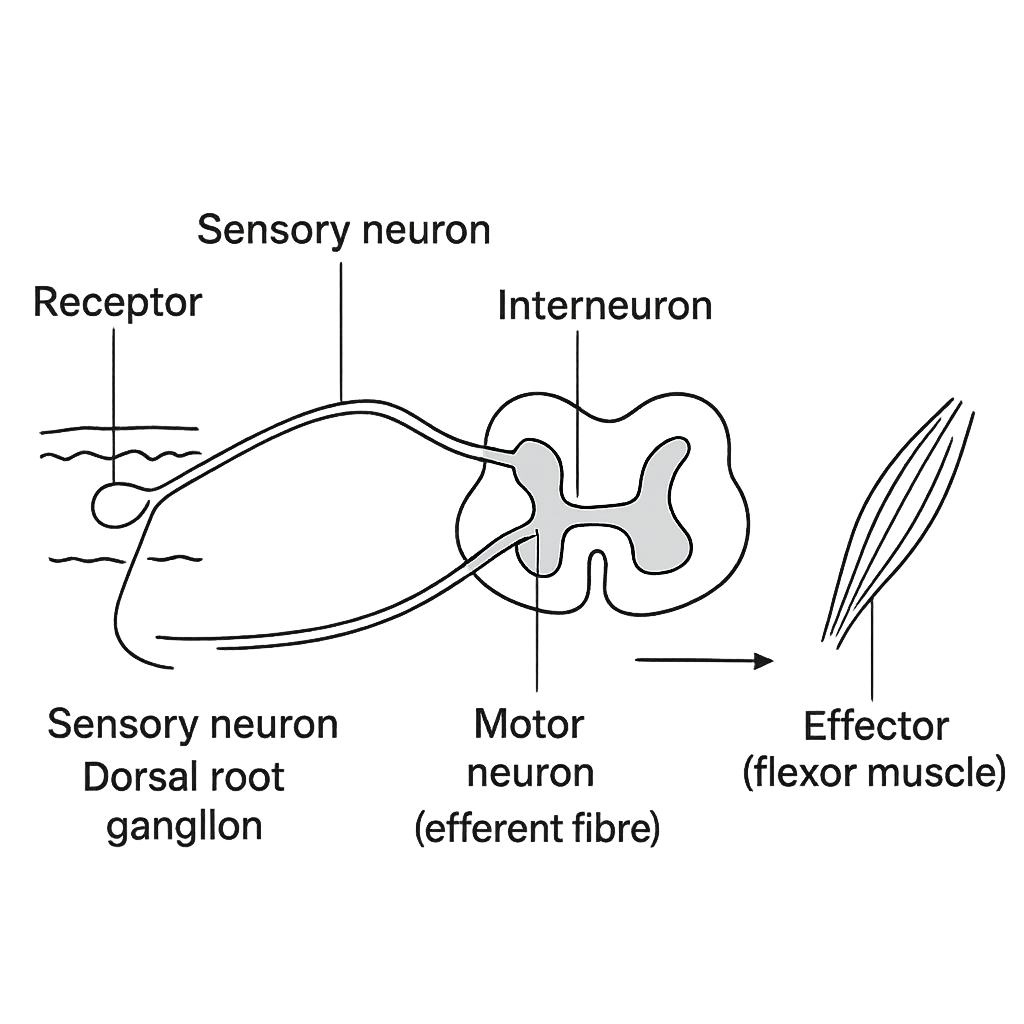
The diagram shows a simple spinal reflex arc in the human body.
Question Parts
(a)
Identify each labelled structure in the diagram.
(b)
Describe the sequence of events that occur from the moment a painful stimulus is applied to the skin until the muscle contracts, referencing the labelled parts.
(c)
Explain two major differences between this reflex response and a voluntary response to the same stimulus, focusing on neural pathways and speed of response.
(d)
A patient suffers damage to the dorsal root ganglion of the reflex arc. Predict how this injury would affect the reflex response and justify your answer.
Detailed Essay Solution & Marking Scheme Available

Get the step-by-step mathematical proofs, key points required by examiners, and a comprehensive breakdown from our AI Tutor.

Master the Exam!

You've seen a preview, but there are thousands more questions plus AI tutor to break down complex solutions.

Unlock Full Access Available for Android & Windows
Help others prepare! Share this practice hub:
Chat with Support