neco 2018 biology | Essay

Prepare for your exams with neco questions? Reviewing past/model questions is one of the most effective ways to guarantee a high score. This practice hub features authentic 2018 biology (Essay) questions designed to simulate the real exam environment.

Practice these randomly selected questions to test your readiness.
Question 1 View Details
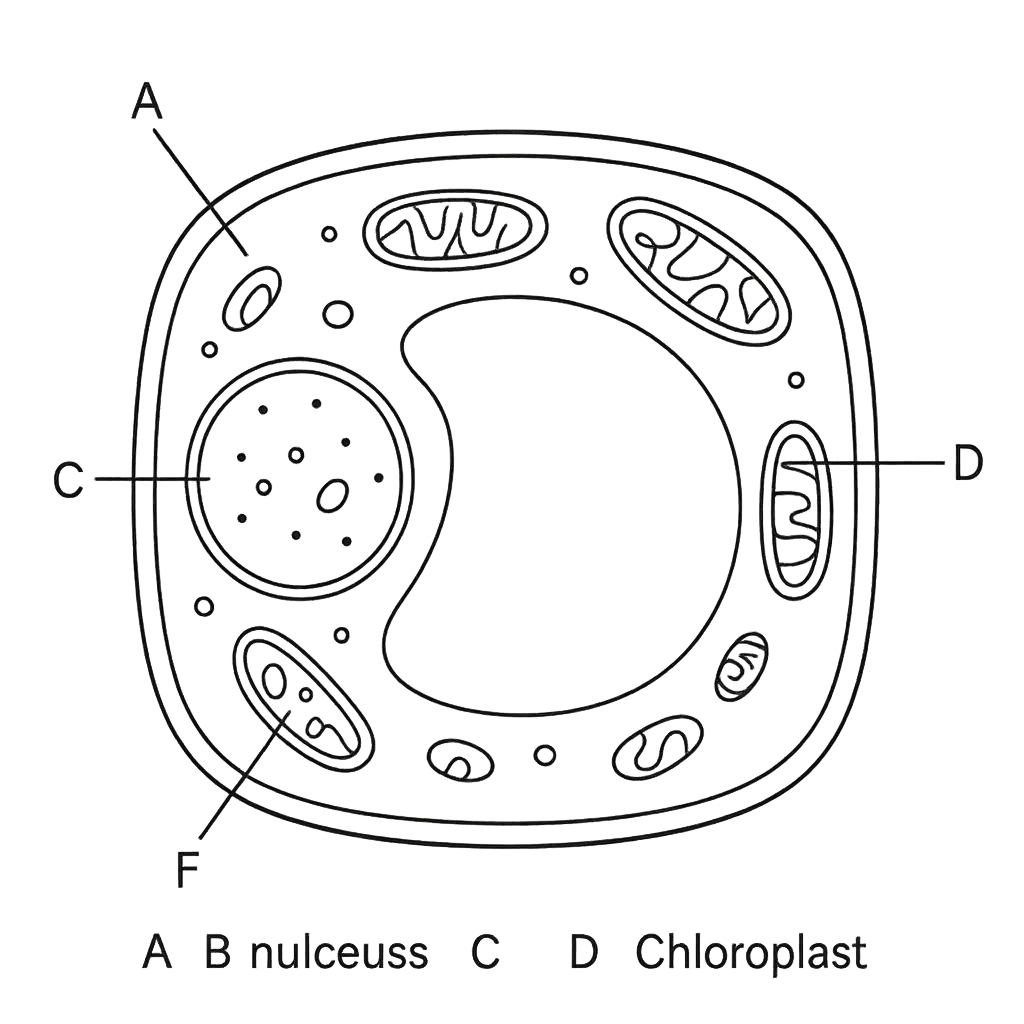
The diagram shows a typical plant cell.
Question Parts
(a)
Identify the structures labelled A, B, C, D, E and F in the diagram.
(b)
State the main function of each of the structures identified in part (a).
(c)
Explain how the cell wall and cell membrane together regulate the movement of water into the cell.
Detailed Essay Solution & Marking Scheme Available

Get the step-by-step mathematical proofs, key points required by examiners, and a comprehensive breakdown from our AI Tutor.
Question 2 View Details
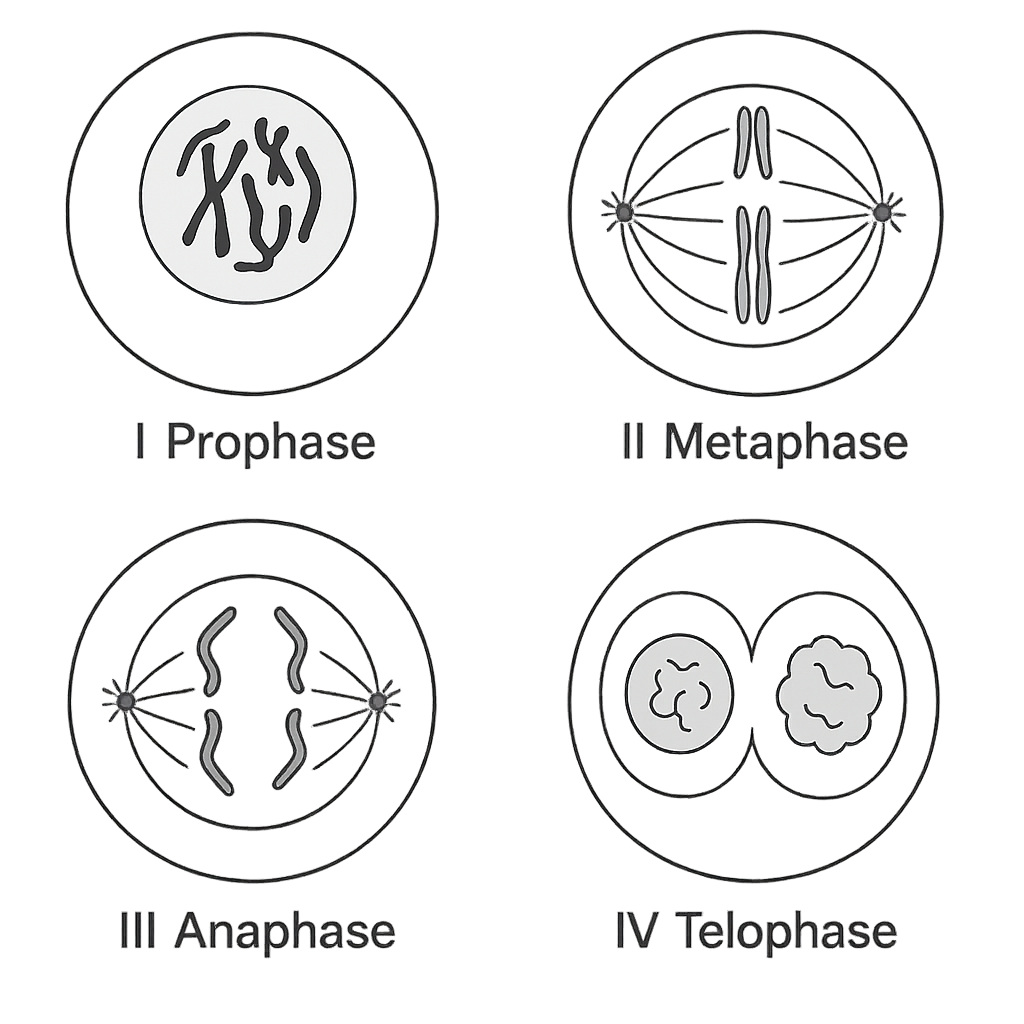
The diagram depicts the stages of mitosis in a eukaryotic cell.
Question Parts
(a)
Match each labelled stage (I, II, III, IV) with the correct phase of mitosis.
(b)
State two key events that occur in each of the phases identified in part (a).
(c)
Explain the significance of cytokinesis that follows mitosis with respect to cell size and genetic continuity.
Detailed Essay Solution & Marking Scheme Available

Get the step-by-step mathematical proofs, key points required by examiners, and a comprehensive breakdown from our AI Tutor.
Question 3 View Details
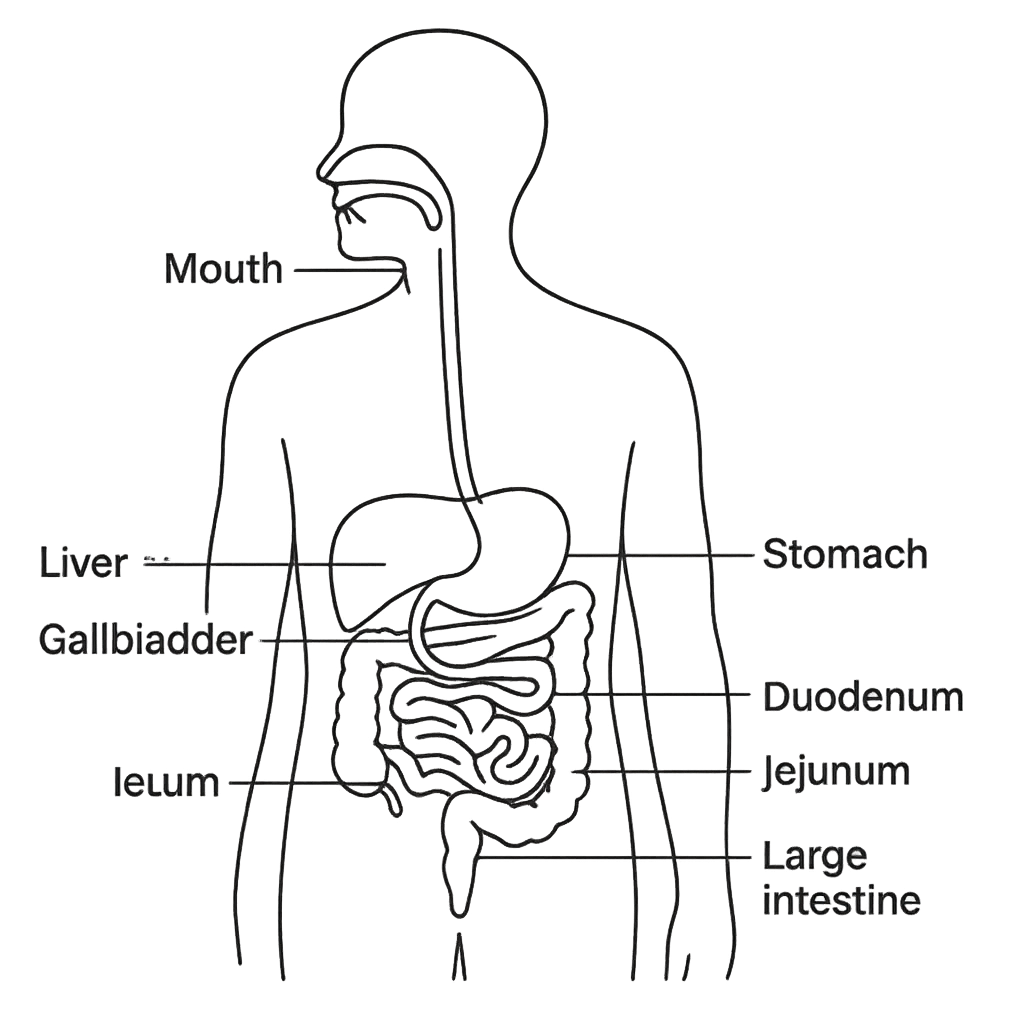
The diagram provided shows the major parts of the human digestive system.
Question Parts
(a)
Identify the organ where the majority of chemical digestion of carbohydrates occurs. State the principal enzyme(s) involved and briefly describe how they act on dietary carbohydrates.
(b)
The total length of the small intestine is 6.0 m, of which the jejunum measures 2.5 m. Assuming that nutrient absorption capacity is uniformly distributed along its length, calculate the approximate percentage of total nutrient absorption that occurs in the jejunum. Show your working.
(c)
Discuss how a deficiency of pancreatic amylase would affect post‑prandial blood glucose levels after a carbohydrate‑rich meal. Include the roles of digestion, absorption and hepatic glucose regulation in your answer.
(d)
A patient undergoes surgical removal of 30 % of the duodenal length. Predict the likely impact on iron absorption and give a concise physiological explanation for your prediction.
Detailed Essay Solution & Marking Scheme Available

Get the step-by-step mathematical proofs, key points required by examiners, and a comprehensive breakdown from our AI Tutor.
Question 4 View Details
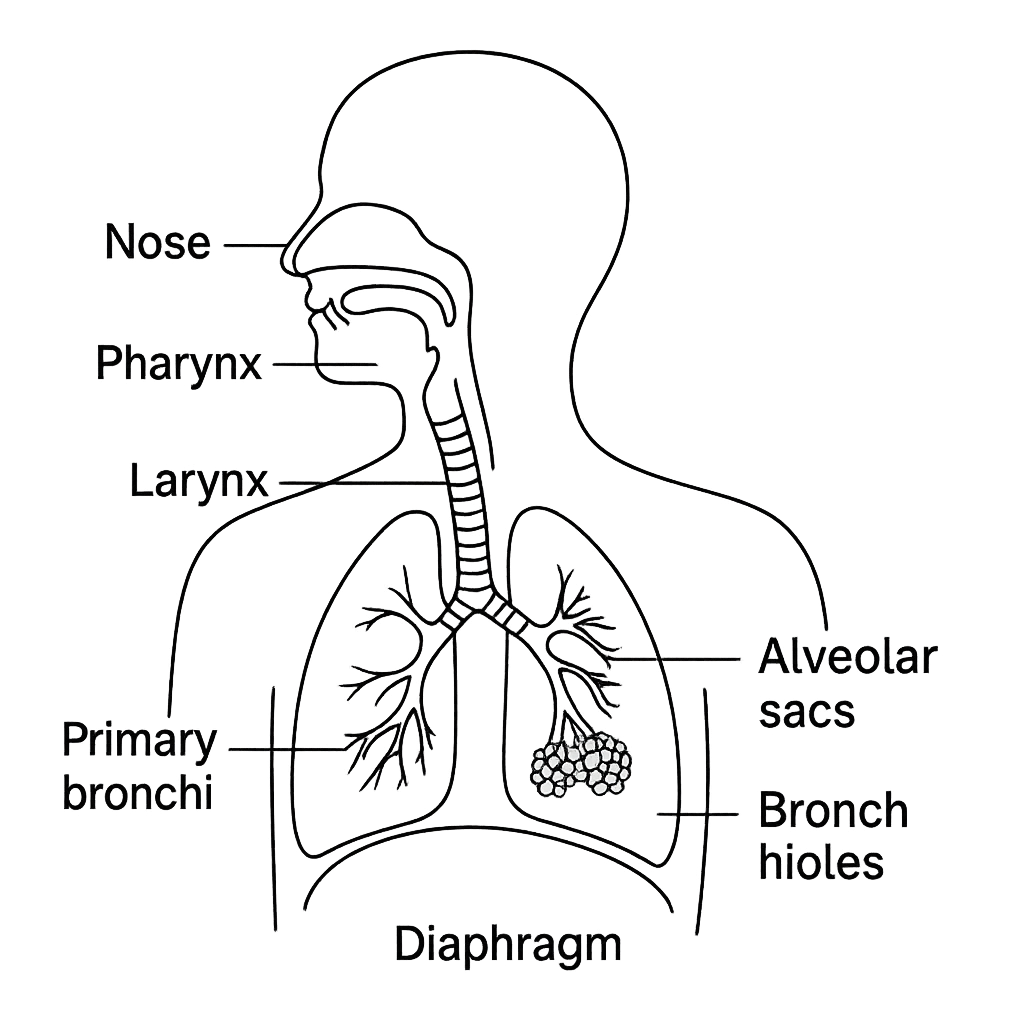
The labelled diagram of the human respiratory system is provided. Answer the following questions.
Question Parts
(a)
List the structures shown in the diagram in the correct order that air passes through from the external environment to the site of gas exchange.
(b)
Describe the pathway of air from entry to the alveoli, indicating the function of each structure listed in part (a).
(c)
Explain the mechanism of external gas exchange in the alveoli, including the role of partial pressure gradients.
(d)
Discuss how exposure to high altitude (≈3000 m above sea level) affects the respiratory process and list two physiological adaptations that help maintain oxygen supply.
Detailed Essay Solution & Marking Scheme Available

Get the step-by-step mathematical proofs, key points required by examiners, and a comprehensive breakdown from our AI Tutor.
Question 5 View Details
Discuss the mechanisms of transport of water and minerals in higher plants, and explain how these mechanisms are adapted to different environmental conditions.
Question Parts
(a)
Describe the structure of xylem vessels and explain how this structure facilitates the upward movement of water.
(b)
Explain the cohesion‑tension theory and illustrate how it accounts for the ascent of sap from roots to leaves.
(c)
Compare the transport of water in a well‑watered plant with that in a drought‑stressed plant, highlighting the physiological adjustments that occur.
(d)
Evaluate the impact of increased soil salinity on the rate of water uptake, using relevant concepts of osmosis and ion toxicity.
Detailed Essay Solution & Marking Scheme Available

Get the step-by-step mathematical proofs, key points required by examiners, and a comprehensive breakdown from our AI Tutor.
Question 6 View Details
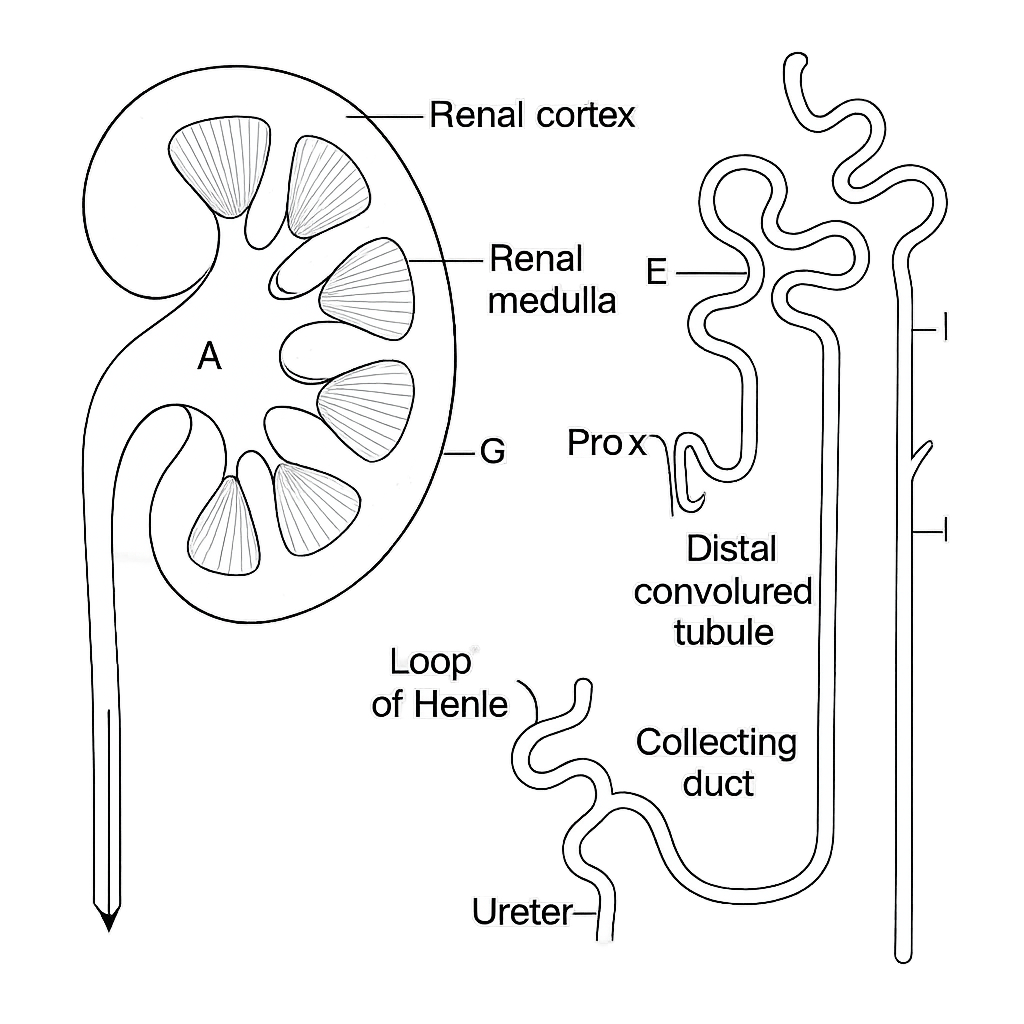
The diagram shows a labelled human kidney with its major regions and a single nephron. The labels are: A – Renal cortex, B – Renal medulla, C – Renal pelvis, D – Ureter, E – Glomerulus, F – Bowman's capsule, G – Proximal convoluted tubule, H – Loop of Henle, I – Distal convoluted tubule, J – Collecting duct. Answer the following:
Question Parts
(a)
State the anatomical name represented by each label (A–J).
(b)
Describe the four processes involved in urine formation (filtration, reabsorption, secretion and excretion) and indicate which labelled part of the nephron is primarily associated with each process.
(c)
Explain how antidiuretic hormone (ADH) modifies the permeability of the collecting duct (J) and the consequent effect on urine concentration.
(d)
Compare the excretory system of a freshwater fish with that of the human, focusing on structural adaptations and mechanisms used to maintain water and ion balance.
Detailed Essay Solution & Marking Scheme Available

Get the step-by-step mathematical proofs, key points required by examiners, and a comprehensive breakdown from our AI Tutor.

Question 7 View Details
Homeostasis is essential for the survival of organisms as it maintains the internal environment within narrow limits. Answer the following questions.
Question Parts
(a)
Explain the role of negative feedback in the regulation of blood glucose concentration. In your answer identify the sensor, integrator and effector components and describe how they interact.
(b)
A diabetic patient has impaired insulin secretion. Predict how this defect will affect the following parameters and justify your predictions: (i) Blood glucose level after a carbohydrate‑rich meal. (ii) Blood glucose level during fasting. (iii) Activity of pancreatic α‑cells.
(c)
Design a short experimental procedure to investigate the effect of ambient temperature on the rate of evaporative water loss in a mammal. State the hypothesis, the independent and dependent variables, control measures and the type of data you would collect.
Detailed Essay Solution & Marking Scheme Available

Get the step-by-step mathematical proofs, key points required by examiners, and a comprehensive breakdown from our AI Tutor.

Question 8 View Details
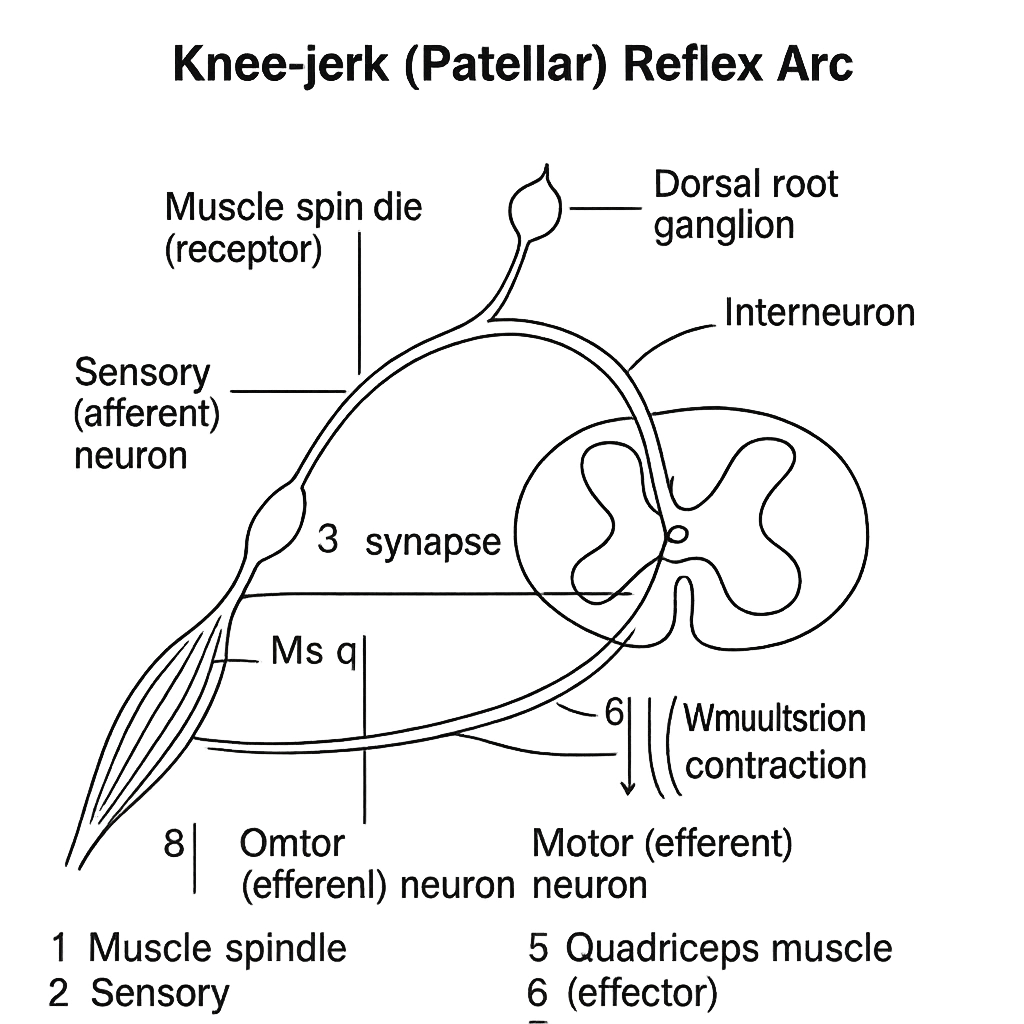
The diagram illustrates the neural pathway of the knee‑jerk (patellar) reflex, showing numbered components from the muscle spindle receptor to the quadriceps muscle.
Question Parts
(a)
Describe, in order, the sequence of events that occur from the moment the muscle spindle is stretched to the contraction of the quadriceps muscle.
(b)
Explain the functional significance of the interneuron (component 5) in this reflex pathway.
(c)
Why is the knee‑jerk reflex faster than a voluntary movement that involves the same muscles? Use the diagram to support your answer.
(d)
Predict the effect on the reflex if the dorsal root ganglion (component 3) were damaged, and justify your prediction.
Detailed Essay Solution & Marking Scheme Available

Get the step-by-step mathematical proofs, key points required by examiners, and a comprehensive breakdown from our AI Tutor.

Master the Exam!

You've seen a preview, but there are thousands more questions plus AI tutor to break down complex solutions.

Unlock Full Access Available for Android & Windows
Help others prepare! Share this practice hub:
Chat with Support