ijmb model questions vol1 2021 biology | Essay

Prepare for your exams with ijmb model questions vol1 questions? Reviewing past/model questions is one of the most effective ways to guarantee a high score. This practice hub features authentic 2021 biology (Essay) questions designed to simulate the real exam environment.

Practice these randomly selected questions to test your readiness.
Question 1 View Details
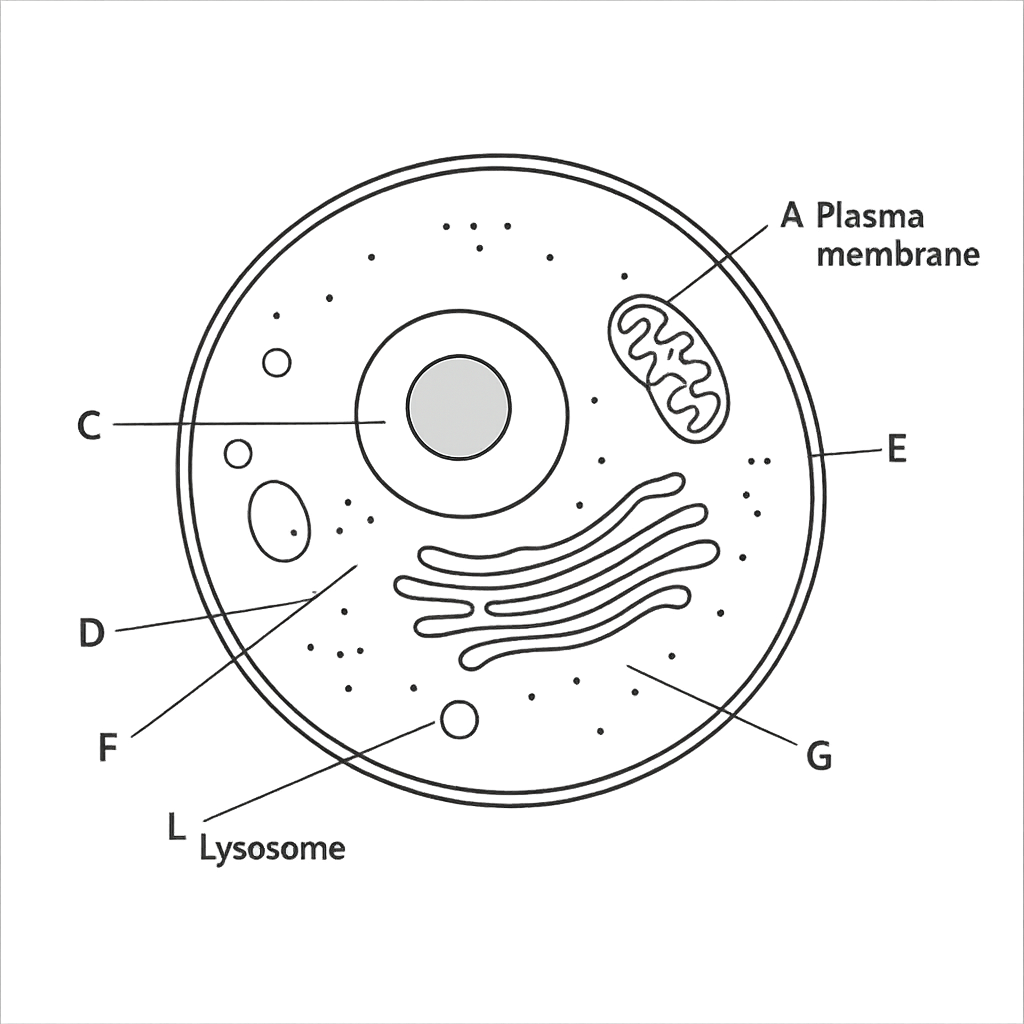
The diagram shows a typical animal cell with the structures labelled A to G.
Question Parts
(a)
Identify any five of the labelled structures and state the principal function of each.
(b)
Explain how the plasma membrane (label A) contributes to selective permeability of the cell.
(c)
Plant cells possess a cell wall that animal cells lack. State which labelled structure(s) in the diagram would be absent in a typical plant cell and give one reason for this difference.
Detailed Essay Solution & Marking Scheme Available

Get the step-by-step mathematical proofs, key points required by examiners, and a comprehensive breakdown from our AI Tutor.
Question 2 View Details
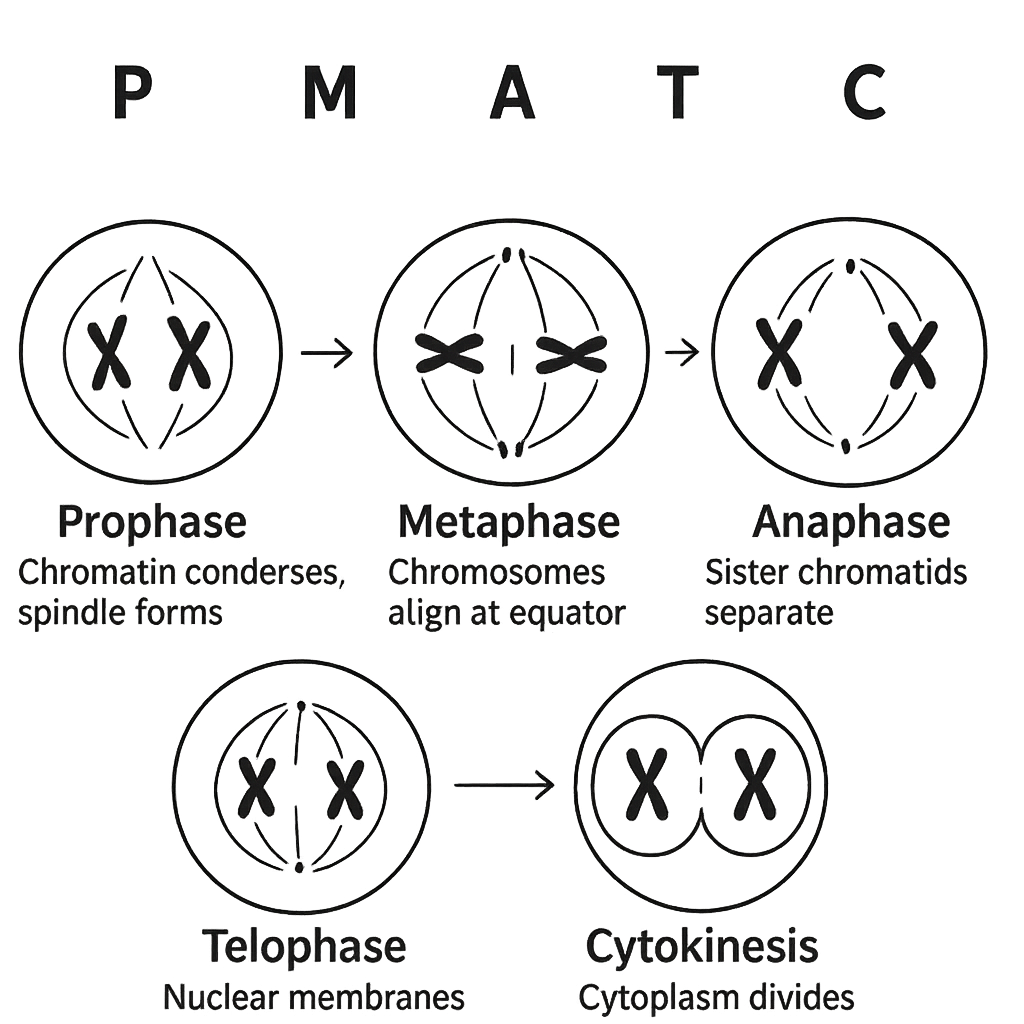
The diagram depicts a eukaryotic cell undergoing mitosis, with the stages labelled P, M, A, T and C.
Question Parts
(a)
List the stages of mitosis in their correct order and describe the key event that characterises each stage.
(b)
Explain the role of spindle fibres during metaphase and anaphase.
(c)
If the same cell were to undergo meiosis instead of mitosis, mention two major differences in the final products compared with mitosis.
Detailed Essay Solution & Marking Scheme Available

Get the step-by-step mathematical proofs, key points required by examiners, and a comprehensive breakdown from our AI Tutor.
Question 3 View Details
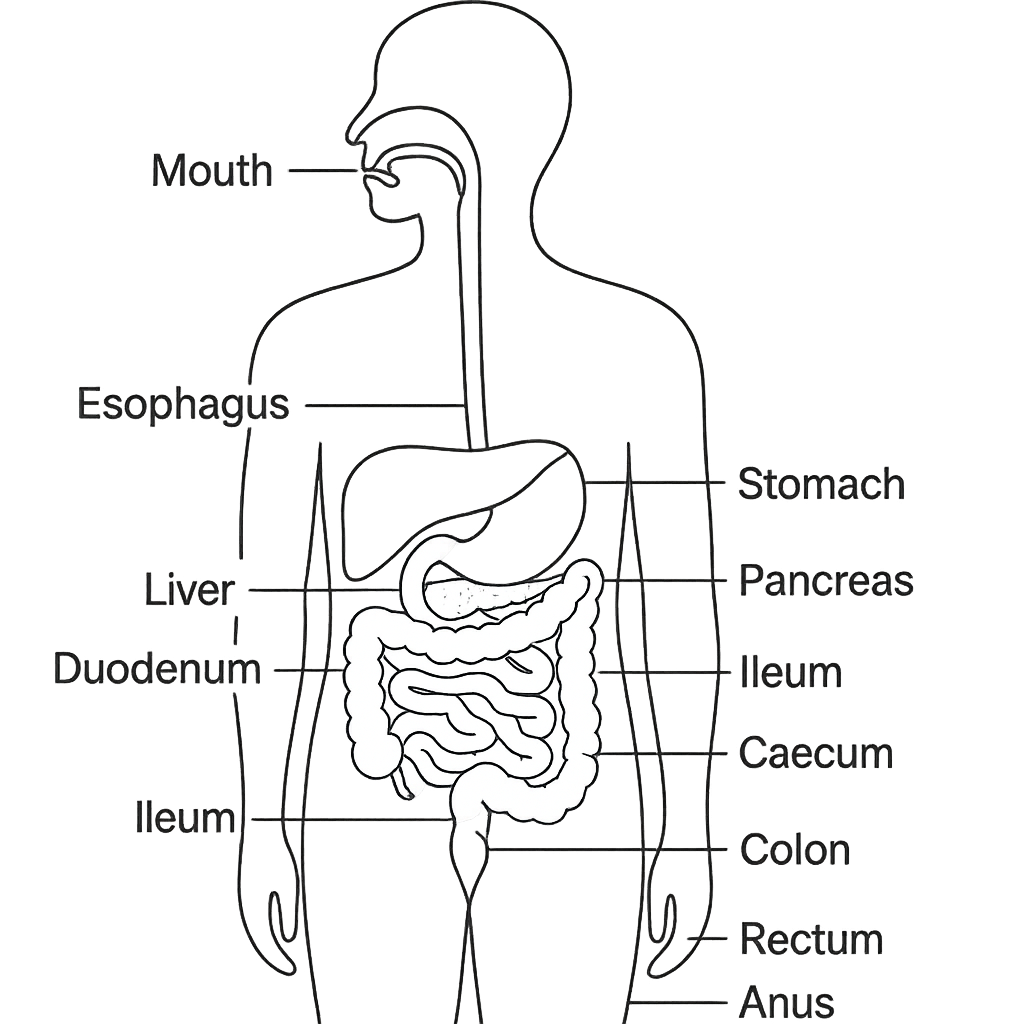
The diagram shows a labelled schematic of the human digestive system.
Question Parts
(a)
Describe the mechanical and chemical processes that occur in the stomach and explain how they contribute to the digestion of proteins.
(b)
Identify the region where the majority of nutrient absorption occurs and justify why this region is most efficient for absorption.
(c)
List any three pancreatic enzymes and state the specific nutrient each enzyme acts upon.
(d)
Explain how the structural features of the small intestine (e.g., villi, microvilli) enhance its absorptive function.
Detailed Essay Solution & Marking Scheme Available

Get the step-by-step mathematical proofs, key points required by examiners, and a comprehensive breakdown from our AI Tutor.
Question 4 View Details
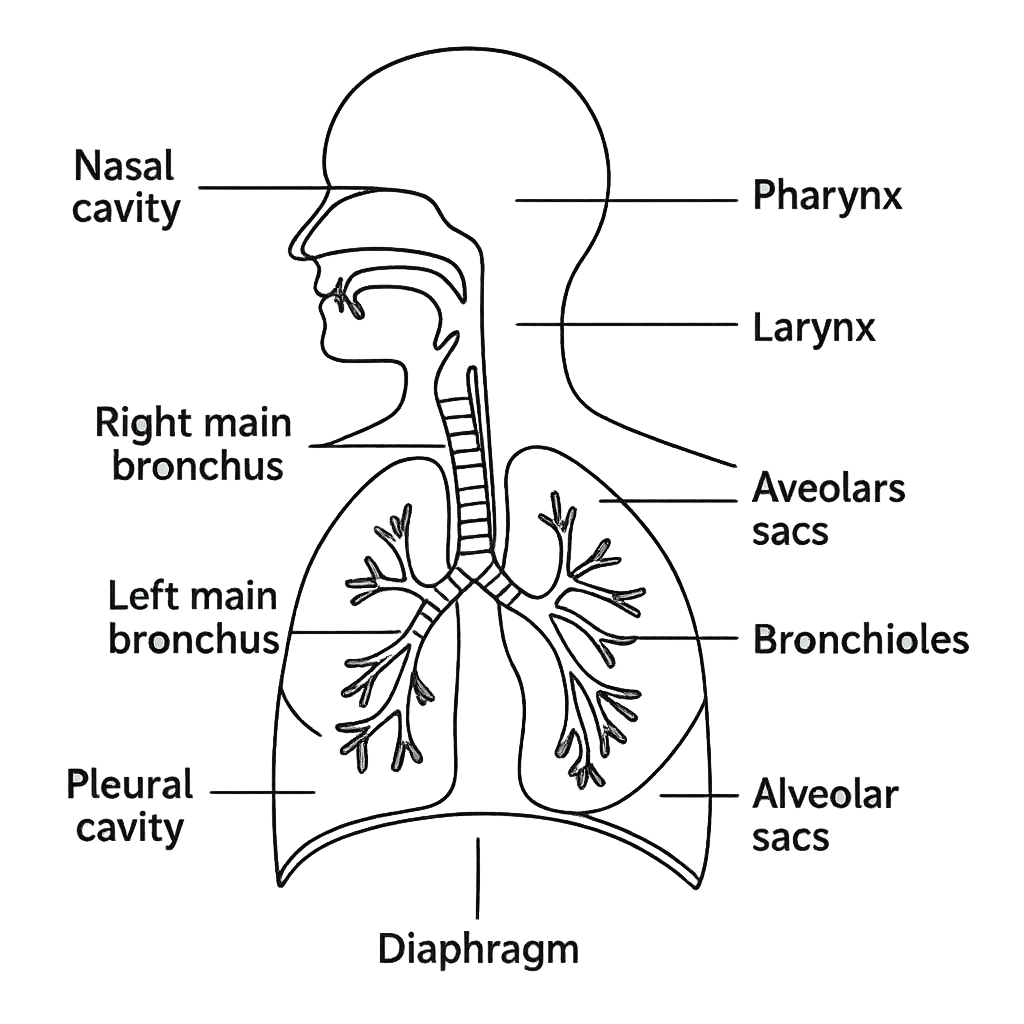
The diagram shows a labelled schematic of the human respiratory system. The components are labelled as follows: A – Nasal cavity, B – Pharynx, C – Larynx, D – Trachea, E – Right main bronchus, F – Left main bronchus, G – Bronchioles, H – Alveolar sacs, I – Diaphragm, J – Pleural cavity.
Question Parts
(a)
Describe, in the correct sequential order, the pathway that a fresh inhaled air molecule follows from the external environment to reach the alveolar sacs, referencing the labelled parts of the diagram.
(b)
Explain the mechanism of ventilation (breathing) highlighting the role of the diaphragm and the intercostal muscles, and indicate on the diagram which labelled part(s) are directly involved.
(c)
Each alveolus can be approximated as a sphere of diameter 0.2 mm. The diagram indicates that an adult human lung contains about 480 million alveoli. Estimate the total surface area available for gas exchange in square metres. Show all steps of your calculation.
(d)
Discuss how the structural features of the alveolar wall facilitate the diffusion of oxygen and carbon dioxide between the air in the alveoli and the blood in the surrounding capillaries.
Detailed Essay Solution & Marking Scheme Available

Get the step-by-step mathematical proofs, key points required by examiners, and a comprehensive breakdown from our AI Tutor.

Question 5 View Details
A researcher is studying the transport of glucose from the arterial blood into the skeletal muscle of a resting adult.
Question Parts
(a)
Given that the arterial blood glucose concentration is 5.5 mmol L⁻¹ and the venous blood leaving the muscle has a glucose concentration of 4.8 mmol L⁻¹, and the muscle receives a blood flow of 500 mL min⁻¹, calculate the net amount of glucose (in millimoles) taken up by the muscle per minute.
(b)
Explain two physiological mechanisms that facilitate the movement of glucose from the capillary plasma into the muscle cells, and indicate which of these mechanisms is energy‑dependent.
(c)
If a drug increases capillary permeability to glucose by 20 % without changing blood flow, discuss qualitatively how the net glucose uptake calculated in part (a) would be affected, and state any assumptions you are making.
Detailed Essay Solution & Marking Scheme Available

Get the step-by-step mathematical proofs, key points required by examiners, and a comprehensive breakdown from our AI Tutor.

Question 6 View Details
A medical student is analysing renal function in a 30‑year‑old male using creatinine clearance as an estimate of glomerular filtration rate (GFR).
Question Parts
(a)
Calculate the creatinine clearance in mL min⁻¹. Show all unit conversions used.
(b)
Compare the calculated clearance with the normal adult GFR range (90–120 mL min⁻¹) and state whether the kidney function is normal, reduced, or increased.
(c)
The subject becomes dehydrated, leading to a 30 % reduction in urine flow rate while plasma and urine creatinine concentrations remain unchanged. Predict qualitatively how the creatinine clearance will change and explain the physiological basis for this change.
Detailed Essay Solution & Marking Scheme Available

Get the step-by-step mathematical proofs, key points required by examiners, and a comprehensive breakdown from our AI Tutor.

Question 7 View Details
A 45‑year‑old man presents with persistent polyuria, excessive thirst and weight loss. Laboratory tests reveal a fasting blood glucose of 210 mg/dL and a serum osmolarity of 295 mOsm·kg⁻¹. He is diagnosed with uncontrolled type‑1 diabetes mellitus.
Question Parts
(a)
Explain how the pancreas normally maintains blood glucose within narrow limits, describing the roles of insulin and glucagon.
(b)
Using the case information, describe the physiological disturbances that lead to the observed polyuria and polydipsia.
(c)
Propose two therapeutic strategies to restore homeostasis in this patient and justify how each addresses the underlying disturbance.
Detailed Essay Solution & Marking Scheme Available

Get the step-by-step mathematical proofs, key points required by examiners, and a comprehensive breakdown from our AI Tutor.

Question 8 View Details
During a laboratory experiment, a student records the latency period and magnitude of the knee‑jerk (patellar) reflex in three subjects: Subject A (age 20, athletic), Subject B (age 55, sedentary) and Subject C (age 70, with peripheral neuropathy). The recorded latencies are 0.04 s, 0.07 s and 0.12 s respectively; the reflex amplitudes are 5 mV, 3 mV and 1 mV respectively.
Question Parts
(a)
Outline the neural pathway of the patellar reflex, identifying the type of neurons involved and the central integration site.
(b)
Analyse the differences in latency and amplitude among the three subjects, linking them to age‑related changes and neuropathic damage.
(c)
The student suggests that increasing the stimulus intensity could normalize the reflex amplitude in Subject C. Critically evaluate this suggestion, considering the concepts of recruitment, refractory periods, and safety.
Detailed Essay Solution & Marking Scheme Available

Get the step-by-step mathematical proofs, key points required by examiners, and a comprehensive breakdown from our AI Tutor.

Question 9 View Details
A 28‑year‑old woman presents with secondary amenorrhea for six months. She reports regular menstrual cycles before the problem started and has no history of pregnancy. Physical examination is normal. Laboratory investigations reveal the following hormone concentrations (average values for a normal follicular phase are shown in brackets): FSH = 4 IU/L (5–10), LH = 3 IU/L (5–20), estradiol = 30 pg/mL (80–400), progesterone = 0.5 ng/mL (0.2–1.0).
Question Parts
(a)
Describe the normal hormonal regulation of the menstrual cycle, emphasizing the feedback mechanisms between the hypothalamus, pituitary gland and ovary.
(b)
Using the laboratory results, interpret which phase of the menstrual cycle is absent or disrupted and propose the most likely endocrine diagnosis for this patient.
(c)
Outline a step‑by‑step investigative and management plan for this patient, justifying the purpose of each investigation and the choice of treatment.
Detailed Essay Solution & Marking Scheme Available

Get the step-by-step mathematical proofs, key points required by examiners, and a comprehensive breakdown from our AI Tutor.

Question 10 View Details
The pedigree below represents a three‑generation family affected by a hereditary disorder that causes progressive loss of vision. Squares denote males, circles females; black shading indicates individuals who are clinically affected. Generation I: I‑1 (male) unaffected, I‑2 (female) unaffected. Their children in Generation II are: II‑1 (male) affected, II‑2 (female) unaffected, II‑3 (male) unaffected. II‑2 is married to II‑4 (male) who is affected. Their children in Generation III are: III‑1 (female) unaffected, III‑2 (male) affected, III‑3 (female) affected.
Question Parts
(a)
Determine the most probable mode of inheritance of the disorder based on the pedigree and justify your conclusion.
Detailed Essay Solution & Marking Scheme Available

Get the step-by-step mathematical proofs, key points required by examiners, and a comprehensive breakdown from our AI Tutor.

Master the Exam!

You've seen a preview, but there are thousands more questions plus AI tutor to break down complex solutions.

Unlock Full Access Available for Android & Windows
Help others prepare! Share this practice hub:
Chat with Support