ijmb model questions vol1 2018 chemistry | Essay

Prepare for your exams with ijmb model questions vol1 questions? Reviewing past/model questions is one of the most effective ways to guarantee a high score. This practice hub features authentic 2018 chemistry (Essay) questions designed to simulate the real exam environment.

Practice these randomly selected questions to test your readiness.
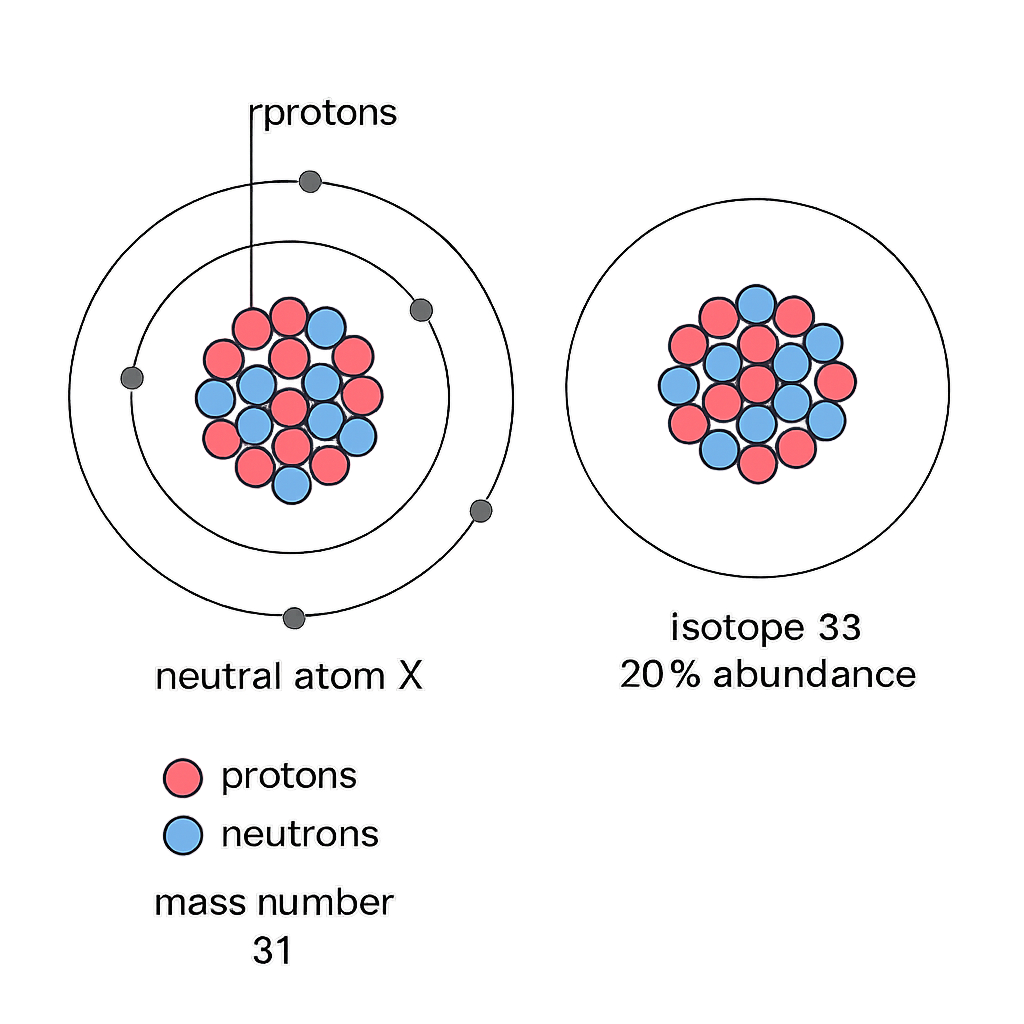
Question 1 View Details
The diagram shows a neutral atom of an element X together with one of its naturally occurring isotopes. The atom has 15 protons, 15 electrons and a total of 31 nucleons. The isotope displayed has a mass number of 33 and constitutes 20 % of the natural abundance of element X.
Question Parts
(a)
State the atomic number, mass number and the number of neutrons of the atom shown in the diagram.
(b)
Calculate the average atomic mass of element X using the isotopic data given.
(c)
Briefly discuss how the neutron‑to‑proton ratio influences the nuclear stability of the two isotopes.
Detailed Essay Solution & Marking Scheme Available

Get the step-by-step mathematical proofs, key points required by examiners, and a comprehensive breakdown from our AI Tutor.
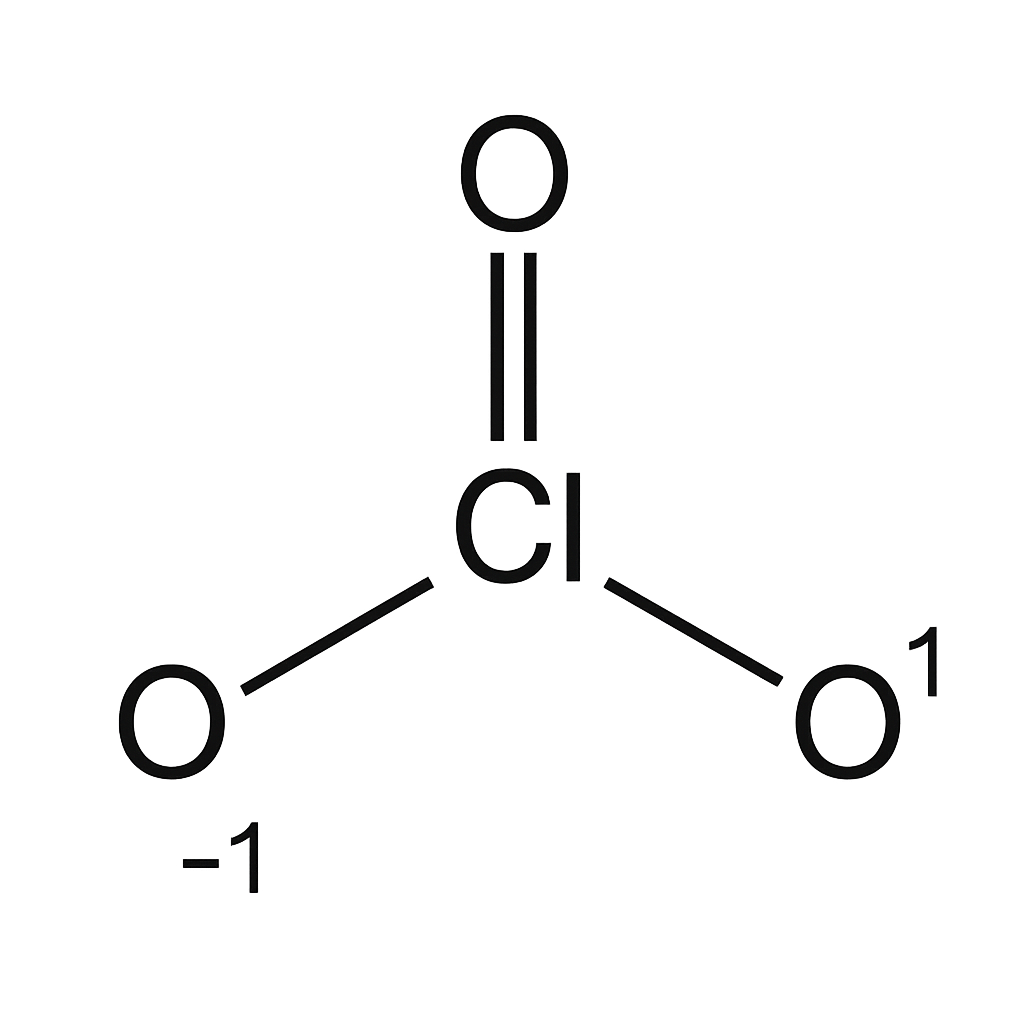
Question 2 View Details
The diagram shows the Lewis structure of the chlorate ion, ClO₃⁻.
Question Parts
(a)
State the oxidation number of chlorine in the chlorate ion.
(b)
Predict the molecular geometry of the chlorate ion using VSEPR theory and give the approximate bond angle.
(c)
Explain, with reference to periodic trends, why chlorine can exhibit a +5 oxidation state in ClO₃⁻ whereas fluorine never exhibits a positive oxidation state.
(d)
In acidic medium, chlorate ion is reduced to chloride ion and water. Write the balanced redox equation for this reduction, showing the number of electrons transferred.
Detailed Essay Solution & Marking Scheme Available

Get the step-by-step mathematical proofs, key points required by examiners, and a comprehensive breakdown from our AI Tutor.
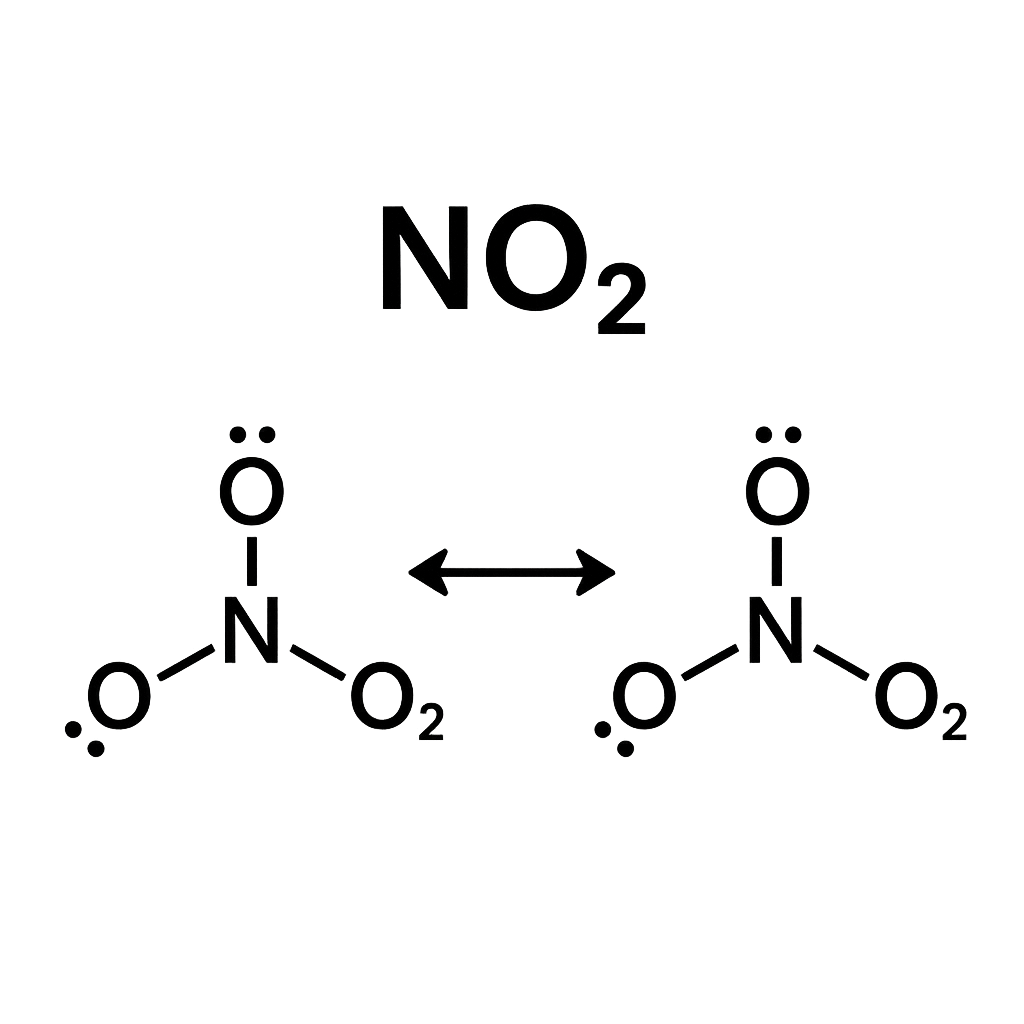
Question 3 View Details
The diagram shows the two major resonance Lewis structures of nitrogen dioxide (NO₂). All atoms are labelled, and lone pairs are indicated.
Question Parts
(a)
State the type of bond present between nitrogen and each oxygen atom in the resonance form on the left.
(b)
Using the left‑hand resonance structure, calculate the formal charge on nitrogen and on each oxygen atom.
(c)
Predict the molecular geometry of NO₂ using VSEPR theory and give a brief justification.
(d)
Discuss whether the NO₂ molecule is polar or non‑polar and explain the reason for your answer.
Detailed Essay Solution & Marking Scheme Available

Get the step-by-step mathematical proofs, key points required by examiners, and a comprehensive breakdown from our AI Tutor.

Question 4 View Details
The diagram shows the coordination complex [Co(NH3)5Cl]Cl2·H2O. The central cobalt ion is octahedrally surrounded by five ammonia ligands and one chloride ligand. Two chloride ions are present as counter‑ions and one water molecule is attached as water of crystallisation. Atomic masses to be used are: H = 1.01 g mol⁻¹, C = 12.01 g mol⁻¹, N = 14.01 g mol⁻¹, O = 16.00 g mol⁻¹, Cl = 35.45 g mol⁻¹, Co = 58.93 g mol⁻¹.
Question Parts
(a)
Write the empirical formula of the complex based on the diagram.
(b)
Calculate the molar mass of the complex in g mol⁻¹.
(c)
A 0.250 g sample of the complex is dissolved in excess HCl. Determine the number of moles of chloride ions (Cl⁻) present in the resulting solution.
(d)
The solution from part (c) is titrated with 0.100 M AgNO₃. It requires 28.5 mL of the AgNO₃ solution to precipitate all chloride ions. Calculate the percentage error between the experimental amount of chloride (from the titration) and the theoretical amount (from part c).
Detailed Essay Solution & Marking Scheme Available

Get the step-by-step mathematical proofs, key points required by examiners, and a comprehensive breakdown from our AI Tutor.

Question 5 View Details
The reaction between aluminium metal and chlorine gas is represented by: 2 Al + 3 Cl₂ → 2 AlCl₃. A student carries out the reaction using 15.0 g of Al in excess Cl₂ and obtains 28.0 g of aluminium chloride (AlCl₃).
Question Parts
(a)
Calculate the theoretical mass of AlCl₃ that could be formed from the given amount of aluminium.
(b)
Determine the percent yield of the reaction based on the actual mass obtained.
(c)
If a chemist wishes to obtain 20.0 g of AlCl₃ and expects an overall yield of 85 %, calculate the minimum mass of aluminium that must be weighed out.
Detailed Essay Solution & Marking Scheme Available

Get the step-by-step mathematical proofs, key points required by examiners, and a comprehensive breakdown from our AI Tutor.

Question 6 View Details
A 500‑g sample of ice at –10 °C is heated in a closed container at atmospheric pressure. The specific heat capacities are: c₍ice₎ = 2.1 J g⁻¹ K⁻¹, c₍water₎ = 4.18 J g⁻¹ K⁻¹, c₍steam₎ = 2.0 J g⁻¹ K⁻¹. The latent heat of fusion of water is 334 J g⁻¹ and the latent heat of vaporisation is 2260 J g⁻¹.
Question Parts
(a)
Calculate the total amount of heat (in kJ) required to convert the ice at –10 °C completely into steam at 120 °C.
(b)
A heater supplies only 250 kJ of energy to the same 500‑g sample initially at –10 °C. Determine the final state (solid, liquid or gas) and the temperature of the sample after the supplied energy is exhausted.
(c)
Briefly explain why the boiling point of water would change if the experiment were carried out at a pressure of 0.8 atm instead of 1 atm.
Detailed Essay Solution & Marking Scheme Available

Get the step-by-step mathematical proofs, key points required by examiners, and a comprehensive breakdown from our AI Tutor.

Question 7 View Details
A 0.250 M aqueous solution of a monoprotic weak acid HA (Mₙ = 60 g mol⁻¹) is titrated at 25 °C with 0.200 M NaOH. At the half‑equivalence point the measured pH is 4.75.
Question Parts
(a)
Determine the acid dissociation constant (Kₐ) of HA.
(b)
Calculate the pH of the solution after 0.025 mol of NaOH has been added to the 0.250 L acid solution.
(c)
Write the net ionic equation for the formation of the salt at the equivalence point and state whether the salt is a strong or weak electrolyte in aqueous solution.
Detailed Essay Solution & Marking Scheme Available

Get the step-by-step mathematical proofs, key points required by examiners, and a comprehensive breakdown from our AI Tutor.

Question 8 View Details
A saturated solution of silver chloride (AgCl) at 25 °C is in equilibrium with solid AgCl. The solubility‑product constant is Kₛₚ(AgCl) = 1.8 × 10⁻¹⁰.
Question Parts
(a)
Calculate the molar solubility of AgCl in pure water and the mass (in milligrams) of AgCl that would dissolve in 250 mL of pure water.
Detailed Essay Solution & Marking Scheme Available

Get the step-by-step mathematical proofs, key points required by examiners, and a comprehensive breakdown from our AI Tutor.

Question 9 View Details
The following redox process occurs in an acidic aqueous solution: Fe²⁺ (aq) + MnO₄⁻ (aq) → Fe³⁺ (aq) + Mn²⁺ (aq) Standard reduction potentials (E°) at 25 °C are: MnO₄⁻ + 8H⁺ + 5e⁻ → Mn²⁺ + 4H₂O  E° = +1.51 V Fe³⁺ + e⁻ → Fe²⁺  E° = +0.77 V Answer the following questions:
Question Parts
(a)
Write the two half‑reactions (oxidation and reduction) that occur in the overall process, showing the correct direction for each half‑reaction in acidic medium.
(b)
Balance the overall redox equation in acidic solution.
(c)
Using the standard potentials given, calculate: (i) the standard cell potential (E°cell); (ii) whether the reaction is spontaneous under standard conditions; (iii) the equilibrium constant (K) at 298 K. (Use the relation ΔG° = –nFE° and ΔG° = –RT ln K, with R = 8.314 J mol⁻¹ K⁻¹, F = 96485 C mol⁻¹.)
Detailed Essay Solution & Marking Scheme Available

Get the step-by-step mathematical proofs, key points required by examiners, and a comprehensive breakdown from our AI Tutor.

Question 10 View Details
A galvanic cell is constructed with a copper electrode immersed in a 0.010 M Cu²⁺ solution and a zinc electrode immersed in a 0.100 M Zn²⁺ solution. The cell operates at 25 °C. Standard reduction potentials (E°) at 25 °C are: Cu²⁺ + 2e⁻ → Cu  E° = +0.34 V Zn²⁺ + 2e⁻ → Zn  E° = –0.76 V Answer the following:
Question Parts
(a)
Write the overall cell reaction and calculate the standard cell potential (E°cell).
(b)
Using the Nernst equation, determine the cell potential (Ecell) under the given concentrations. (Assume the reaction quotient Q = [Zn²⁺]/[Cu²⁺] and n = 2.)
(c)
If the cell delivers a constant current of 0.50 A for 2.00 h, calculate the mass of copper deposited on the cathode. (Molar mass of Cu = 63.55 g mol⁻¹.)
(d)
The standard entropy change for the cell reaction is ΔS° = –120 J K⁻¹ mol⁻¹. Discuss qualitatively how raising the temperature from 25 °C to 35 °C would affect the cell potential.
Detailed Essay Solution & Marking Scheme Available

Get the step-by-step mathematical proofs, key points required by examiners, and a comprehensive breakdown from our AI Tutor.

Master the Exam!

You've seen a preview, but there are thousands more questions plus AI tutor to break down complex solutions.

Unlock Full Access Available for Android & Windows
Help others prepare! Share this practice hub:
Chat with Support