ijmb model questions vol1 2017 biology | Essay

Prepare for your exams with ijmb model questions vol1 questions? Reviewing past/model questions is one of the most effective ways to guarantee a high score. This practice hub features authentic 2017 biology (Essay) questions designed to simulate the real exam environment.

Practice these randomly selected questions to test your readiness.
Question 1 View Details
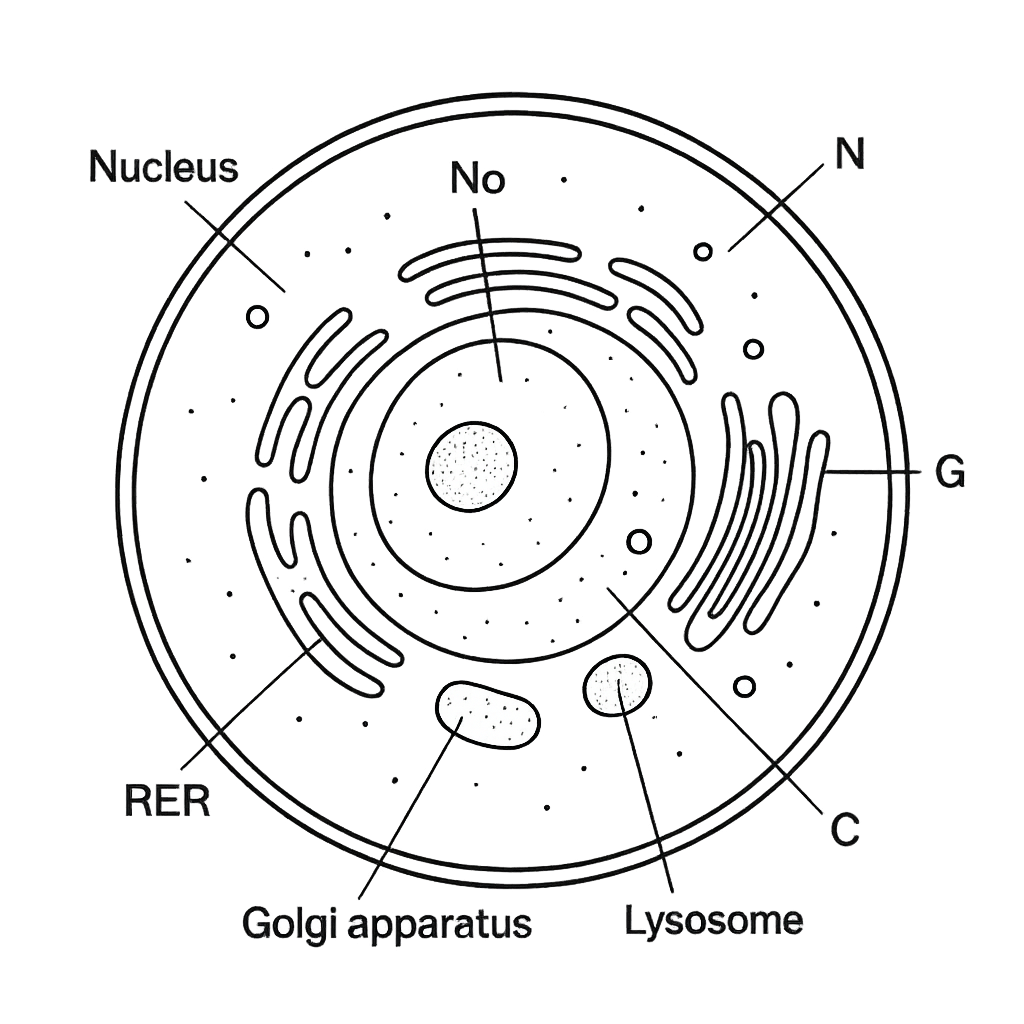
The diagram below is a labelled illustration of a typical animal cell.
Question Parts
(a)
Identify any four organelles shown in the diagram and state the principal function of each.
(b)
Explain how the structural features of the mitochondrion enable it to carry out oxidative phosphorylation efficiently.
(c)
A cell is actively synthesising a secretory protein. Using the diagram, indicate the organelles directly involved in the synthesis, processing and secretion of this protein and describe the pathway it follows from synthesis to release outside the cell.
Detailed Essay Solution & Marking Scheme Available

Get the step-by-step mathematical proofs, key points required by examiners, and a comprehensive breakdown from our AI Tutor.
Question 2 View Details
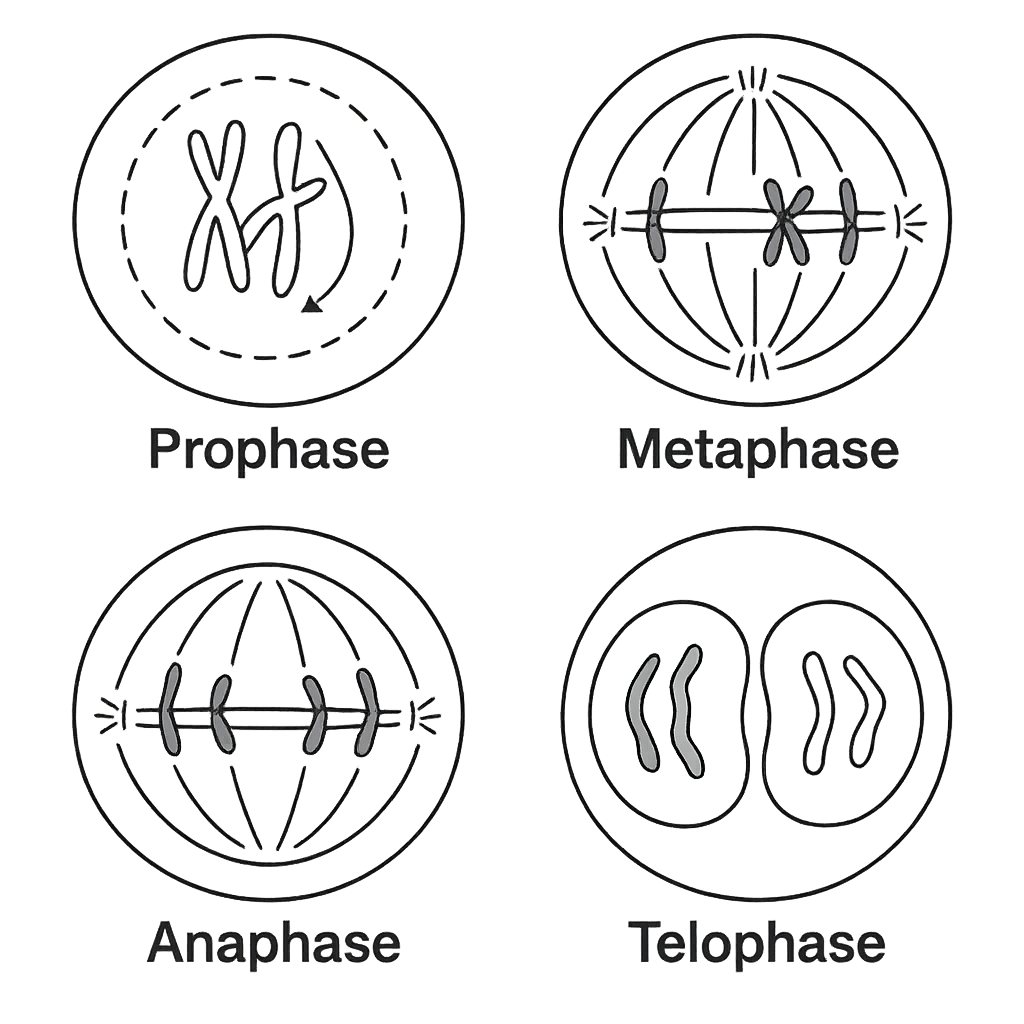
The illustration presents a labelled diagram of the four stages of mitosis in an animal cell.
Question Parts
(a)
Identify the stage shown in the diagram.
(b)
List three key events that characterise this stage.
(c)
Explain why the orientation of the spindle fibres is critical for accurate chromosome segregation during mitosis.
(d)
If a mutation prevented cytokinesis from occurring after telophase, describe two possible consequences for the resulting cell(s).
Detailed Essay Solution & Marking Scheme Available

Get the step-by-step mathematical proofs, key points required by examiners, and a comprehensive breakdown from our AI Tutor.
Question 3 View Details
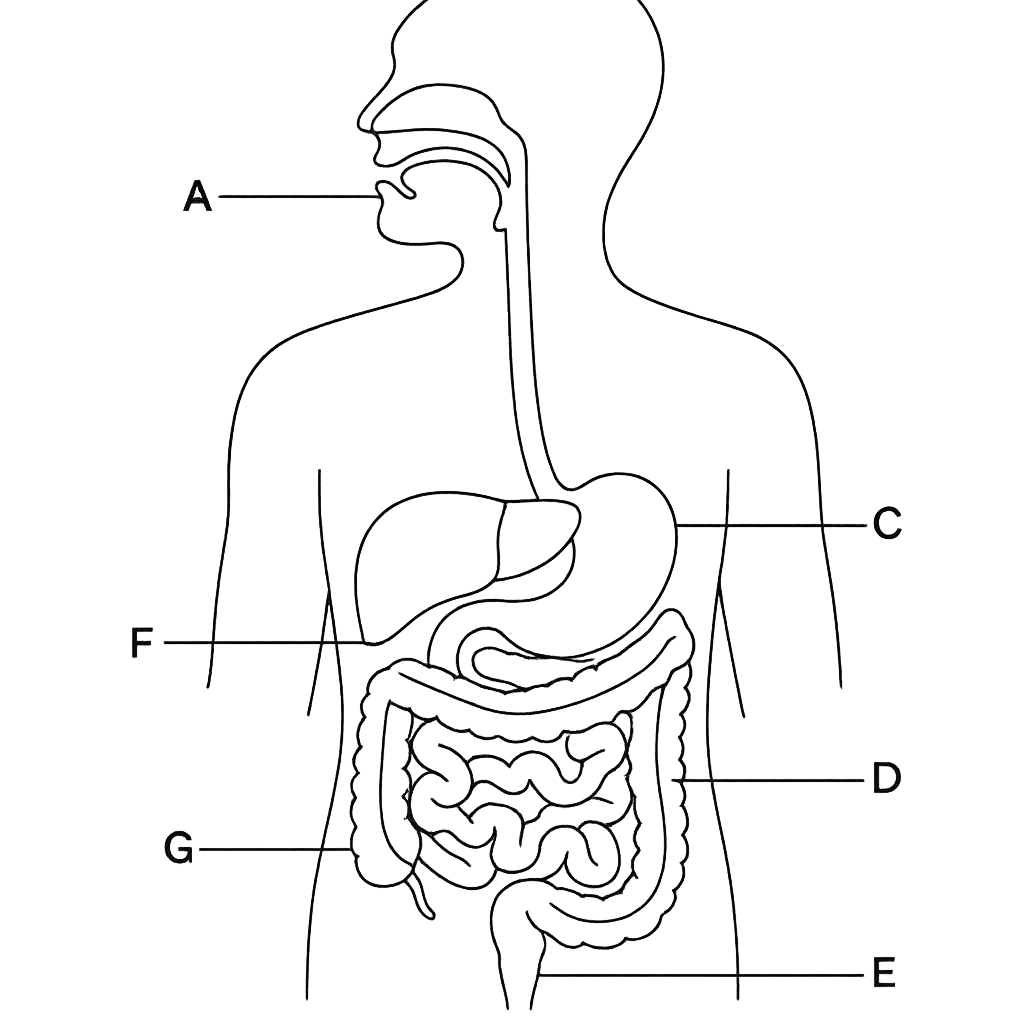
The diagram shows the major organs of the human digestive system involved in nutrition.
Question Parts
(a)
Identify the organ in the diagram that is primarily responsible for the mechanical breakdown of food.
(b)
State two enzymes secreted by the pancreas and describe the specific macronutrient each enzyme acts upon.
(c)
Explain how the structure of the small intestine enhances nutrient absorption, referring to at least three morphological features.
Detailed Essay Solution & Marking Scheme Available

Get the step-by-step mathematical proofs, key points required by examiners, and a comprehensive breakdown from our AI Tutor.

Question 4 View Details
The diagram shows the major structures of the human respiratory system.
Question Parts
(a)
Describe, in the correct order, the pathway that a breath of air follows from the external environment to the site where gas exchange with the blood occurs. State each structure the air passes through.
(b)
Explain the physiological mechanism that enables oxygen to move from the alveolar air into the blood. Include the role of partial pressure gradients and the structure of the alveolar‑capillary membrane.
(c)
During inspiration the diaphragm contracts downwards. Using the diagram, explain how this change in thoracic volume leads to airflow into the lungs, referring to Boyle’s law.
(d)
Compare external respiration with internal respiration, highlighting differences in location, the gases involved, and the direction of diffusion.
Detailed Essay Solution & Marking Scheme Available

Get the step-by-step mathematical proofs, key points required by examiners, and a comprehensive breakdown from our AI Tutor.

Question 5 View Details
A 22‑year‑old medical student is studying the processes involved in the transport of nutrients from the gastrointestinal tract into the bloodstream.
Question Parts
(a)
Explain how the structural specialisations of the small‑intestinal mucosa (villi and microvilli) facilitate the absorption of glucose.
(b)
The concentration of glucose in the intestinal lumen is 15 mM while that in the adjacent capillary blood is 5 mM. Discuss how the concentration gradient and the possibility of transporter saturation influence the rate of glucose uptake.
(c)
For the sodium‑glucose cotransporter (SGLT1) the maximal transport rate (Vmax) is 2.0 µmol·min⁻¹·g⁻¹ of intestinal mucosa and the Michaelis constant (Km) is 3 mM. Calculate the rate of glucose uptake when the lumen concentration is 15 mM. Show all steps and comment on whether the transporter is saturated.
Detailed Essay Solution & Marking Scheme Available

Get the step-by-step mathematical proofs, key points required by examiners, and a comprehensive breakdown from our AI Tutor.

Question 6 View Details
A physiology lecturer is reviewing the mechanisms by which the human kidney eliminates metabolic waste and maintains fluid balance.
Question Parts
(a)
Describe the structural organisation of a nephron and the principal functions of its main regions (glomerulus, proximal tubule, loop of Henle, distal tubule and collecting duct).
(b)
Given a glomerular filtration rate (GFR) of 120 mL min⁻¹, a plasma protein concentration of 7 g dL⁻¹ and an oncotic pressure of 25 mmHg, explain how Starling forces determine the net filtration pressure across the glomerular capillary wall.
(c)
A patient’s urine osmolality is 800 mOsm·kg⁻¹ while plasma osmolality is 300 mOsm·kg⁻¹. Discuss the role of antidiuretic hormone (ADH) in achieving this concentration difference and the renal tubular mechanisms involved.
Detailed Essay Solution & Marking Scheme Available

Get the step-by-step mathematical proofs, key points required by examiners, and a comprehensive breakdown from our AI Tutor.

Question 7 View Details
Blood glucose concentration is tightly regulated in the human body to ensure a constant supply of energy to cells. Explain how this homeostatic control is achieved.
Question Parts
(a)
Describe the structure of the pancreas that is directly involved in glucose regulation and the hormones it secretes.
(b)
Outline the short‑term regulatory mechanisms that act when blood glucose falls below the normal range.
(c)
Outline the short‑term regulatory mechanisms that act when blood glucose rises above the normal range.
(d)
Discuss two possible clinical consequences of a failure in these regulatory mechanisms.
Detailed Essay Solution & Marking Scheme Available

Get the step-by-step mathematical proofs, key points required by examiners, and a comprehensive breakdown from our AI Tutor.

Question 8 View Details
The patellar (knee‑jerk) reflex is a classic monosynaptic reflex that exemplifies the coordination of the nervous system. Answer the following questions.
Question Parts
(a)
Describe, in order, the anatomical structures and events that occur from the moment the patellar tendon is tapped to the contraction of the quadriceps muscle.
(b)
Explain why the latency of this reflex is shorter than that of a comparable voluntary movement.
(c)
A researcher records a reflex latency of 45 ms in a healthy adult. Discuss two physiological or experimental factors that could cause this latency to vary.
(d)
Predict the effect on the patellar reflex if the dorsal root ganglion supplying the sensory afferent is damaged, and justify your answer.
Detailed Essay Solution & Marking Scheme Available

Get the step-by-step mathematical proofs, key points required by examiners, and a comprehensive breakdown from our AI Tutor.

Question 9 View Details
A 28‑year‑old woman presents with a history of irregular menstrual cycles and difficulty conceiving. She reports that her cycles are often longer than 35 days and that she experiences scanty bleeding. Laboratory investigations reveal that her serum estradiol rises normally in the first half of the cycle but falls sharply after ovulation, while progesterone levels remain low throughout the luteal phase.
Question Parts
(a)
Explain the normal hormonal events that occur during the luteal phase of the menstrual cycle and describe how these hormones prepare the endometrium for possible implantation.
(b)
Discuss how low progesterone levels during the luteal phase, as observed in this patient, can lead to infertility.
(c)
Based on the laboratory findings, infer the likely hormonal profile (estradiol and progesterone) throughout the cycle for this woman and explain why anovulation is the most probable cause of her infertility.
Detailed Essay Solution & Marking Scheme Available

Get the step-by-step mathematical proofs, key points required by examiners, and a comprehensive breakdown from our AI Tutor.

Question 10 View Details
A pedigree chart shows a family in which a rare autosomal recessive disorder (affected phenotype = albinism) appears in the following pattern: the proband (III‑2) is affected; both of his parents (II‑1 and II‑2) are phenotypically normal; his two siblings (III‑1 and III‑3) are also phenotypically normal. In the previous generation, the maternal grandparents (I‑1 and I‑2) are phenotypically normal, while the paternal grandparents (I‑3 and I‑4) are phenotypically normal as well. The disorder has a reported prevalence of 1 in 2 500 individuals in the population.
Question Parts
(a)
Determine the most likely genotype of each individual shown in the pedigree (use the symbols ++ for homozygous normal, +‑ for heterozygous carrier, and ‑‑ for affected).
(b)
Using the Hardy–Weinberg principle, calculate the expected carrier frequency (heterozygotes) for this disorder in the general population.
(c)
Discuss how a consanguineous marriage (e.g., first‑cousin union) in this family could affect the incidence of the disorder in their offspring, and state any two genetic counselling measures that should be offered.
Detailed Essay Solution & Marking Scheme Available

Get the step-by-step mathematical proofs, key points required by examiners, and a comprehensive breakdown from our AI Tutor.

Master the Exam!

You've seen a preview, but there are thousands more questions plus AI tutor to break down complex solutions.

Unlock Full Access Available for Android & Windows
Help others prepare! Share this practice hub:
Chat with Support