igcse model questions vol1 2024 chemistry | Essay

Prepare for your exams with igcse model questions vol1 questions? Reviewing past/model questions is one of the most effective ways to guarantee a high score. This practice hub features authentic 2024 chemistry (Essay) questions designed to simulate the real exam environment.

Practice these randomly selected questions to test your readiness.
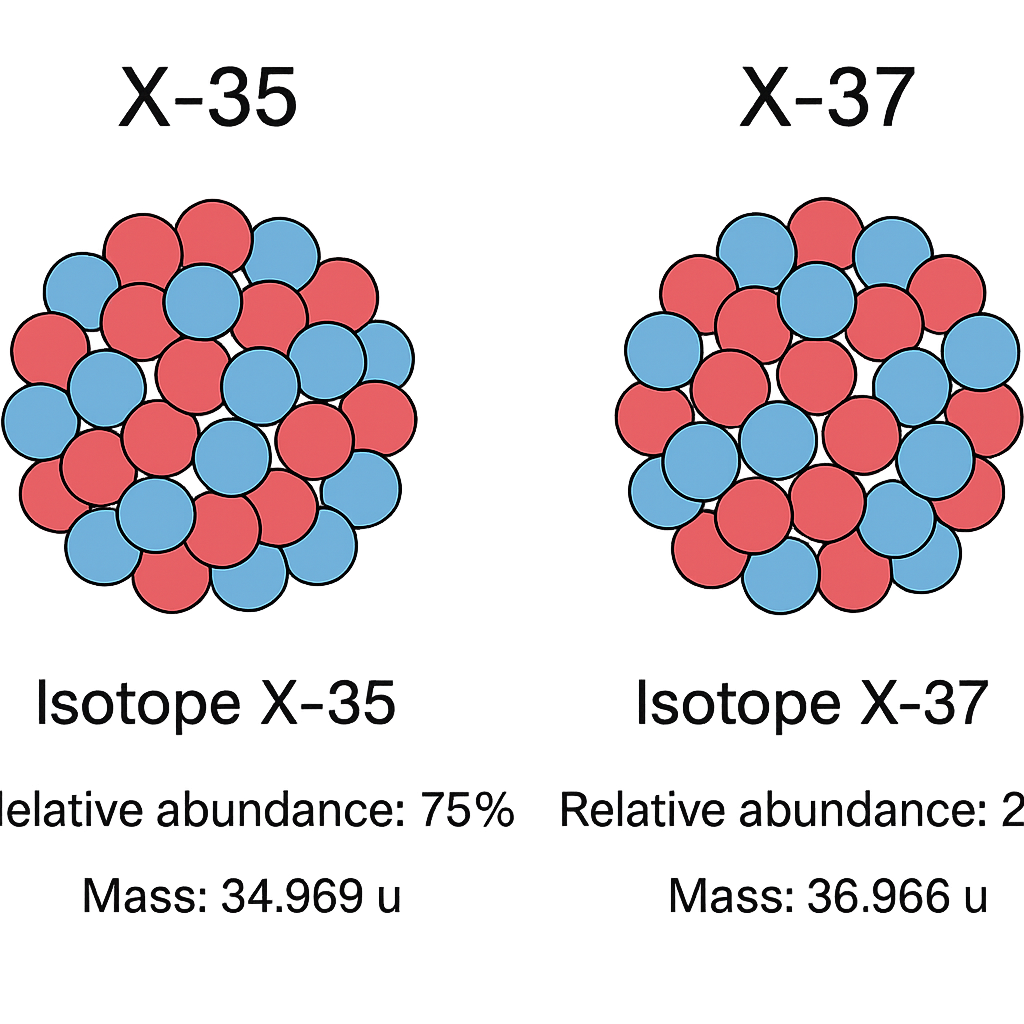
Question 1 View Details
The diagram shows two isotopes of a fictional element X. Isotope X‑35 has a relative abundance of 75 % and a mass of 34.969 u. Isotope X‑37 has a relative abundance of 25 % and a mass of 36.966 u. In each nucleus the protons are shown as red spheres and the neutrons as blue spheres; the number of protons is the same for both isotopes.
Question Parts
(a)
State the atomic number (Z) of element X.
(b)
Calculate the number of neutrons in each isotope.
(c)
Determine the average atomic mass of element X to three decimal places.
(d)
Explain why the average atomic mass is not a whole number even though the mass numbers of the isotopes are whole numbers.
Detailed Essay Solution & Marking Scheme Available

Get the step-by-step mathematical proofs, key points required by examiners, and a comprehensive breakdown from our AI Tutor.
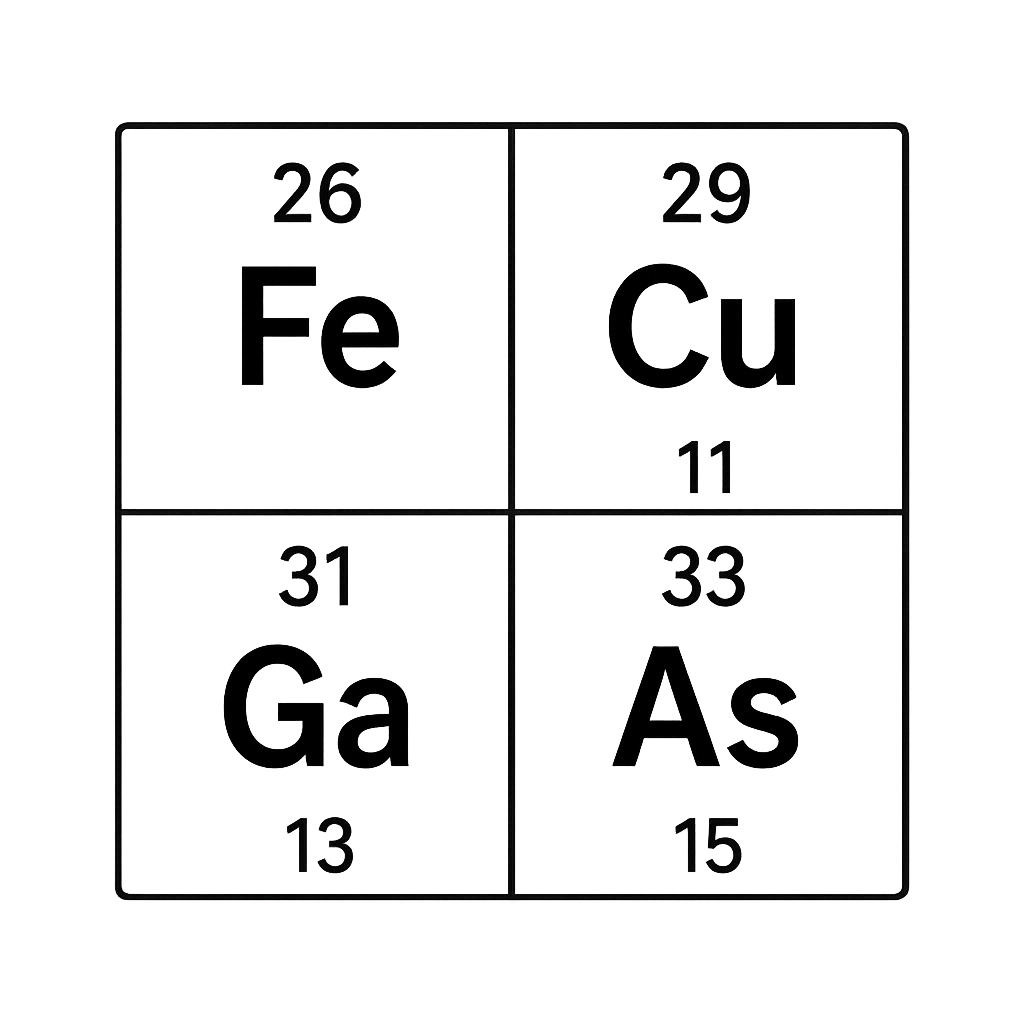
Question 2 View Details
The diagram shows a fragment of the periodic table containing four elements with their atomic numbers, symbols, group numbers and periods indicated.
Question Parts
(a)
Write the ground‑state electron configuration for gallium (Ga).
() State the number of electrons in each principal energy level (n = 1, 2, 3, 4).
() Write the configuration using the noble‑gas shorthand.
(b)
The element arsenic (As) is shown in the diagram.
() State its most common oxidation state(s).
() Explain, using its position in the periodic table, why this oxidation state is favoured.
(c)
Compare the metallic character of copper (Cu) and gallium (Ga). Use periodic trends to justify which is more metallic and why.
(d)
Iron (Fe) forms coloured compounds such as the yellow colour of Fe³⁺ in aqueous solution. Explain how the presence of d‑electrons leads to coloured compounds, referring to electronic transitions.
Detailed Essay Solution & Marking Scheme Available

Get the step-by-step mathematical proofs, key points required by examiners, and a comprehensive breakdown from our AI Tutor.
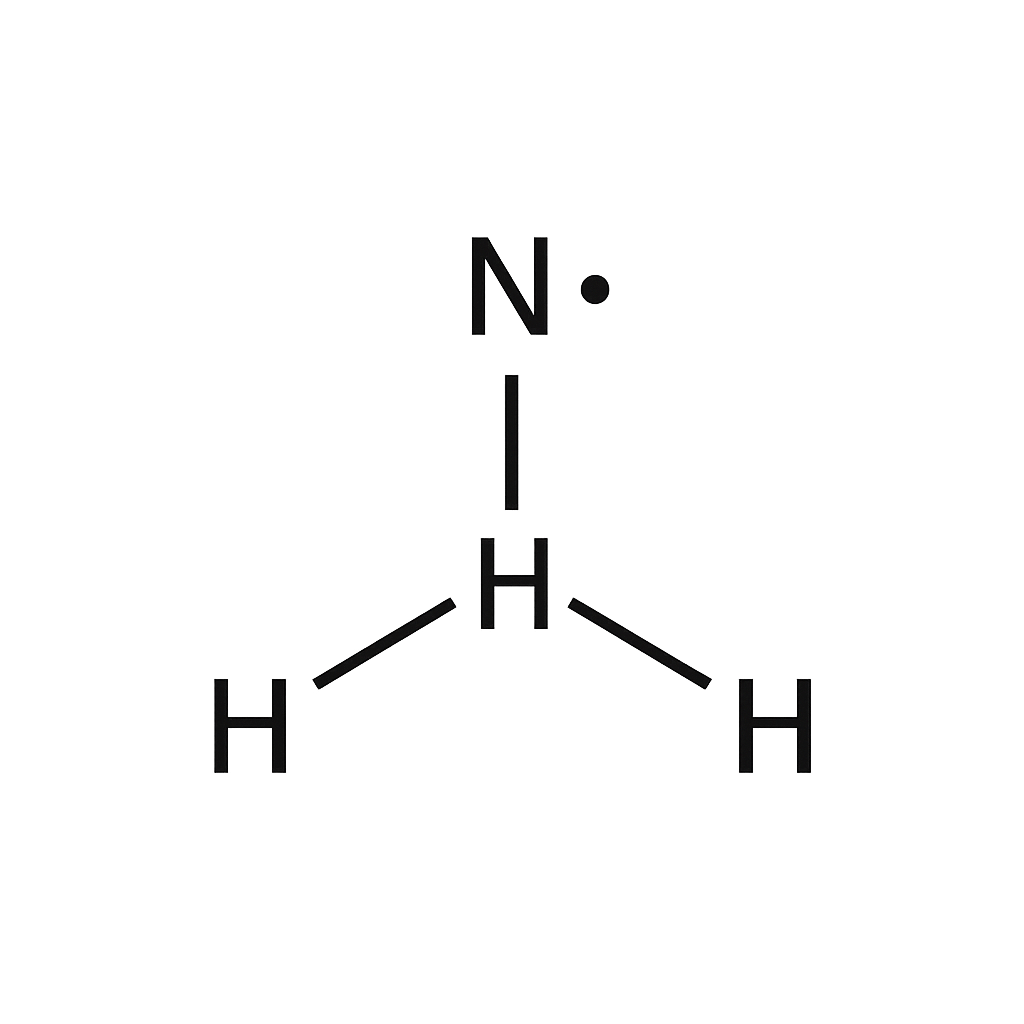
Question 3 View Details
The diagram shows the Lewis structure of a molecule of ammonia (NH₃).
Question Parts
(a)
State the type of chemical bond(s) that exist between the nitrogen and hydrogen atoms.
(b)
How many lone pairs of electrons are present on the nitrogen atom?
(c)
Using VSEPR theory, predict the molecular geometry of NH₃ and give the approximate H–N–H bond angle.
(d)
Explain whether the NH₃ molecule is polar or non‑polar, giving a clear justification.
Detailed Essay Solution & Marking Scheme Available

Get the step-by-step mathematical proofs, key points required by examiners, and a comprehensive breakdown from our AI Tutor.
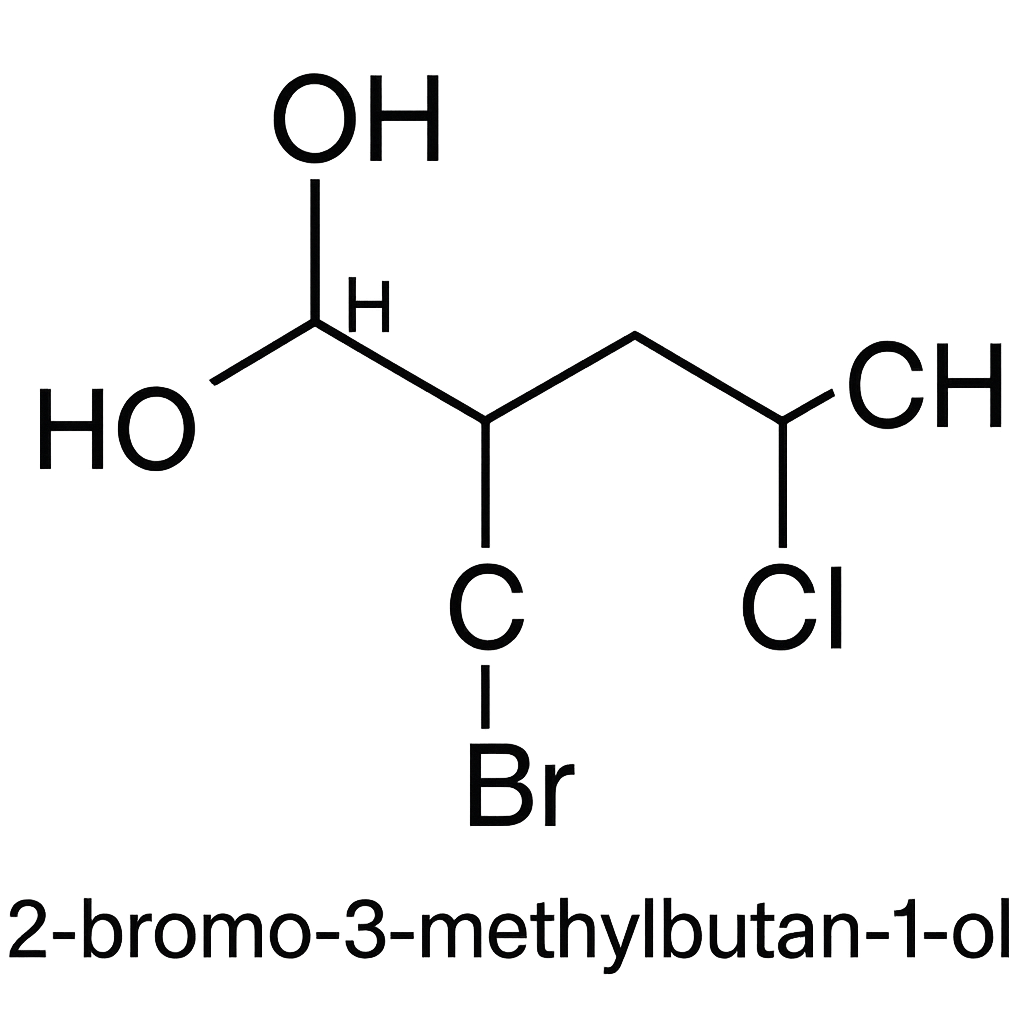
Question 4 View Details
The diagram shows the structural formula of an organic compound containing carbon, hydrogen, oxygen and bromine atoms.
Question Parts
(a)
Write the IUPAC name of the compound shown.
(b)
Determine the molecular formula of the compound.
(c)
Calculate the empirical formula of the compound.
(d)
Identify all functional groups present in the molecule.
(e)
The compound is oxidised with acidic potassium dichromate (K₂Cr₂O₇/H₂SO₄). (i) Write the major oxidation product(s) and give their IUPAC name(s). (ii) Explain briefly why this product is formed.
Detailed Essay Solution & Marking Scheme Available

Get the step-by-step mathematical proofs, key points required by examiners, and a comprehensive breakdown from our AI Tutor.

Question 5 View Details
Magnesium metal reacts with excess hydrochloric acid according to the balanced equation: Mg + 2 HCl → MgCl₂ + H₂(g) A student collects 11.2 L of hydrogen gas at STP over water. The gas is dried and the volume measured again, still 11.2 L. The student then isolates the solid product and obtains 45.0 g of MgCl₂. Answer the following:
Question Parts
(a)
Calculate the number of moles of hydrogen gas collected.
(b)
From the amount of hydrogen obtained, determine the mass of magnesium that must have reacted.
(c)
Calculate the theoretical mass of MgCl₂ that should be formed from the magnesium calculated in part (b).
(d)
The actual mass of MgCl₂ obtained is 45.0 g. Determine the percent yield of the reaction.
Detailed Essay Solution & Marking Scheme Available

Get the step-by-step mathematical proofs, key points required by examiners, and a comprehensive breakdown from our AI Tutor.

Question 6 View Details
A rigid, sealed container of volume 2.00 L initially contains 0.500 mol of nitrogen gas at 298 K and a pressure of 1.20 atm. The container is heated to 350 K, and the pressure rises to 1.68 atm. Answer the following:
Question Parts
(a)
Using the ideal gas law, calculate the pressure that would be expected at 350 K if the volume remains constant. State whether the observed pressure of 1.68 atm is consistent with the ideal‑gas prediction.
(b)
The container is now cooled to 250 K while the volume is allowed to expand until the pressure returns to 1.20 atm. Calculate the final volume of the gas at this new state.
Detailed Essay Solution & Marking Scheme Available

Get the step-by-step mathematical proofs, key points required by examiners, and a comprehensive breakdown from our AI Tutor.

Question 7 View Details
A student carried out a series of experiments to investigate the neutralisation of a strong acid by a strong base and the preparation of a salt.
Question Parts
(a)
Write the balanced net ionic equation for the reaction between hydrochloric acid (HCl) and sodium hydroxide (NaOH).
(b)
The student titrated 25.0 cm³ of an unknown strong acid solution with 0.100 mol dm⁻³ NaOH. The volume of NaOH required to reach the equivalence point was 31.6 cm³. Calculate the concentration of the acid solution. Show all steps and state any assumptions.
(c)
After the titration, the student evaporated the solution to dryness and obtained a white crystalline solid. Explain, with a suitable chemical equation, how the solid is formed and identify the salt.
(d)
The student then dissolved 2.00 g of the obtained salt in 100 cm³ of water and measured the pH as 8.3. Explain why the solution is basic, including the relevant hydrolysis reaction, and calculate the base‑hydrolysis constant (K_b) for the salt’s anion. (Take K_w = 1.0 × 10⁻¹⁴.)
Detailed Essay Solution & Marking Scheme Available

Get the step-by-step mathematical proofs, key points required by examiners, and a comprehensive breakdown from our AI Tutor.

Question 8 View Details
A laboratory investigation was carried out to study the solubility of calcium sulphate (CaSO₄) in water at different temperatures.
Question Parts
(a)
The solubility product of CaSO₄ at 25 °C is K_sp = 2.4 × 10⁻⁵ (mol² dm⁻⁶). Calculate the molar solubility (s) of CaSO₄ at this temperature.
(b)
In a separate experiment 1.00 g of CaSO₄ was added to 200 cm³ of water at 25 °C, stirred until equilibrium and then filtered. The mass of undissolved solid recovered was 0.30 g. Using the result, determine the experimental molar solubility and discuss two possible reasons for any difference from the theoretical value obtained in part (a).
Detailed Essay Solution & Marking Scheme Available

Get the step-by-step mathematical proofs, key points required by examiners, and a comprehensive breakdown from our AI Tutor.

Question 9 View Details
A sample of potassium dichromate reacts with excess ferrous sulphate solution in acidic medium. The reaction is carried out at 25 °C and the solution is sufficiently acidic to ensure complete reaction.
Question Parts
(a)
Write the balanced overall redox equation for the reaction, showing the states of the reactants and products.
(b)
From the balanced equation, state which species acts as the oxidising agent and which acts as the reducing agent.
(c)
If 3.00 g of K₂Cr₂O₇ is used, calculate the mass of iron(III) sulphate, Fe₂(SO₄)₃, that can be formed (assume excess FeSO₄ and that the reaction goes to completion).
Detailed Essay Solution & Marking Scheme Available

Get the step-by-step mathematical proofs, key points required by examiners, and a comprehensive breakdown from our AI Tutor.

Question 10 View Details
A galvanic cell is constructed with a zinc electrode immersed in 0.010 M Zn²⁺ solution and a copper electrode immersed in 0.10 M Cu²⁺ solution. The temperature is 25 °C. Standard electrode potentials are E°(Zn²⁺/Zn) = –0.76 V and E°(Cu²⁺/Cu) = +0.34 V.
Question Parts
(a)
Write the overall cell reaction and calculate the standard cell potential, E°cell.
(b)
Using the Nernst equation, calculate the cell potential under the given concentrations.
Detailed Essay Solution & Marking Scheme Available

Get the step-by-step mathematical proofs, key points required by examiners, and a comprehensive breakdown from our AI Tutor.

Master the Exam!

You've seen a preview, but there are thousands more questions plus AI tutor to break down complex solutions.

Unlock Full Access Available for Android & Windows
Help others prepare! Share this practice hub:
Chat with Support