igcse model questions vol1 2023 biology | Essay

Prepare for your exams with igcse model questions vol1 questions? Reviewing past/model questions is one of the most effective ways to guarantee a high score. This practice hub features authentic 2023 biology (Essay) questions designed to simulate the real exam environment.

Practice these randomly selected questions to test your readiness.
Question 1 View Details
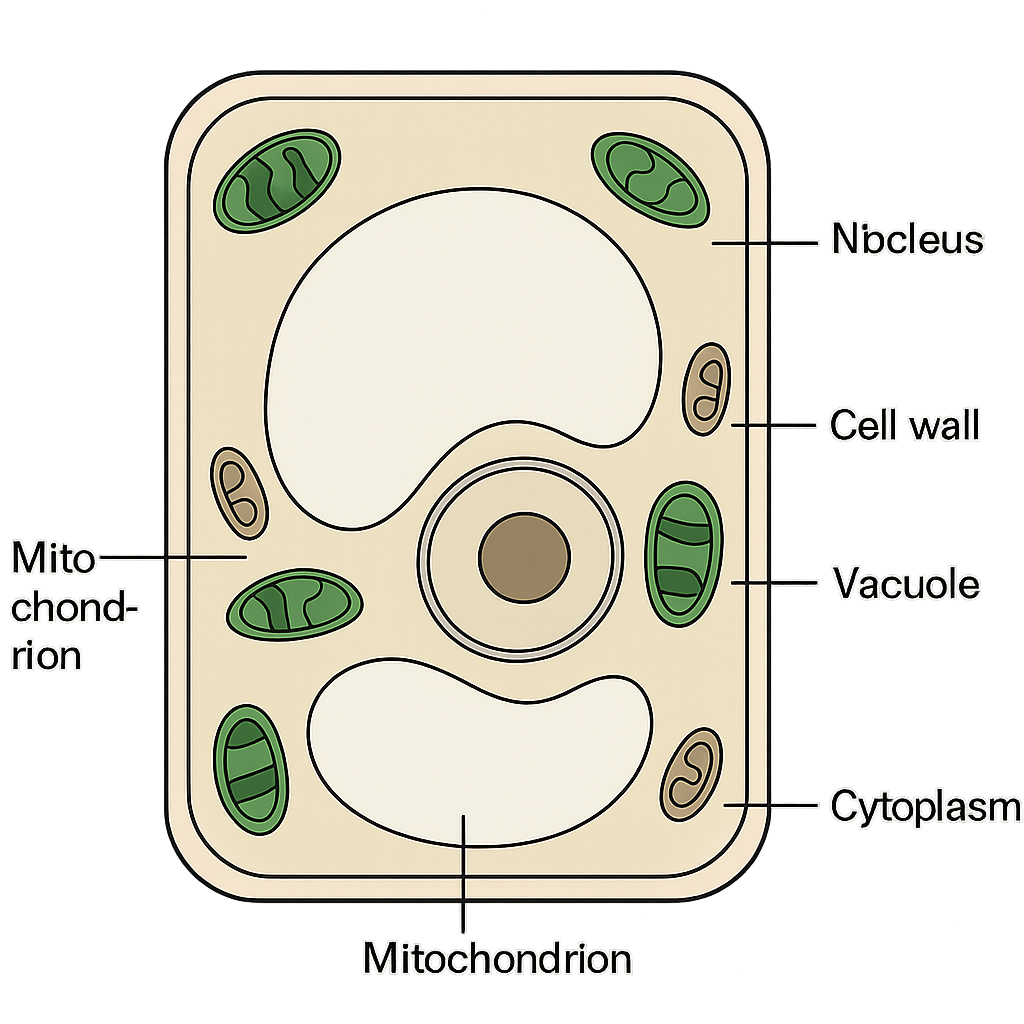
The labelled diagram shows a typical plant cell.
Question Parts
(a)
List the parts that are labelled in the diagram.
(b)
For each part listed in (a), give a brief description of its main function.
(c)
Compare a plant cell with an animal cell, mentioning three structures that are present only in the plant cell and explain why they are important for a plant.
(d)
Predict what would happen to the cell if the vacuole were ruptured during drought conditions.
Detailed Essay Solution & Marking Scheme Available

Get the step-by-step mathematical proofs, key points required by examiners, and a comprehensive breakdown from our AI Tutor.
Question 2 View Details
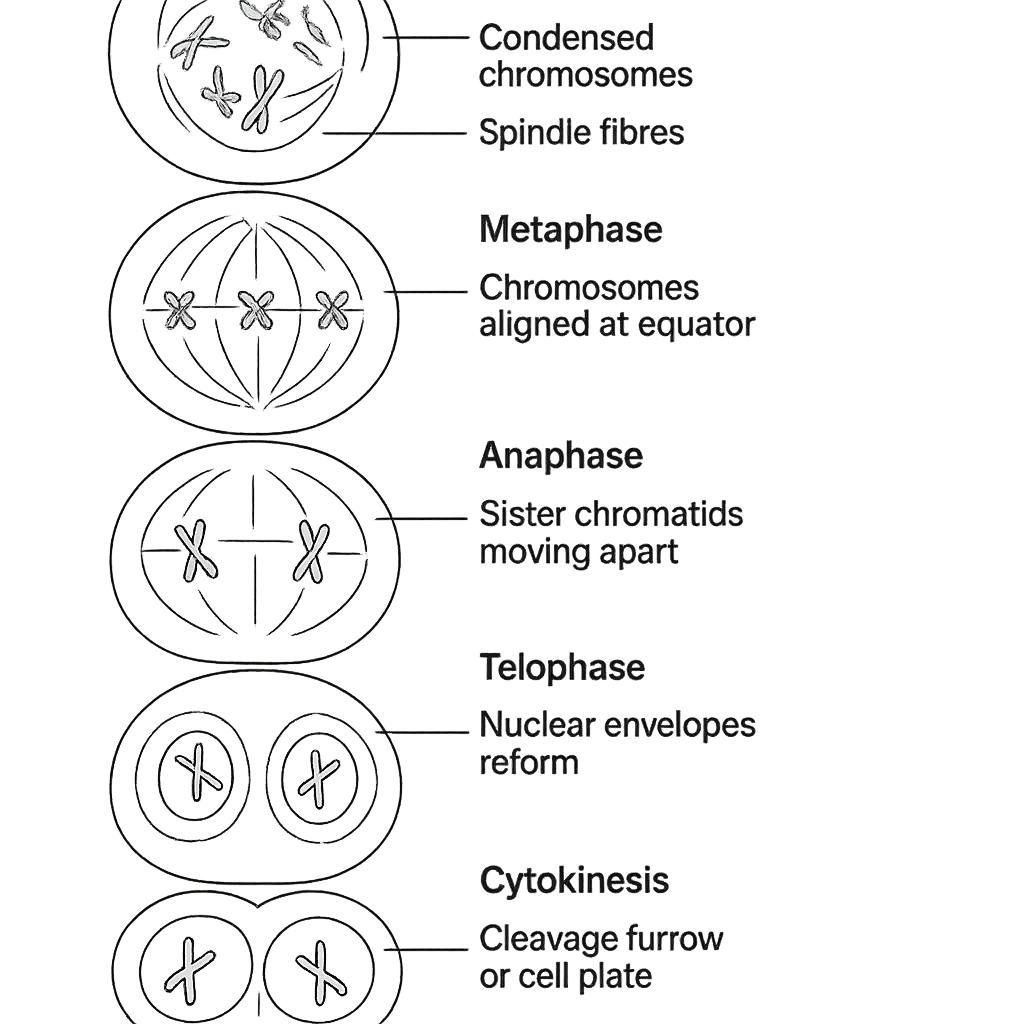
The labelled diagram illustrates the stages of mitosis in a eukaryotic cell.
Question Parts
(a)
Write the correct chronological order of the stages shown, using the letters provided in the diagram (e.g., A, B, C, D, E).
(b)
For each stage listed in (a), briefly describe the key cellular events that occur.
(c)
Explain the role of spindle fibres during mitosis.
(d)
If a cell fails to complete cytokinesis after telophase, what is the likely outcome for the resulting cell(s)?
Detailed Essay Solution & Marking Scheme Available

Get the step-by-step mathematical proofs, key points required by examiners, and a comprehensive breakdown from our AI Tutor.
Question 3 View Details
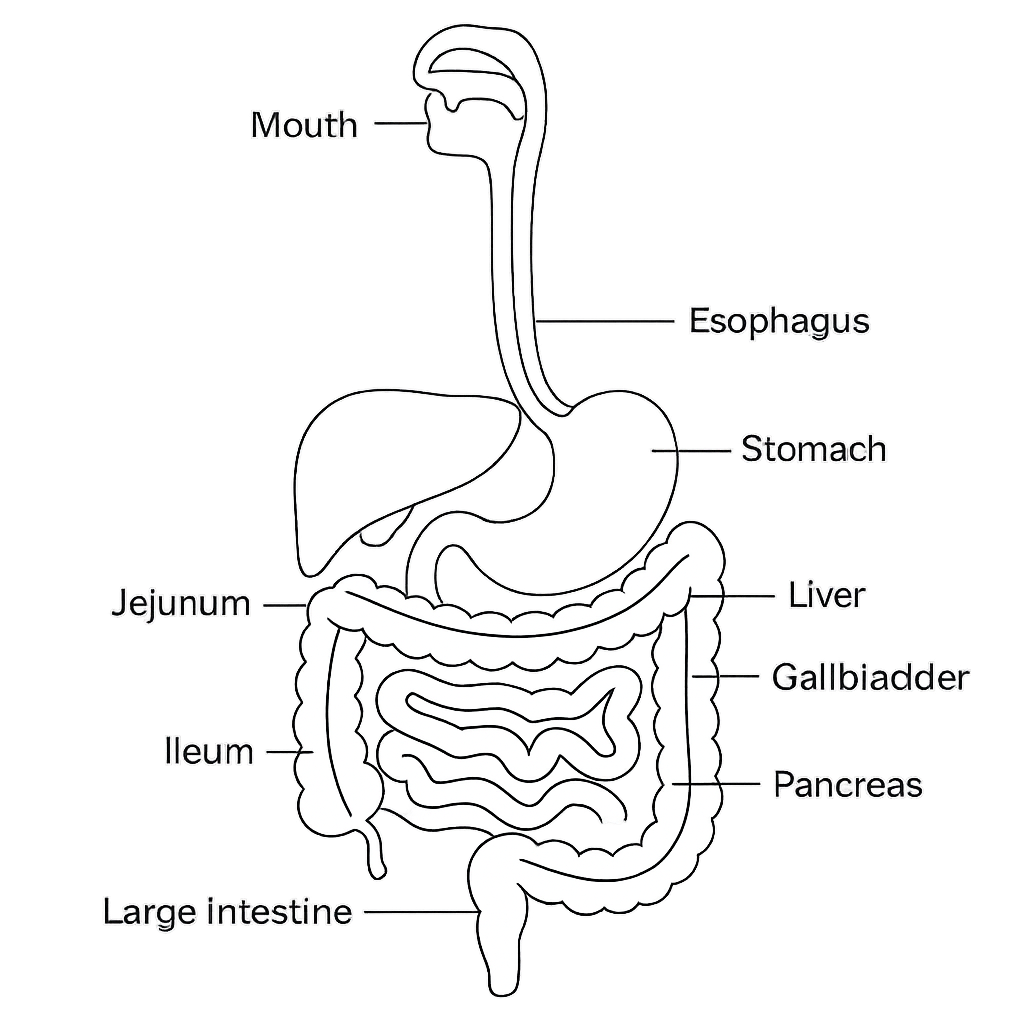
The diagram shows a labelled illustration of the human digestive system.
Question Parts
(a)
Identify the organ in which the majority of chemical digestion of carbohydrates occurs. State the principal enzyme(s) involved and briefly describe how they act on the carbohydrate molecules.
(b)
Explain the role of the pancreas in digestion. In your answer, include the types of secretions released, the hormones that regulate their release and the importance of these secretions for the digestion of proteins, fats and carbohydrates.
(c)
Using the labelled diagram, describe the complete pathway of a food bolus from the moment it is swallowed until the undigested residue is expelled as faeces. For each major organ, state one key process that occurs there.
(d)
Lactase deficiency (lactose intolerance) impairs the digestion of the disaccharide lactose. Discuss the physiological consequences of this deficiency and suggest two practical dietary adjustments that can minimise the problem.
Detailed Essay Solution & Marking Scheme Available

Get the step-by-step mathematical proofs, key points required by examiners, and a comprehensive breakdown from our AI Tutor.
Question 4 View Details
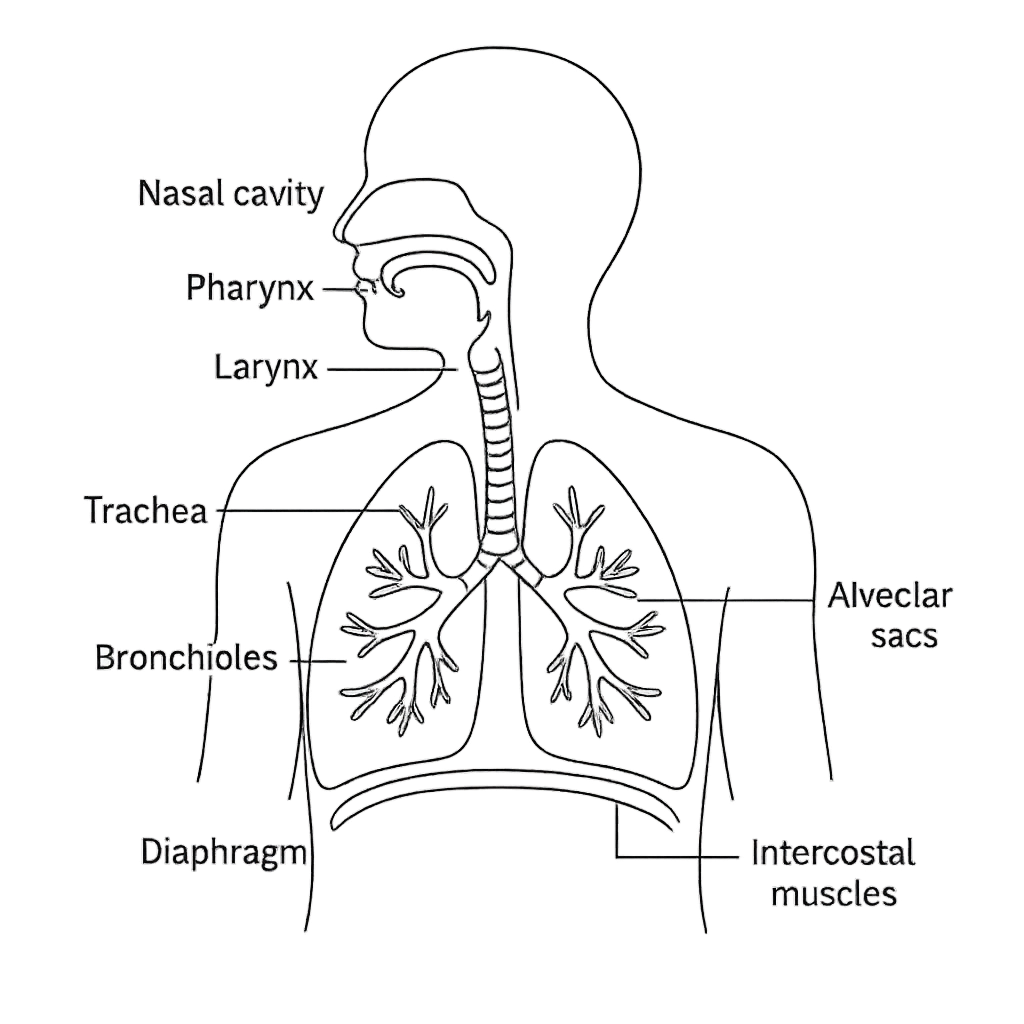
The labelled diagram shows the main structures of the human respiratory system.
Question Parts
(a)
Describe the complete pathway that a breath of air follows from the external environment to the alveoli, naming each structure it passes through.
(b)
Explain how the structural features of the alveoli make them especially suited for gas exchange.
(c)
A disease reduces the total alveolar surface area by 40 % while the thickness of the alveolar membrane remains unchanged. Using Fick’s law (rate of diffusion ∝ surface area ÷ thickness), discuss the expected effect on the rate of oxygen diffusion and the likely physiological consequence for the individual.
(d)
Compare external respiration with cellular respiration, highlighting the role of the respiratory system in each process.
Detailed Essay Solution & Marking Scheme Available

Get the step-by-step mathematical proofs, key points required by examiners, and a comprehensive breakdown from our AI Tutor.

Question 5 View Details
The transport of substances in the human circulatory system is essential for maintaining homeostasis.
Question Parts
(a)
Define cardiac output and state how it is calculated.
(b)
During rest a person's cardiac output is 5 L min⁻¹ and the arterial oxygen content is 0.20 L O₂ per litre of blood. During moderate exercise the cardiac output rises to 12 L min⁻¹ and the arterial oxygen content falls to 0.18 L O₂ per litre. Assuming all delivered oxygen is used by the tissues, calculate the rate of oxygen consumption at rest and during exercise and state the percentage increase in oxygen consumption.
(c)
Explain why oxygen consumption increases during exercise even though the arterial oxygen content per litre of blood falls.
(d)
A blockage in a coronary artery reduces blood flow to a region of the heart by 30 %. Discuss two possible consequences for the affected cardiac tissue.
Detailed Essay Solution & Marking Scheme Available

Get the step-by-step mathematical proofs, key points required by examiners, and a comprehensive breakdown from our AI Tutor.

Question 6 View Details
Excretion removes metabolic waste products from the body and helps maintain internal balance.
Question Parts
(a)
Describe the structure of a human nephron and state the function of each main part in the formation of urine.
(b)
Explain how the kidney conserves water when a person is dehydrated, referring to the hormonal control involved.
(c)
A healthy adult produces 150 mL of urine per hour with an average urea concentration of 0.25 g per 100 mL. Calculate the total amount of urea excreted in 24 hours. If the same person becomes dehydrated and urine volume falls to 80 mL per hour while the urea concentration rises to 0.40 g per 100 mL, calculate the new total urea excreted in 24 hours and discuss the physiological significance of this change.
Detailed Essay Solution & Marking Scheme Available

Get the step-by-step mathematical proofs, key points required by examiners, and a comprehensive breakdown from our AI Tutor.

Question 7 View Details
Homeostasis is essential for maintaining the internal environment of the human body within narrow limits.
Question Parts
(a)
Explain how negative feedback regulates the concentration of glucose in the blood. In your answer identify the sensor, control centre and effectors and describe the outcome of the response.
(b)
Compare negative feedback with positive feedback. Give one human example of each and explain why positive feedback is less common in physiological regulation.
(c)
A person with type 1 diabetes is unable to produce insulin. Discuss how this defect disrupts the homeostatic regulation of blood glucose and outline two possible long‑term consequences for other organ systems.
Detailed Essay Solution & Marking Scheme Available

Get the step-by-step mathematical proofs, key points required by examiners, and a comprehensive breakdown from our AI Tutor.

Question 8 View Details
Coordination in animals involves the integration of the nervous and endocrine systems to produce appropriate responses to internal and external stimuli.
Question Parts
(a)
Describe the structure of a typical reflex arc, naming each component and its function, and explain how the speed of the response is achieved.
(b)
Outline the pathway of a hormonal signal that regulates water balance, using antidiuretic hormone (ADH) as an example. Include the role of the hypothalamus and the posterior pituitary.
(c)
A drug blocks the action of acetylcholine at neuromuscular junctions. Predict the effect of this drug on (i) a skeletal‑muscle reflex and (ii) the heart rate. Justify your answers by referring to the relevant aspects of nervous and endocrine coordination.
(d)
Evaluate the advantages and disadvantages of having both nervous and endocrine systems for coordination in the human body.
Detailed Essay Solution & Marking Scheme Available

Get the step-by-step mathematical proofs, key points required by examiners, and a comprehensive breakdown from our AI Tutor.

Question 9 View Details
A 22‑year‑old woman attends a health clinic for a routine check‑up. She wishes to understand how the menstrual cycle is regulated and how different contraceptive methods interfere with this regulation.
Question Parts
(a)
Describe the hormonal changes that occur during the follicular phase of the menstrual cycle, naming the key hormones and their sources.
(b)
Explain how the luteal phase differs hormonally from the follicular phase and why the corpus luteum is essential for maintaining early pregnancy.
(c)
Evaluate two hormonal contraceptive methods – (i) the combined oral contraceptive pill and (ii) the progestogen‑only injectable – in terms of the specific points in the menstrual cycle they modify and the physiological basis for their effectiveness.
Detailed Essay Solution & Marking Scheme Available

Get the step-by-step mathematical proofs, key points required by examiners, and a comprehensive breakdown from our AI Tutor.

Question 10 View Details
A plant breeder is developing a new variety of maize that is resistant to a fungal disease. The resistance trait is known to be controlled by a single dominant allele (R). The breeder crosses a homozygous resistant plant (RR) with a susceptible plant (rr) and then self‑pollinates the F1 generation.
Question Parts
(a)
Using appropriate genetic notation, predict the genotypic and phenotypic ratios expected in the F1 generation.
(b)
From the F1 plants, a self‑cross is performed. Determine the expected genotypic and phenotypic ratios in the F2 generation.
(c)
If a sample of 200 F2 plants shows 130 resistant and 70 susceptible individuals, perform a chi‑square test at the 5 % significance level to assess whether the observed segregation fits the expected 3:1 ratio. Show all calculations and state your conclusion.
(d)
Discuss two possible reasons why the observed ratio might deviate from the expected ratio, relating your answer to genetic principles.
Detailed Essay Solution & Marking Scheme Available

Get the step-by-step mathematical proofs, key points required by examiners, and a comprehensive breakdown from our AI Tutor.

Master the Exam!

You've seen a preview, but there are thousands more questions plus AI tutor to break down complex solutions.

Unlock Full Access Available for Android & Windows
Help others prepare! Share this practice hub:
Chat with Support