igcse model questions vol1 2021 chemistry | Essay

Prepare for your exams with igcse model questions vol1 questions? Reviewing past/model questions is one of the most effective ways to guarantee a high score. This practice hub features authentic 2021 chemistry (Essay) questions designed to simulate the real exam environment.

Practice these randomly selected questions to test your readiness.
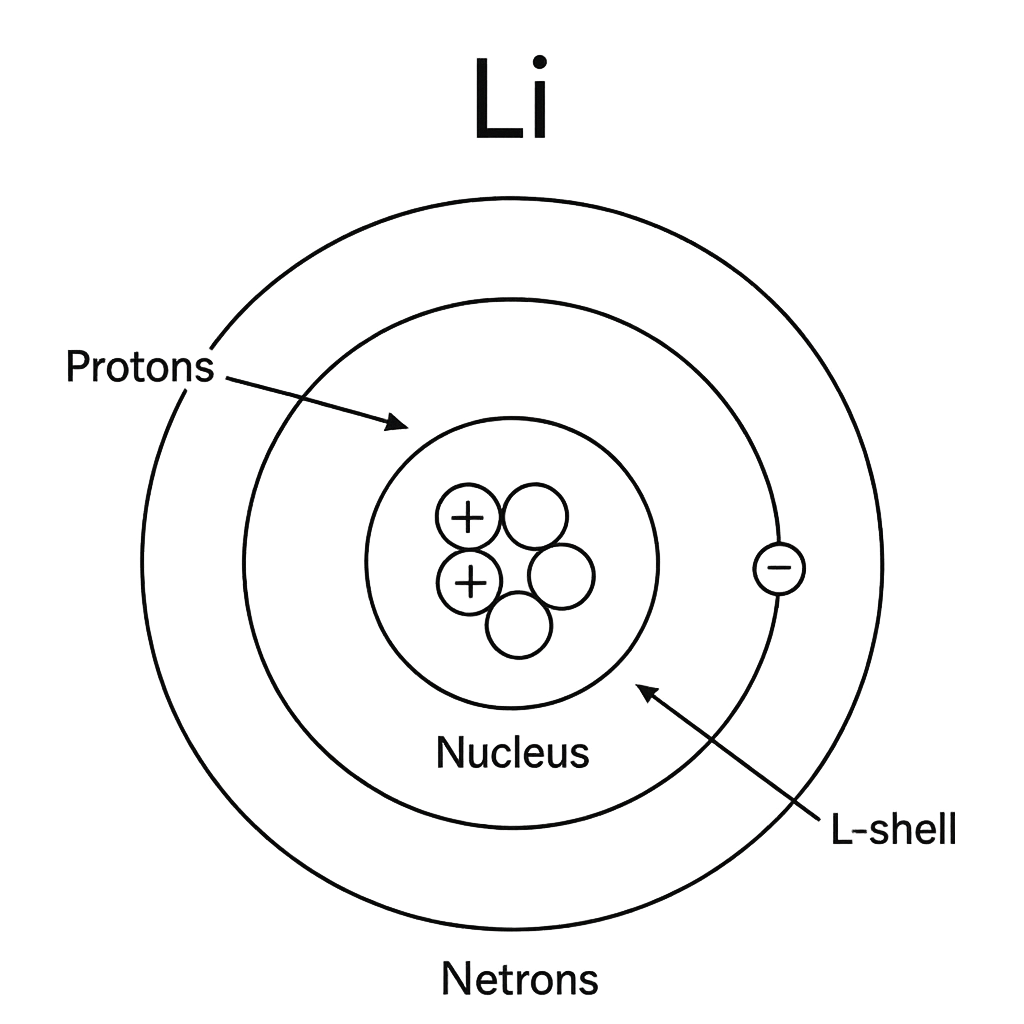
Question 1 View Details
The diagram shows a neutral lithium atom (Li) with its nucleus and electron shells labelled.
Question Parts
(a)
Write the ground‑state electron configuration of the atom using the notation 1s, 2s, etc.
(b)
Determine the mass number of the most abundant isotope shown and explain how you obtained it.
(c)
Using its position in the periodic table, explain why lithium behaves as a metal.
(d)
When lithium forms a cation, write the charge on the ion, give its electron configuration and state how many electrons are now in each shell.
Detailed Essay Solution & Marking Scheme Available

Get the step-by-step mathematical proofs, key points required by examiners, and a comprehensive breakdown from our AI Tutor.
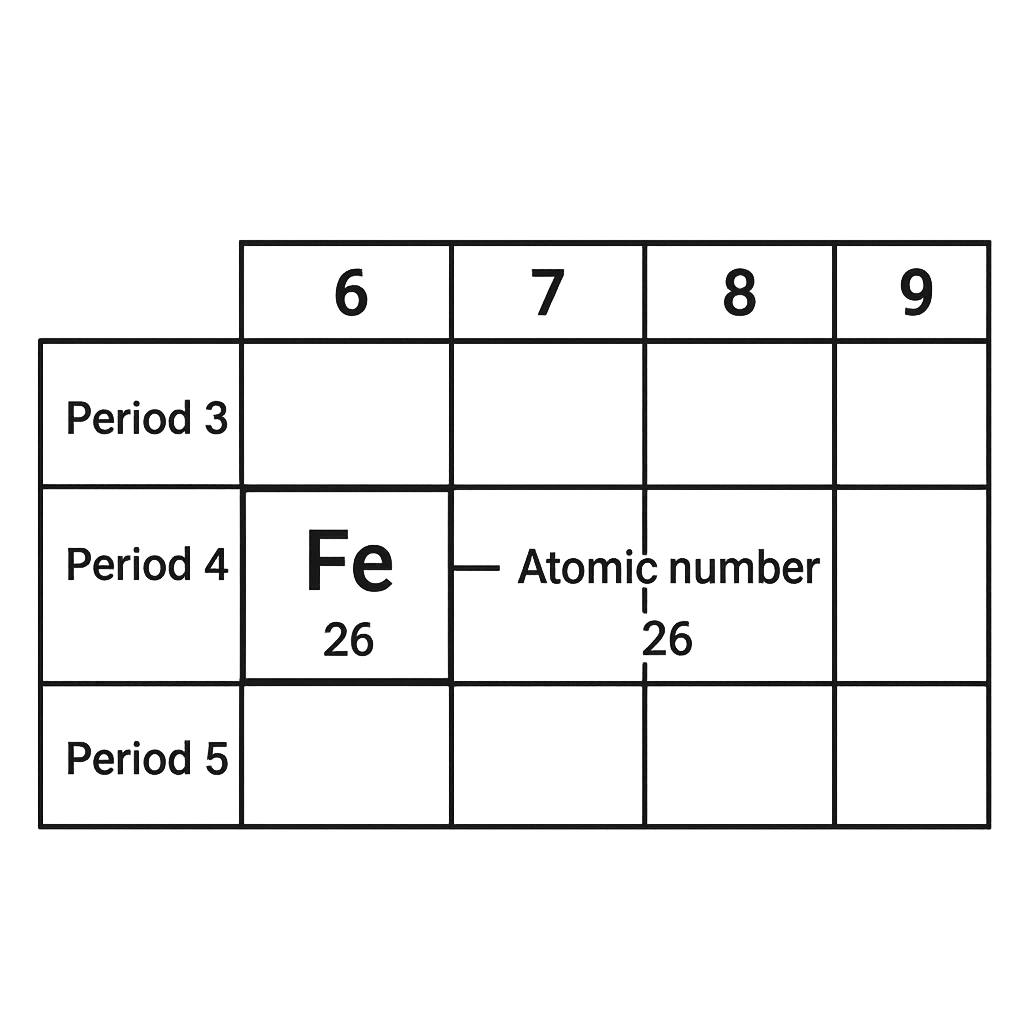
Question 2 View Details
The diagram is a section of the periodic table highlighting the element with atomic number 26.
Question Parts
(a)
State the period and group (or family) to which the element belongs.
(b)
Write the ground‑state electron configuration of the element using the notation 1s, 2s, etc.
(c)
Compare the metallic character of this element with the element directly above it and the element directly below it in the same group. Explain the observed trend using periodic‑trend concepts.
(d)
List the common oxidation states of the element and give a brief justification for their occurrence based on its electron configuration.
Detailed Essay Solution & Marking Scheme Available

Get the step-by-step mathematical proofs, key points required by examiners, and a comprehensive breakdown from our AI Tutor.
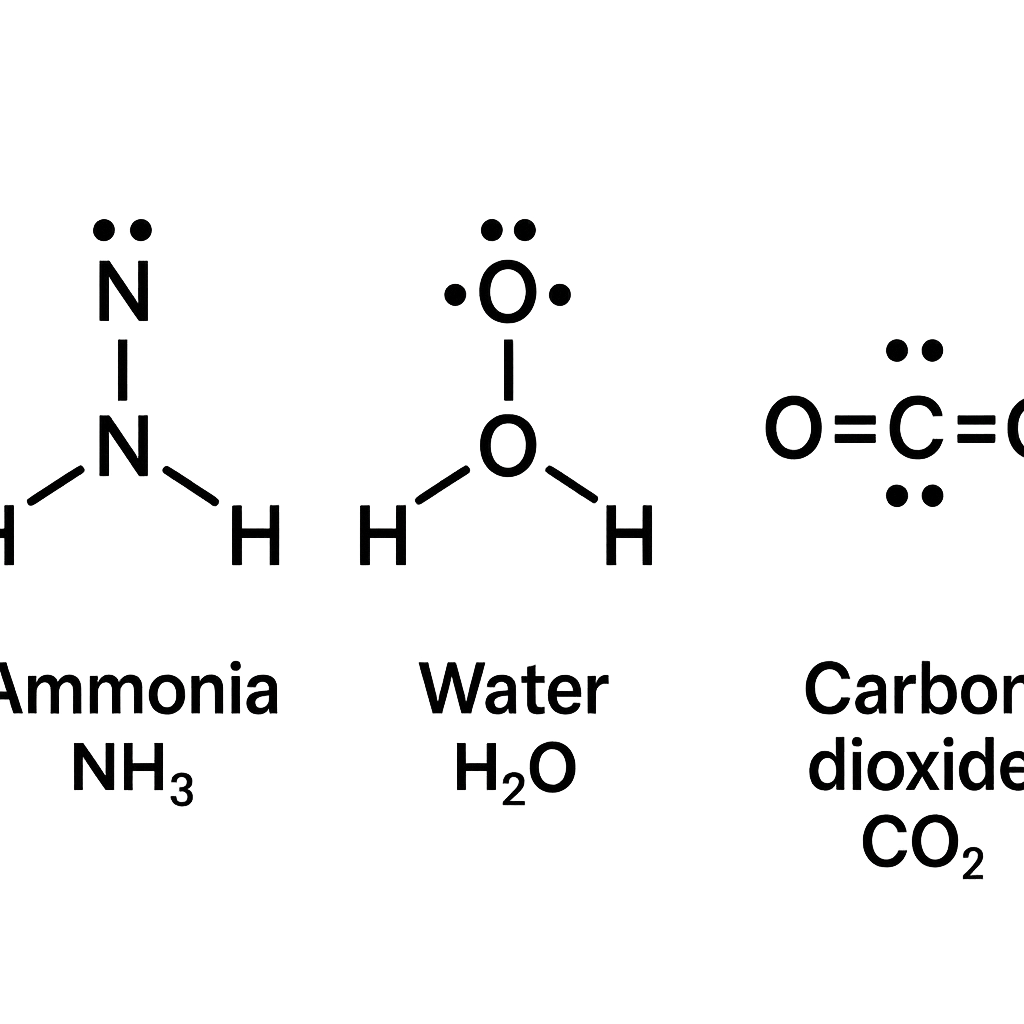
Question 3 View Details
The diagram shows the Lewis structures of three compounds: ammonia (NH3), water (H2O) and carbon dioxide (CO2).
Question Parts
(a)
For each molecule, state the electron‑pair geometry, the molecular shape and the approximate bond angle(s).
(b)
State the type of hybridisation of the central atom in each molecule.
(c)
Discuss the polarity of each molecule, giving reasons based on shape and bond dipoles.
(d)
Compare the boiling points of the three substances and explain the observed trend in terms of intermolecular forces.
Detailed Essay Solution & Marking Scheme Available

Get the step-by-step mathematical proofs, key points required by examiners, and a comprehensive breakdown from our AI Tutor.
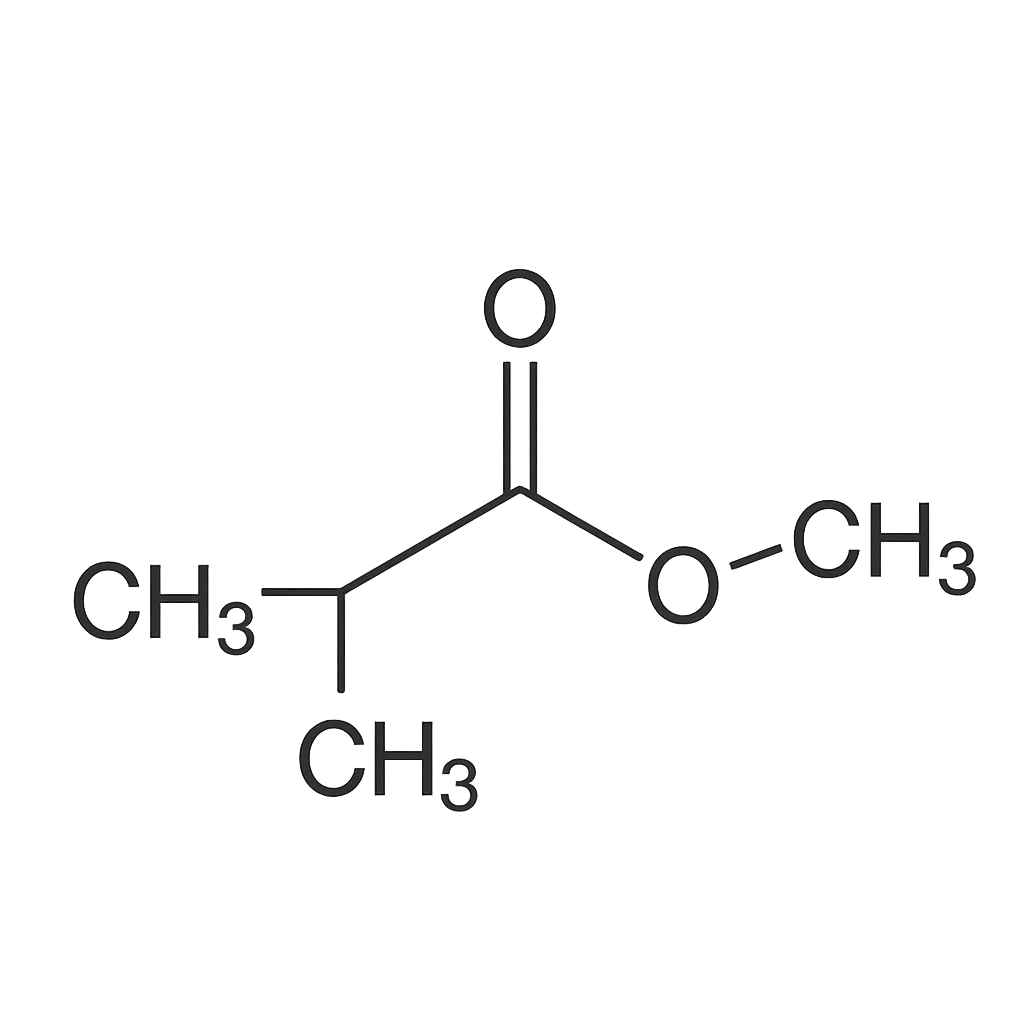
Question 4 View Details
The diagram shows the structural formula of a colourless liquid organic compound commonly used as a solvent. [The diagram is provided as described in the visual specifications below.]
Question Parts
(a)
Identify all the functional groups present in the compound.
(b)
Write the systematic IUPAC name of the compound.
(c)
A sample of 5.00 g of the compound is dissolved in water. Calculate the number of moles of carbon, hydrogen and oxygen atoms present in the sample. Show all steps.
(d)
When the compound reacts with aqueous sodium hydroxide (NaOH), it undergoes hydrolysis. Write the balanced chemical equation for this reaction and name the products formed.
Detailed Essay Solution & Marking Scheme Available

Get the step-by-step mathematical proofs, key points required by examiners, and a comprehensive breakdown from our AI Tutor.

Question 5 View Details
A laboratory experiment is set up to prepare aluminium chloride (AlCl3) by the reaction: 2 Al (s) + 3 Cl2 (g) → 2 AlCl3 (s) All reagents are of analytical grade and the reaction is carried out in a sealed vessel.
Question Parts
(a)
A sample of 5.0 g of aluminium is placed in the vessel and excess chlorine gas is introduced. Identify the limiting reagent and state the reason for your choice.
(b)
Calculate the theoretical yield of AlCl₃ (in grams) that could be obtained from the 5.0 g of aluminium.
(c)
The experiment actually yields 10.0 g of AlCl₃. Determine the percentage yield.
(d)
If instead 5.0 g of chlorine gas were placed in the vessel with excess aluminium, calculate the mass of AlCl₃ that could be formed.
Detailed Essay Solution & Marking Scheme Available

Get the step-by-step mathematical proofs, key points required by examiners, and a comprehensive breakdown from our AI Tutor.

Question 6 View Details
A 10.0 g sample of an unknown solid (substance X) is heated in a calorimeter. The heating is carried out from –20 °C to 150 °C. The relevant data for X are: • Specific heat capacity of the solid, cₛ = 1.0 J g⁻¹ K⁻¹ • Melting point = 30 °C, heat of fusion L_f = 60 J g⁻¹ • Specific heat capacity of the liquid, cₗ = 0.8 J g⁻¹ K⁻¹ • Boiling point = 120 °C, heat of vaporisation L_v = 220 J g⁻¹ • Specific heat capacity of the gas, c_g = 0.6 J g⁻¹ K⁻¹ No heat loss to the surroundings occurs.
Question Parts
(a)
Calculate the total amount of energy (in joules) required to raise the sample from –20 °C to 150 °C, taking all phase changes into account.
Detailed Essay Solution & Marking Scheme Available

Get the step-by-step mathematical proofs, key points required by examiners, and a comprehensive breakdown from our AI Tutor.

Question 7 View Details
A 0.250 mol sample of acetic acid (CH₃COOH, Ka = 1.8 × 10⁻⁵) is dissolved in water and diluted to 1.00 L. Sodium acetate (CH₃COONa) is then added until the concentration of acetate ion becomes 0.20 mol L⁻¹. The resulting solution is used as a buffer.
Question Parts
(a)
Calculate the pH of the buffer solution.
(b)
A 250.0 mL sample of this buffer is mixed with 0.010 mol of HCl. Calculate the new pH of the solution, showing all steps.
(c)
Suggest a suitable indicator for an acid–base titration in which this buffer is titrated with NaOH. State the pH range of the indicator and justify why it is appropriate.
Detailed Essay Solution & Marking Scheme Available

Get the step-by-step mathematical proofs, key points required by examiners, and a comprehensive breakdown from our AI Tutor.

Question 8 View Details
The solubility product of lead(II) iodide at 25 °C is Ksp = 1.2 × 10⁻⁸. A saturated solution of PbI₂ is prepared at 25 °C, filtered, and then 0.50 g of solid PbI₂ is added to 250.0 mL of the filtrate. The mixture is allowed to reach equilibrium at the same temperature.
Question Parts
(a)
Calculate the molar solubility of PbI₂ in pure water at 25 °C.
Detailed Essay Solution & Marking Scheme Available

Get the step-by-step mathematical proofs, key points required by examiners, and a comprehensive breakdown from our AI Tutor.

Question 9 View Details
In an acidic solution potassium permanganate (KMnO₄) is used to oxidise oxalic acid (H₂C₂O₄·2H₂O). The reaction is carried out at 25 °C. You are required to:
Question Parts
(a)
Write the balanced overall redox equation for the reaction between KMnO₄ and oxalic acid in acidic medium.
(b)
A sample of 0.50 g of oxalic acid dihydrate (H₂C₂O₄·2H₂O) is to be completely oxidised. The KMnO₄ solution available has a concentration of 0.020 mol L⁻¹. Calculate the volume of KMnO₄ solution required (in millilitres). Show all steps of your calculation.
(c)
Explain why the reaction must be carried out in an acidic medium. Include in your answer the role of H⁺ ions in the half‑reaction and the effect on the oxidation state of manganese.
Detailed Essay Solution & Marking Scheme Available

Get the step-by-step mathematical proofs, key points required by examiners, and a comprehensive breakdown from our AI Tutor.

Question 10 View Details
A galvanic cell is constructed using a zinc electrode immersed in 0.10 M ZnSO₄ solution and a copper electrode immersed in 0.010 M CuSO₄ solution. The two half‑cells are linked by a salt bridge. Standard reduction potentials at 25 °C are: \(\mathrm{Zn^{2+} + 2e^- \rightarrow Zn(s)}\) E° = –0.76 V \(\mathrm{Cu^{2+} + 2e^- \rightarrow Cu(s)}\) E° = +0.34 V The cell operates at 25 °C. You are required to:
Question Parts
(a)
Write the cell notation for the galvanic cell as described.
(b)
Calculate the electromotive force (E) of the cell at 25 °C using the Nernst equation. Show all steps and give your answer to two decimal places.
(c)
If the cell delivers a constant current of 0.50 A for 2.00 hours, calculate the mass of zinc that will be deposited (or dissolved) at the zinc electrode. State any assumptions you make.
Detailed Essay Solution & Marking Scheme Available

Get the step-by-step mathematical proofs, key points required by examiners, and a comprehensive breakdown from our AI Tutor.

Master the Exam!

You've seen a preview, but there are thousands more questions plus AI tutor to break down complex solutions.

Unlock Full Access Available for Android & Windows
Help others prepare! Share this practice hub:
Chat with Support