igcse model questions vol1 2020 biology | Essay

Prepare for your exams with igcse model questions vol1 questions? Reviewing past/model questions is one of the most effective ways to guarantee a high score. This practice hub features authentic 2020 biology (Essay) questions designed to simulate the real exam environment.

Practice these randomly selected questions to test your readiness.
Question 1 View Details
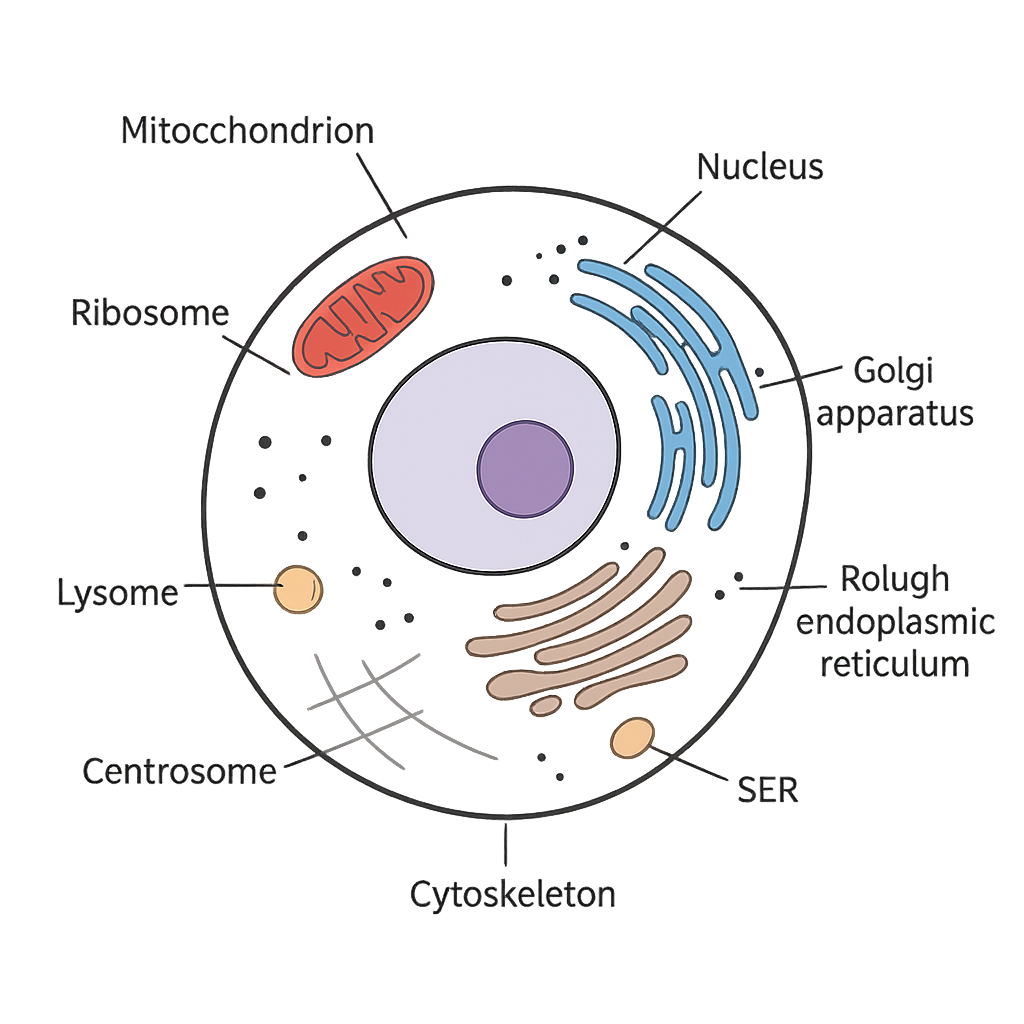
The diagram shows a typical animal cell with its major organelles labelled.
Question Parts
(a)
Identify three organelles shown in the diagram and state the principal function of each.
(b)
Explain how the plasma membrane maintains selective permeability.
(c)
A secretory protein has just been synthesised on a ribosome attached to the rough endoplasmic reticulum (RER). Using the diagram, describe the complete route the protein follows from synthesis to secretion outside the cell.
Detailed Essay Solution & Marking Scheme Available

Get the step-by-step mathematical proofs, key points required by examiners, and a comprehensive breakdown from our AI Tutor.
Question 2 View Details
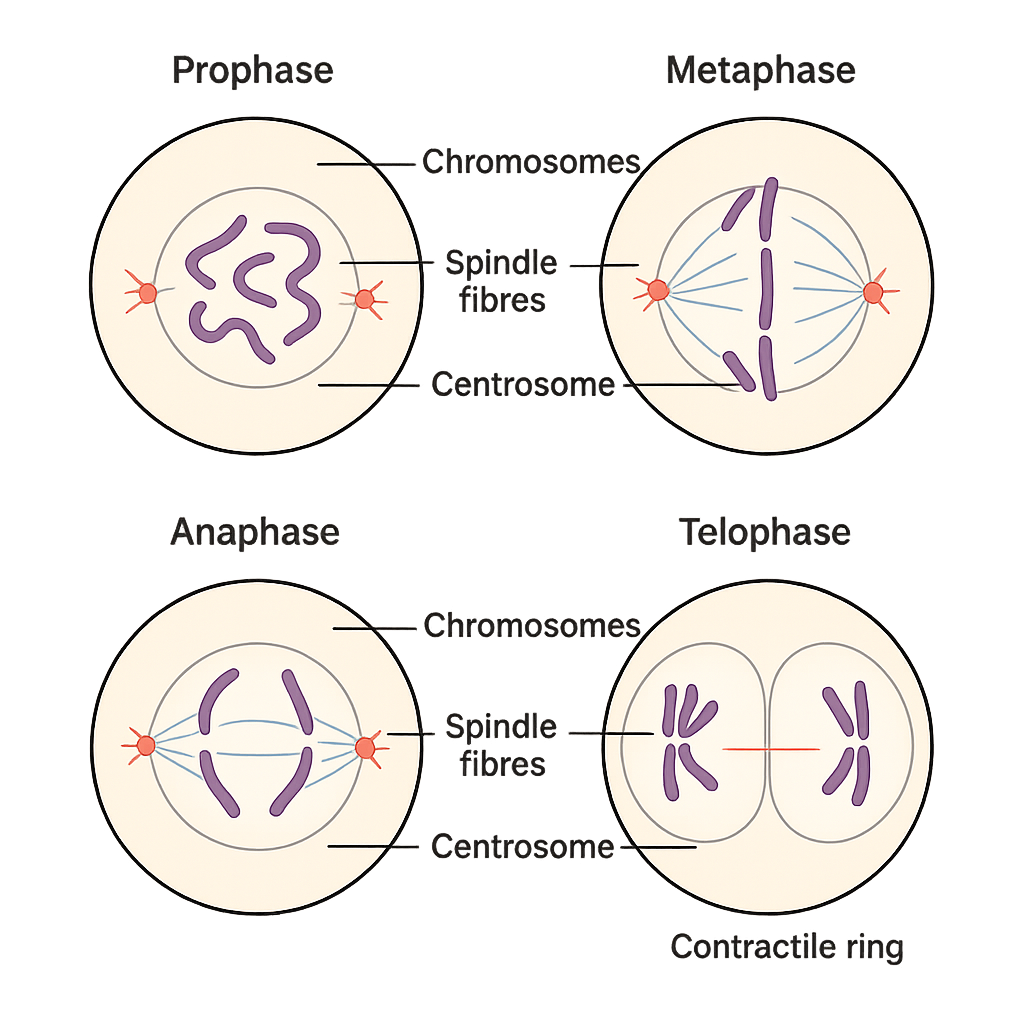
The illustration depicts the stages of mitosis in an animal cell.
Question Parts
(a)
Label the four main stages of mitosis shown in the diagram.
(b)
For each stage, state what happens to the chromosomes and to the spindle fibres.
(c)
Explain why cytokinesis follows telophase in animal cells, referring to the structures shown in the diagram.
Detailed Essay Solution & Marking Scheme Available

Get the step-by-step mathematical proofs, key points required by examiners, and a comprehensive breakdown from our AI Tutor.
Question 3 View Details
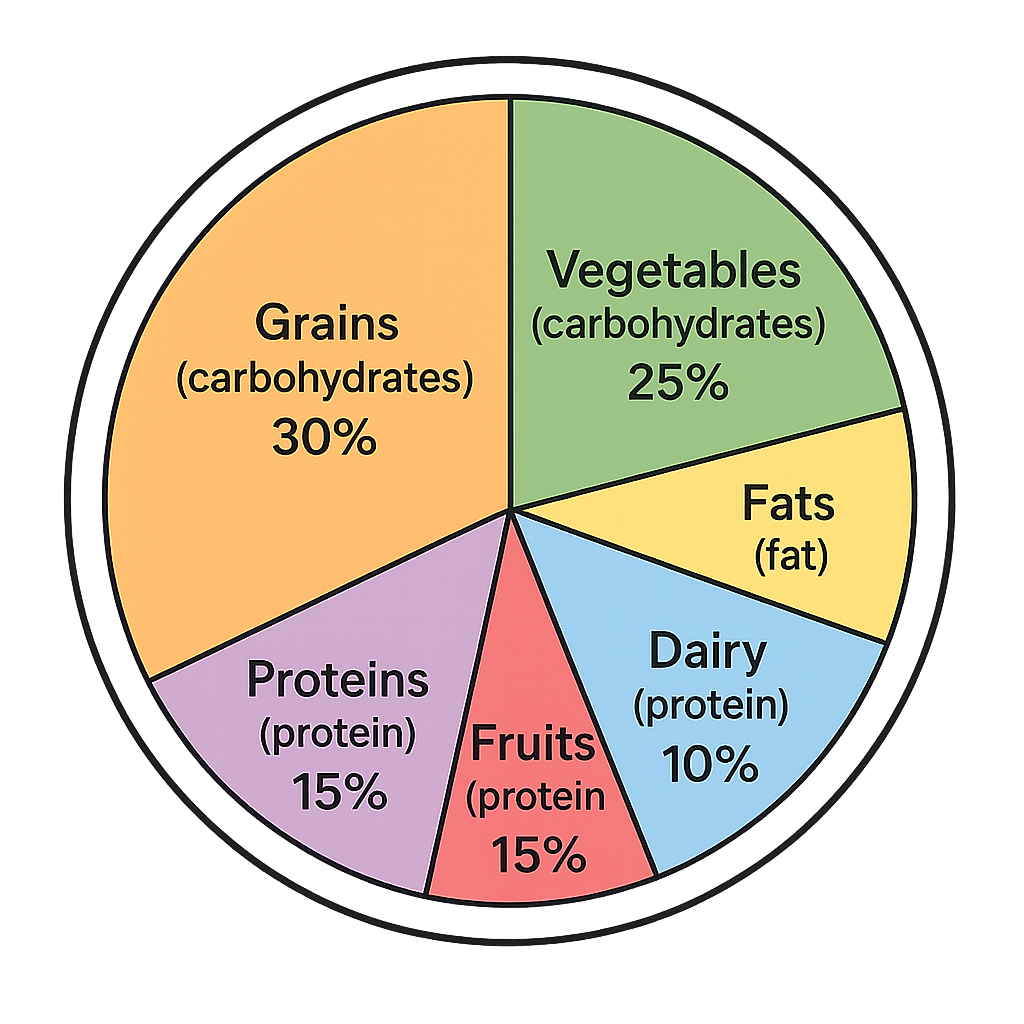
The diagram shows a labelled food plate that represents a balanced daily diet for a typical adolescent.
Question Parts
(a)
Identify the three macronutrients shown in the diagram and give two food examples for each.
(b)
Explain the principal role of each macronutrient in the human body, citing at least one physiological process for each.
(c)
The plate indicates that 30 % of the total energy should come from proteins, 55 % from carbohydrates and 15 % from fats. An adolescent requires 2 400 kJ of energy per day. Using the energy values protein = 17 kJ g⁻¹, carbohydrate = 17 kJ g⁻¹ and fat = 37 kJ g⁻¹, calculate: i. the amount of energy (in kJ) that should be supplied by each macronutrient; ii. the corresponding mass (in grams) of each macronutrient. Show all steps.
(d)
Discuss two health consequences of a chronic deficiency of each macronutrient.
Detailed Essay Solution & Marking Scheme Available

Get the step-by-step mathematical proofs, key points required by examiners, and a comprehensive breakdown from our AI Tutor.
Question 4 View Details
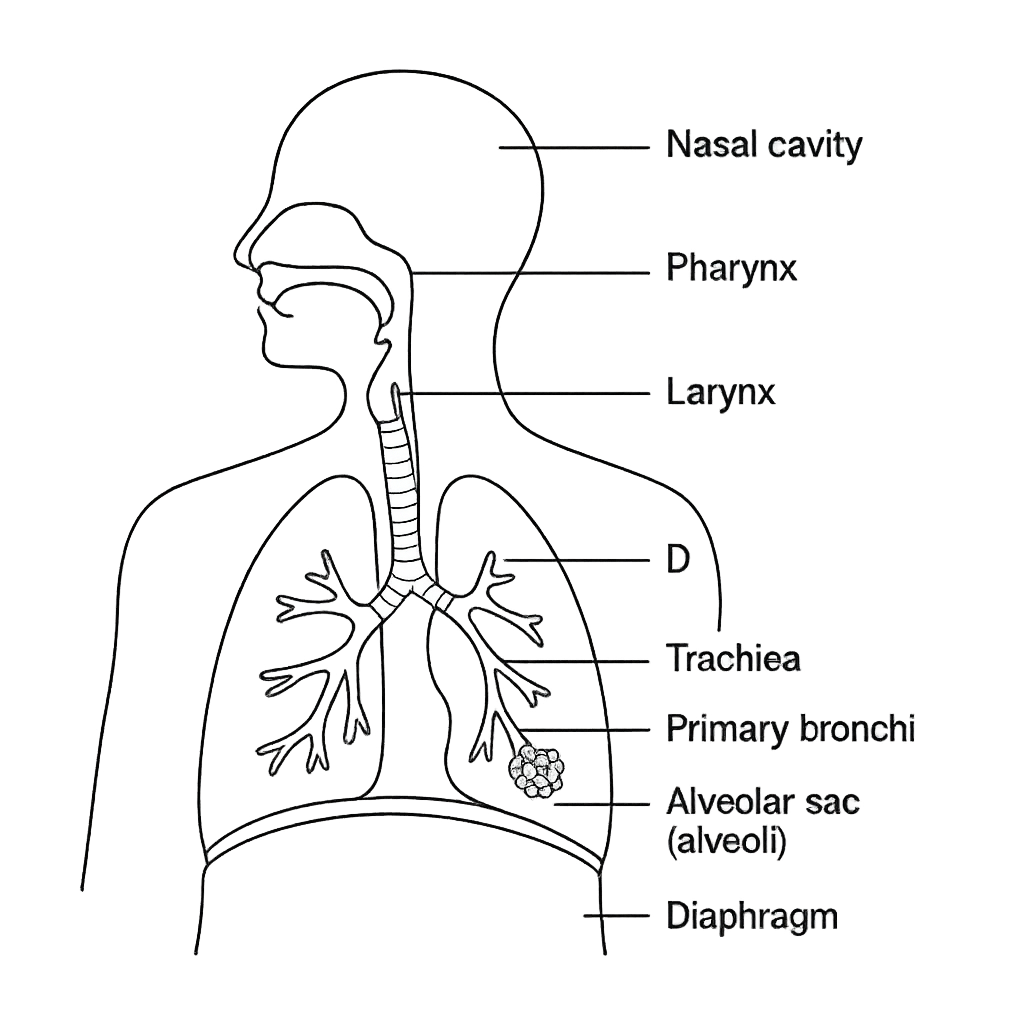
The labelled diagram illustrates the main structures of the human respiratory system.
Question Parts
(a)
Identify the structures represented by labels A, B, C, D, E, F, G and H.
(b)
Describe, using the diagram, the complete pathway that a breath of air follows from entry into the nose to reaching the alveolar sac.
(c)
Explain the muscular actions shown in the diagram that produce inhalation and exhalation, mentioning the role of the diaphragm and intercostal muscles.
(d)
Using the diagram, discuss how oxygen and carbon dioxide are exchanged between the alveolar sac (G) and the blood, referring to the relevant partial pressure gradients.
Detailed Essay Solution & Marking Scheme Available

Get the step-by-step mathematical proofs, key points required by examiners, and a comprehensive breakdown from our AI Tutor.

Question 5 View Details
A researcher is studying the rate of water transport in the stem of a young bean plant. The plant is kept in a controlled environment at 25 °C. When the stem is placed in distilled water, the height of the water column in the stem rises from the cut end to a height of 12 cm after 30 minutes. When the same stem is placed in a solution containing 0.5 mol dm⁻³ sucrose, the height after the same period is only 8 cm.
Question Parts
(a)
Explain why the height of the water column is lower in the sucrose solution than in distilled water.
(b)
Assuming the rate of water rise is constant during the 30‑minute period, calculate the percentage reduction in the rate of water transport caused by the sucrose solution.
(c)
The researcher now adds a hormone auxin that is known to increase the permeability of the xylem vessels by 20 %. Predict qualitatively how the height of the water column after 30 min in the sucrose solution would change, and justify your answer.
Detailed Essay Solution & Marking Scheme Available

Get the step-by-step mathematical proofs, key points required by examiners, and a comprehensive breakdown from our AI Tutor.

Question 6 View Details
A healthy adult has a glomerular filtration rate (GFR) of 120 mL min⁻¹. In the proximal convoluted tubule, 65 % of the filtered Na⁺ and water are re‑absorbed. In the loop of Henle, a further 15 % of the filtered water is re‑absorbed, but Na⁺ re‑absorption is negligible. In the distal convoluted tubule and collecting duct, 10 % of the remaining water is re‑absorbed under the influence of antidiuretic hormone (ADH). The remaining filtrate is excreted as urine.
Question Parts
(a)
Construct a table showing the volume of filtrate (in mL) at the end of each segment: glomerulus, proximal tubule, loop of Henle, distal tubule/collecting duct, and final urine.
(b)
Explain how the presence of ADH influences the concentration of the urine produced, linking it to the water re‑absorption calculated in part (a).
(c)
If the person becomes dehydrated and ADH secretion increases such that water re‑absorption in the distal tubule rises to 25 % of the water arriving there, recalculate the final urine volume and comment on the change in urine concentration.
Detailed Essay Solution & Marking Scheme Available

Get the step-by-step mathematical proofs, key points required by examiners, and a comprehensive breakdown from our AI Tutor.

Question 7 View Details
A 20‑year‑old male student goes for a 2‑hour jog on a hot day. The ambient temperature is 35 °C and the relative humidity is 60 %. While jogging he sweats at a rate of 0.8 L h⁻¹. His total body water is 42 L.
Question Parts
(a)
Describe the physiological mechanisms that act to prevent his core body temperature from rising excessively during the jog.
(b)
i) Calculate the percentage of his total body water lost after the 2‑hour jog. ii) Discuss how this loss could affect blood pressure and the operation of the cardiovascular component of homeostasis.
(c)
Explain how the kidneys contribute to restoring water balance after the exercise, mentioning the role of antidiuretic hormone (ADH).
Detailed Essay Solution & Marking Scheme Available

Get the step-by-step mathematical proofs, key points required by examiners, and a comprehensive breakdown from our AI Tutor.

Question 8 View Details
A 25‑year‑old sprinter undergoes an 8‑week specialised training programme aimed at improving rapid movements. Her simple reaction time to a visual stimulus is measured before the programme as 0.28 s and after the programme as 0.22 s.
Question Parts
(a)
Define coordination and explain why it is essential for sprint performance.
(b)
i) Calculate the percentage improvement in her reaction time. ii) Discuss two neural adaptations that are likely responsible for this improvement.
(c)
Explain how cerebellar damage would alter the sprinter’s gait and timing, giving one specific example.
Detailed Essay Solution & Marking Scheme Available

Get the step-by-step mathematical proofs, key points required by examiners, and a comprehensive breakdown from our AI Tutor.

Question 9 View Details
A 28‑year‑old woman attends a health clinic for advice on her reproductive health. She is interested in understanding the menstrual cycle, the action of combined oral contraceptive pills and how her reproductive strategy differs from asexual reproduction in plants.
Question Parts
(a)
Describe the hormonal changes that occur during the menstrual cycle and explain how these changes regulate the timing of ovulation.
(b)
The woman is considering a combined oral contraceptive pill (COCP). Explain the mechanism by which the COCP prevents ovulation and discuss two possible side‑effects of its use.
(c)
Compare asexual reproduction in strawberry plants (via runners) with sexual reproduction in humans, focusing on the consequences for genetic variation.
Detailed Essay Solution & Marking Scheme Available

Get the step-by-step mathematical proofs, key points required by examiners, and a comprehensive breakdown from our AI Tutor.

Question 10 View Details
A genetics teacher is preparing a lesson on inheritance patterns, probability calculations and DNA replication. The class is working with pea plants, a human pedigree for a hereditary hearing disorder and a review of the enzymes involved in DNA synthesis.
Question Parts
(a)
In peas, plant height is controlled by a single gene with alleles T (tall, dominant) and t (dwarf, recessive). A heterozygous tall plant (Tt) is crossed with a dwarf plant (tt).
(b)
Two heterozygous tall F₁ plants (both Tt) are crossed. (i) Determine the probability that a randomly selected offspring from this cross will be dwarf. (ii) Determine the probability that a randomly selected offspring will be both dwarf and homozygous for the recessive allele.
(c)
A pedigree chart shows a hereditary hearing disorder that appears in both males and females, affected individuals have unaffected parents, and the disorder occurs in siblings of affected persons but not in the previous generation. (i) Identify the most likely mode of inheritance. (ii) If two unaffected individuals are known carriers, calculate the risk that their child will be affected.
(d)
During DNA replication, DNA polymerase and DNA ligase play essential roles. Explain the specific function of each enzyme and describe how the proofreading activity of DNA polymerase contributes to the overall fidelity of DNA replication.
Detailed Essay Solution & Marking Scheme Available

Get the step-by-step mathematical proofs, key points required by examiners, and a comprehensive breakdown from our AI Tutor.

Master the Exam!

You've seen a preview, but there are thousands more questions plus AI tutor to break down complex solutions.

Unlock Full Access Available for Android & Windows
Help others prepare! Share this practice hub:
Chat with Support