igcse model questions vol1 2018 biology | Essay

Prepare for your exams with igcse model questions vol1 questions? Reviewing past/model questions is one of the most effective ways to guarantee a high score. This practice hub features authentic 2018 biology (Essay) questions designed to simulate the real exam environment.

Practice these randomly selected questions to test your readiness.
Question 1 View Details
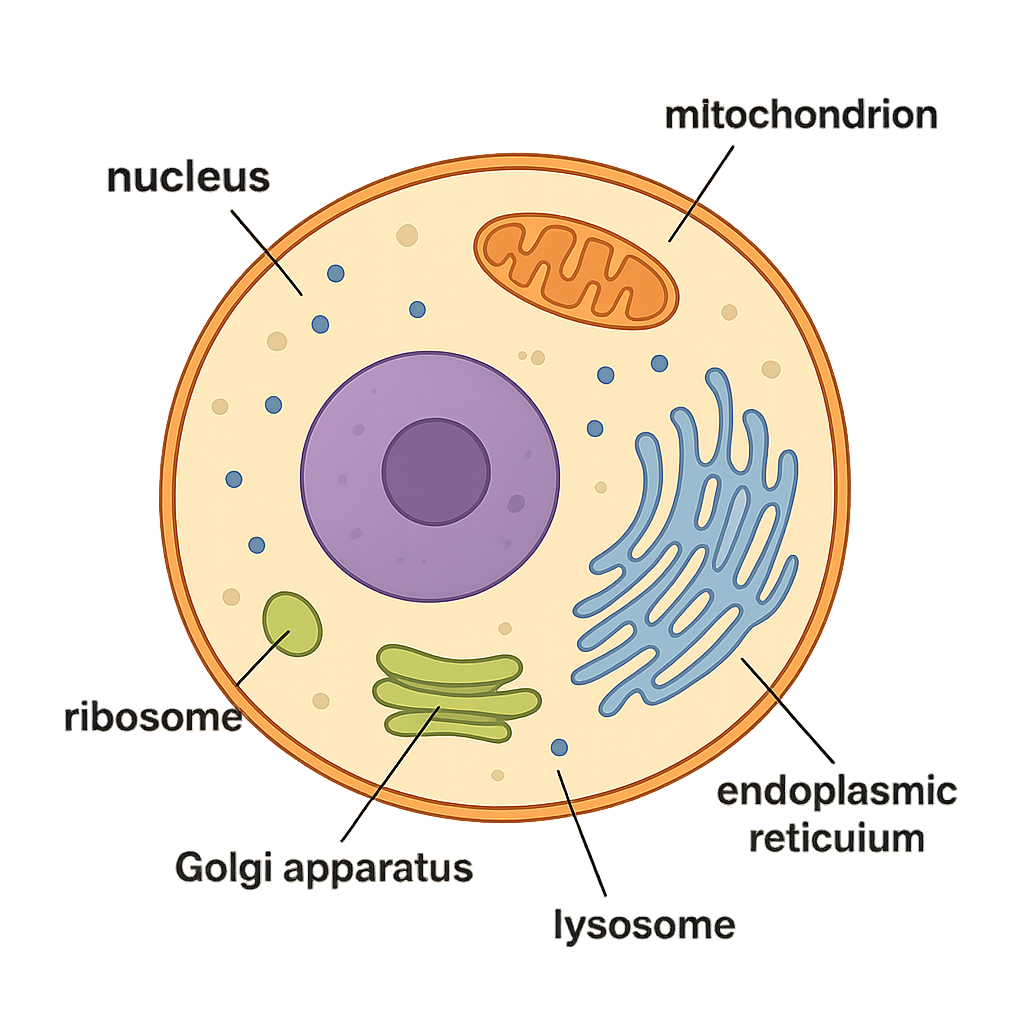
The diagram shows a typical animal cell with its major organelles labelled.
Question Parts
(a)
Select any three organelles shown in the diagram and state the main function of each.
(b)
Explain two structural differences between an animal cell and a typical plant cell that are evident from the diagram.
(c)
Describe two mechanisms by which substances can cross the cell membrane and give one example of each.
Detailed Essay Solution & Marking Scheme Available

Get the step-by-step mathematical proofs, key points required by examiners, and a comprehensive breakdown from our AI Tutor.
Question 2 View Details
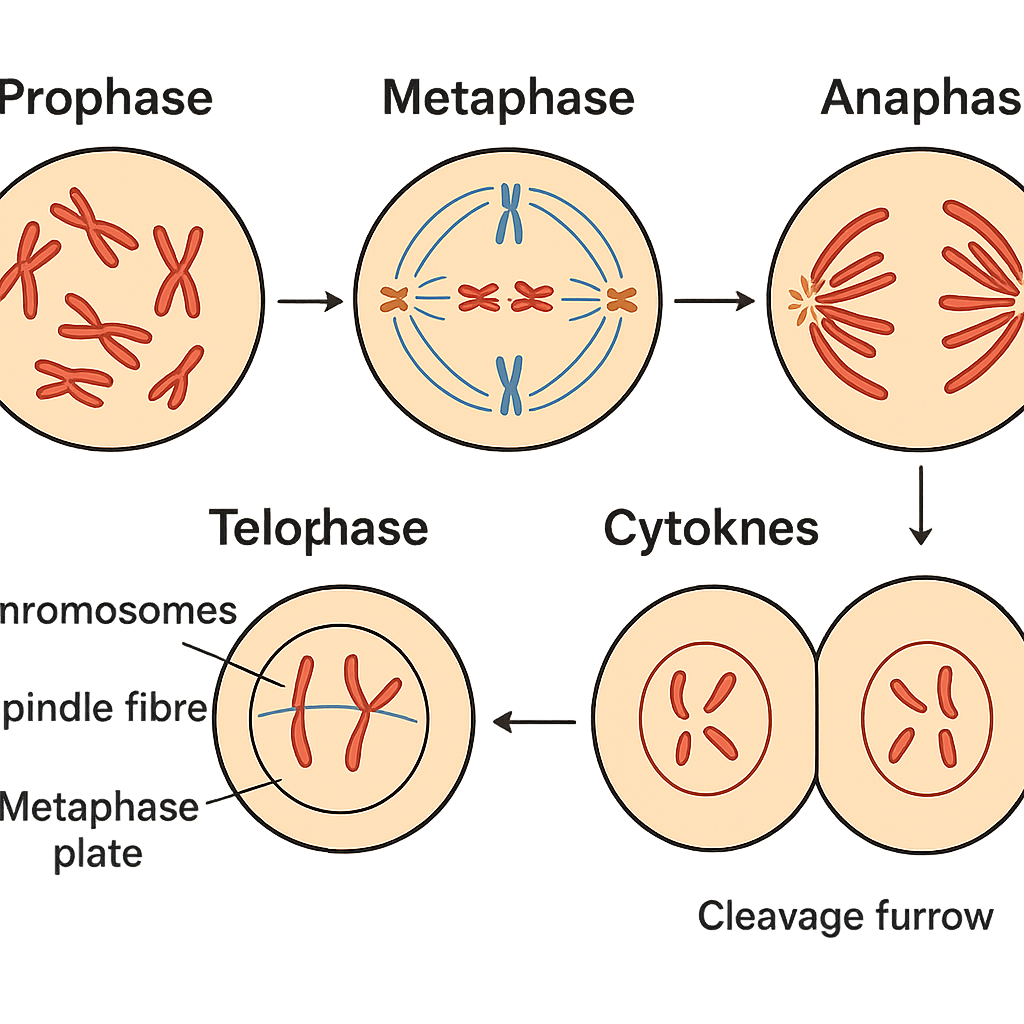
The labelled diagram depicts the stages of mitosis in a eukaryotic cell.
Question Parts
(a)
For each of the stages shown – prophase, metaphase, anaphase, telophase and cytokinesis – briefly describe the main events that occur.
(b)
Explain the role of spindle fibres during mitosis.
(c)
If the total time taken for mitosis (from the start of prophase to the end of telophase) is 60 minutes and the relative durations are: prophase 30%, metaphase 20%, anaphase 25%, telophase 15%, cytokinesis 10%, calculate the time in minutes spent in each stage.
Detailed Essay Solution & Marking Scheme Available

Get the step-by-step mathematical proofs, key points required by examiners, and a comprehensive breakdown from our AI Tutor.
Question 3 View Details
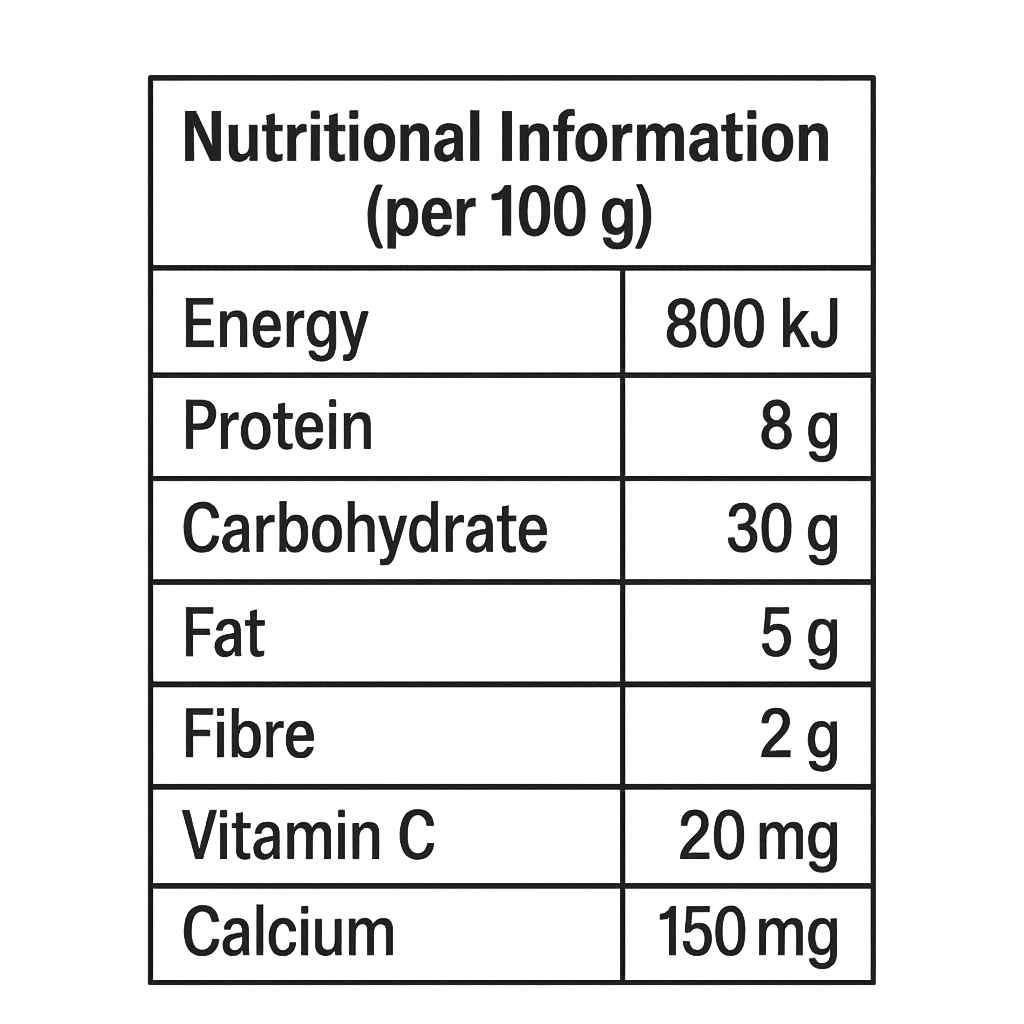
The diagram shows a food label for a ready‑to‑eat cereal bar. All values are given per 100 g of the product.
Question Parts
(a)
Using the conversion factors 1 g protein = 17 kJ, 1 g carbohydrate = 17 kJ and 1 g fat = 37 kJ, calculate the total energy that should be obtained from the protein, carbohydrate and fat shown on the label. Compare your result with the energy value stated on the label and suggest two possible reasons for any discrepancy.
(b)
Identify the nutrient that is present in the greatest amount (by mass) in the cereal bar and explain why this nutrient is important for a teenage athlete.
(c)
A person eats 250 g of the cereal bar. Calculate the amount of protein (in grams) and calcium (in milligrams) that the person will ingest.
(d)
Suggest two modifications to the formulation of the cereal bar that would make it more suitable for a person with hypertension, and briefly justify each suggestion.
Detailed Essay Solution & Marking Scheme Available

Get the step-by-step mathematical proofs, key points required by examiners, and a comprehensive breakdown from our AI Tutor.
Question 4 View Details
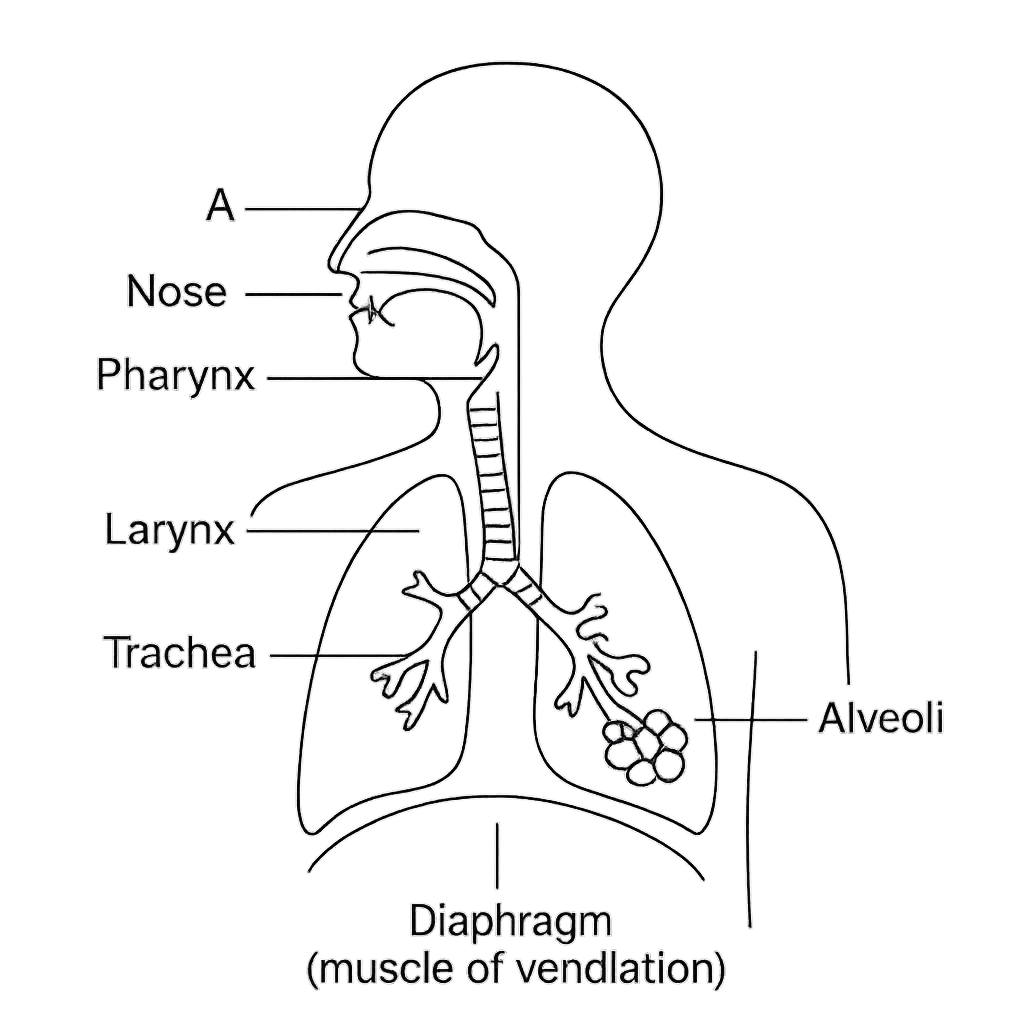
The diagram shows a labelled schematic of the human respiratory system.
Question Parts
(a)
Starting at the labelled entry point for air, describe the complete pathway that air follows to reach the site of gas exchange. Mention each labelled part in the correct order.
(b)
Explain how the structure of the alveoli (label G) facilitates efficient gas exchange. Include in your answer the role of surface area and diffusion distance.
(c)
Using the diagram, compare the pressure changes in the thoracic cavity during inhalation and exhalation and describe how the diaphragm (label H) contributes to these changes.
(d)
A patient with asthma experiences narrowing of the bronchioles (label F). Using the diagram, explain how this narrowing affects airflow and gas exchange, and suggest two management strategies that could alleviate the problem.
Detailed Essay Solution & Marking Scheme Available

Get the step-by-step mathematical proofs, key points required by examiners, and a comprehensive breakdown from our AI Tutor.

Question 5 View Details
A researcher is studying water movement in a mature bean plant (Phaseolus vulgaris) grown in a pot. The plant is watered with 500 mL of water at the start of the experiment. Over the next 72 hours the following observations are recorded: - The soil moisture sensor shows that the water content of the soil has fallen by 150 mL. - A potometer attached to the stem records a total water loss of 120 mL. - The fresh weight of the plant increased by 20 g (assume 1 g ≈ 1 mL water taken up for growth). The ambient temperature during the experiment was 25 °C and relative humidity 60 %. The researcher knows that, for this species, the rate of transpiration increases by about 10 % for each 1 °C rise in temperature, all other factors being constant.
Question Parts
(a)
Calculate the percentage of the water supplied that was lost by transpiration.
(b)
Explain the pathway that water follows from the soil to the atmosphere in this plant, naming the main processes involved.
(c)
If the temperature had been 30 °C instead of 25 °C, estimate the new amount of water that would have been lost by transpiration, assuming the same initial water supply and that the increase in temperature is the only change.
(d)
Discuss two ways the plant could reduce excessive water loss if the environment became hotter and drier.
Detailed Essay Solution & Marking Scheme Available

Get the step-by-step mathematical proofs, key points required by examiners, and a comprehensive breakdown from our AI Tutor.

Question 6 View Details
A 25‑year‑old male is investigated for dehydration after completing a marathon. The following renal data are obtained: - Glomerular filtration rate (GFR) = 120 mL min⁻¹. - In the proximal convoluted tubule, 65 % of the filtered Na⁺ and water are re‑absorbed. - In the loop of Henle, an additional 15 % of the filtered water is re‑absorbed, while Na⁺ re‑absorption is negligible. - In the distal convoluted tubule and collecting duct, under the influence of antidiuretic hormone (ADH), 80 % of the remaining water is re‑absorbed, while 5 % of the remaining Na⁺ is re‑absorbed. Assume that the filtered load of water equals the GFR (i.e., 120 mL min⁻¹) and that Na⁺ concentration in the filtrate is constant throughout the nephron.
Question Parts
(a)
Calculate the volume of urine formed per minute (i.e., the final urine flow rate) under the given conditions.
Detailed Essay Solution & Marking Scheme Available

Get the step-by-step mathematical proofs, key points required by examiners, and a comprehensive breakdown from our AI Tutor.

Question 7 View Details
Homeostasis is essential for maintaining the internal environment of the human body within narrow limits.
Question Parts
(a)
Explain how negative feedback regulates the concentration of glucose in the blood, describing the roles of the pancreas, insulin and glucagon.
(b)
Describe two mechanisms by which the body conserves water when fluid intake is low, linking each mechanism to the role of the kidneys and the hormone ADH.
(c)
A patient diagnosed with diabetes insipidus produces large volumes of dilute urine. Explain how this condition disrupts homeostasis and discuss the likely physiological consequences.
Detailed Essay Solution & Marking Scheme Available

Get the step-by-step mathematical proofs, key points required by examiners, and a comprehensive breakdown from our AI Tutor.

Question 8 View Details
Coordination of the nervous system enables organisms to respond rapidly and accurately to internal and external stimuli.
Question Parts
(a)
Outline the complete pathway of a stretch reflex, naming each structure involved and the sequence of events from the sensory receptor to the effector muscle.
(b)
Explain how the brain integrates sensory information from the visual and vestibular systems to coordinate a voluntary reaching movement, referring specifically to the roles of the cerebellum and the primary motor cortex.
(c)
In a laboratory experiment a frog’s sciatic nerve is stimulated with increasing electrical current. Predict how the amplitude and frequency of the recorded action potentials in the attached muscle will change as the stimulus intensity is raised, and justify your prediction.
Detailed Essay Solution & Marking Scheme Available

Get the step-by-step mathematical proofs, key points required by examiners, and a comprehensive breakdown from our AI Tutor.

Question 9 View Details
Answer the following questions about human reproduction.
Question Parts
(a)
Describe the hormonal changes that occur during the menstrual cycle and explain how these hormones regulate the phases of the cycle.
(b)
Explain how the structure of the fallopian tube facilitates fertilisation.
(c)
Two methods of contraception are the combined oral contraceptive pill and the intra‑uterine device (IUD).
() State the primary mechanism by which each method prevents pregnancy.
() Assess the effectiveness of each method, mentioning typical‑use failure rates.
Detailed Essay Solution & Marking Scheme Available

Get the step-by-step mathematical proofs, key points required by examiners, and a comprehensive breakdown from our AI Tutor.

Question 10 View Details
Answer the following questions about genetics.
Question Parts
(a)
A pure‑breeding tall pea plant (TT) is crossed with a pure‑breeding short plant (tt). All F1 plants are tall and are self‑fertilised to produce the F2 generation.
() Predict the genotypic ratio among the F2 offspring.
() Predict the phenotypic ratio among the F2 offspring.
() Calculate the probability that a randomly selected F2 plant is tall.
(b)
In a family a disorder is known to be autosomal recessive. The affected individual (II‑2) has unaffected parents (I‑1 and I‑2). His unaffected sister (II‑1) marries an unaffected man (II‑3). They have a child (III‑1) who is affected. Determine the genotype of II‑1 and the probability that a future child of II‑1 and II‑3 will be affected.
Detailed Essay Solution & Marking Scheme Available

Get the step-by-step mathematical proofs, key points required by examiners, and a comprehensive breakdown from our AI Tutor.

Master the Exam!

You've seen a preview, but there are thousands more questions plus AI tutor to break down complex solutions.

Unlock Full Access Available for Android & Windows
Help others prepare! Share this practice hub:
Chat with Support