igcse model questions vol1 2017 biology | Essay

Prepare for your exams with igcse model questions vol1 questions? Reviewing past/model questions is one of the most effective ways to guarantee a high score. This practice hub features authentic 2017 biology (Essay) questions designed to simulate the real exam environment.

Practice these randomly selected questions to test your readiness.
Question 1 View Details
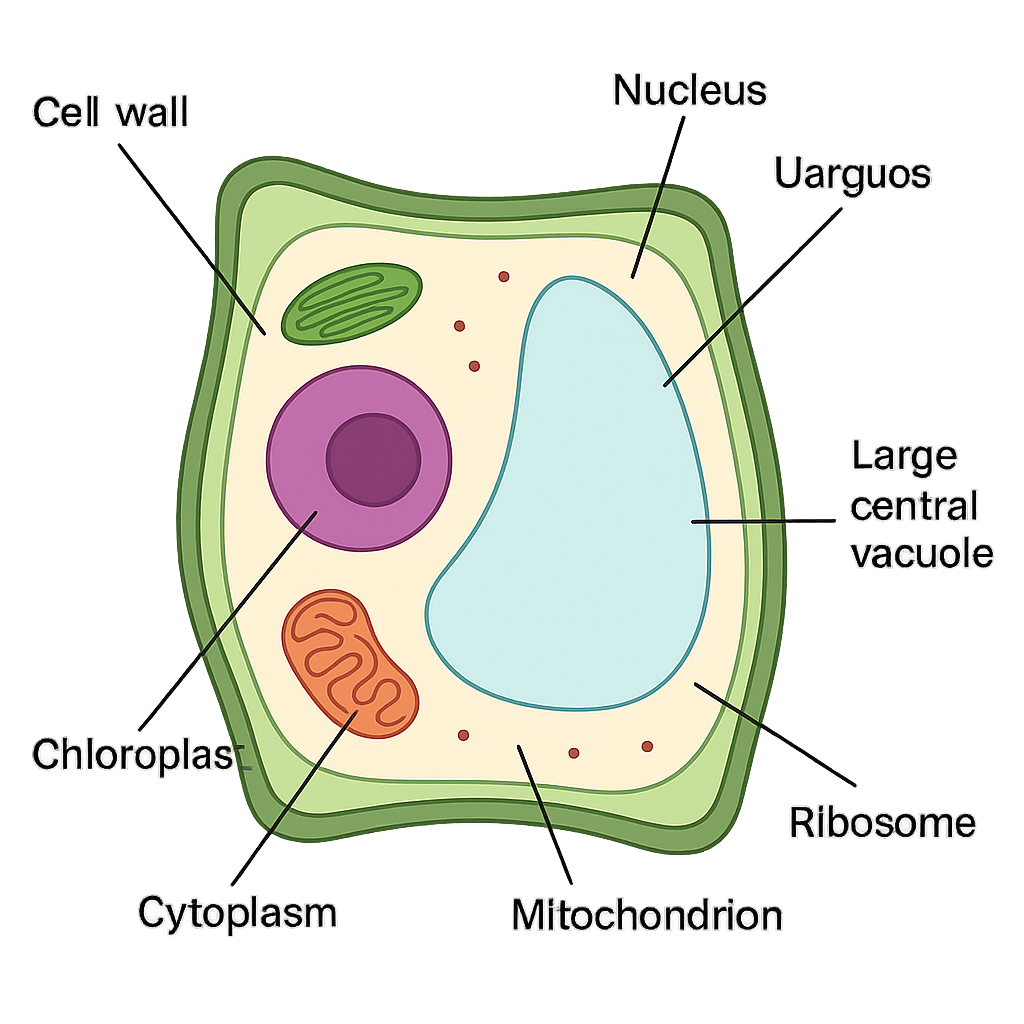
The diagram shows a typical plant cell.
Question Parts
(a)
Identify and label all the organelles shown in the diagram.
(b)
State the main function of each organelle you identified in part (a).
(c)
Explain why a cell wall is essential for a plant cell but absent in animal cells.
Detailed Essay Solution & Marking Scheme Available

Get the step-by-step mathematical proofs, key points required by examiners, and a comprehensive breakdown from our AI Tutor.
Question 2 View Details
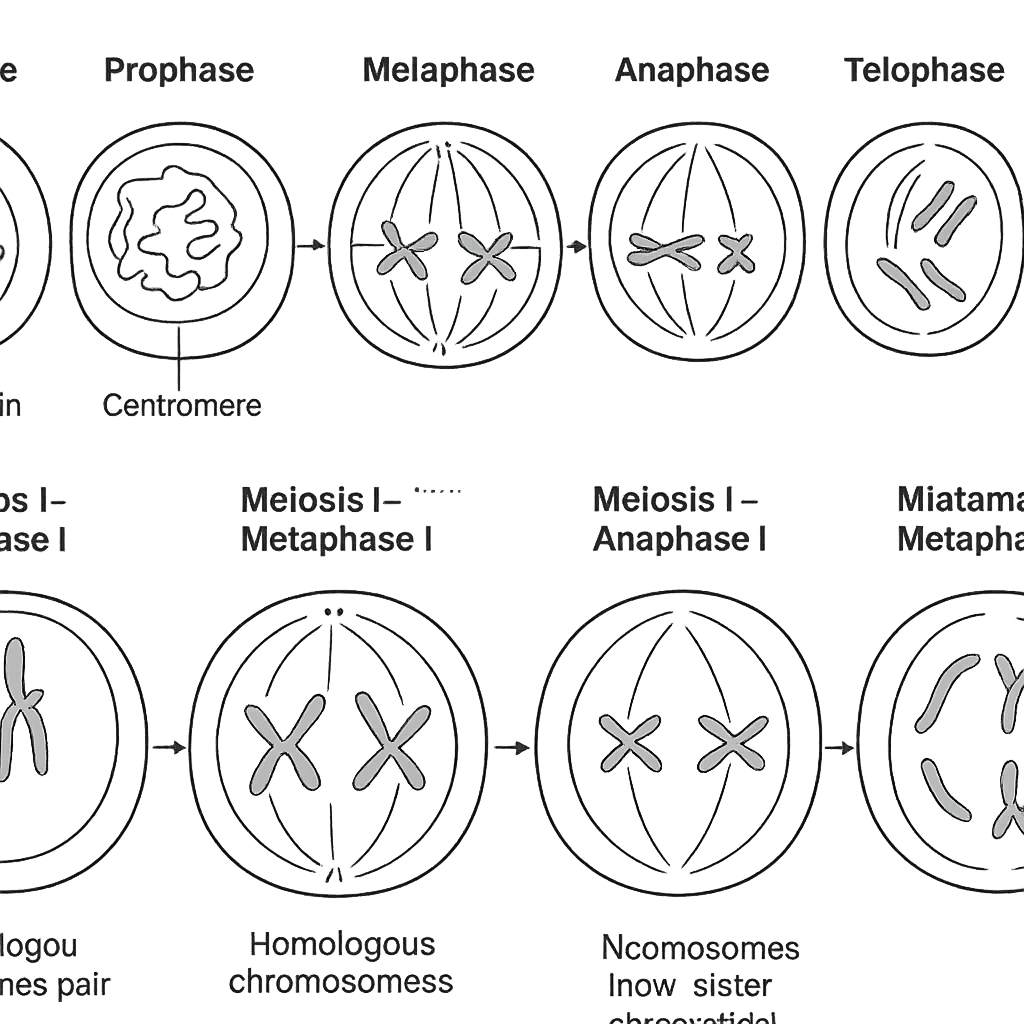
The diagram shows the main stages of cell division in a typical eukaryotic cell, illustrating both mitosis and the two successive meiotic divisions. All key structures such as chromosomes, centromeres, spindle fibres, nuclear envelope and cell membrane are labelled.
Question Parts
(a)
Describe the events that occur during mitosis. List the stages in their correct order and state the principal changes in chromosome number and arrangement at each stage.
(b)
Explain why meiosis produces cells with half the chromosome number of the original cell. Refer specifically to the stages at which the reduction in chromosome number occurs.
(c)
A plant breeder has produced a tetraploid (4n) variety of a crop. Using your knowledge of meiosis, explain how the chromosome number in the gametes of this tetraploid plant compares with that of a normal diploid (2n) plant, and discuss the possible outcome for the offspring if a tetraploid gamete fuses with a normal diploid gamete.
(d)
Compare mitosis and meiosis.
() State two major differences between mitosis and meiosis in terms of (i) chromosome behaviour and (ii) genetic variation produced.
() Briefly state one biological advantage of each process.
Detailed Essay Solution & Marking Scheme Available

Get the step-by-step mathematical proofs, key points required by examiners, and a comprehensive breakdown from our AI Tutor.
Question 3 View Details
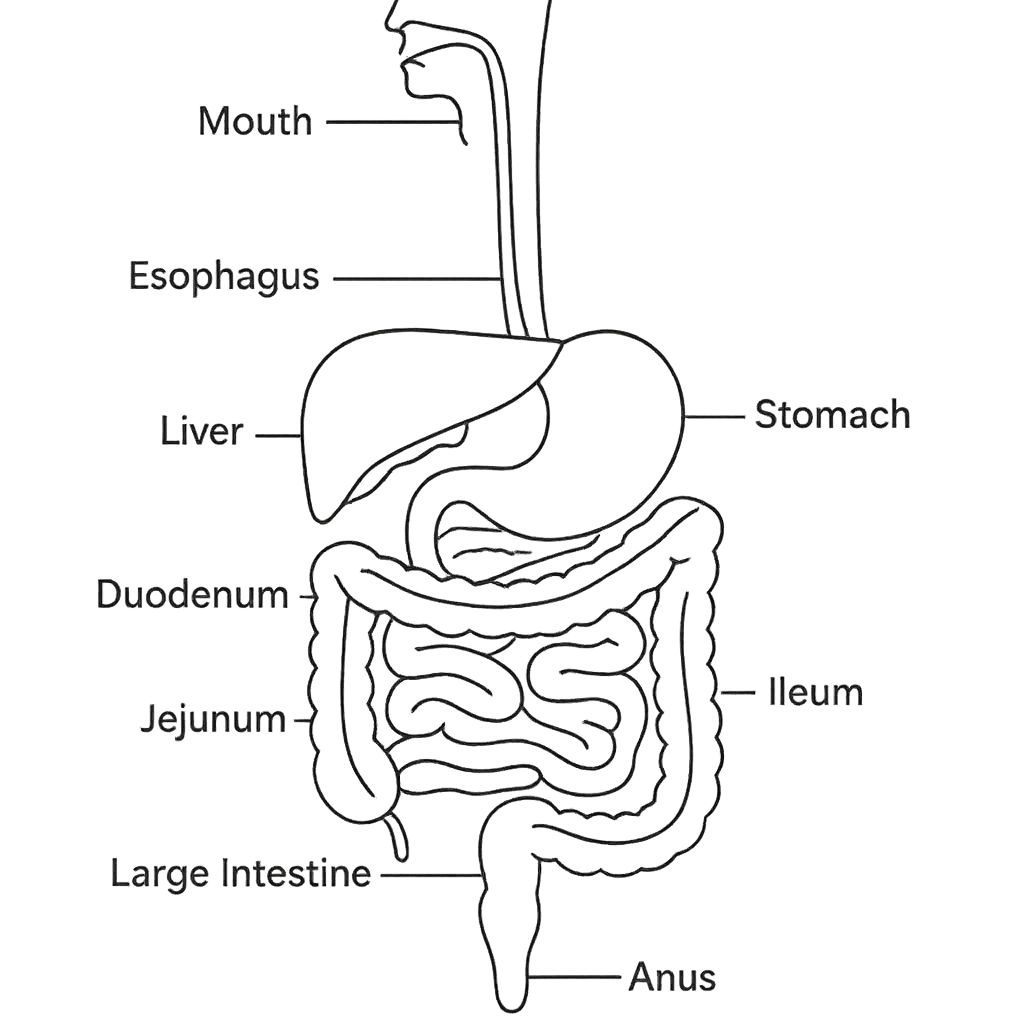
The diagram shows the main parts of the human digestive system.
Question Parts
(a)
Describe the complete pathway that a bolus of food follows from ingestion to elimination, naming each organ it passes through.
(b)
Carbohydrate digestion begins in the mouth and is completed in the small intestine. Explain the role of the enzymes involved at each stage, naming the specific enzymes and the pH at which they are most active.
(c)
A person has a deficiency of pancreatic amylase. Predict how this would affect the digestion of a starchy meal and suggest two practical dietary adjustments to compensate for the deficiency.
Detailed Essay Solution & Marking Scheme Available

Get the step-by-step mathematical proofs, key points required by examiners, and a comprehensive breakdown from our AI Tutor.
Question 4 View Details
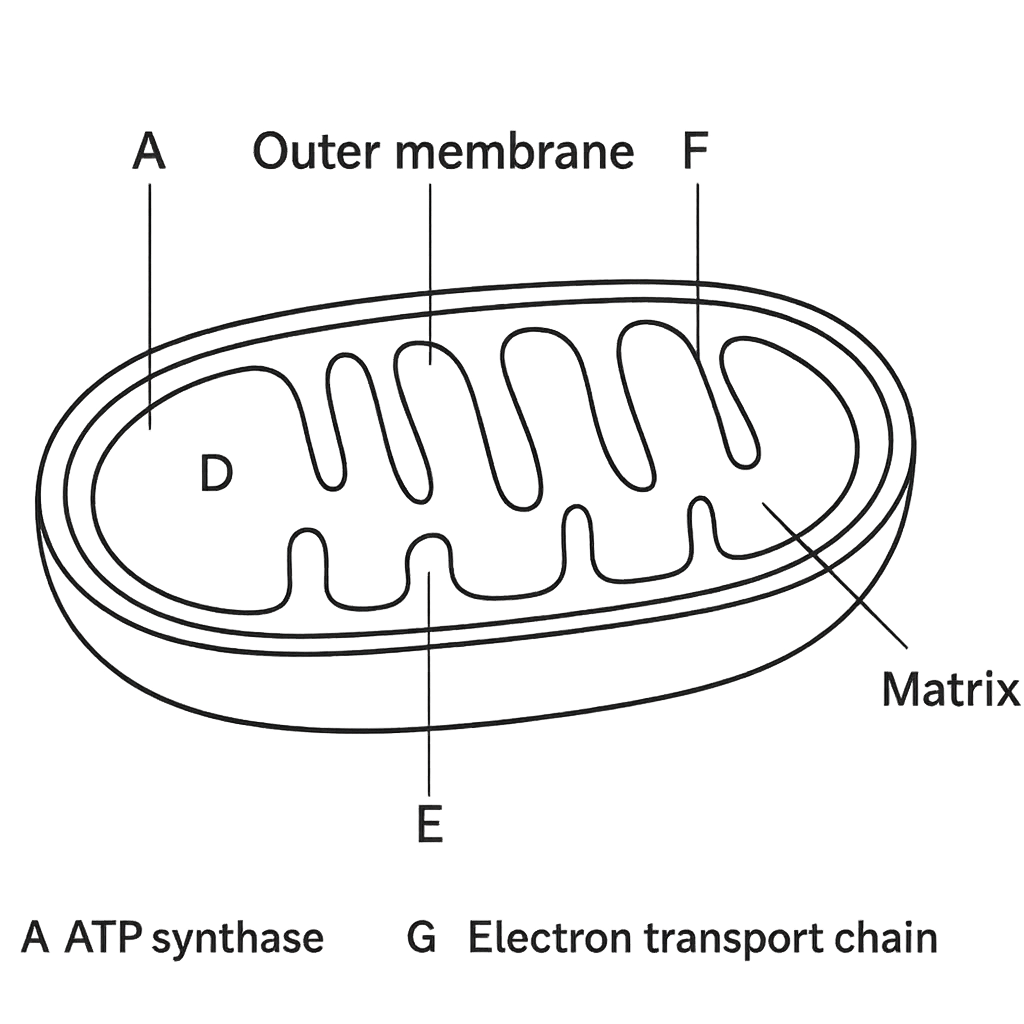
The diagram shows a typical eukaryotic cell mitochondrion with its major structures labelled from A to G.
Question Parts
(a)
State the name of each labelled part (A–G) shown in the diagram.
(b)
For each part identified in (a), briefly describe its specific role in aerobic respiration.
(c)
Using the information that each NADH yields 3 ATP and each FADH₂ yields 2 ATP in the electron transport chain, calculate the total number of ATP molecules produced from one molecule of glucose under fully aerobic conditions. Assume glycolysis produces 2 NADH and 2 ATP (substrate‑level), pyruvate oxidation produces 2 NADH, and the Krebs cycle produces 6 NADH, 2 FADH₂ and 2 ATP (substrate‑level). Then explain what would happen to the ATP yield if oxygen were limited.
Detailed Essay Solution & Marking Scheme Available

Get the step-by-step mathematical proofs, key points required by examiners, and a comprehensive breakdown from our AI Tutor.

Question 5 View Details
A student is studying the circulatory system of a mammal. She records an arterial blood pressure of 120 mmHg, a venous pressure of 10 mmHg and a total peripheral resistance of 20 mmHg·min·L⁻¹. The average heart rate is 75 beats per minute.
Question Parts
(a)
Calculate the cardiac output (CO) in litres per minute using the relationship CO = ΔP / R, where ΔP is the pressure difference between artery and vein and R is the resistance.
(b)
Using the cardiac output obtained in part (a), determine the average stroke volume (SV) in millilitres per beat.
(c)
Explain how the structural features of capillaries facilitate the exchange of nutrients and waste products between the blood and surrounding tissues.
(d)
Compare the transport of oxygen in blood with the transport of glucose in plasma. Discuss two major differences in the mechanisms and their physiological significance.
Detailed Essay Solution & Marking Scheme Available

Get the step-by-step mathematical proofs, key points required by examiners, and a comprehensive breakdown from our AI Tutor.

Question 6 View Details
A laboratory investigation measures the concentrations of urea and creatinine in the urine of a patient. Over a 24‑hour period the urine volume collected is 1.8 L. The concentrations are: urea = 15 g L⁻¹, creatinine = 0.9 g L⁻¹. The plasma creatinine concentration is 0.09 g L⁻¹.
Question Parts
(a)
Calculate the total amount (in grams) of urea and of creatinine excreted in the 24‑hour urine sample.
(b)
Using creatinine clearance as an estimate of glomerular filtration rate, calculate the creatinine clearance in millilitres per minute. Use the formula Clearance = (U × V) / P, where U is the urine concentration (g L⁻¹), V is the urine flow rate (L min⁻¹) and P is the plasma concentration (g L⁻¹).
(c)
Discuss two physiological mechanisms by which the kidney conserves water while still eliminating waste products.
(d)
If a patient with impaired renal function shows a plasma urea concentration of 0.5 g L⁻¹ while the urine volume falls to 0.9 L per day (urine urea concentration remains 15 g L⁻¹), explain why the plasma urea level rises despite the unchanged urine concentration.
Detailed Essay Solution & Marking Scheme Available

Get the step-by-step mathematical proofs, key points required by examiners, and a comprehensive breakdown from our AI Tutor.

Question 7 View Details
A 16‑year‑old student is found to have consistently high blood glucose levels during a routine health screening.
Question Parts
(a)
Explain the normal negative‑feedback mechanism that keeps blood glucose concentration within a narrow range. In your answer, describe the roles of the pancreas, insulin and glucagon, and identify the three main components of the feedback loop.
(b)
Describe the distribution of the hormone‑secreting cells within the pancreas, naming the specific cell types and the hormones they produce.
(c)
Predict the likely changes in blood‑glucose concentration and the clinical signs that would appear if the β‑cells of this student were destroyed (as in type 1 diabetes).
Detailed Essay Solution & Marking Scheme Available

Get the step-by-step mathematical proofs, key points required by examiners, and a comprehensive breakdown from our AI Tutor.

Question 8 View Details
A 20‑year‑old athlete cuts the tip of his index finger while playing football. The doctor explains that the rapid withdrawal of the finger is an example of a reflex action.
Question Parts
(a)
Outline the complete neural pathway of the myotatic (stretch) reflex that could be used to withdraw the finger from a painful stimulus.
(b)
Explain why the reflex withdrawal is faster than a voluntary movement that would achieve the same result.
(c)
A patient with multiple sclerosis shows noticeably slowed finger‑withdrawal reflexes. Discuss how loss of myelin affects nerve‑impulse conduction and the observable reflex response.
Detailed Essay Solution & Marking Scheme Available

Get the step-by-step mathematical proofs, key points required by examiners, and a comprehensive breakdown from our AI Tutor.

Question 9 View Details
A tropical plant species can reproduce both sexually, through insect‑pollinated flowers, and asexually, via stolons that spread over the soil surface. The plant is being cultivated in a region where pollinator activity is low during part of the year.
Question Parts
(a)
Describe the structure and function of the male and female gametophytes in a flowering plant.
(b)
Explain how the plant hormone auxin influences fruit development after fertilisation.
(c)
Given the low pollinator activity, discuss two management strategies to ensure seed production and two strategies to exploit asexual reproduction for large‑scale propagation of this plant. Provide a brief justification for each strategy.
Detailed Essay Solution & Marking Scheme Available

Get the step-by-step mathematical proofs, key points required by examiners, and a comprehensive breakdown from our AI Tutor.

Question 10 View Details
In a population of a freshwater fish, scale colour is controlled by a single gene with two alleles: S (dominant, silver) and s (recessive, black). A random sample of 200 fish shows 120 silver and 80 black individuals. The fish breed randomly.
Question Parts
(a)
Using Hardy–Weinberg principles, estimate the frequencies of the S and s alleles in this population.
(b)
Predict the expected genotype frequencies (SS, Ss, ss) in the next generation if the population remains in Hardy–Weinberg equilibrium.
(c)
A mutation occurs that converts the S allele to a new dominant allele T (gold) at a rate of 1 × 10⁻⁵ per generation. Assuming no selection, discuss the likely impact of this mutation on allele frequencies over 100 generations.
(d)
A breeder decides to select only silver‑coloured fish (SS or Ss) for breeding. Explain how this selective breeding will affect the allele frequencies of S and s over successive generations.
Detailed Essay Solution & Marking Scheme Available

Get the step-by-step mathematical proofs, key points required by examiners, and a comprehensive breakdown from our AI Tutor.

Master the Exam!

You've seen a preview, but there are thousands more questions plus AI tutor to break down complex solutions.

Unlock Full Access Available for Android & Windows
Help others prepare! Share this practice hub:
Chat with Support