gce model questions vol1 2021 chemistry | Essay

Prepare for your exams with gce model questions vol1 questions? Reviewing past/model questions is one of the most effective ways to guarantee a high score. This practice hub features authentic 2021 chemistry (Essay) questions designed to simulate the real exam environment.

Practice these randomly selected questions to test your readiness.
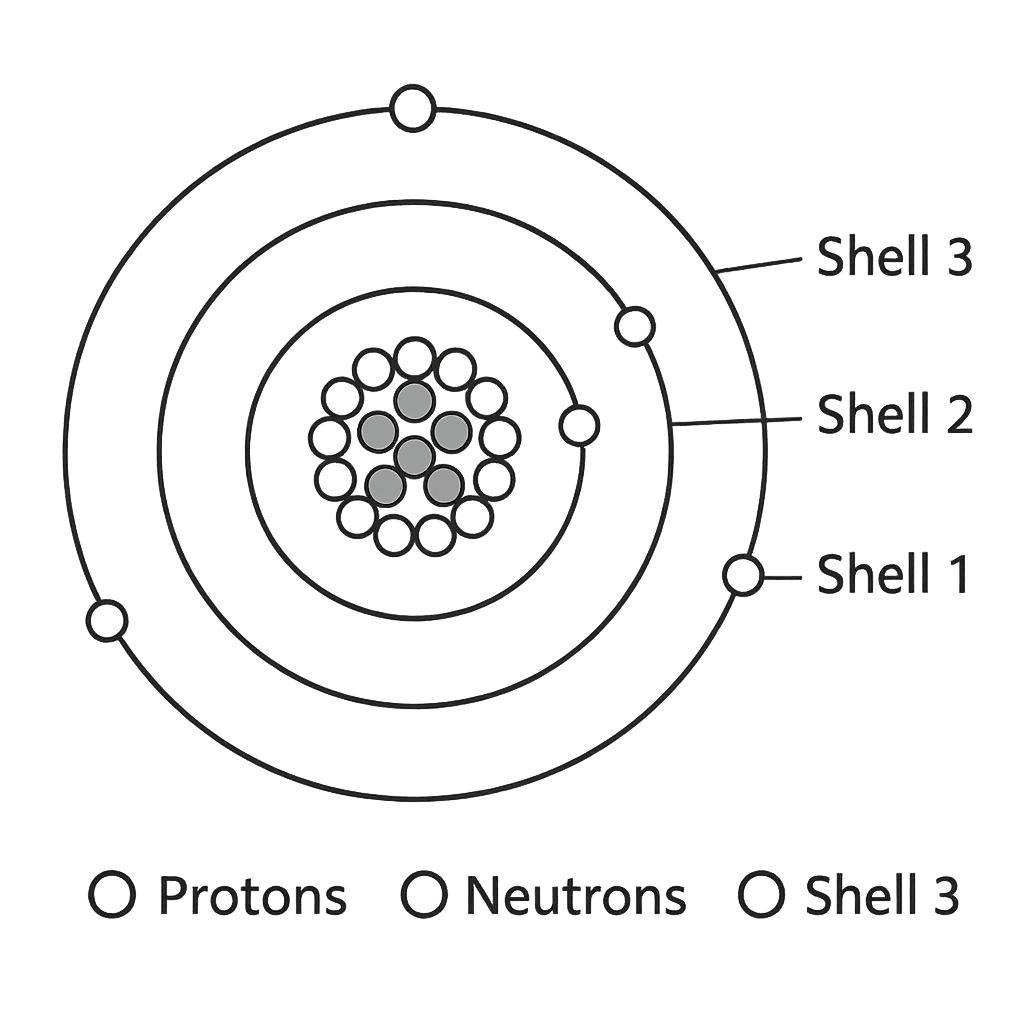
Question 1 View Details
The diagram shows a neutral atom of an unknown element. The nucleus contains 15 protons and 16 neutrons. The electron shells are labelled and the number of electrons in each shell is shown: first shell – 2 electrons, second shell – 8 electrons, third shell – 5 electrons.
Question Parts
(a)
Identify the element and write its symbol.
(b)
Calculate the mass number of the atom and give the standard notation for the isotope shown.
(c)
Write the ground‑state electron configuration of the element using the Aufbau principle and indicate the number of valence electrons.
(d)
Explain why this element commonly forms a –3 ion in its compounds.
Detailed Essay Solution & Marking Scheme Available

Get the step-by-step mathematical proofs, key points required by examiners, and a comprehensive breakdown from our AI Tutor.
Question 2 View Details
The illustration shows a portion of the periodic table covering periods 3 and 4 and groups 1 to 8. The element highlighted in the diagram is iron (Fe) with atomic number 26. The following data are given for the three transition metals in period 4: - Manganese (Mn, Z = 25): atomic radius 127 pm, first ionisation energy 717 kJ mol⁻¹, electronegativity 1.55. - Iron (Fe, Z = 26): atomic radius 126 pm, first ionisation energy 762 kJ mol⁻¹, electronegativity 1.83. - Cobalt (Co, Z = 27): atomic radius 125 pm, first ionisation energy 760 kJ mol⁻¹, electronegativity 1.88.
Question Parts
(a)
Explain why the atomic radius decreases from Mn to Co across the period, even though the number of electron shells remains the same.
(b)
Using the ionisation energy data, predict the most common oxidation state of iron in its compounds and justify your answer.
(c)
Write the ground‑state electron configuration of iron and discuss its magnetic behaviour in terms of unpaired electrons.
Detailed Essay Solution & Marking Scheme Available

Get the step-by-step mathematical proofs, key points required by examiners, and a comprehensive breakdown from our AI Tutor.

Question 3 View Details
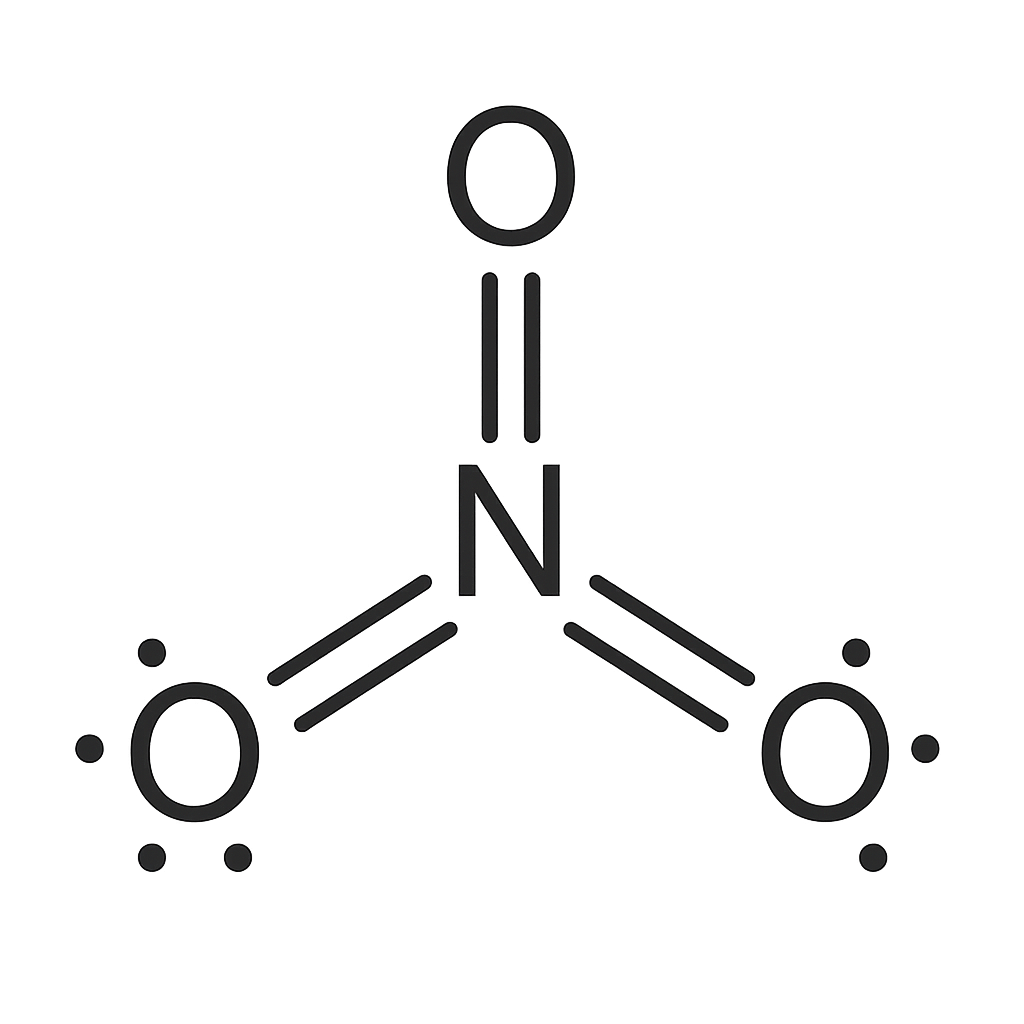
The diagram shows the Lewis structure of the nitrate ion (NO₃⁻).
Question Parts
(a)
Calculate the total number of valence electrons in the ion and determine the formal charge on each atom in the shown structure.
(b)
State the hybridisation of the nitrogen atom and describe the molecular geometry of the ion.
(c)
Explain why the nitrate ion exhibits resonance and draw all resonance structures that are possible.
(d)
Determine the average N–O bond order in the ion and discuss whether the ion is polar or non‑polar.
Detailed Essay Solution & Marking Scheme Available

Get the step-by-step mathematical proofs, key points required by examiners, and a comprehensive breakdown from our AI Tutor.

Question 4 View Details
The diagram below represents the coordination compound [Cu(NH₃)₄]SO₄·H₂O. The central copper ion is surrounded by four ammonia ligands, a sulphate ion acts as the counter‑ion and one molecule of water of crystallisation is present. Using the information from the diagram, answer the following questions.
Question Parts
(a)
Write the correct molecular formula of the compound, showing the numbers of each type of atom explicitly.
(b)
A 2.50 g sample of the compound is dissolved in water and treated with excess silver nitrate, precipitating Ag₂SO₄. The mass of the precipitate obtained is 3.18 g. Calculate the percentage by mass of the sulphate ion (SO₄²⁻) in the original sample.
(c)
Using the data above, determine the number of moles of copper present in the 2.50 g sample.
(d)
When the compound is heated strongly it loses the water of crystallisation and the four ammonia ligands, leaving copper(II) sulphate. Write the balanced overall decomposition reaction and calculate the mass of CuSO₄ that would be obtained from the 2.50 g sample.
Detailed Essay Solution & Marking Scheme Available

Get the step-by-step mathematical proofs, key points required by examiners, and a comprehensive breakdown from our AI Tutor.

Question 5 View Details
A sample of a mixed solid containing calcium carbonate (CaCO₃) and magnesium carbonate (MgCO₃) is treated with excess hydrochloric acid (HCl). The reaction proceeds according to: \n\nCaCO₃(s) + 2HCl(aq) → CaCl₂(aq) + CO₂(g) + H₂O(l)\nMgCO₃(s) + 2HCl(aq) → MgCl₂(aq) + CO₂(g) + H₂O(l)\n\nA 5.00 g sample of the mixed carbonate is completely reacted with 150 mL of 0.80 mol L⁻¹ HCl. After the reaction, the gaseous CO₂ is collected over water at 25 °C and a pressure of 760 mm Hg; the volume of dry CO₂ collected is 2.45 L. The mass of the solution remaining after filtration is 85.0 g. The molar masses are: CaCO₃ = 100.09 g mol⁻¹, MgCO₃ = 84.31 g mol⁻¹, HCl = 36.46 g mol⁻¹, CaCl₂ = 110.98 g mol⁻¹, MgCl₂ = 95.21 g mol⁻¹.\n\nAnswer the following:
Question Parts
(a)
Determine which carbonate, CaCO₃ or MgCO₃, is the limiting reagent.
(b)
Calculate the theoretical mass of CaCl₂ that could be formed if all of the limiting carbonate reacts completely.
(c)
Given that the actual mass of CaCl₂ obtained after evaporation of the filtrate is 4.35 g, calculate the percent yield of the reaction.
(d)
Explain qualitatively how the presence of excess HCl influences the completeness of the reaction and the purity of the isolated CaCl₂.
Detailed Essay Solution & Marking Scheme Available

Get the step-by-step mathematical proofs, key points required by examiners, and a comprehensive breakdown from our AI Tutor.

Question 6 View Details
A 12.0 g sample of a pure liquid substance (molar mass = 84.0 g mol⁻¹) is initially at 20.0 °C. The substance has a specific heat capacity of 2.0 J g⁻¹ K⁻¹ in the liquid state and a heat of vaporisation of 35.0 kJ mol⁻¹ at its normal boiling point of 150.0 °C. The surrounding atmosphere is at 1 atm pressure. The sample is placed in an insulated calorimeter and 1.20 MJ of heat is supplied uniformly.\n\nAnswer the following:
Question Parts
(a)
Calculate the amount of heat required to raise the temperature of the liquid from 20.0 °C to its boiling point (150.0 °C).
(b)
From the remaining heat after reaching the boiling point, determine the mass of the liquid that will be completely vaporised.
(c)
If after vaporising the mass found in part (b) there is still heat left, calculate the final temperature of the vapour assuming no further phase change occurs. (Use the specific heat capacity of the vapour as 1.5 J g⁻¹ K⁻¹.)
(d)
Briefly discuss why the boiling point of the substance would change if the external pressure were reduced to 0.5 atm.
Detailed Essay Solution & Marking Scheme Available

Get the step-by-step mathematical proofs, key points required by examiners, and a comprehensive breakdown from our AI Tutor.

Question 7 View Details
A student prepares a buffer solution by dissolving 0.20 mol of acetic acid (CH₃COOH) and 0.30 mol of sodium acetate (CH₃COONa) in enough water to make 1.00 L of solution. The acid dissociation constant of acetic acid is Ka = 1.8 × 10⁻⁵ at 25 °C.
Question Parts
(a)
Calculate the initial pH of the buffer solution.
(b)
The student then adds 0.010 mol of HCl to the buffer (the total volume remains 1.00 L). Determine the new pH of the solution after the acid has reacted with the buffer components.
(c)
Explain, in words, why the pH of the solution changes only slightly after the addition of the strong acid, and give a concise definition of buffer capacity.
(d)
Suggest one practical way to increase the buffer capacity of the solution and justify how it works.
Detailed Essay Solution & Marking Scheme Available

Get the step-by-step mathematical proofs, key points required by examiners, and a comprehensive breakdown from our AI Tutor.

Question 8 View Details
The solubility product of silver chloride at 25 °C is Ksp(AgCl) = 1.8 × 10⁻¹⁰. A 1.00 L solution initially contains 0.010 mol of AgNO₃. Sodium chloride solution is added gradually to this solution.
Question Parts
(a)
Calculate the concentration of chloride ion at which AgCl just begins to precipitate.
Detailed Essay Solution & Marking Scheme Available

Get the step-by-step mathematical proofs, key points required by examiners, and a comprehensive breakdown from our AI Tutor.

Question 9 View Details
Potassium permanganate is used to titrate oxalic acid dihydrate (H2C2O4·2H2O) in acidic solution. The reaction proceeds in an acidic medium and the standardised KMnO4 solution has a concentration of 0.0200 M.
Question Parts
(a)
Write the balanced overall redox equation for the reaction in acidic medium, showing the oxidation numbers of manganese and carbon in the reactants and products.
(b)
During a titration, 25.00 mL of the 0.0200 M KMnO₄ solution is required to reach the endpoint. Calculate the mass of oxalic acid dihydrate present in the sample.
(c)
Explain why the permanganate–oxalic acid reaction is suitable for the standardisation of a KMnO₄ solution.
Detailed Essay Solution & Marking Scheme Available

Get the step-by-step mathematical proofs, key points required by examiners, and a comprehensive breakdown from our AI Tutor.

Question 10 View Details
A galvanic cell is assembled with a zinc electrode immersed in 0.010 M ZnSO₄ solution and a copper electrode immersed in a solution of Cu²⁺ of unknown concentration. The cell operates at 25 °C and the measured electromotive force (EMF) is 1.10 V.
Question Parts
(a)
Write the overall cell reaction, indicating the anode and cathode half‑reactions.
(b)
Using the Nernst equation, calculate the concentration of Cu²⁺ in the copper half‑cell.
(c)
If the cell were operated at 35 °C, describe qualitatively how the EMF would be affected, assuming the ion concentrations remain the same.
Detailed Essay Solution & Marking Scheme Available

Get the step-by-step mathematical proofs, key points required by examiners, and a comprehensive breakdown from our AI Tutor.

Master the Exam!

You've seen a preview, but there are thousands more questions plus AI tutor to break down complex solutions.

Unlock Full Access Available for Android & Windows
Help others prepare! Share this practice hub:
Chat with Support