gce model questions vol1 2019 chemistry | Essay

Prepare for your exams with gce model questions vol1 questions? Reviewing past/model questions is one of the most effective ways to guarantee a high score. This practice hub features authentic 2019 chemistry (Essay) questions designed to simulate the real exam environment.

Practice these randomly selected questions to test your readiness.
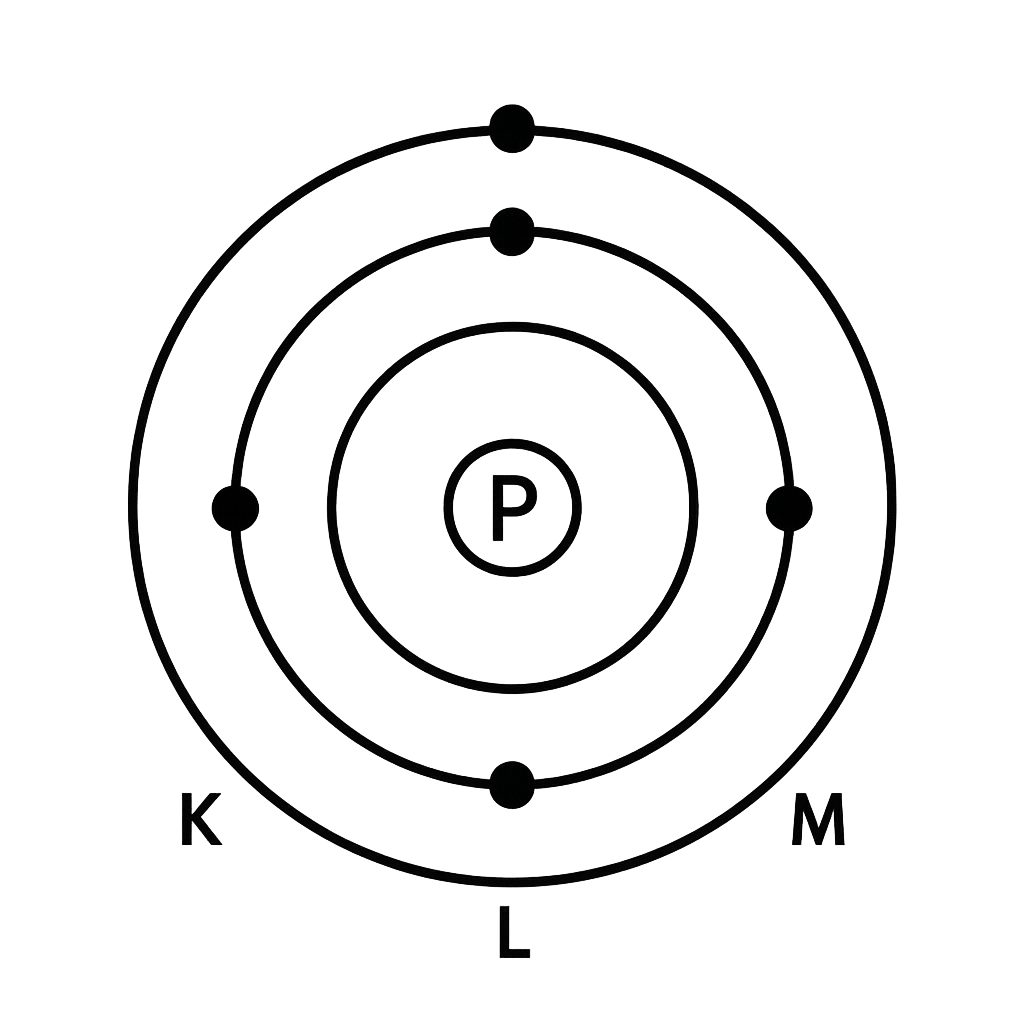
Question 1 View Details
The diagram shows a Bohr model of an atom with atomic number Z = 15. The nucleus is labelled “P” and the concentric shells are labelled K, L and M containing 2, 8 and 5 electrons respectively.
Question Parts
(a)
Write the ground‑state electron configuration of the atom using the Aufbau principle (show the distribution of electrons in the shells).
(b)
Using Slater’s rules (simplified) estimate the effective nuclear charge (Zₑff) felt by an outer‑most 3p electron and then calculate, with the Bohr‑type expression \(E = -13.6\,\dfrac{Z_{eff}^{2}}{n^{2}}\) eV, the energy required to remove that electron (first ionisation energy). Show all steps.
(c)
The experimental first ionisation energy of phosphorus is 10.5 eV. Discuss at least two reasons why the value obtained in part (b) differs markedly from the experimental value.
Detailed Essay Solution & Marking Scheme Available

Get the step-by-step mathematical proofs, key points required by examiners, and a comprehensive breakdown from our AI Tutor.
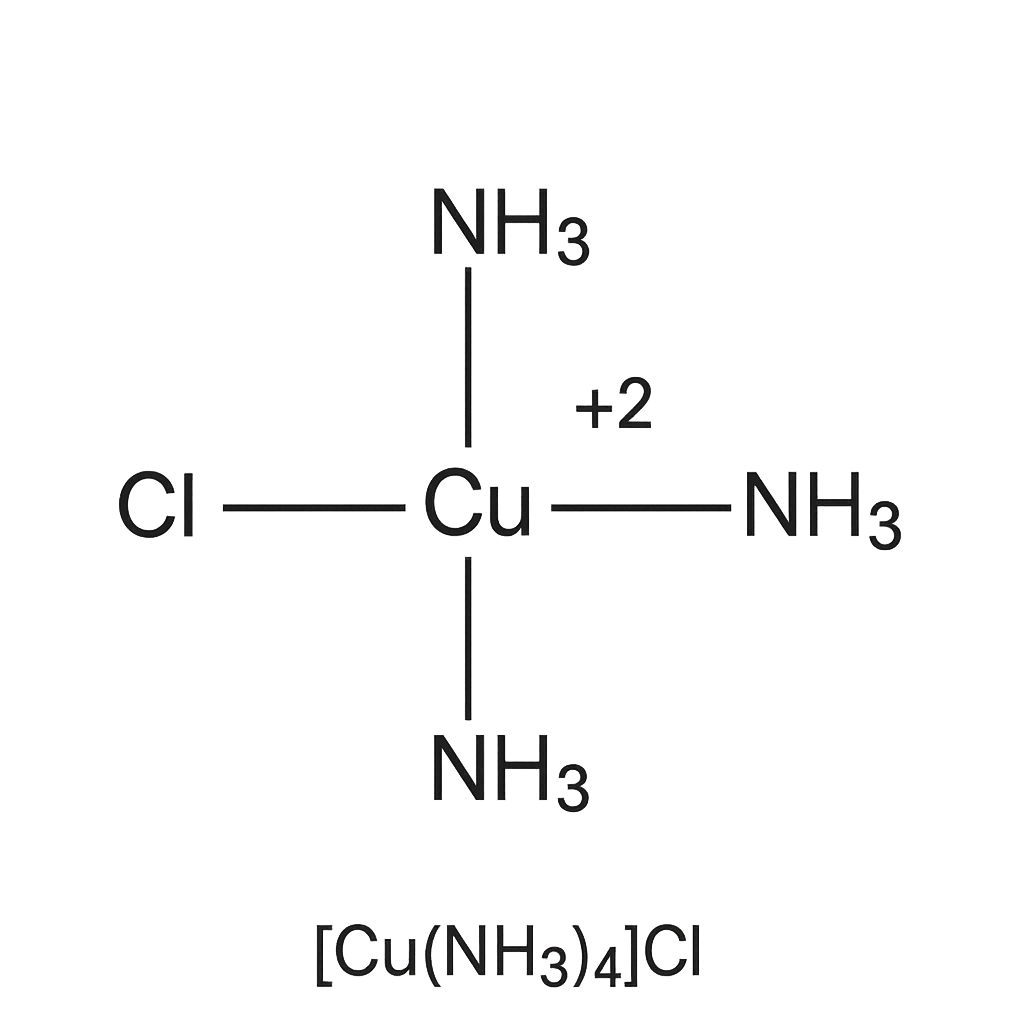
Question 2 View Details
The diagram shows the Lewis structure of the coordination compound [Cu(NH3)4]Cl2. The central copper ion is surrounded by four ammonia (NH3) ligands arranged in a square planar geometry, and two chloride ions act as counter‑ions.
Question Parts
(a)
State the oxidation state of the copper ion in the complex and justify your answer using periodic‑table information.
(b)
Write the electron configuration of the copper ion in the complex, indicating any electron loss and the resulting d‑electron count.
(c)
Explain why the complex adopts a square planar geometry rather than a tetrahedral geometry, referring to crystal‑field theory and the position of copper in the periodic table.
(d)
Predict the colour of the solid compound and give a brief explanation based on d‑d electronic transitions and the ligand‑field splitting you described.
Detailed Essay Solution & Marking Scheme Available

Get the step-by-step mathematical proofs, key points required by examiners, and a comprehensive breakdown from our AI Tutor.
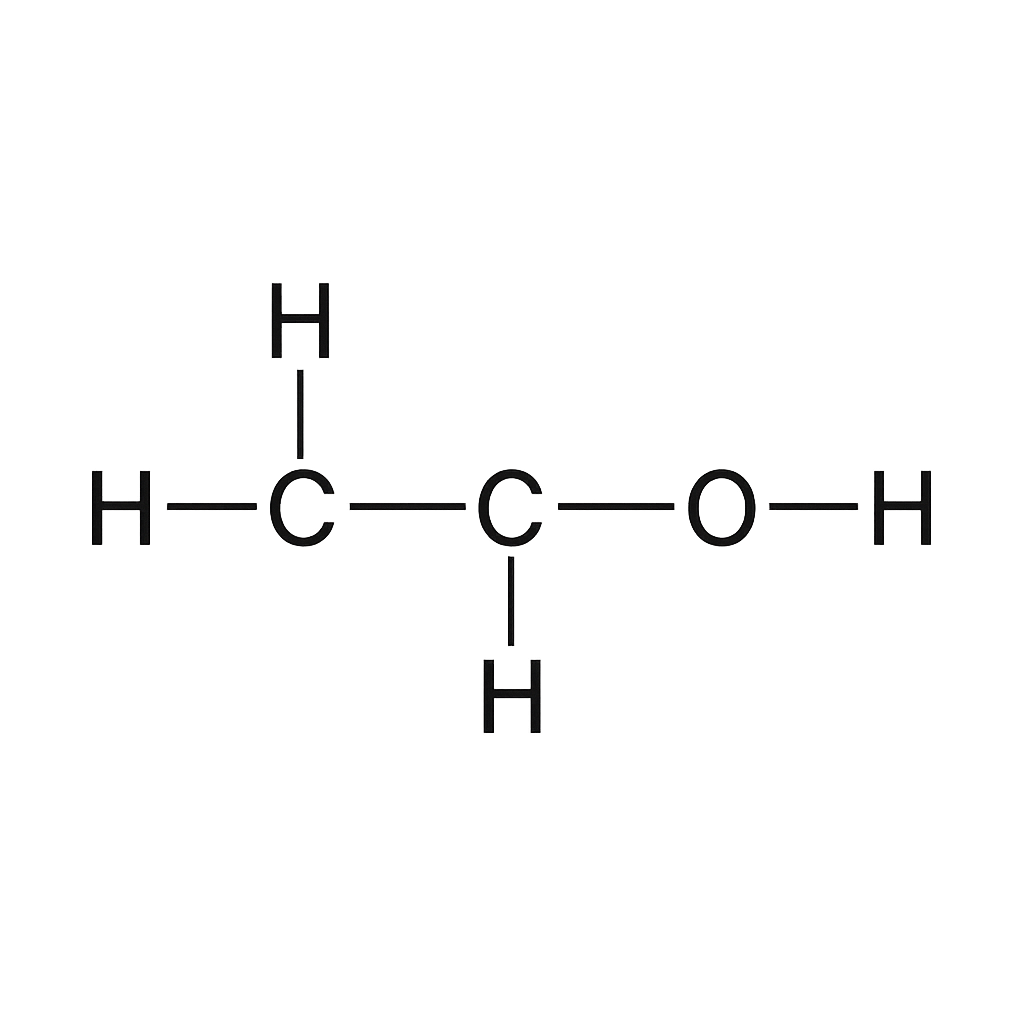
Question 3 View Details
The diagram shows the line‑bond structure of a covalent molecule containing carbon, hydrogen and oxygen atoms.
Question Parts
(a)
Write the molecular formula of the compound and state its empirical formula.
(b)
Draw the complete Lewis structure of the molecule, showing all bonding pairs and lone pairs on the oxygen atom.
(c)
Using VSEPR theory, state the predicted geometry around each central atom (both carbon atoms and the oxygen atom) and give the approximate bond angles.
(d)
Discuss whether the molecule is polar or non‑polar, giving reasons based on its shape and the electronegativity of the atoms involved.
Detailed Essay Solution & Marking Scheme Available

Get the step-by-step mathematical proofs, key points required by examiners, and a comprehensive breakdown from our AI Tutor.
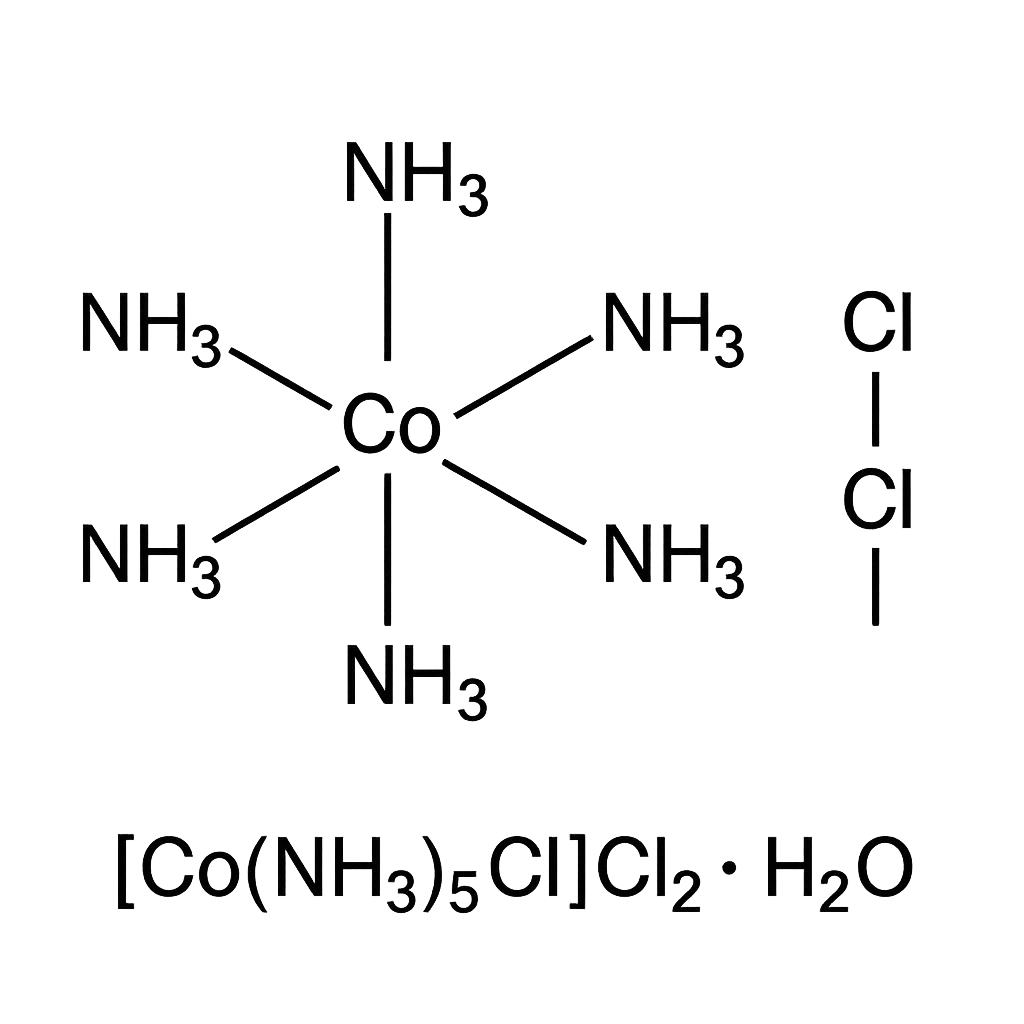
Question 4 View Details
The diagram shows the structural formula of the coordination compound [Co(NH₃)₅Cl]Cl₂·H₂O. The sample is dissolved in water and the solution is diluted to a final volume of 250.0 mL. Answer the following questions.
Question Parts
(a)
Write the correct empirical formula for the compound and state the oxidation state of the cobalt ion.
(b)
Calculate the molar mass of the compound (to three significant figures).
(c)
A 2.50 g sample of the compound is dissolved and diluted as described. Calculate:
() The number of moles of cobalt present in the solution.
() The concentration of chloride ions (free outer‑sphere chloride only) in the solution.
(d)
The solution is titrated with a standard AgNO₃ solution (0.200 mol L⁻¹) to precipitate all free chloride ions. If 25.0 mL of the AgNO₃ solution is required, calculate the percentage purity of the original 2.50 g sample with respect to the compound (assume any impurity does not contain chloride).
Detailed Essay Solution & Marking Scheme Available

Get the step-by-step mathematical proofs, key points required by examiners, and a comprehensive breakdown from our AI Tutor.

Question 5 View Details
A chemical plant produces ammonia (NH₃) by the Haber process using nitrogen gas (N₂) and hydrogen gas (H₂). The balanced equation is: N₂(g) + 3 H₂(g) → 2 NH₃(g) The plant initially charges a reactor with 140 g of N₂ and an excess of H₂. The student is required to:
Question Parts
(a)
Calculate the theoretical mass of NH₃ that could be obtained from the 140 g of N₂.
(b)
If the actual mass of NH₃ recovered after the reaction is 150 g, determine the percent yield of the process.
(c)
The plant now wishes to produce 500 g of NH₃ with an expected overall yield of 85 %. Calculate the mass of N₂ that must be initially charged (assume H₂ is in large excess).
(d)
Discuss at least three practical factors that can affect the yield of NH₃ in the industrial Haber process.
Detailed Essay Solution & Marking Scheme Available

Get the step-by-step mathematical proofs, key points required by examiners, and a comprehensive breakdown from our AI Tutor.

Question 6 View Details
A sealed rigid container holds 2.00 mol of an ideal gas at 300 K and 1.00 atm. The gas is heated to 450 K while the pressure is kept constant by allowing the piston to move freely. The gas in question is nitrogen (N₂) for which the van der Waals constants are a = 1.39 L² atm mol⁻² and b = 0.0391 L mol⁻¹. The student is asked to:
Question Parts
(a)
Using the ideal‑gas law, calculate the volume of the gas at 450 K (keep pressure at 1.00 atm).
(b)
Taking the same amount of gas, temperature and volume obtained in part (a), calculate the actual pressure using the van der Waals equation.
(c)
Explain why the vapour pressure of water at 100 °C is equal to the atmospheric pressure and how this relates to the phase change from liquid to vapour.
(d)
Discuss how the strength of intermolecular forces influences the boiling points of different substances.
Detailed Essay Solution & Marking Scheme Available

Get the step-by-step mathematical proofs, key points required by examiners, and a comprehensive breakdown from our AI Tutor.

Question 7 View Details
A student prepares a buffer solution by dissolving 0.50 mol of acetic acid (CH₃COOH, Ka = 1.8 × 10⁻⁵) and 0.30 mol of sodium acetate (CH₃COONa) in 1.0 L of water.
Question Parts
(a)
Explain, with reference to the acid‑base equilibrium, how this mixture resists changes in pH when small amounts of a strong acid or a strong base are added.
(b)
Calculate the pH of the buffer solution.
(c)
The student adds 0.10 mol of 0.1 M HCl to the buffer (volume change is negligible). Calculate the new pH after the addition, showing all steps.
(d)
Discuss two practical applications where such a buffer would be advantageous, and explain why its buffering capacity is appropriate for each application.
Detailed Essay Solution & Marking Scheme Available

Get the step-by-step mathematical proofs, key points required by examiners, and a comprehensive breakdown from our AI Tutor.

Question 8 View Details
A saturated solution of calcium fluoride, CaF₂, at 25 °C is in equilibrium with solid CaF₂. The solubility product of CaF₂ at 25 °C is Ksp = 1.5 × 10⁻¹⁰.
Question Parts
(a)
Write the dissolution equilibrium equation for CaF₂ and the corresponding expression for Ksp.
Detailed Essay Solution & Marking Scheme Available

Get the step-by-step mathematical proofs, key points required by examiners, and a comprehensive breakdown from our AI Tutor.

Question 9 View Details
The reaction between potassium permanganate and oxalic acid in acidic solution is commonly employed in volumetric analysis.
Question Parts
(a)
Write the balanced redox equation for the reaction in acidic medium.
(b)
Identify the oxidising agent and the reducing agent and state the change in oxidation numbers for the species involved.
(c)
In a titration, 25.0 cm³ of 0.0200 M KMnO₄ solution is required to completely oxidise 10.0 cm³ of oxalic acid solution. Calculate the concentration of the oxalic acid solution. (Assume the balanced equation from part (a) gives a 2 : 5 mole ratio between MnO₄⁻ and C₂O₄²⁻.)
(d)
Discuss two practical considerations that must be observed when using KMnO₄ as a titrant in redox titrations.
Detailed Essay Solution & Marking Scheme Available

Get the step-by-step mathematical proofs, key points required by examiners, and a comprehensive breakdown from our AI Tutor.

Question 10 View Details
A galvanic cell is constructed using a copper electrode immersed in 0.010 M Cu²⁺ solution and a silver electrode immersed in 0.10 M Ag⁺ solution.
Question Parts
(a)
Write the overall cell reaction and calculate the standard cell potential (E°cell) using the standard reduction potentials: Cu²⁺ + 2e⁻ → Cu (E° = +0.34 V) and Ag⁺ + e⁻ → Ag (E° = +0.80 V).
Detailed Essay Solution & Marking Scheme Available

Get the step-by-step mathematical proofs, key points required by examiners, and a comprehensive breakdown from our AI Tutor.

Master the Exam!

You've seen a preview, but there are thousands more questions plus AI tutor to break down complex solutions.

Unlock Full Access Available for Android & Windows
Help others prepare! Share this practice hub:
Chat with Support