gce model questions vol1 2018 biology | Essay

Prepare for your exams with gce model questions vol1 questions? Reviewing past/model questions is one of the most effective ways to guarantee a high score. This practice hub features authentic 2018 biology (Essay) questions designed to simulate the real exam environment.

Practice these randomly selected questions to test your readiness.
Question 1 View Details
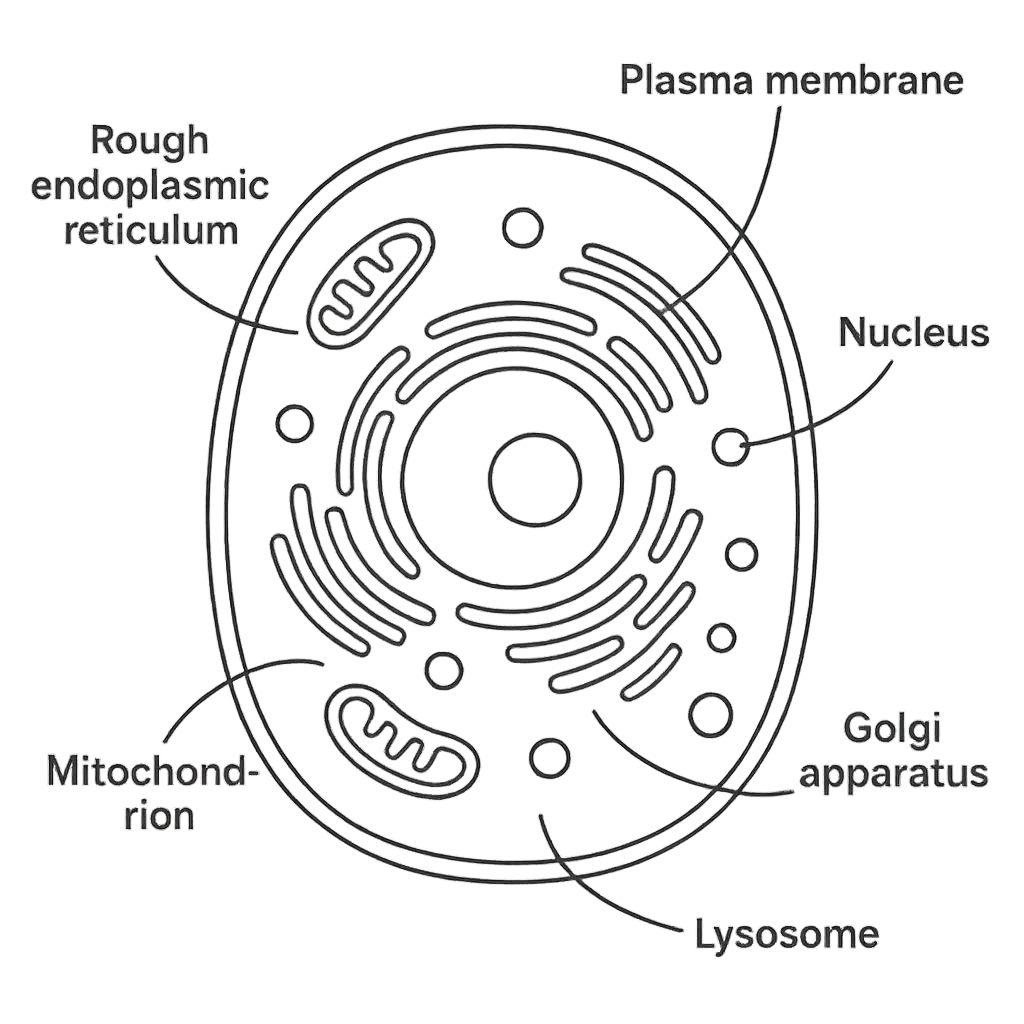
The illustration shows a typical eukaryotic animal cell with the major organelles labelled as indicated.
Question Parts
(a)
For each labelled organelle, give a concise description of its main function:
(b)
Explain how the structural features of the plasma membrane enable it to act as a selectively permeable barrier.
(c)
A drug reduces mitochondrial ATP production by 30 %. Discuss two likely cellular consequences of this decrease.
Detailed Essay Solution & Marking Scheme Available

Get the step-by-step mathematical proofs, key points required by examiners, and a comprehensive breakdown from our AI Tutor.
Question 2 View Details
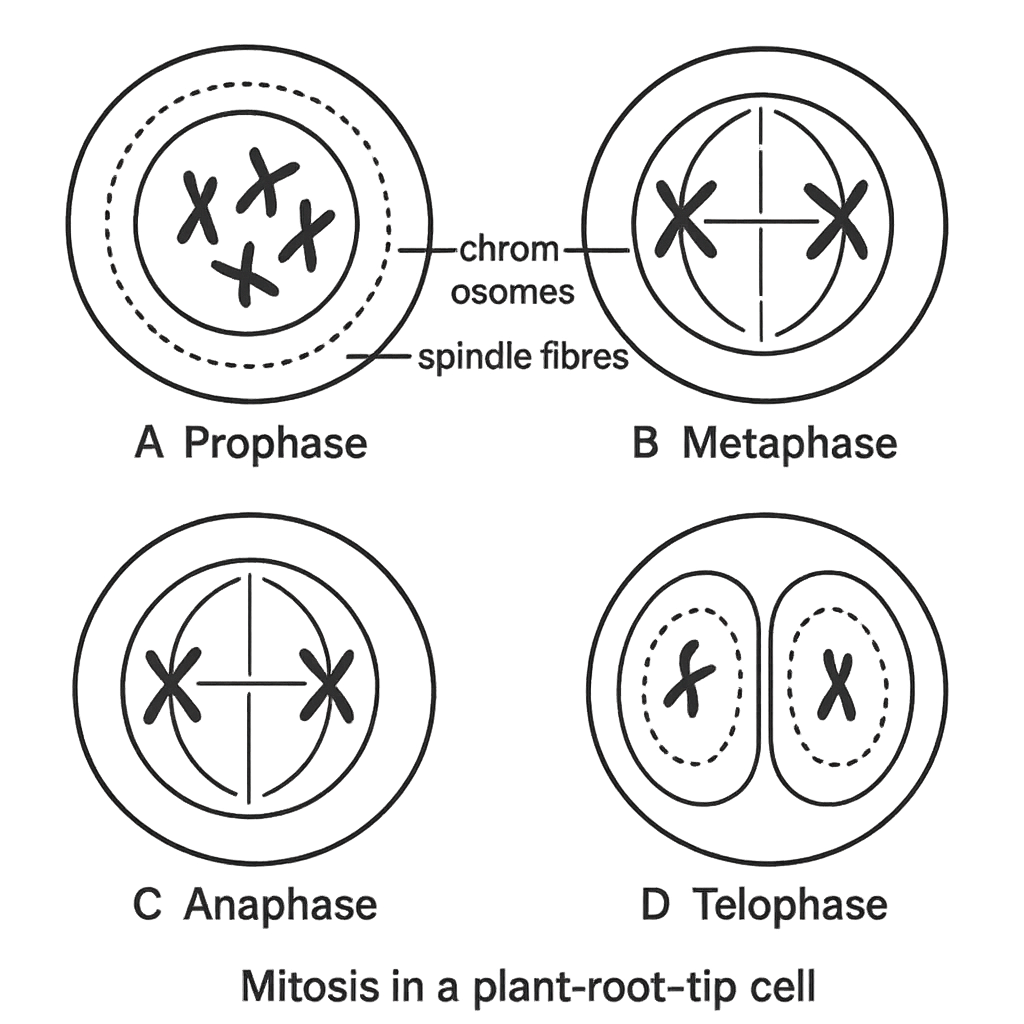
The labelled diagram (Figure) depicts four successive stages of mitosis in a plant root‑tip cell, labelled A, B, C and D.
Question Parts
(a)
State the correct chronological order of the stages shown in the diagram and mention one key event that characterises each stage.
(b)
Explain the role of spindle fibres during metaphase and anaphase.
(c)
A mutation prevents formation of the contractile ring during cytokinesis. Predict the likely outcome for the two daughter cells.
Detailed Essay Solution & Marking Scheme Available

Get the step-by-step mathematical proofs, key points required by examiners, and a comprehensive breakdown from our AI Tutor.
Question 3 View Details
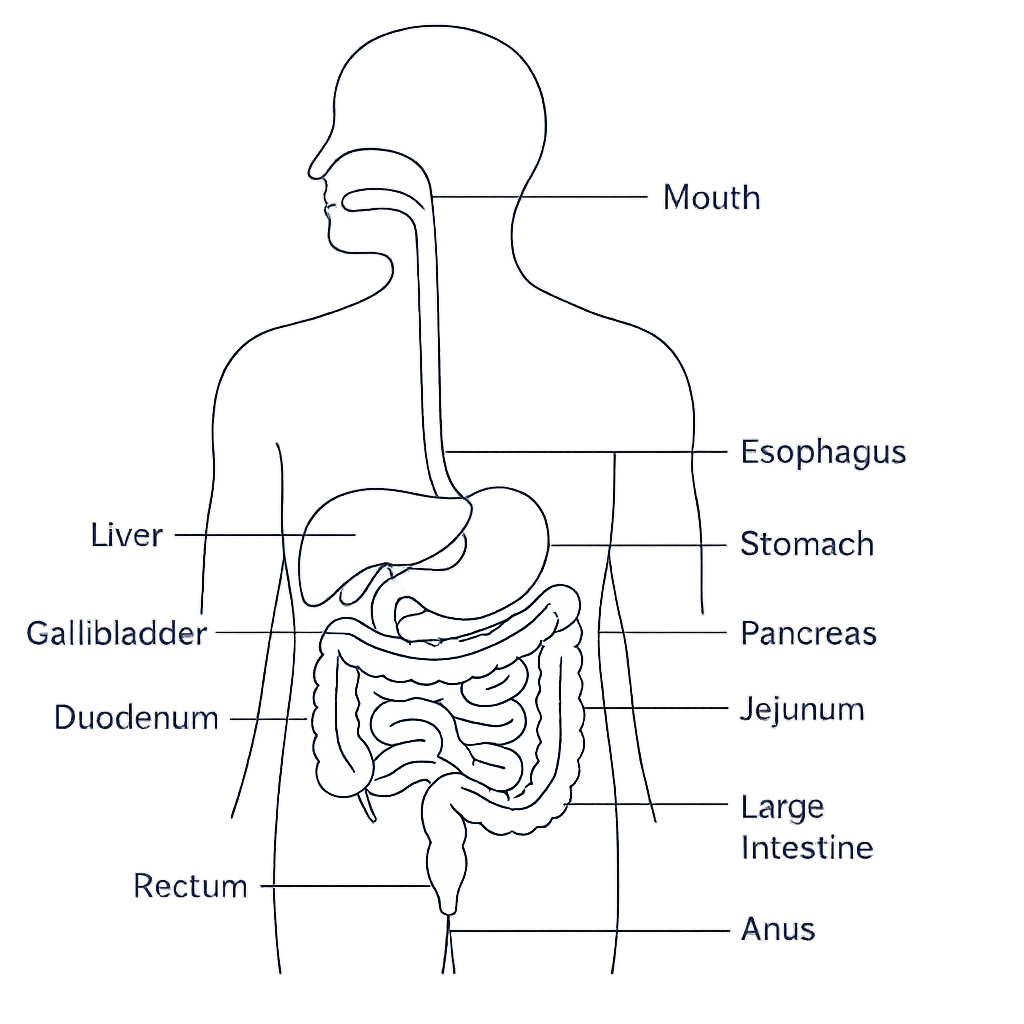
The diagram shows a labelled illustration of the human digestive system, including the mouth, esophagus, stomach, duodenum, jejunum, ileum, large intestine, rectum, anus, liver, gallbladder and pancreas.
Question Parts
(a)
State the principal function of each of the following organs: mouth, stomach, small intestine and large intestine.
(b)
Explain how mechanical and chemical digestion occur in the stomach, mentioning the role of the main components of gastric juice.
(c)
The pancreas is shown adjacent to the duodenum. Describe how pancreatic secretions aid digestion in the small intestine and outline the hormonal regulation of their release.
(d)
Identify the region where most nutrient absorption occurs and discuss two structural adaptations that make this region efficient for absorption.
Detailed Essay Solution & Marking Scheme Available

Get the step-by-step mathematical proofs, key points required by examiners, and a comprehensive breakdown from our AI Tutor.
Question 4 View Details
Respiration is essential for supplying oxygen to cells and removing carbon dioxide. Answer the following questions.
Question Parts
(a)
Describe the pathway that air follows from the external environment to the alveoli, naming each structure and its role in conditioning the inhaled air.
Detailed Essay Solution & Marking Scheme Available

Get the step-by-step mathematical proofs, key points required by examiners, and a comprehensive breakdown from our AI Tutor.

Question 5 View Details
In a mammalian body, the transport of oxygen from the lungs to the tissues involves several physiological steps.
Question Parts
(a)
Outline the complete pathway that oxygen follows from the alveolar air to a skeletal muscle cell, indicating the medium of transport at each stage and the principal physiological structures involved.
(b)
The partial pressure of oxygen (pO₂) in alveolar air is 100 mmHg and in systemic arterial blood is 95 mmHg. Haemoglobin can bind 1.34 mL O₂ per gram of Hb and the blood contains 150 g Hb per litre. Using Henry’s law (0.003 mL O₂ · L⁻¹ · mmHg⁻¹) for dissolved O₂, calculate the maximum amount of oxygen (in millilitres) that can be carried in 5 L of arterial blood. Show all steps of your calculation.
(c)
Discuss two physiological factors that can impair the efficiency of oxygen transport in the blood and the likely consequences for tissue metabolism.
Detailed Essay Solution & Marking Scheme Available

Get the step-by-step mathematical proofs, key points required by examiners, and a comprehensive breakdown from our AI Tutor.

Question 6 View Details
The human kidney is the principal organ for excretion of metabolic waste and regulation of body fluid composition.
Question Parts
(a)
Describe the structural organization of a nephron and state the main function of each segment (glomerulus, proximal tubule, loop of Henle, distal tubule, and collecting duct) in the formation of urine.
(b)
A person consumes 120 g of protein in a day. Protein contains 16 % nitrogen by weight and 80 % of the absorbed nitrogen is converted to urea for excretion. The molecular weight of urea is 60 g mol⁻¹ and each mole of urea contains two nitrogen atoms (28 g N mol⁻¹). Estimate the mass of urea that must be eliminated in the urine (in grams). Show all steps of your calculation.
(c)
Explain how antidiuretic hormone (ADH) influences water re‑absorption in the collecting duct and the resulting effect on urine concentration.
Detailed Essay Solution & Marking Scheme Available

Get the step-by-step mathematical proofs, key points required by examiners, and a comprehensive breakdown from our AI Tutor.

Question 7 View Details
A 25‑year‑old male athlete is training in a hot and humid environment. During the session his core body temperature rises, his blood glucose level falls because of prolonged exercise, and he begins to sweat heavily.
Question Parts
(a)
Describe the negative‑feedback mechanisms that act to restore normal core temperature.
(b)
Explain how blood‑glucose homeostasis is maintained during prolonged exercise.
(c)
Evaluate the possible consequences if one of these homeostatic mechanisms fails (choose either temperature regulation or glucose regulation). Include potential short‑term and long‑term effects on performance and health.
Detailed Essay Solution & Marking Scheme Available

Get the step-by-step mathematical proofs, key points required by examiners, and a comprehensive breakdown from our AI Tutor.

Question 8 View Details
During a laboratory experiment a student taps the tip of a frog’s toe and records that the hind leg flexes rapidly and then returns to its original position.
Question Parts
(a)
Describe the neural pathway involved in this withdrawal reflex, naming the receptor, afferent neuron, interneuron (if present), effector muscle and the type of synapse.
(b)
Compare this reflex with a voluntary movement such as lifting a glass of water. Discuss differences in speed, cortical involvement and purpose.
(c)
A toxin that blocks acetylcholine receptors at the neuromuscular junction is introduced. Predict how this would affect the reflex described and explain the underlying physiological basis.
Detailed Essay Solution & Marking Scheme Available

Get the step-by-step mathematical proofs, key points required by examiners, and a comprehensive breakdown from our AI Tutor.

Question 9 View Details
Human reproduction is controlled by a complex interplay of hormones and physiological processes.
Question Parts
(a)
Describe the sequential hormonal changes that occur during the menstrual cycle and explain how these changes regulate the endometrium.
(b)
Explain the role of the hypothalamic‑pituitary‑gonadal axis in the timing of ovulation.
(c)
Two contraceptive methods are the combined oral contraceptive pill and the intra‑uterine device (IUD). Evaluate each method in terms of its mechanism of action and reported effectiveness.
Detailed Essay Solution & Marking Scheme Available

Get the step-by-step mathematical proofs, key points required by examiners, and a comprehensive breakdown from our AI Tutor.

Question 10 View Details
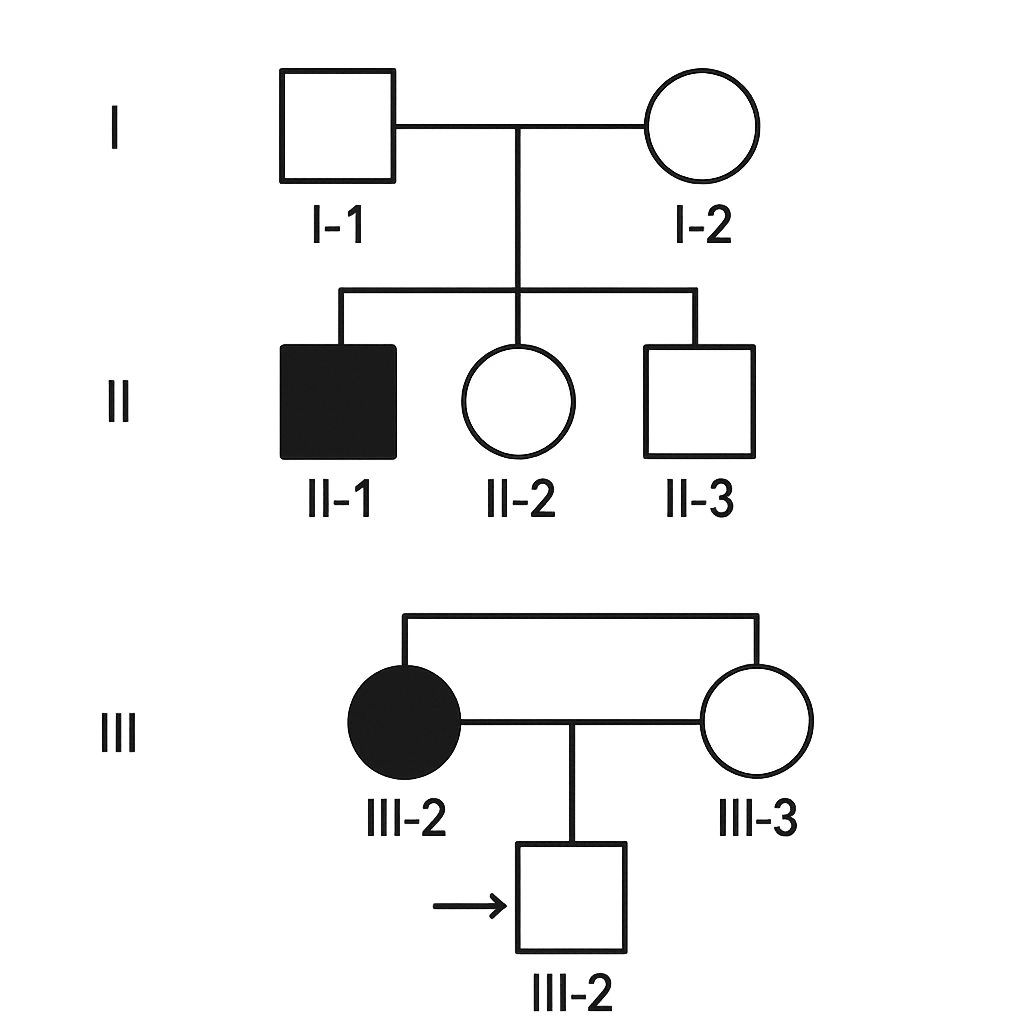
The diagram shows a three‑generation pedigree for a rare autosomal recessive disorder (shaded symbols). Squares represent males and circles represent females. The disorder is caused by the homozygous recessive genotype aa. The proband is the shaded male in generation III indicated by an arrow. Assume that the partner of the proband is unrelated, phenotypically normal and not a known carrier.
Question Parts
(a)
State the most likely genotype of each individual shown in the pedigree (I‑1, I‑2, II‑1, II‑2, II‑3, III‑1, III‑2, III‑3).
(b)
Using the genotypes deduced in part (a), calculate the probability that a future child of the proband (aa) with an unrelated, phenotypically normal partner will be affected by the disorder.
(c)
Explain, with reference to the pedigree, why the disorder is concluded to be autosomal recessive rather than X‑linked.
Detailed Essay Solution & Marking Scheme Available

Get the step-by-step mathematical proofs, key points required by examiners, and a comprehensive breakdown from our AI Tutor.

Master the Exam!

You've seen a preview, but there are thousands more questions plus AI tutor to break down complex solutions.

Unlock Full Access Available for Android & Windows
Help others prepare! Share this practice hub:
Chat with Support