gce model questions vol1 2017 chemistry | Essay

Prepare for your exams with gce model questions vol1 questions? Reviewing past/model questions is one of the most effective ways to guarantee a high score. This practice hub features authentic 2017 chemistry (Essay) questions designed to simulate the real exam environment.

Practice these randomly selected questions to test your readiness.
Question 1 View Details
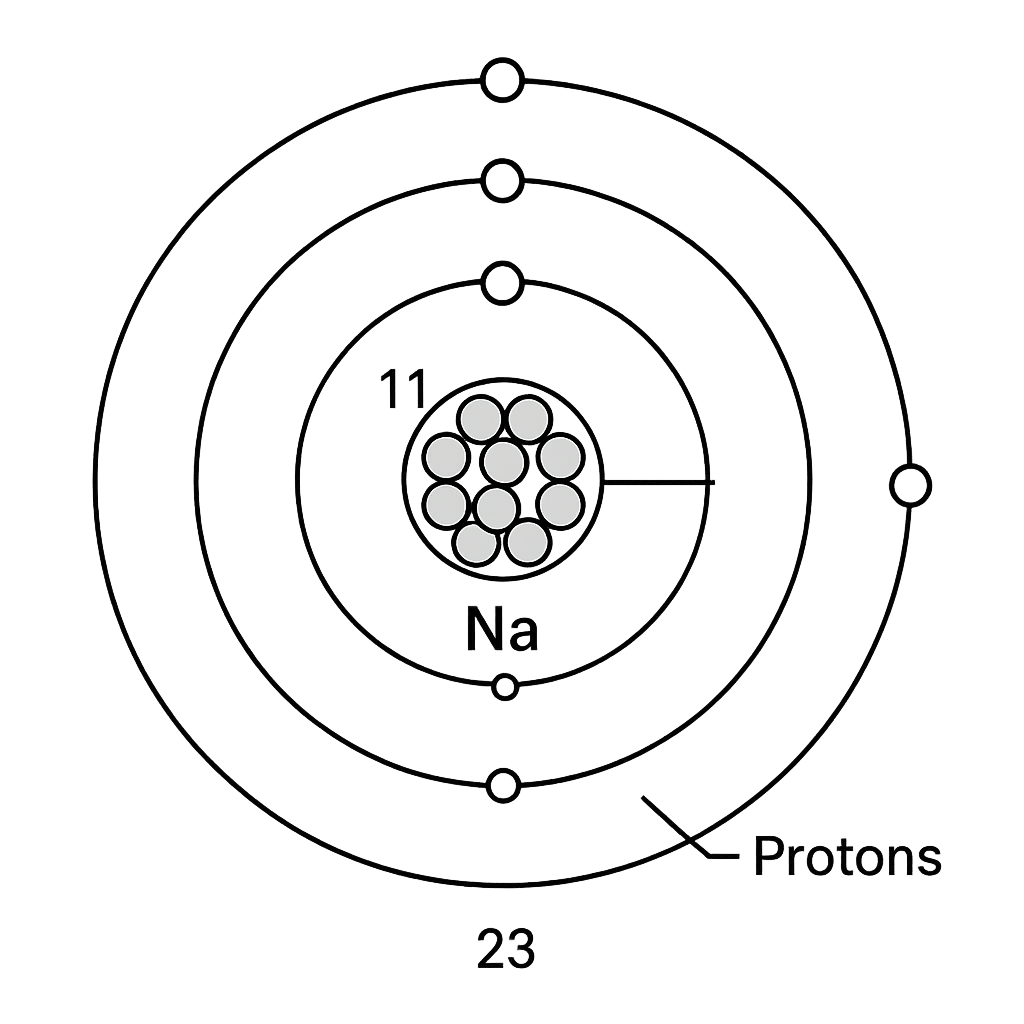
The diagram shows a neutral sodium (Na) atom. The nucleus contains protons and neutrons, and the electrons are arranged in three shells. The first shell holds 2 electrons, the second shell holds 8 electrons and the third shell holds 1 electron. The atomic number of sodium is 11 and the most abundant isotope has a mass number of 23.
Question Parts
(a)
Write the ground‑state electronic configuration of the sodium atom shown in the diagram.
(b)
Using the diagram, determine the number of neutrons present in the most abundant isotope of sodium.
(c)
Explain the type of chemical bond that sodium is most likely to form with chlorine and give the formula of the resulting compound.
(d)
State the mass number of the most abundant isotope of sodium and justify your answer using the information in the diagram.
Detailed Essay Solution & Marking Scheme Available

Get the step-by-step mathematical proofs, key points required by examiners, and a comprehensive breakdown from our AI Tutor.
Question 2 View Details
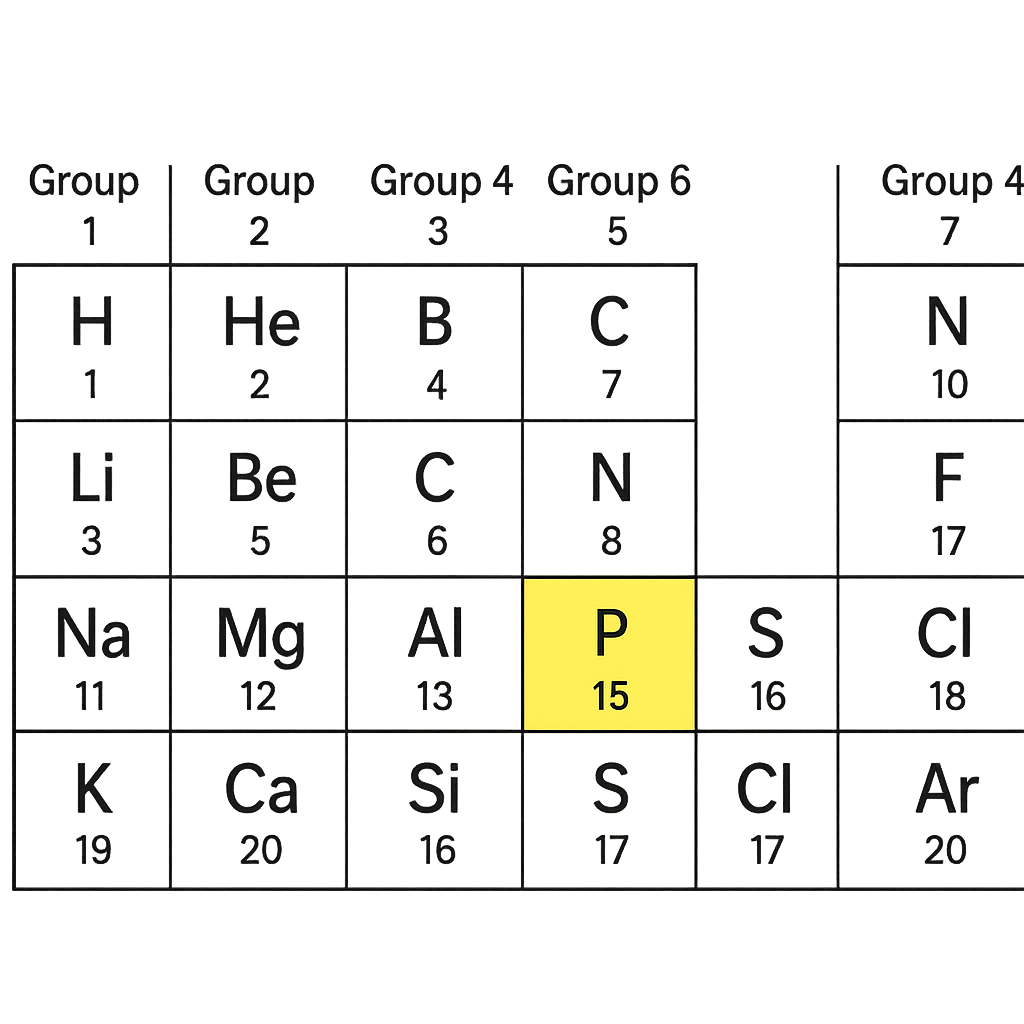
The illustration presents a portion of the periodic table containing elements with atomic numbers 1 to 20. The positions of phosphorus (P, Z = 15) and sulfur (S, Z = 16) are highlighted. Approximate atomic masses are given: Ca = 40.1 u, P = 31.0 u, O = 16.0 u.
Question Parts
(a)
State the period and group numbers for phosphorus as shown in the diagram.
(b)
Write the ground‑state electronic configuration of sulfur.
(c)
Using their positions in the periodic table, compare the chemical reactivity of phosphorus and sulfur, explaining why one is more likely to gain electrons than the other.
(d)
Calculate the percentage by mass of phosphorus in calcium phosphate, Ca₃(PO₄)₂, using the atomic masses provided.
Detailed Essay Solution & Marking Scheme Available

Get the step-by-step mathematical proofs, key points required by examiners, and a comprehensive breakdown from our AI Tutor.
Question 3 View Details
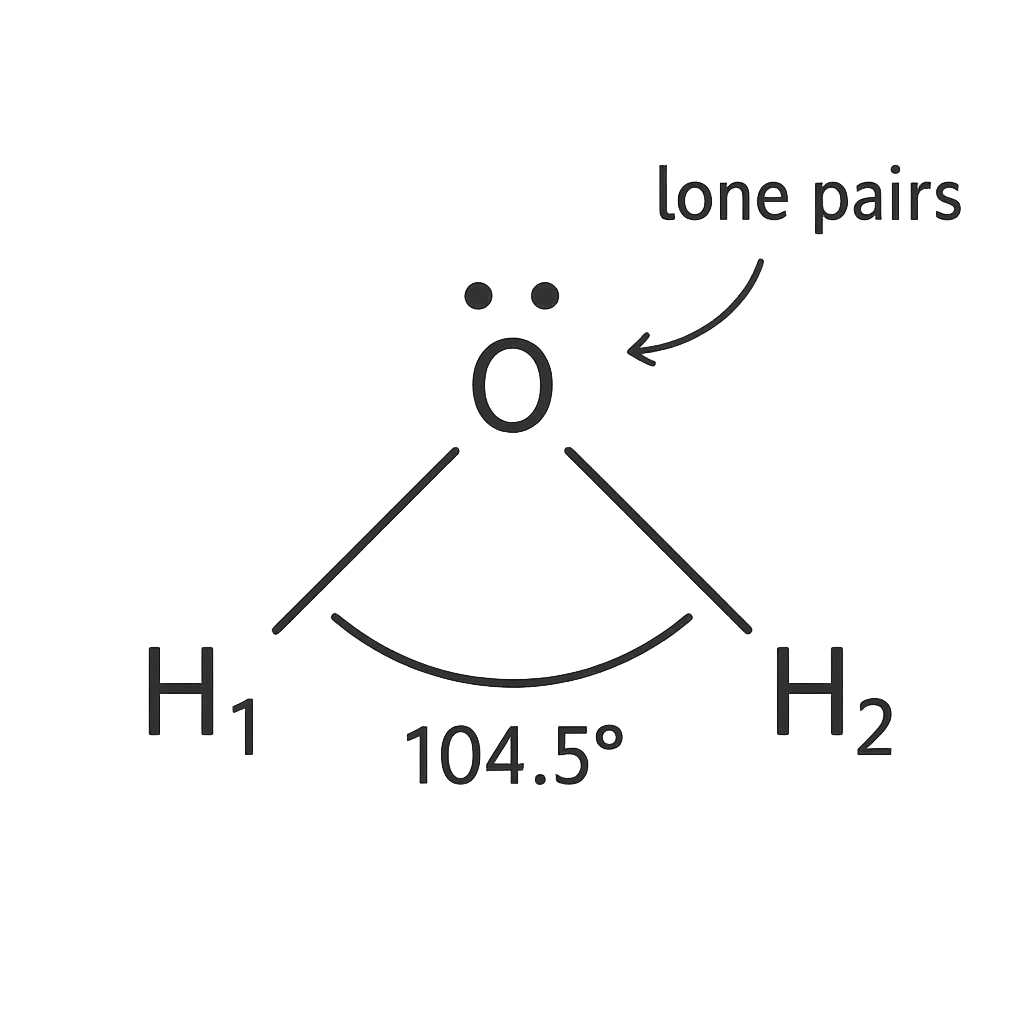
The diagram shows the Lewis structure of a water molecule (H₂O).
Question Parts
(a)
State the type of chemical bond(s) present in the molecule and justify your answer.
(b)
Using VSEPR theory, predict the H–O–H bond angle and give a brief explanation of how the lone pairs on oxygen affect this angle.
(c)
Discuss whether the water molecule is polar or non‑polar and justify your answer using the information from the diagram.
(d)
Predict two physical properties of water that arise from its polarity and explain the underlying reasons.
Detailed Essay Solution & Marking Scheme Available

Get the step-by-step mathematical proofs, key points required by examiners, and a comprehensive breakdown from our AI Tutor.

Question 4 View Details
The diagram shows the structural formula of D‑glucose, a common monosaccharide. Using the information from the diagram, answer the following questions.
Question Parts
(a)
Determine the empirical formula of glucose from the structural diagram.
() Write the empirical formula.
() State the molecular formula.
() Calculate the percent by mass of carbon in glucose.
(b)
A 180 g sample of glucose is completely combusted in excess oxygen.
() Write the balanced chemical equation for the combustion of glucose.
() Calculate the volume of CO₂ (at STP) produced from the 180 g sample.
(c)
A laboratory preparation requires 0.50 mol of glucose to be dissolved in water to make a 0.250 mol L⁻¹ solution in a 2.00 L volumetric flask.
() Calculate the mass of glucose needed.
() Determine the mass of water required to prepare the solution (assume the density of water is 1 g mL⁻¹ and the volume of solute is negligible).
(d)
In aqueous solution glucose can cyclise to a six‑membered hemiacetal where carbon 1 bonds to the oxygen on carbon 5, forming a pyranose ring. Using the diagram, explain how this cyclisation changes the number of distinct hydroxyl groups that can act as reducing ends.
Detailed Essay Solution & Marking Scheme Available

Get the step-by-step mathematical proofs, key points required by examiners, and a comprehensive breakdown from our AI Tutor.

Question 5 View Details
A mixture containing 5.00 g of calcium carbonate (CaCO₃) and 3.00 g of hydrochloric acid (HCl) is allowed to react completely according to the equation: CaCO₃(s) + 2 HCl(aq) → CaCl₂(aq) + H₂O(l) + CO₂(g) The carbon dioxide gas produced is collected over water at 0 °C and 1.00 atm pressure. The volume of gas measured is 0.45 L. (The vapour pressure of water at 0 °C is 0.006 atm.) Answer the following questions:
Question Parts
(a)
Identify the limiting reagent and show the calculations used to reach your conclusion.
(b)
Calculate the theoretical volume of CO₂ (at STP) that could be obtained from the reaction.
(c)
Determine the percent yield of CO₂ based on the measured volume of 0.45 L (corrected for water vapour).
(d)
Calculate the mass of calcium carbonate that remains unreacted after the reaction is complete.
Detailed Essay Solution & Marking Scheme Available

Get the step-by-step mathematical proofs, key points required by examiners, and a comprehensive breakdown from our AI Tutor.

Question 6 View Details
A solution is prepared by dissolving 0.500 kg of pure glucose (C₆H₁₂O₆, M = 180 g mol⁻¹) in enough water to give a total mass of 1.00 kg. The observed boiling‑point elevation of the solution is 0.52 °C. Answer the following:
Question Parts
(a)
Calculate the molality (m) of the glucose solution.
(b)
Using the experimental data, determine the experimental boiling‑point elevation constant (K_b) for water.
(c)
Predict the boiling‑point elevation if 0.200 kg of glucose is dissolved in 1.000 kg of water, assuming the experimental K_b obtained in part (b) remains valid.
Detailed Essay Solution & Marking Scheme Available

Get the step-by-step mathematical proofs, key points required by examiners, and a comprehensive breakdown from our AI Tutor.

Question 7 View Details
A buffer solution is prepared by dissolving 0.20 mol of acetic acid (CH₃COOH) and 0.30 mol of sodium acetate (CH₃COONa) in enough water to make 1.00 L of solution. The acid dissociation constant of acetic acid at 25 °C is Ka = 1.8 × 10⁻⁵. Answer the following:
Question Parts
(a)
Calculate the pH of the buffer solution before any other substance is added. Show all steps.
(b)
0.050 mol of a strong acid (HCl) is added to the buffer (assume the total volume remains 1.00 L). Calculate the new pH of the solution after the acid has reacted completely with the acetate ion. Show your reasoning.
(c)
Explain, in the context of the calculations above, why the buffer resists a large change in pH and state the practical limitation of its buffering capacity.
Detailed Essay Solution & Marking Scheme Available

Get the step-by-step mathematical proofs, key points required by examiners, and a comprehensive breakdown from our AI Tutor.

Question 8 View Details
Silver chloride (AgCl) is a sparingly soluble salt. At 25 °C its solubility in pure water is 1.33 × 10⁻⁵ mol L⁻¹. Answer the following questions:
Question Parts
(a)
Calculate the solubility product constant (Ksp) of AgCl at 25 °C.
(b)
A solution is prepared that contains 0.010 mol L⁻¹ NaCl and 0.010 mol L⁻¹ AgNO₃. Determine whether a precipitate of AgCl will form. If precipitation occurs, calculate the equilibrium concentrations of Ag⁺ and Cl⁻ ions remaining in solution.
(c)
When the temperature is raised to 50 °C, the solubility of AgCl doubles. Assuming the solubility product varies as the square of the solubility, calculate the new Ksp at 50 °C and discuss how the change in temperature would affect the extent of precipitation in the solution described in part (b).
(d)
Explain qualitatively how the addition of a common ion and an increase in temperature influence the solubility of a sparingly soluble salt, citing the relevant principles.
Detailed Essay Solution & Marking Scheme Available

Get the step-by-step mathematical proofs, key points required by examiners, and a comprehensive breakdown from our AI Tutor.

Question 9 View Details
A solution containing potassium permanganate (KMnO₄) and oxalic acid (H₂C₂O₄) is acidified with sulfuric acid and heated.
Question Parts
(a)
Write the balanced overall redox equation for the reaction in acidic medium.
(b)
From the balanced equation, calculate the volume of CO₂ gas (at STP) produced when 5.00 g of oxalic acid reacts completely.
(c)
Explain why sulfuric acid is required in this reaction and describe the change in oxidation state of manganese during the process.
Detailed Essay Solution & Marking Scheme Available

Get the step-by-step mathematical proofs, key points required by examiners, and a comprehensive breakdown from our AI Tutor.

Question 10 View Details
A galvanic cell is constructed with a zinc electrode immersed in 0.010 M ZnSO₄ solution and a copper electrode immersed in 0.10 M CuSO₄ solution. The cell is represented as: Zn(s) | Zn²⁺ (0.010 M) || Cu²⁺ (0.10 M) | Cu(s). Standard reduction potentials are: Zn²⁺ + 2 e⁻ → Zn(s) E° = –0.76 V; Cu²⁺ + 2 e⁻ → Cu(s) E° = +0.34 V.
Question Parts
(a)
Write the overall cell reaction and state which electrode functions as the anode and which as the cathode under standard conditions.
(b)
Calculate the cell potential at 25 °C for the given concentrations using the Nernst equation.
(c)
If a current of 0.500 A is drawn from the cell for 2.00 h, calculate the mass of copper deposited on the copper electrode.
(d)
Discuss qualitatively how increasing the concentration of Zn²⁺ to 1.0 M would affect the cell potential and explain the reason for this change.
Detailed Essay Solution & Marking Scheme Available

Get the step-by-step mathematical proofs, key points required by examiners, and a comprehensive breakdown from our AI Tutor.

Master the Exam!

You've seen a preview, but there are thousands more questions plus AI tutor to break down complex solutions.

Unlock Full Access Available for Android & Windows
Help others prepare! Share this practice hub:
Chat with Support