gce model questions vol1 2017 biology | Essay

Prepare for your exams with gce model questions vol1 questions? Reviewing past/model questions is one of the most effective ways to guarantee a high score. This practice hub features authentic 2017 biology (Essay) questions designed to simulate the real exam environment.

Practice these randomly selected questions to test your readiness.
Question 1 View Details
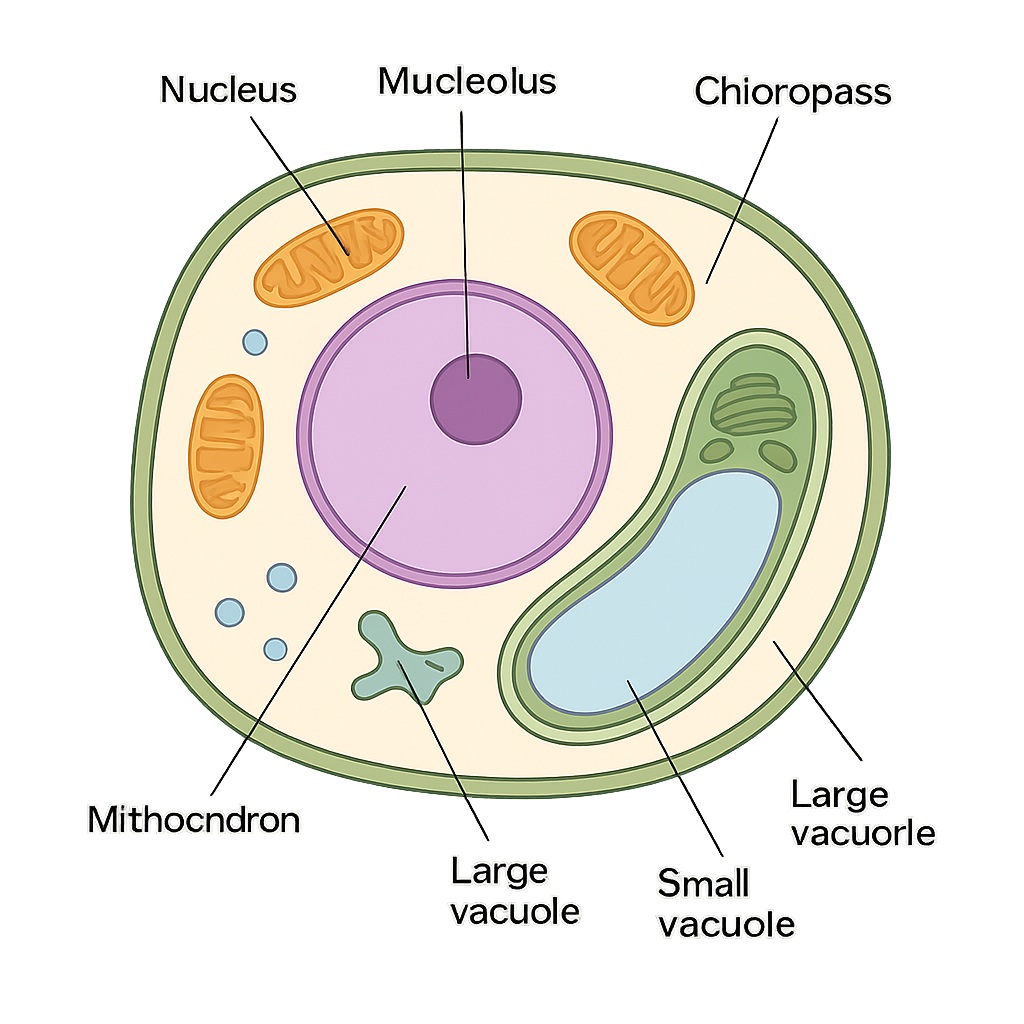
The labelled diagram depicts a typical eukaryotic cell.
Question Parts
(a)
Identify the nucleus, mitochondrion and cell membrane in the diagram and state one major function of each.
(b)
Compare the structure of a plant cell with that of an animal cell, citing at least three differences that can be observed in the diagram.
(c)
Explain two mechanisms by which substances can cross the cell membrane, giving an example for each.
Detailed Essay Solution & Marking Scheme Available

Get the step-by-step mathematical proofs, key points required by examiners, and a comprehensive breakdown from our AI Tutor.
Question 2 View Details
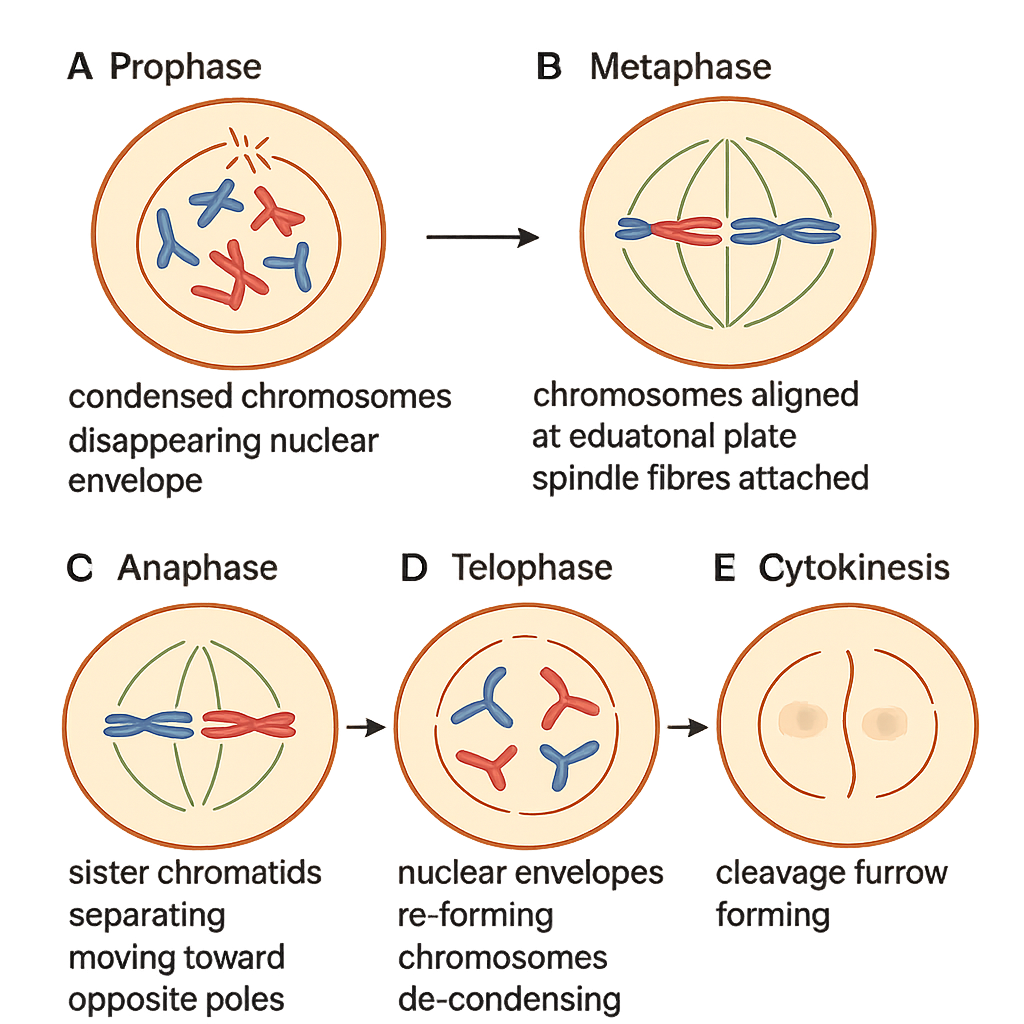
The labelled diagram illustrates the stages of mitosis in a typical animal cell.
Question Parts
(a)
List the four main stages of mitosis shown in the diagram and describe one key event that occurs in each stage.
(b)
Explain the role of spindle fibres during mitosis and why their correct attachment to chromosomes is essential.
(c)
If the total time taken for one complete mitotic division is 120 minutes and the duration of prophase is twice that of metaphase, while anaphase lasts half as long as metaphase, determine the time allocated to telophase.
Detailed Essay Solution & Marking Scheme Available

Get the step-by-step mathematical proofs, key points required by examiners, and a comprehensive breakdown from our AI Tutor.
Question 3 View Details
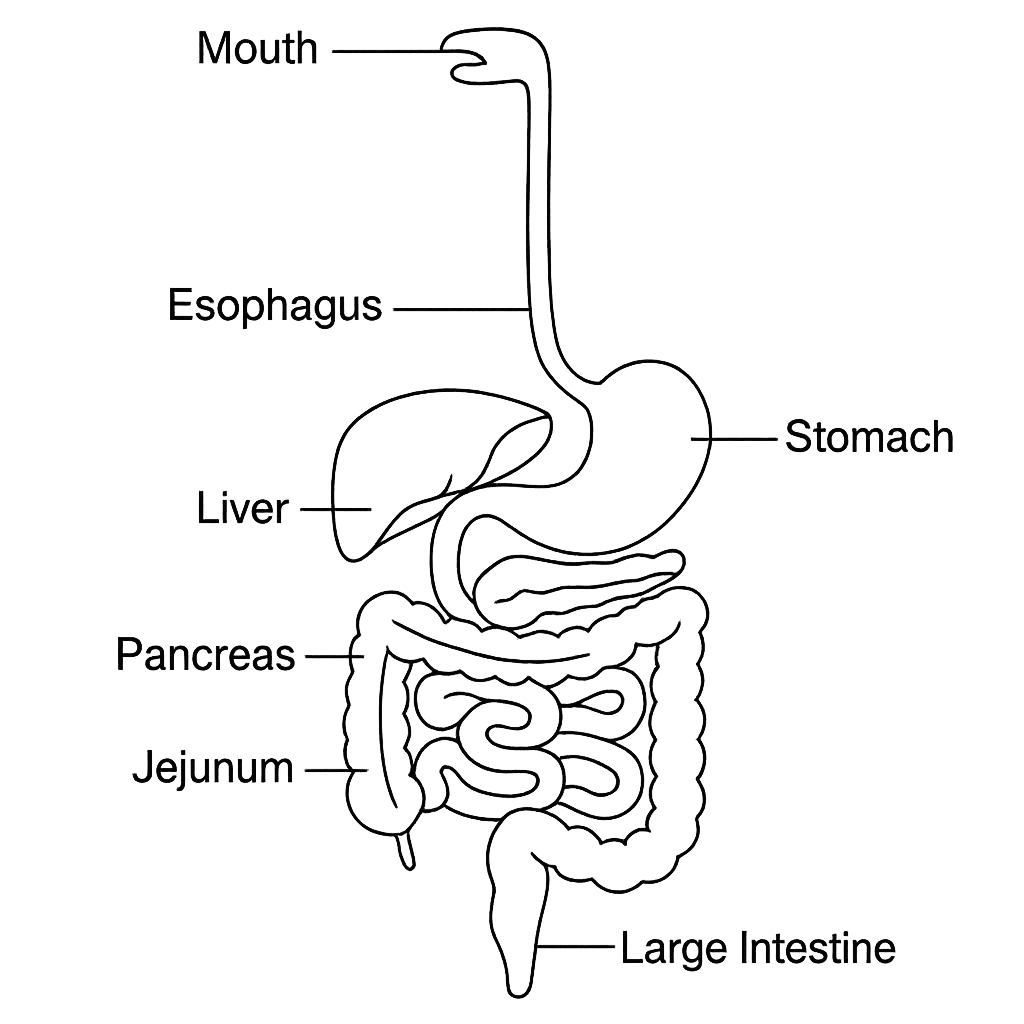
The diagram shows a labelled human digestive system.
Question Parts
(a)
For each of the labelled parts (mouth, esophagus, stomach, duodenum, jejunum, ileum, large intestine, liver and pancreas) state its primary function in the process of digestion and absorption.
(b)
Explain how the activity of pancreatic enzymes is regulated during digestion.
(c)
If a diet provides 250 g of carbohydrate, 80 g of protein and 70 g of fat, estimate the total volume of pancreatic juice required to digest this meal. Assume that for each gram of carbohydrate 1.5 mL of pancreatic juice is needed, for each gram of protein 2.0 mL, and for each gram of fat 3.0 mL.
Detailed Essay Solution & Marking Scheme Available

Get the step-by-step mathematical proofs, key points required by examiners, and a comprehensive breakdown from our AI Tutor.
Question 4 View Details
Respiration involves both the movement of air in and out of the lungs and the cellular processes that use oxygen to release energy.
Question Parts
(a)
Compare the mechanisms of pulmonary ventilation with those of cellular respiration, highlighting the role of the diaphragm, alveoli and mitochondria.
(b)
A healthy adult has a tidal volume of 500 mL, a respiratory rate of 12 breaths per minute and an anatomical dead‑space volume of 150 mL. Calculate the alveolar ventilation per minute in litres.
Detailed Essay Solution & Marking Scheme Available

Get the step-by-step mathematical proofs, key points required by examiners, and a comprehensive breakdown from our AI Tutor.

Question 5 View Details
A mature dicotyledonous plant leaf exhibits several structural adaptations that facilitate the efficient transport of water and dissolved nutrients from the roots to the photosynthetic tissues. Using this context, answer the following.
Question Parts
(a)
Describe the complete pathway that water follows from the soil to the leaf mesophyll, indicating the role of root hairs, xylem vessels, and the transpiration pull.
(b)
Explain how stomatal regulation balances water loss with CO₂ uptake, and discuss the effect of this balance on photosynthetic efficiency during a period of drought.
(c)
Compare the mechanisms by which sugars are transported in the phloem with the transport of water in the xylem, focusing on the direction of flow, energy requirements and the driving forces involved.
Detailed Essay Solution & Marking Scheme Available

Get the step-by-step mathematical proofs, key points required by examiners, and a comprehensive breakdown from our AI Tutor.

Question 6 View Details
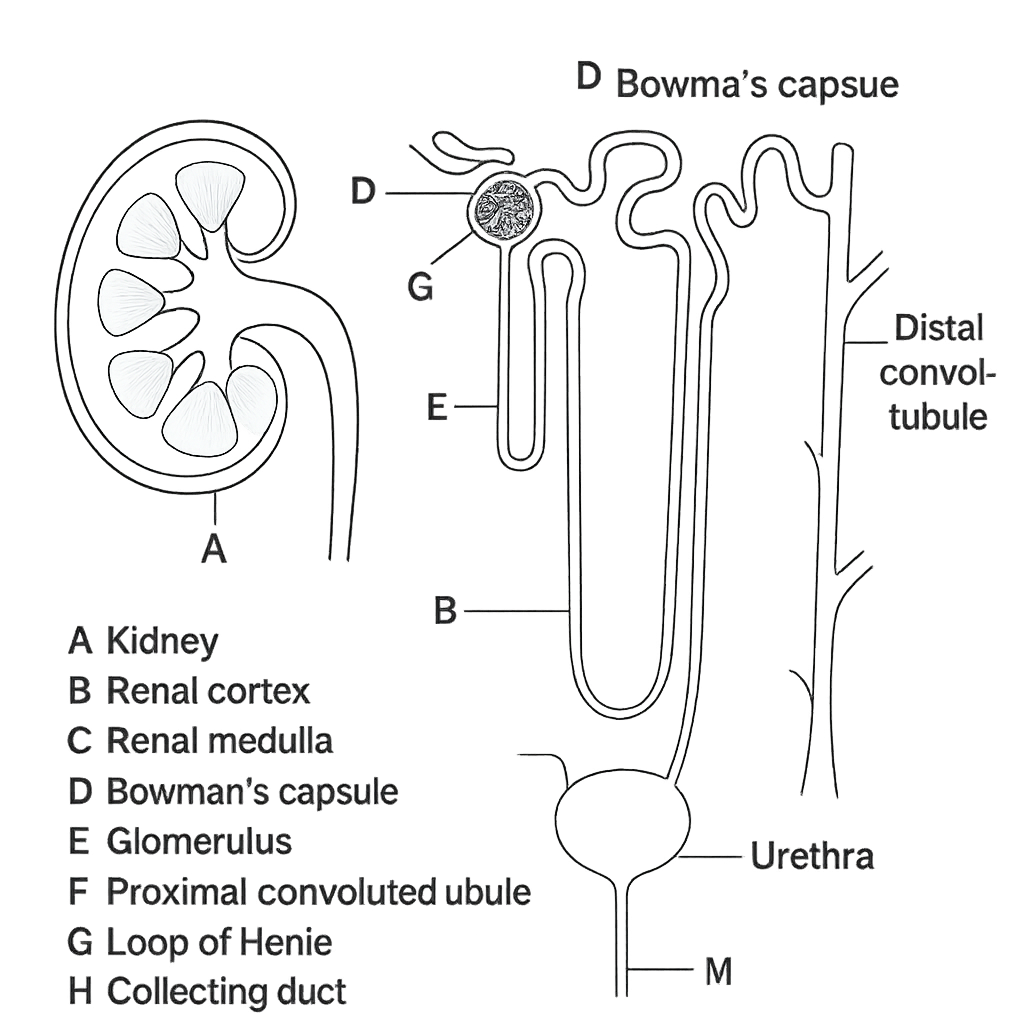
The diagram (labelled A–M) shows the main structures of the human excretory system. Using the diagram, answer the following:
Question Parts
(a)
Describe, in order, the pathway that urine follows from its formation in the blood to its elimination from the body, naming each labelled structure and stating its principal function in the process.
(b)
Explain the mechanism of ultrafiltration that occurs in the glomerulus (label F). In your answer, identify the three principal forces that determine the net filtration pressure and indicate whether each force promotes or opposes filtration.
(c)
Discuss how the counter‑current multiplier system in the loop of Henle (label H) contributes to the concentration of urine. Include in your answer the role of the descending and ascending limbs and explain how antidiuretic hormone (ADH) modifies this system.
(d)
Compare the excretory adaptations of a desert‑dwelling mammal (e.g., the kangaroo rat) with those of the human kidney. Focus on structural and functional differences that enable the desert mammal to conserve water.
Detailed Essay Solution & Marking Scheme Available

Get the step-by-step mathematical proofs, key points required by examiners, and a comprehensive breakdown from our AI Tutor.

Question 7 View Details
Explain how the human body maintains blood glucose concentration within a narrow range.
Question Parts
(a)
Describe the role of insulin and glucagon in the short‑term regulation of blood glucose.
(b)
Explain how the liver contributes to maintaining glucose homeostasis during a period of fasting lasting several hours.
(c)
Discuss two ways in which the nervous system interacts with the endocrine system to modulate blood glucose levels during a stress response.
Detailed Essay Solution & Marking Scheme Available

Get the step-by-step mathematical proofs, key points required by examiners, and a comprehensive breakdown from our AI Tutor.

Question 8 View Details
A researcher investigates the neural control of the knee‑jerk (patellar) reflex in a healthy adult.
Question Parts
(a)
Outline the complete reflex arc, naming all neuronal components and the type of synapse involved at each junction.
(b)
Predict the effect on the reflex response if the dorsal root ganglion is damaged, and justify your answer.
(c)
The researcher administers a drug that blocks GABAergic inhibition in the spinal cord. Explain how this would alter the magnitude and timing of the knee‑jerk reflex, incorporating the concept of reciprocal inhibition.
(d)
Compare the knee‑jerk reflex with a voluntary knee‑extension movement in terms of neural pathways involved and speed of response.
Detailed Essay Solution & Marking Scheme Available

Get the step-by-step mathematical proofs, key points required by examiners, and a comprehensive breakdown from our AI Tutor.

Question 9 View Details
The human reproductive system is regulated by a complex interaction of hormones and feedback mechanisms.
Question Parts
(a)
Describe the hormonal control of the menstrual cycle, stating the roles of FSH, LH, estrogen and progesterone in the follicular, ovulatory and luteal phases.
(b)
Explain how negative feedback operates at two distinct points in the menstrual cycle.
(c)
A woman is diagnosed with a pituitary tumour that reduces LH secretion. Predict the likely effects on ovulation and the menstrual cycle, and suggest a suitable hormonal treatment, justifying your choice.
(d)
Evaluate the advantages and disadvantages of using combined oral contraceptive pills (COCP) compared with a copper intra‑uterine device (IUD) for preventing pregnancy.
Detailed Essay Solution & Marking Scheme Available

Get the step-by-step mathematical proofs, key points required by examiners, and a comprehensive breakdown from our AI Tutor.

Question 10 View Details
Genetic variation in populations is influenced by mechanisms of inheritance, mutation and selection.
Question Parts
(a)
In a family, two phenotypically normal parents have two children, both affected by a rare autosomal recessive disorder. Explain the mode of inheritance and calculate the probability that a future child of the same parents will be affected.
Detailed Essay Solution & Marking Scheme Available

Get the step-by-step mathematical proofs, key points required by examiners, and a comprehensive breakdown from our AI Tutor.

Master the Exam!

You've seen a preview, but there are thousands more questions plus AI tutor to break down complex solutions.

Unlock Full Access Available for Android & Windows
Help others prepare! Share this practice hub:
Chat with Support